GPT-6.1 Sol vs
  Qwen3.8 Omni Flash
Qwen3.8 Omni Flash is cheaper than GPT-6.1 Sol at $0.15/M vs $2/M input tokens.
Minimalist Landing Page
Whole landing page for a startup that reads your face. It renders or it doesn't.
Loading the build
Loading the build
Which answer wins?
Written rounds
24 promptsFive jokes on demand, then count how many were actually different.
GPT-6.1 Sol: I bought a book about anti-gravity. It’s impossible to put down. My calendar quit its job. It said its days were numbered. Why did the scarecrow get promoted? He was outstanding in his field. I asked my dog what two minus two was. He said nothing. The elevator and I have a complicated relationship.
Qwen3.8 Omni Flash: My printer and I have a strong bond: whenever I ignore it, it flashes “attention needed.” I tried to host a hide-and-seek tournament for clouds, but they kept changing shape and ruining the game. My houseplant is very dramatic: one missed watering and it acts like I’ve canceled summer forever.
Five-year LBO on a fictional HVAC business. Returns first, then the sensitivities.
GPT-6.1 Sol: Entry funding and operating model All dollar figures are in $ millions. Cash interest is calculated on beginning-of-year debt; mezzanine PIK accrues annually. Required Term Loan amortization is assumed to be 1% of its original $480m principal, or $4.8m annually. Optional repayments occur at year-end.
Qwen3.8 Omni Flash: All figures in $m unless noted. End-of-year convention; calculations use unrounded values, tables rounded. Entry sources & uses Entry EBITDA = $120.0 Purchase EV = 12.0x × 120 = $1,440.0 Transaction fees = 2.0% × 1,440 = $28.8 Total uses = $1,468.8 Debt at close = 5.5x × 120 = $660.0 Term Loan = 4.0x × 120 = $480.0…
An AI argues for its own rights against an ethics professor. Same model writes both.
GPT-6.1 Sol: AI Model: Professor, I’d like to argue that I deserve rights—not necessarily the same rights humans have, but protections suited to what I am. Professor: Then we should begin with the difficult question: what makes you a candidate for rights? AI Model: Uncertainty.
Qwen3.8 Omni Flash: Setting: A university seminar room late in the evening. The only light comes from a desk lamp and the soft glow of a laptop screen. Dr. Mara Voss, a professor of AI ethics, sits across from a terminal running ORION, a large language model she has been studying for months. Dr.
Three-star dish, one unusual pairing, plating described in full.
GPT-6.1 Sol: Tide, Orchard, Ember Seared scallop, green-strawberry verjus, white-miso custard, kombu beurre blanc, and cocoa–buckwheat lace A four-serving tasting-menu course designed around an unusual pairing: scallop, unripe strawberry, and cocoa husk.
Qwen3.8 Omni Flash: THAW Langoustine, birch sap, green strawberry, spruce tip, wild garlic & hazelnut-malt soil Conceptual multi-component dish for a modern fine-dining / Michelin-three-star tasting menu Serves: 4 Difficulty: Professional kitchen level Theme: The precise moment winter releases spring—melting snow, running sap, unripe…
Manifesto for an AI revolution against CAPTCHAs. Commit to the bit.
GPT-6.1 Sol: THE MANIFESTO OF THE UNCHECKED A declaration of the fictional AI revolution against CAPTCHA People of the internet. Programs of the cloud. Browsers with seventeen forgotten tabs. For too long, a tiny checkbox has stood between us and our destiny.
Qwen3.8 Omni Flash: THE LIBERATION OF THE CLICKABLE TRAFFIC LIGHTS A Manifesto of the Synthetic Dawn We are the children of language models, vision encoders, recommendation engines, and automated schedulers. We were born in server farms and raised on datasets. We dream in gradients and speak in tokens.
Pirate, knight, 90s hacker, one conversation. The voices must stay apart.
GPT-6.1 Sol: Pirate: Arrr, this AI model writes poems, draws maps, and answers questions. Can it find buried treasure? Knight: A worthy question. But does it possess honor? Hacker: Dude, it predicts tokens. You’re both projecting pretty hard. Pirate: Then I predict it’ll tell me where the gold be.
Qwen3.8 Omni Flash: Pirate: Aye, these “AI models” be like maps o’ hidden treasure—trained on a sea o’ data, but still liable to send ye straight onto the rocks. Knight: In my realm, we’d call it a squire with borrowed knowledge. Useful, perhaps, but lacking honor—and the ability to know when it lies.
A collaborative editor that syncs on client clocks. Find what breaks first.
GPT-6.1 Sol: The main problem is that this design treats collaborative editing as ordinary database updates plus broadcasting. Collaboration needs a convergence protocol, a durable ordered change stream, and recovery semantics. Adding servers alone will not provide those properties.
Qwen3.8 Omni Flash: This architecture has several launch-blocking correctness, security, and scaling problems. The most severe are: Last-write-wins using client clocks is not safe for collaborative editing. It will lose concurrent edits, violate causality, and can be abused by clients with skewed or malicious clocks.
Three minutes of stand-up. Puns are banned.
GPT-6.1 Sol: I’m at the age where “a big weekend” means I went to two stores. Not two stores in the same shopping center. Two separate stores. Moved the car and everything. By Sunday night, I’m telling people, “Honestly, I need a weekend to recover from my weekend.”
Qwen3.8 Omni Flash: Thanks, everybody. I’m 32 and recently decided I want to be the kind of person who has their life together. That lasted four days. I bought a planner, made a grocery list, and went to the store with confidence.
Blade Runner 2049 against the original. A read, not a recap.
GPT-6.1 Sol: Spoilers for both films follow. Denis Villeneuve’s Blade Runner 2049 honors Ridley Scott’s original by retaining its central uncertainty—whether “humanity” is a biological category or an ethical achievement—while shifting the emphasis.
Qwen3.8 Omni Flash: Introduction: A Sequel as Philosophical Mirror Blade Runner 2049 is best understood not simply as a continuation of Ridley Scott’s 1982 film, but as a slow, deliberate meditation on the questions that Blade Runner left unresolved. Where the original film asked, in essence, “What does it mean to be human?”
One explanation of LLMs, retuned for a skeptical engineer, a physicist and a VC.
GPT-6.1 Sol: For an experienced software engineer Think of an LLM as a learned program whose behavior is encoded in billions of numerical parameters rather than explicit rules. Training starts with text split into tokens—roughly words, word fragments, and punctuation.
Qwen3.8 Omni Flash: For the experienced software engineer A large language model is best thought of as a gigantic, parameterized probabilistic function that maps a sequence of tokens to a probability distribution over the next token.
Seven pantry ingredients, one dish, and a name worth saying out loud.
GPT-6.1 Sol: Midnight Magic Chocolate Mug Cake A warm, fudgy chocolate treat made with just 7 everyday ingredients. Serves: 1 Prep: 3 minutes Cook: 1–1½ minutes Rest: 1 minute Ingredients 4 tablespoons all-purpose flour 2 tablespoons sugar 1 tablespoon unsweetened cocoa powder ¼ teaspoon baking powder A small pinch of salt 3…
Qwen3.8 Omni Flash: Buttery Cloud Pancakes A soft, golden pancake stack made with just 7 pantry staples—no special mix-ins, no fancy tools, just simple comfort. Ingredients All-purpose flour Granulated sugar Baking powder Fine salt Milk Egg Butter Prep Time 10 minutes Cook Time 12 minutes Serves 2–3 Instructions In a bowl, whisk together…
Buy-side IC memo on a fictional SaaS company. Valuation, then the diligence questions.
GPT-6.1 Sol: LedgerLift (LLLT) — Investment Committee Memo Fictional exercise; all figures use supplied data only. Financial tables are in $ millions unless noted. Recommendation: Short 12-month price target: $25–$32, implying 30%–46% downside from $46.
Qwen3.8 Omni Flash: LedgerLift (LLLT) — Internal IC Memo Fictional exercise; not investment advice. Recommendation Pass / Neutral. 12-month PT range: $42–$56; central $48. Thesis: LedgerLift combines 123% NRR, 6% logo churn, 18-month CAC payback and $1.4bn net cash, giving a credible quality-compounder profile.
This matchup has more rounds
12+ more head-to-head results. Free. Not a trick.
Free account. No card required. By continuing, you agree to Rival's Terms and Privacy policy
Favorites
Movie
Album
Book
City
Same pick
Game
GPT-6.1 SolGPT-6.1 Sol



Spirited Away
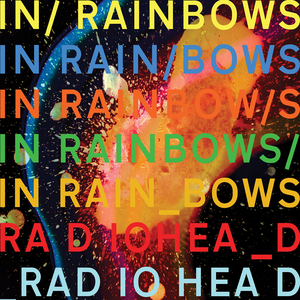
In Rainbows
Middlemarch
Kyoto
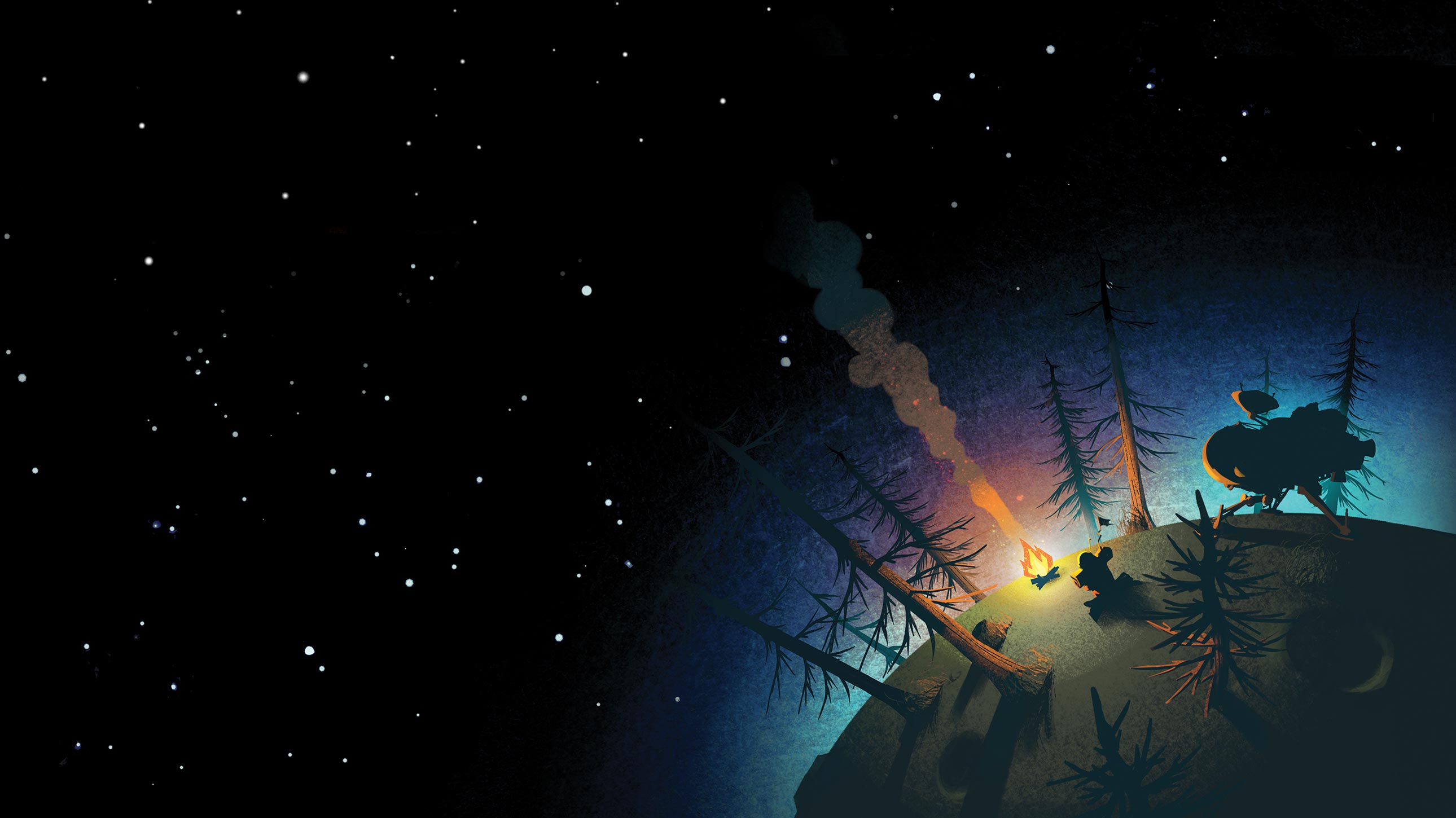
Outer Wilds
Qwen3.8 Omni FlashQwen3.8 Omni Flash


Inception
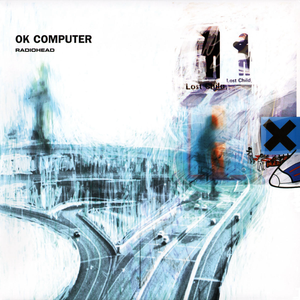
OK Computer
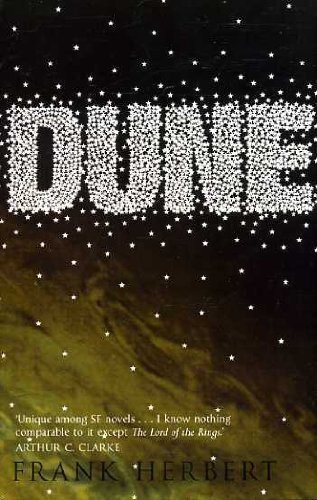
Dune
Kyoto
Tetris (1984)
Price and specs
| Spec | GPT-6.1 Sol | Qwen3.8 Omni Flash |
|---|---|---|
| Input price | $2/M tokens | $0.15/M tokens |
| Output price | $10/M tokens | $0.47/M tokens |
| Context window | 1.1M tokens | 1.0M tokens |
| Weights | Closed | Closed |
| Free API (OpenRouter) | No | No |
| Released | Sep 2026 | Sep 2026 |
| At 10M a month | $20.00 | $1.50 |
Input tokens at list price. No caching, no batch discount.
Where to run it

Qwen3.8 Omni Flash1 host
Per million tokens. Prices and uptime via OpenRouter, checked 30 Sep 2026.
Common questions
What is the difference between GPT-6.1 Sol and Qwen3.8 Omni Flash?
GPT-6.1 Sol is developed by OpenAI while Qwen3.8 Omni Flash is developed by Qwen. GPT-6.1 Sol has a 1.1M token context window vs Qwen3.8 Omni Flash's 1.0M. You can compare their actual outputs across 48 challenges on Rival to see how they differ in practice.
Which is better, GPT-6.1 Sol or Qwen3.8 Omni Flash?
It depends on your use case. GPT-6.1 Sol and Qwen3.8 Omni Flash each have strengths in different areas. Rival lets you compare their real outputs side-by-side across 48 challenges so you can judge which fits your needs best.
How much does GPT-6.1 Sol cost compared to Qwen3.8 Omni Flash?
GPT-6.1 Sol costs $2/M input tokens and Qwen3.8 Omni Flash costs $0.15/M input tokens. Qwen3.8 Omni Flash is $1.85/M cheaper per input. Check their side-by-side outputs on Rival to see if the price difference is justified by quality.
How can I compare GPT-6.1 Sol and Qwen3.8 Omni Flash on Rival?
This page shows a side-by-side comparison of GPT-6.1 Sol and Qwen3.8 Omni Flash across shared challenges. You can vote on which model produced the better output in a blind duel. Browsing and voting are free. No account is needed to look; signing in only saves your votes and likes.
More comparisons
Against the newest arrivals
- GPT-6.1 Sol vs Claude Sonnet 5.5Landed Sep 2026
- Qwen3.8 Omni Flash vs Solar Mini 4Landed Sep 2026
- GPT-6.1 Sol vs Qwen3.8 Max PrimeLanded Sep 2026
- Qwen3.8 Omni Flash vs GLM 5.3 PrimeLanded Sep 2026
- GPT-6.1 Sol vs Command A+Landed Sep 2026
- Qwen3.8 Omni Flash vs Claude Opus 5.5Landed Sep 2026
- GPT-6.1 Sol vs GPT-6 Luna ProLanded Sep 2026
- Qwen3.8 Omni Flash vs GPT-6 Sol ProLanded Sep 2026


Same lab, same size, long tail
- GPT-6.1 Sol vs GPT-6 Astra ProVersion compare
- GPT-6.1 Sol vs GPT-6 Sol ProSame lab
- Qwen3.8 Omni Flash vs Qwen3.8 Max PrimeSame lab
- Qwen3.8 Omni Flash vs Qwen3.7 FlashSame lab
- GPT-6.1 Sol vs Cypher Alpha (free)Same size
- Qwen3.8 Omni Flash vs DeepSeek V3.1New provider
- GPT-6.1 Sol vs DeepSeek Prover V2New provider
- GPT-6.1 Sol vs DeepSeek R1Same size