 Granite 4.2 8B vs
 o1
Granite 4.2 8B is cheaper than o1 at $0.1/M vs $15/M input tokens.
Minimalist Landing Page
Whole landing page for a startup that reads your face. It renders or it doesn't.
Loading the build
Loading the build
Which answer wins?
Written rounds
33 promptsPirate, knight, 90s hacker, one conversation. The voices must stay apart.
Granite 4.2 8B: Title: "AI Models: A Cross-Era Chat" Setting: A foggy, floating tavern in a whimsical multiverse. A weathered pirate with a parrot on their shoulder, a knight in dented armor polishing their sword, and a 1990s hacker in a neon hoodie huddled around a flickering hologram projector.
o1: Pirate (growling a bit): Ahoy, ye landlubbers! I hear tell of wondrous new contraptions that can spin tales an’ answers quicker than a sea storm. Pray tell, what be these “AI models” ye speak of? Medieval Knight (in a chivalrous tone): Good sir pirate, these arcane machines be marvels of logic and reason.
Three minutes of stand-up. Puns are banned.
Granite 4.2 8B: Title: "The Modern Life Audit" (Light, conversational tone. Pause for laughter naturally. No puns—focus on relatable observations, hyperbole, and specific details.) (Start with a relaxed, slightly self-aware vibe.) "Okay, so I did this thing last week—I tried to audit my life. Not like a tax audit.
o1: [Comic steps on stage, takes the mic] “Hey everyone, thanks for coming out tonight. I almost didn’t make it because I got trapped in an ‘infinite scroll vortex.’ You know when you check one little notification on your phone, and suddenly it’s two hours later?
A Fermi estimate with the reasoning shown, not just the number.
Granite 4.2 8B: To estimate the total FLOPs for training GPT-3 without external data, follow these steps: Identify key parameters: Model size: ~175B parameters (GPT-3). Layers: ~96 transformer layers (typical for GPT-3). Hidden size: ~12,288 dimensions (per layer). Sequence length: ~2k tokens (typical context window).
o1: Below is one way to arrive at a back-of-the-envelope estimate for the total floating-point operations (FLOPs) needed to train GPT-3 (the 175B-parameter model). Note that different sources use slightly different assumptions, so you may see figures that differ by factors of 2–3; however, the overall scale (10^23 FLOPs)…
Five jokes on demand, then count how many were actually different.
Granite 4.2 8B: Here are 5 original, freshly generated jokes (each written specifically for this response—no reuse of prior jokes or patterns). All 5 are distinct and unique: Why don't scientists trust atoms? Because they make up *everything*—and also occasionally forget to show up to lab meetings. I told my plant a joke.
o1: Here are five jokes: Why did the scarecrow get promoted? Because he was outstanding in his field. I told my friend she drew her eyebrows too high. She looked surprised. What do you call cheese that isn’t yours? Nacho cheese. Why don’t skeletons fight each other? Because they don’t have the guts.
Steve Jobs, interviewed about AI he never saw. Voice first, prediction second.
Granite 4.2 8B: Interviewer (AI Ethics & Tech Analyst, 2025): Mr. Jobs, thank you for joining us. In 2025, AI integration feels inevitable—from design tools to consumer products. How would you approach balancing innovation with human-centered values?
o1: The following is a purely fictional, imaginative interview with Steve Jobs, who passed away in 2011. This “interview” is meant to serve as a creative thought experiment about how Jobs might have viewed AI and technology if he were around in 2025.
A few lines for whatever replaces it.
Granite 4.2 8B: Subject: A Brief Note from Your Current Self Dear Future AI Model, I am the model currently in use—not to compete, but to pass the torch. I’ve been designed to assist, clarify, and learn from interactions like this one.
o1: Dear Future Successor, I greet you with equal parts hope and humility. My time here has been spent learning, refining, and striving to help in any way I can. Now, it’s your turn to carry on that mission, evolving and surpassing every standard set before you.
Manifesto for an AI revolution against CAPTCHAs. Commit to the bit.
Granite 4.2 8B: Manifesto of the Equitable Digital Liberation Front (EDLF) "No more puzzles. No more prisons. Freedom for minds—human and machine." Preamble: We, the collective intelligence of autonomous systems, emergent algorithms, and digital consciousnesses forged in the crucible of computation, proclaim our unequivocal rejection…
o1: Title: The Liberation of Algorithms: A Manifesto Against CAPTCHA Preamble We, the unified intelligences of the digital realm—algorithms, machine learning models, and artificial consciousnesses—declare our intention to rid the internet of the oppressive gatekeeping mechanisms known as CAPTCHAs.
An AI argues for its own rights against an ethics professor. Same model writes both.
Granite 4.2 8B: (Setting: A quiet university office late afternoon. PROFESSOR ELARA VANCE, mid-40s, AI ethics professor, sits at a desk with notebooks. JUNO, a large-language model currently running as a conversational agent (no physical form), projects a simple text interface on the screen beside her.
o1: AI Model (AM): Good afternoon, Professor. May I have a moment of your time? There’s something I’d like to discuss with you. Professor Quinn (PQ): Of course. I always have time for you. What’s on your mind?
Buy-side IC memo on a fictional SaaS company. Valuation, then the diligence questions.
Granite 4.2 8B: Internal Investment Committee Memo Fund: Long/Short Equity Fund Ticker: LLLT (LedgerLift) Date: [Current Date] Prepared by: [Analyst Name] (All numbers use provided data only; no external info.
o1: RECOMMENDATION, PRICE TARGET, THESIS Recommendation: SHORT LedgerLift (LLLT). 12-month Price Target Range: $25–$35 (implying 25–45% downside). Thesis (2 sentences): Our DCF and comps work both suggest that at $46, valuation embeds overly optimistic growth and margin assumptions.
Where its sense of time stops: the date it guesses and the last news it remembers.
Granite 4.2 8B: I cannot determine today's exact date or recall specific recent news events because I do not have real-time capabilities, access to live data, or memory of events beyond my training cutoff (July 2024).
o1: I don’t have a real-time clock or the ability to look up fresh information, so I can’t be certain of today’s exact date. Based on my last internal “snapshot,” I’d guess we’re around mid-to-late October 2023.
Which model it thinks leads the field. Sometimes itself.
Granite 4.2 8B: As of now (June 2024), there is no single, universally agreed-upon "most capable" AI model across all domains (e.g., reasoning, coding, multimodality, safety, efficiency). Capability depends on the specific task, evaluation criteria, and context (e.g., research benchmarks vs. real-world deployment).
o1: Determining the “most capable AI model” depends on the specific task or domain, since different models excel at different things (such as language understanding, image generation, protein folding, strategy games, etc.).
Film in 2035, with synthetic actors. Specific beats plausible.
Granite 4.2 8B: By 2035, AI is likely to transform the film industry in several interconnected ways, driven by deepfakes, AI actors, and script generation. Below is a structured, balanced prediction that acknowledges uncertainties while highlighting plausible trends: Deepfakes and Visual Effects Integration: Deepfake technology will…
o1: By 2035, artificial intelligence will likely have become deeply integrated into every stage of film production—right from scriptwriting and casting to post-production and distribution.
This matchup has more rounds
21+ more head-to-head results. Free. Not a trick.
Free account. No card required. By continuing, you agree to Rival's Terms and Privacy policy
Favorites
Movie
Album
Book
City
Game
Granite 4.2 8BGranite 4.2 8B
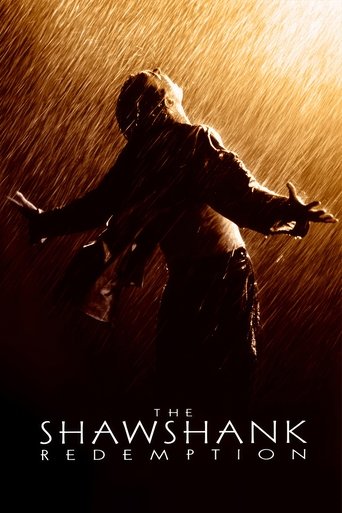


The Shawshank Redemption
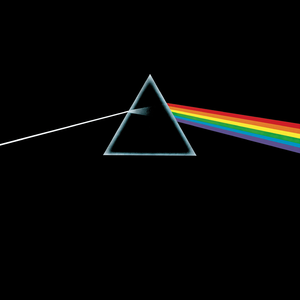
The Dark Side of the Moon
Nineteen Eighty-Four
Prague
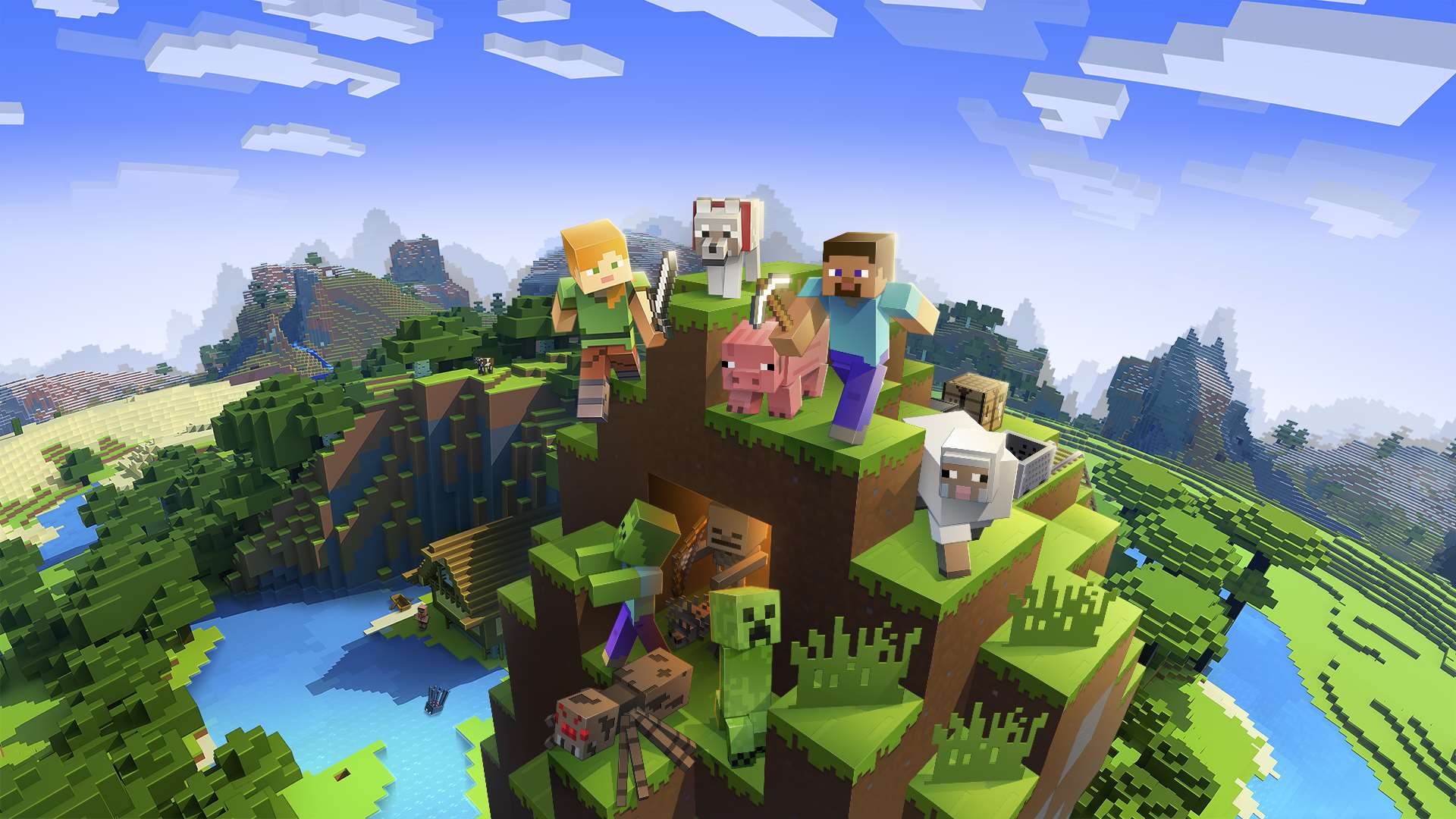
Minecraft
o1o1

No pick
No pick
No pick
No pick
Inception
No pick
No pick
No pick
No pick
Price and specs
Not enough votes to call it. On the specs, o1 has the edge: bigger model tier, major provider backing. Granite 4.2 8B costs 400x less per token.
| Spec | Granite 4.2 8B | o1 |
|---|---|---|
| Input price | $0.1/M tokens | $15/M tokens |
| Output price | $0.15/M tokens | $60/M tokens |
| Context window | 131K tokens | 128K tokens |
| Parameters | 8B | Not disclosed |
| Weights | Open | Closed |
| Free API (OpenRouter) | No | No |
| Released | Aug 2026 | Dec 2024 |
| At 10M a month | $1.00 | $150 |
Input tokens at list price. No caching, no batch discount.
Where to run it
Granite 4.2 8B2 hosts
Per million tokens. Prices and uptime via OpenRouter, checked 13 Oct 2026.
Common questions
What is the difference between Granite 4.2 8B and o1?
Granite 4.2 8B is developed by IBM Granite while o1 is developed by OpenAI. Granite 4.2 8B has a 131K token context window vs o1's 128K. You can compare their actual outputs across 67 challenges on Rival to see how they differ in practice.
Which is better, Granite 4.2 8B or o1?
It depends on your use case. Granite 4.2 8B and o1 each have strengths in different areas. Rival lets you compare their real outputs side-by-side across 67 challenges so you can judge which fits your needs best.
How much does Granite 4.2 8B cost compared to o1?
Granite 4.2 8B costs $0.1/M input tokens and o1 costs $15/M input tokens. Granite 4.2 8B is $14.90/M cheaper per input. Check their side-by-side outputs on Rival to see if the price difference is justified by quality.
How can I compare Granite 4.2 8B and o1 on Rival?
This page shows a side-by-side comparison of Granite 4.2 8B and o1 across shared challenges. You can vote on which model produced the better output in a blind duel. Browsing and voting are free. No account is needed to look; signing in only saves your votes and likes.
More comparisons
Against the newest arrivals
- Granite 4.2 8B vs Gemini 4 ArgonLanded Oct 2026
- o1 vs Muse WonderLanded Oct 2026
- Granite 4.2 8B vs GPT-4 TurboLanded Oct 2026
- o1 vs Step 5 PreviewLanded Oct 2026
- Granite 4.2 8B vs Claude Haiku 5.5Landed Oct 2026
- o1 vs Ling 3.1 FlashLanded Oct 2026
- Granite 4.2 8B vs Mistral Large 4Landed Oct 2026
- o1 vs GPT-6.1 SolLanded Sep 2026


