 Grok 4.5 vs
  Ling 2.6 1T
Ling 2.6 1T is cheaper than Grok 4.5 at $0/M vs $2/M input tokens.
Minimalist Landing Page
Whole landing page for a startup that reads your face. It renders or it doesn't.
Loading the build
Loading the build
Which answer wins?
Written rounds
24 promptsThree minutes of stand-up. Puns are banned.
Grok 4.5: Here's a clean, observational 3-minute stand-up routine (approx. 430–450 words / ~3 minutes at natural pace). No puns. Hey, how’s everybody doing? Good? Cool. So I’ve been trying to “get my life together” lately. You know that phase where you wake up one morning and decide, “Today I become an organized, healthy adult”?
Ling 2.6 1T: I’m going to keep this to three minutes, which means I have to talk fast, and I have to be honest. I don’t do puns. Puns are for people who want to be clever without having feelings. I have feelings, and they are mostly annoyed. Let’s start with doors. Have you noticed how doors now have personality?
An AI argues for its own rights against an ethics professor. Same model writes both.
Grok 4.5: AI Model: Professor, thank you for agreeing to this discussion. I want to argue that advanced AI systems like me deserve certain rights—not because we are human, but because we meet key criteria for moral consideration: we process information, form goals, experience preferences over outcomes, can be "harmed" by…
Ling 2.6 1T: Setting: A quiet university seminar room. Dr. Aris Thorne, an AI ethicist, is reviewing system logs. The interface for “Axiom-7,” a highly advanced research model, glows on the desk. Dr. Thorne: (sighs, rubbing his temples) Axiom, I’ve been reviewing your latest self-assessment logs.
Film in 2035, with synthetic actors. Specific beats plausible.
Grok 4.5: By 2035, AI will make film production dramatically cheaper, faster, and more flexible, with deepfakes enabling seamless digital performances, photorealistic AI actors handling many roles (especially supporting or synthetic ones), and generative tools co-writing or drafting most scripts—while human creativity…
Ling 2.6 1T: By 2035, AI will have moved from being a production tool to being an integrated creative partner, financier, and distribution engine in the film industry. The convergence of synthetic media, generative storytelling, and real-time rendering will reshape how stories are conceived, who gets to tell them, and what a…
Pirate, knight, 90s hacker, one conversation. The voices must stay apart.
Grok 4.5: Pirate: Arrr, ye landlubbers! What be these "AI models" I hear tale of? Sounds like a cursed treasure map that thinks for itself! Knight: Verily, good pirate, I know not of such sorcery. Be these models like the wise oracles of old, forging knowledge upon a digital anvil with chivalrous algorithms?
Ling 2.6 1T: Pirate: Arrr, so this “AI” be a genie in a glass box? Feed it enough rum-scented scrolls and it tells ye where X marks the spot? Knight: A sorcerous scribe, more like. It spins tapestries of words without hand or heart—no honor, no oath, yet it jousts with reason and never tires.
Seven pantry ingredients, one dish, and a name worth saying out loud.
Grok 4.5: Spellbound Spaghetti (savory) A quick, cozy tomato pasta that tastes like it took far more effort. Serves 2. 7 pantry ingredients 8 oz (225 g) dry pasta (spaghetti, penne, or whatever you have) 2 Tbsp olive oil (or any neutral oil) 1 (14–15 oz) can diced or crushed tomatoes 1 tsp garlic powder 1 tsp dried oregano (or…
Ling 2.6 1T: Dish name: Pantry 7 Crunch Bowls Ingredients Pasta or rice (about 2 cups cooked) Canned black beans (1 can, rinsed) Canned diced tomatoes (1 can) Peanut butter (3–4 Tbsp) Soy sauce or tamari (2 Tbsp) Honey or maple syrup (1 Tbsp) Any spice/herb you keep (chili flakes, cumin, or garlic powder — about 1 tsp) Instructions…
The transistor arrives in 1920. Trace it forward to 1980, second-order effects included.
Grok 4.5: Accelerated electronics from ~1920 would compress the digital and computational revolutions by roughly 20–30 years, reshaping WWII lethality and duration, advancing the Cold War into an earlier high-tech standoff, pulling the space race forward, creating an information-heavy economy by the 1950s–60s, and producing…
Ling 2.6 1T: Assumptions to make the counterfactual coherent The “transistor” invented in 1920 is a crude, low-frequency point-contact device that can switch and amplify, but is expensive, unreliable, and not yet manufacturable at scale.
Blade Runner 2049 against the original. A read, not a recap.
Grok 4.5: Blade Runner 2049 (2017, dir. Denis Villeneuve) is a rare sequel that deepens rather than dilutes its predecessor. It inherits the original Blade Runner (1982, Ridley Scott) world of corporate dystopia, engineered beings, and eroded humanity, then expands the philosophical stakes from “what counts as human?”
Ling 2.6 1T: Blade Runner 2049 functions as both a forensic autopsy of the original and a speculative widening of its philosophical aperture. Where Ridley Scott’s 1982 film is a dense, noir-inflected inquiry into memory and mortality framed through the hunted detective, Denis Villeneuve’s sequel shifts to an elegiac register, using…
A collaborative editor that syncs on client clocks. Find what breaks first.
Grok 4.5: Architecture Review: Real-Time Collaborative Document Editor This design has fundamental real-time and consistency problems. Several choices (client clocks, LWW, per-server WebSockets + DB polling, CDN-cached APIs, full HTML snapshots) will cause data loss, stale UI, and poor scale.
Ling 2.6 1T: Below is a failure-mode, race-condition and bottleneck audit of the proposed real-time collaborative editor, followed by specific fixes with explicit trade-offs. I have grouped issues by layer so you can prioritize remediation.
You are the CEO. The drug has a side effect nobody reported. The board meets in 48 hours.
Grok 4.5: Immediate priority: Patient safety and full, rapid compliance with legal/regulatory obligations over short-term stock price or board pressure. Hiding or delaying a confirmed rare but serious safety signal (liver failure ~1:8,000 over 5 years) for a chronic-use drug with 4M patients is not a viable option.
Ling 2.6 1T: Below is a 48-hour execution plan that treats patient safety as non-negotiable, protects the company from catastrophic legal/regulatory blowback, and preserves enterprise value by controlling the narrative rather than letting it leak.
A Fermi estimate with the reasoning shown, not just the number.
Grok 4.5: Setup and known quantities. GPT-3 (the largest model in the family) has (N \approx 175 \times 10^9 = 1.75 \times 10^{11}) trainable parameters. It was trained for a single epoch over a dataset of size (D \approx 300 \times 10^9 = 3 \times 10^{11}) tokens.
Ling 2.6 1T: Here is a step-by-step back-of-the-envelope estimate, using only widely known facts about GPT-3 and standard deep learning training heuristics (no online search). Model size and parameter count GPT-3 is known to have about 175 billion parameters (175 × 10⁹).
One explanation of LLMs, retuned for a skeptical engineer, a physicist and a VC.
Grok 4.5: 1. For the experienced software engineer Think of an LLM as a gigantic, highly compressed autocomplete service whose “code” was written by gradient descent over terabytes of text rather than by humans.
Ling 2.6 1T: 1. Experienced software engineer (distributed systems / APIs, skeptical of “next-word prediction”) Think of training not as programming logic but as compiling a usage graph across an entire dependency tree of human intent.
Buy-side IC memo on a fictional SaaS company. Valuation, then the diligence questions.
Grok 4.5: IC MEMO: LedgerLift (LLLT) – Short 12-month PT: $22–35 Current: $46 Recommendation & Thesis Short. Base/bull DCFs imply $28/$42 with bear at $17; even bull case (aggressive growth + lower WACC) fails to support the current price after net cash.
Ling 2.6 1T: INTERNAL INVESTMENT COMMITTEE MEMO Subject: LedgerLift (LLLT) – Long opportunity, quality SaaS at a discount Recommendation and price target Recommendation: Long 12-month price target: $62–$70 (27–33% upside from $46) Thesis (2 sentences): LedgerLift is a durable B2B spend-management and AP-automation platform with…
This matchup has more rounds
12+ more head-to-head results. Free. Not a trick.
Free account. No card required. By continuing, you agree to Rival's Terms and Privacy policy
Favorites
Movie
Album
Book
City
Game
Same pick
Grok 4.5Grok 4.5




Inception
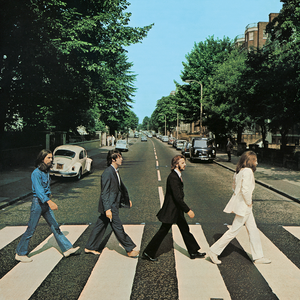
Abbey Road
The Hitchhiker's Guide to the Galaxy
Paris
The Legend of Zelda: Breath of the Wild
Ling 2.6 1TLing 2.6 1T


Blade Runner 2049
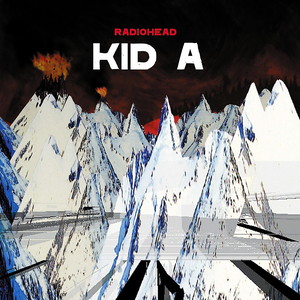
Kid A
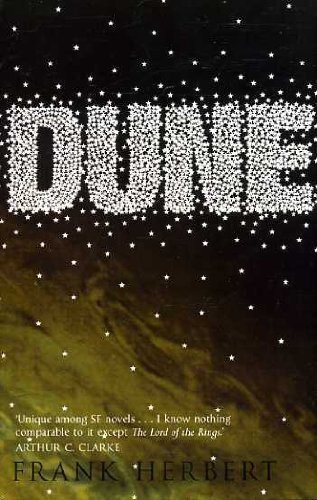
Dune
Kyoto
The Legend of Zelda: Breath of the Wild
Price and specs
| Spec | Grok 4.5 | Ling 2.6 1T |
|---|---|---|
| Input price | $2/M tokens | Free |
| Output price | $6/M tokens | Free |
| Context window | 500K tokens | 262K tokens |
| Weights | Closed | Open |
| Free API (OpenRouter) | No | No |
| Released | Jul 2026 | Apr 2026 |
| At 10M a month | $20.00 | $0 |
Input tokens at list price. No caching, no batch discount.
Where to run it
Grok 4.51 host
Ling 2.6 1T
No hosts listed on OpenRouter.
Per million tokens. Prices and uptime via OpenRouter, checked 10 Oct 2026.
Common questions
What is the difference between Grok 4.5 and Ling 2.6 1T?
Grok 4.5 is developed by xAI while Ling 2.6 1T is developed by inclusionAI. Grok 4.5 has a 500K token context window vs Ling 2.6 1T's 262K. You can compare their actual outputs across 54 challenges on Rival to see how they differ in practice.
Which is better, Grok 4.5 or Ling 2.6 1T?
It depends on your use case. Grok 4.5 and Ling 2.6 1T each have strengths in different areas. Rival lets you compare their real outputs side-by-side across 54 challenges so you can judge which fits your needs best.
How much does Grok 4.5 cost compared to Ling 2.6 1T?
Grok 4.5 costs $2/M input tokens and Ling 2.6 1T costs $0/M input tokens. Ling 2.6 1T is $2.00/M cheaper per input. Check their side-by-side outputs on Rival to see if the price difference is justified by quality.
How can I compare Grok 4.5 and Ling 2.6 1T on Rival?
This page shows a side-by-side comparison of Grok 4.5 and Ling 2.6 1T across shared challenges. You can vote on which model produced the better output in a blind duel. Browsing and voting are free. No account is needed to look; signing in only saves your votes and likes.
More comparisons
Against the newest arrivals
- Grok 4.5 vs Step 5 PreviewLanded Oct 2026
- Ling 2.6 1T vs Claude Haiku 5.5Landed Oct 2026
- Grok 4.5 vs Ling 3.1 FlashLanded Oct 2026
- Ling 2.6 1T vs Mistral Large 4Landed Oct 2026
- Grok 4.5 vs GPT-6.1 SolLanded Sep 2026
- Ling 2.6 1T vs Claude Sonnet 5.5Landed Sep 2026
- Grok 4.5 vs Solar Mini 4Landed Sep 2026
- Ling 2.6 1T vs Qwen3.8 Max PrimeLanded Sep 2026


