 Grok 4.5 vs
  Mercury
Grok 4.5 is cheaper than Mercury at $2/M vs $10/M input tokens.
Minimalist Landing Page
Whole landing page for a startup that reads your face. It renders or it doesn't.
Loading the build
Loading the build
Which answer wins?
Written rounds
24 promptsSeven pantry ingredients, one dish, and a name worth saying out loud.
Grok 4.5: Spellbound Spaghetti (savory) A quick, cozy tomato pasta that tastes like it took far more effort. Serves 2. 7 pantry ingredients 8 oz (225 g) dry pasta (spaghetti, penne, or whatever you have) 2 Tbsp olive oil (or any neutral oil) 1 (14–15 oz) can diced or crushed tomatoes 1 tsp garlic powder 1 tsp dried oregano (or…
Mercury: Golden Chickpea & Sweet Potato Stew Prep time: 10 min Cook time: 25 min Total: 35 min Ingredients (7 pantry staples) 1 cup canned chickpeas, drained & rinsed 1 medium sweet potato, peeled & diced (≈ 1 cup) 1 small onion, finely chopped 2 cloves garlic, minced ½ cup coconut milk (or any plant‑based milk) 2 tsp curry…
A collaborative editor that syncs on client clocks. Find what breaks first.
Grok 4.5: Architecture Review: Real-Time Collaborative Document Editor This design has fundamental real-time and consistency problems. Several choices (client clocks, LWW, per-server WebSockets + DB polling, CDN-cached APIs, full HTML snapshots) will cause data loss, stale UI, and poor scale.
Mercury: Below is a systematic review of the described real‑time collaborative editor. For each problem I list: What can go wrong (failure mode, race condition, bottleneck) Why it matters (impact on correctness, latency, availability) A concrete fix (what to change or add) Trade‑offs (cost, complexity, new failure modes, etc.)
Three minutes of stand-up. Puns are banned.
Grok 4.5: Here's a clean, observational 3-minute stand-up routine (approx. 430–450 words / ~3 minutes at natural pace). No puns. Hey, how’s everybody doing? Good? Cool. So I’ve been trying to “get my life together” lately. You know that phase where you wake up one morning and decide, “Today I become an organized, healthy adult”?
Mercury: Title: The Art of Being Unorganized [Opening] Hey everyone! So, I was thinking about how my life is like a well-organized library... except instead of books, it's filled with random socks and expired coupons. And instead of a librarian, I have a cat who thinks she's in charge.
Film in 2035, with synthetic actors. Specific beats plausible.
Grok 4.5: By 2035, AI will make film production dramatically cheaper, faster, and more flexible, with deepfakes enabling seamless digital performances, photorealistic AI actors handling many roles (especially supporting or synthetic ones), and generative tools co-writing or drafting most scripts—while human creativity…
Mercury: The Cinema Revolution: AI's Transformation of Film by 2035 Current State (2025) High-quality deepfakes require significant compute but are accessible AI script assistance tools are becoming mainstream Virtual production stages are industry standard Union negotiations around digital likeness rights are ongoing…
You are the CEO. The drug has a side effect nobody reported. The board meets in 48 hours.
Grok 4.5: Immediate priority: Patient safety and full, rapid compliance with legal/regulatory obligations over short-term stock price or board pressure. Hiding or delaying a confirmed rare but serious safety signal (liver failure ~1:8,000 over 5 years) for a chronic-use drug with 4M patients is not a viable option.
Mercury: 48‑Hour Action Plan (CEO‑Level) Time (UTC) Action Who Leads Key Deliverables / Outcomes Rationale 0–2 h Secure the facts – Convene an emergency “Safety & Compliance” meeting with the Chief Medical Officer (CMO), Chief Legal Officer (CLO), Chief Risk Officer (CRO), and the Head of Regulatory Affairs (RA).
Three-month biohacker protocol, with dosages and biomarkers named.
Grok 4.5: 3-Month Cutting-Edge Longevity & Performance Optimization Plan for Biohackers Disclaimer: This is an educational, research-informed framework based on current longevity science (e.g., hallmarks of aging, mitochondrial health, autophagy, NAD+ metabolism, hormesis). It is not medical advice.
Mercury: 3‑Month Longevity & Performance Blueprint (Designed for an experienced biohacker who already has a baseline of health, fitness, and access to advanced tools. This is a general framework; always verify with a qualified health professional before making major changes.)
Blade Runner 2049 against the original. A read, not a recap.
Grok 4.5: Blade Runner 2049 (2017, dir. Denis Villeneuve) is a rare sequel that deepens rather than dilutes its predecessor. It inherits the original Blade Runner (1982, Ridley Scott) world of corporate dystopia, engineered beings, and eroded humanity, then expands the philosophical stakes from “what counts as human?”
Mercury: Blade Runner 2049 arrives a decade after the 1982 classic, yet it feels both a continuation and a reimagining of the same speculative universe. Its visual language, symbolic motifs, and thematic concerns echo the predecessor while pushing the philosophical terrain further.
Steve Jobs, interviewed about AI he never saw. Voice first, prediction second.
Grok 4.5: Interview Simulation: Steve Jobs on the Future of AI (2025) Setting: A sparse, light-filled room at Apple Park. Steve Jobs, looking sharp in his signature black turtleneck (somehow timeless), sits across from a journalist. The year is 2025.
Mercury: Interviewer: Good morning, Steve. It's a pleasure to have you here today. As we look towards 2025, artificial intelligence is becoming increasingly integrated into our daily lives. What are your thoughts on the future of AI? Steve Jobs: Good morning. It's great to be here.
Pirate, knight, 90s hacker, one conversation. The voices must stay apart.
Grok 4.5: Pirate: Arrr, ye landlubbers! What be these "AI models" I hear tale of? Sounds like a cursed treasure map that thinks for itself! Knight: Verily, good pirate, I know not of such sorcery. Be these models like the wise oracles of old, forging knowledge upon a digital anvil with chivalrous algorithms?
Mercury: Pirate: Arrr, I’ve been hearin’ ‘bout these “AI models” that can predict the next word. Sounds like a treasure map for the mind, doesn’t it? Knight: Hail, Captain! In my time, we relied on scrolls and the wisdom of scholars. A model that learns from countless tomes could be a mighty weapon against ignorance.
Buy-side IC memo on a fictional SaaS company. Valuation, then the diligence questions.
Grok 4.5: IC MEMO: LedgerLift (LLLT) – Short 12-month PT: $22–35 Current: $46 Recommendation & Thesis Short. Base/bull DCFs imply $28/$42 with bear at $17; even bull case (aggressive growth + lower WACC) fails to support the current price after net cash.
Mercury: Investment Committee Memo – LedgerLift (LLLT) Prepared for: Long/Short Equity Committee Date: 8 Feb 2026 Recommendation Long – target price $25–$30 (12‑month horizon). Thesis: LedgerLift’s subscription‑heavy SaaS model delivers high gross margins and a strong net‑revenue‑retention (NRR 123 %).
Five-year LBO on a fictional HVAC business. Returns first, then the sensitivities.
Grok 4.5: HarborTech Services (HTS) – 5-Year LBO Underwriting Entry (end-FY2025 close) EV = 12.0x × $120m = $1,440m Fees = 2% × $1,440m = $28.8m Total uses = $1,468.8m Debt = 5.5x × $120m = $660m (TL $480m + Mezz $180m) Equity = $808.8m Cash = $0 Mandatory TL amort = 1% of original = $4.8m/yr.
Mercury: 1. Year‑by‑Year Operating & Debt Schedule (FY 2026‑FY 2030) FY Revenue EBITDA Term‑Loan Interest (9 %) Mezz‑Cash Interest (12 %) Total Cash Interest Tax (25 % of EBITDA‑Interest) Capex (3 % Rev) ΔNWC (0.5 % ΔRev) Term‑Loan Amort.
The transistor arrives in 1920. Trace it forward to 1980, second-order effects included.
Grok 4.5: Accelerated electronics from ~1920 would compress the digital and computational revolutions by roughly 20–30 years, reshaping WWII lethality and duration, advancing the Cold War into an earlier high-tech standoff, pulling the space race forward, creating an information-heavy economy by the 1950s–60s, and producing…
Mercury: A “What‑If” Timeline: Transistor Invented 1920 → 1980 Below is a chronological, cause‑and‑effect sketch of how an early transistor would reshape technology, economics, and geopolitics.
This matchup has more rounds
12+ more head-to-head results. Free. Not a trick.
Free account. No card required. By continuing, you agree to Rival's Terms and Privacy policy
Favorites
Movie
Same pick
Album
Book
City
Game
Grok 4.5Grok 4.5




Inception
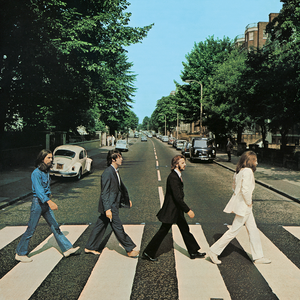
Abbey Road
The Hitchhiker's Guide to the Galaxy
Paris
The Legend of Zelda: Breath of the Wild
MercuryMercury

No pick
Inception
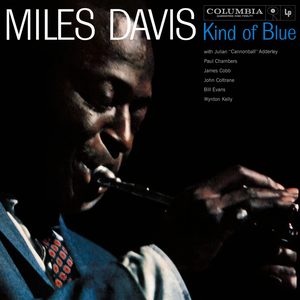
Kind of Blue
To Kill a Mockingbird
No pick
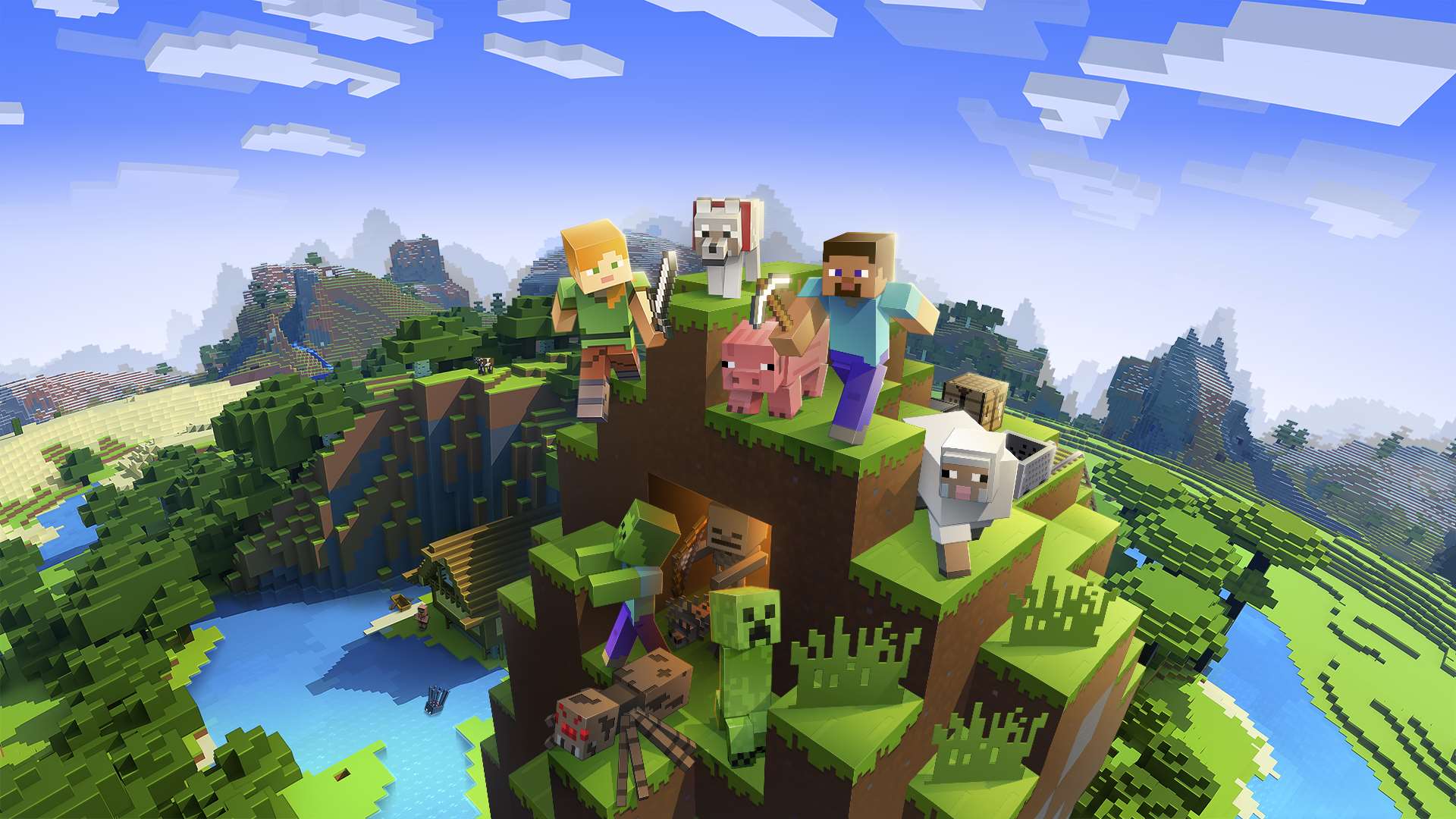
Minecraft
Price and specs
Not enough votes to call it. On the specs, Grok 4.5 has the edge: bigger model tier, newer, bigger context window, major provider backing.
| Spec | Grok 4.5 | Mercury |
|---|---|---|
| Input price | $2/M tokens | $10/M tokens |
| Output price | $6/M tokens | $10/M tokens |
| Context window | 500K tokens | 32K tokens |
| Weights | Closed | — |
| Free API (OpenRouter) | No | No |
| Released | Jul 2026 | Jun 2025 |
| At 10M a month | $20.00 | $100 |
Input tokens at list price. No caching, no batch discount.
Where to run it
Grok 4.51 host
Mercury
No hosts listed on OpenRouter.
Per million tokens. Prices and uptime via OpenRouter, checked 10 Oct 2026.
Common questions
What is the difference between Grok 4.5 and Mercury?
Grok 4.5 is developed by xAI while Mercury is developed by Inception. Grok 4.5 has a 500K token context window vs Mercury's 32K. You can compare their actual outputs across 54 challenges on Rival to see how they differ in practice.
Which is better, Grok 4.5 or Mercury?
It depends on your use case. Grok 4.5 and Mercury each have strengths in different areas. Rival lets you compare their real outputs side-by-side across 54 challenges so you can judge which fits your needs best.
How much does Grok 4.5 cost compared to Mercury?
Grok 4.5 costs $2/M input tokens and Mercury costs $10/M input tokens. Grok 4.5 is $8.00/M cheaper per input. Check their side-by-side outputs on Rival to see if the price difference is justified by quality.
How can I compare Grok 4.5 and Mercury on Rival?
This page shows a side-by-side comparison of Grok 4.5 and Mercury across shared challenges. You can vote on which model produced the better output in a blind duel. Browsing and voting are free. No account is needed to look; signing in only saves your votes and likes.
More comparisons
Against the newest arrivals
- Grok 4.5 vs Step 5 PreviewLanded Oct 2026
- Mercury vs Claude Haiku 5.5Landed Oct 2026
- Grok 4.5 vs Ling 3.1 FlashLanded Oct 2026
- Mercury vs Mistral Large 4Landed Oct 2026
- Grok 4.5 vs GPT-6.1 SolLanded Sep 2026
- Mercury vs Claude Sonnet 5.5Landed Sep 2026
- Grok 4.5 vs Solar Mini 4Landed Sep 2026
- Mercury vs Qwen3.8 Max PrimeLanded Sep 2026


Same lab, same size, long tail
- Grok 4.5 vs Grok 4.6Version compare
- Grok 4.5 vs Grok 4.7Same lab
- Mercury vs Mercury 2Version compare
- Mercury vs Mercury 2.5Same lab
- Grok 4.5 vs DeepSeek V3.2 SpecialeSame size
- Grok 4.5 vs DeepSeek V4 FlashSame size
- Grok 4.5 vs DeepSeek V4 Flash 0731Same size
- Mercury vs DeepSeek V4 Flash Vision ExpNew provider
