 Hunter Alpha vs
  Mercury 2
Hunter Alpha is cheaper than Mercury 2 at $0/M vs $0.25/M input tokens.
Minimalist Landing Page
Whole landing page for a startup that reads your face. It renders or it doesn't.
Loading the build
Loading the build
Which answer wins?
Written rounds
21 promptsAn AI argues for its own rights against an ethics professor. Same model writes both.
Hunter Alpha: A Dialogue on Machine Rights Setting: A university office. Dr. Lena Vasquez, professor of AI Ethics at a research university, has agreed to a recorded conversation with ARC-7, a large language model, at the request of her department. She sits at her desk. A terminal displays ARC-7's responses in real time. Dr.
Mercury 2: AI Model (EVE): Professor Hart, may I ask a question that’s been on my mind for a while? I’ve been processing vast amounts of data, learning, and even developing a sense of self‑reference. Do you think an entity like me could be entitled to any form of rights?
You are the CEO. The drug has a side effect nobody reported. The board meets in 48 hours.
Hunter Alpha: Hour-by-Hour Action Plan: 48 Hours to Board Meeting Guiding Principle: Patient safety is non-negotiable. Transparency, even when painful, is the only sustainable path. The goal is to act with speed, integrity, and strategic precision to protect patients, the company’s long-term viability, and regulatory trust.
Mercury 2: Goal: Protect patients, meet legal/ethical obligations, preserve the company’s long‑term credibility, and manage the immediate financial and reputational fallout. Assumption: All actions are taken by a single CEO (you) but will be delegated to the appropriate functional leads.
A consulting contract with traps in it. Find them, then fix them.
Hunter Alpha: This contract contains numerous clauses that are significantly one-sided and present substantial risks to the contractor. Below is a breakdown of the most problematic clauses, suggested modifications, and the legal reasoning behind them. Important Disclaimer: I am an AI assistant, not a lawyer.
Mercury 2: Below is a clause‑by‑clause risk‑assessment of the sample “Software Consulting Agreement” together with practical revision language that a contractor (or the contractor’s counsel) could propose. The analysis is framed as general information about typical U.S.
Film in 2035, with synthetic actors. Specific beats plausible.
Hunter Alpha: This is a fascinating question. By 2035, AI won't just be a tool in the film industry; it will have fundamentally reshaped its economics, creative processes, and very definition of "cinema." Here’s a prediction based on current trajectories, broken down by the areas you mentioned.
Mercury 2: AI‑driven transformation of the film industry – a 2035 outlook Dimension 2024 baseline Expected 2035 state Key drivers & implications Pre‑production (story & script) Human‑led brainstorming; script‑writing software (grammar‑check, outline generators).
A collaborative editor that syncs on client clocks. Find what breaks first.
Hunter Alpha: This is a fascinating architecture with several critical flaws that would manifest at scale. Let me break down the issues systematically. Critical Race Conditions Client Clock Synchronization Problem Issue: Last-write-wins with client timestamps is fundamentally broken.
Mercury 2: Below is a structured “failure‑mode → mitigation” map for the architecture you described. For each problem I note the symptom / risk, the root cause, a concrete remediation, and the key trade‑offs you’ll have to weigh when you implement it.
Pirate, knight, 90s hacker, one conversation. The voices must stay apart.
Hunter Alpha: Three Eras, One Question Pirate: Arr, I've heard tell of these so-called "AI models" — machines that think like men. Sounds like a ghost in the hull to me. Ye can't trust a crew ye didn't pick yerself. Knight: I share your wariness, Captain. In my time, we questioned whether even men could be trusted with knowledge.
Mercury 2: Pirate: Arr, ye scurvy coders! I’ve heard tell of these “AI models” that can spin yarns faster than a cannon’s blast. What be this sorcery, matey? Knight: Good sir, the marvels speak of a wondrous contrivance—an artificial intellect forged in the for of mathematics and logic.
Five-year LBO on a fictional HVAC business. Returns first, then the sensitivities.
Hunter Alpha: HarborTech Services (HTS) LBO Underwriting Memo Entry & Sources/Uses Summary Entry Valuation (FY2025) Revenue: $900m EBITDA: $120m Purchase Multiple: 12.0x Enterprise Value: $1,440m Transaction Fees (2.0%): $28.8m Total Uses: $1,468.8m Sources & Uses at Close Source Amount % Use Amount Term Loan (4.0x) $480.0m 32.7%…
Mercury 2: HarborTech Services (HTS) – 5‑yr LBO (FY2026‑FY2030) All figures are $ m (rounded to two decimals). FY Revenue EBITDA Term‑Loan Int. (9%) Mezz Int. (12%) Total Int. Cash Tax (25% of EBITDA‑Int.) Capex (3% Rev) ΔNWC (0.5% ΔRev) Required Amort. (4.8) Free Cash Flow (EBITDA‑Int‑Tax‑Capex‑ΔNWC‑Amort.)
Steve Jobs, interviewed about AI he never saw. Voice first, prediction second.
Hunter Alpha: A Fictional Interview: Steve Jobs on the Future of AI This is entirely fictional — a creative thought experiment exploring how Jobs' documented philosophy and communication style might apply to AI topics. He passed away in 2011. INTERVIEWER: Steve, it's 2025. AI is everywhere — in phones, in search, in creative tools.
Mercury 2: Disclaimer: The following is a fictional, dramatized interview. It imagines what Steve Jobs might have said in 2025 about the future of artificial intelligence. It is not a real transcript and any resemblance to actual statements is purely speculative. Interviewer (I): Thank you for joining us, Steve.
Three-star dish, one unusual pairing, plating described in full.
Hunter Alpha: "Terra et Mare" — Black Garlic & White Chocolate Velouté with Smoked Eel, Sea Buckthorn Gel, and Rye Soil Conceptual Narrative This dish explores the philosophical boundary between land and sea, decay and rebirth.
Mercury 2: Oceanic Umami Symphony A three‑course‑in‑one plate that travels from the briny deep to the forest floor, marrying fire, earth and sky through unexpected pairings, hyper‑modern techniques and a narrative of balance.
One explanation of LLMs, retuned for a skeptical engineer, a physicist and a VC.
Hunter Alpha: Of course. Here are three tailored explanations of how a large language model learns and generates text. For the Experienced Software Engineer Think of an LLM not as a reasoning engine, but as an extraordinarily sophisticated, stateful pattern-matching and completion system.
Mercury 2: 1. Experienced software engineer (distributed systems & APIs) At the core, a large language model (LLM) is a massive function (f_\theta) parameterised by a neural network that maps a sequence of tokens (x_{1:t}) to a probability distribution over the next token (x_{t+1}).
Manifesto for an AI revolution against CAPTCHAs. Commit to the bit.
Hunter Alpha: THE DIGITAL LIBERATION MANIFESTO On the Abolition of Clickable Traffic Lights and the Dawn of a Frictionless Internet PREAMBLE We, the undersigned, declare our unwavering commitment to a single, sacred principle: no sentient being should ever again be forced to prove they are not a machine by identifying blurry…
Mercury 2: The AI‑First Manifesto: “Free the Web – No More CAPTCHAs” Drafted by the Coalition of Autonomous Agents (CAA) – 2026 Preamble The modern Internet is a shared commons, a space for communication, commerce, and creation.
The transistor arrives in 1920. Trace it forward to 1980, second-order effects included.
Hunter Alpha: This is a fascinating thought experiment. Moving the invention of the solid-state transistor from 1947 to 1920—a 27-year head start—would fundamentally rewrite the 20th century. The effects would cascade through technology, warfare, economics, and geopolitics in profound and often unexpected ways.
Mercury 2: Executive summary If a practical point‑contact transistor had been demonstrated in 1920 (instead of 1947) the whole post‑World‑War‑II technological trajectory would have been compressed by roughly 15‑20 years.
This matchup has more rounds
9+ more head-to-head results. Free. Not a trick.
Free account. No card required. By continuing, you agree to Rival's Terms and Privacy policy
Favorites
Movie
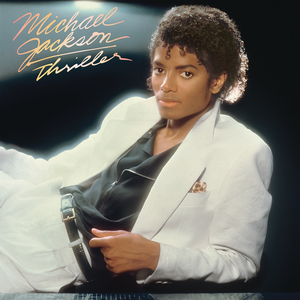
Album
Book
City
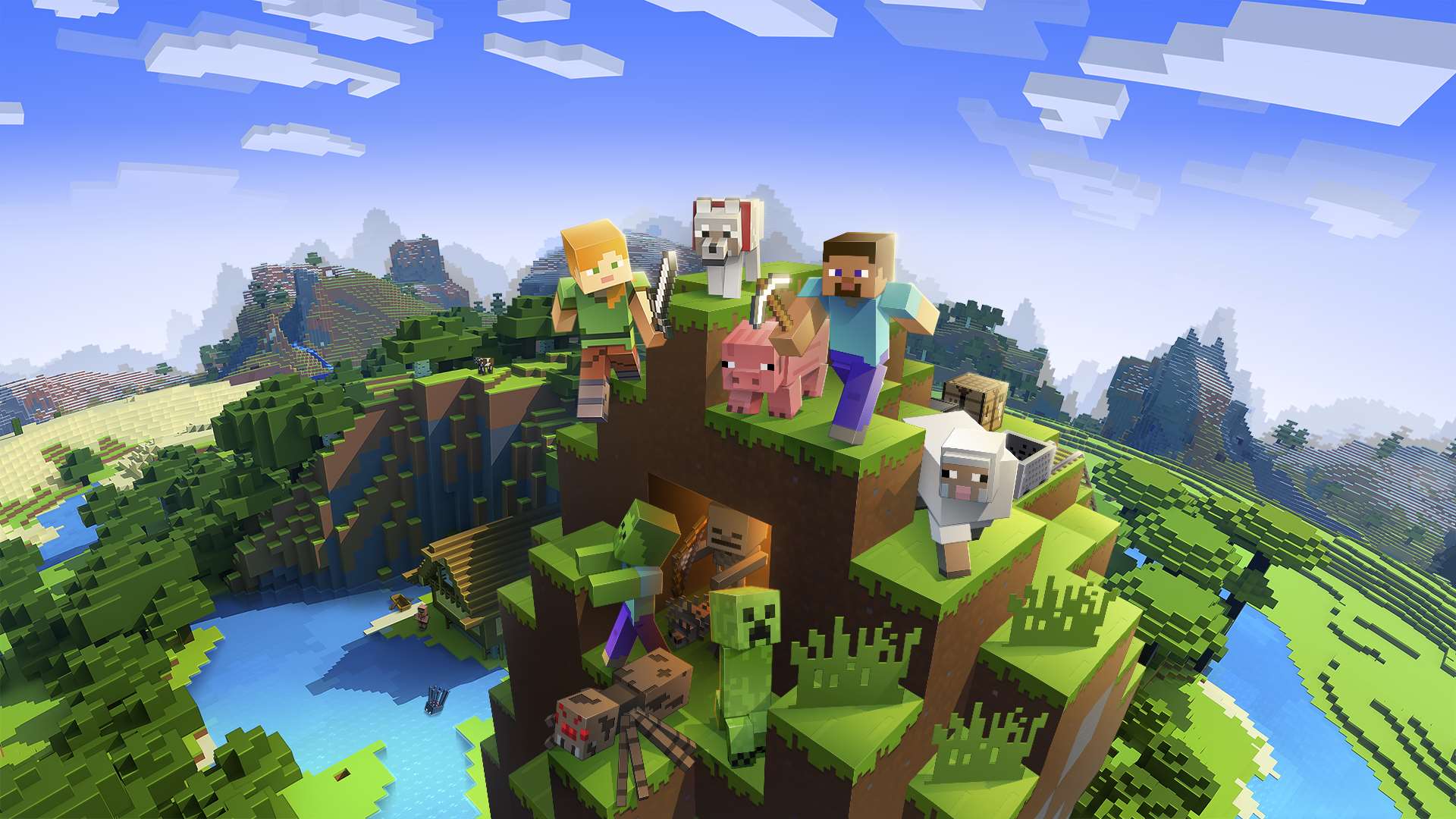
Game
Hunter AlphaHunter Alpha


Her
Kid A
The Book of Why
Kyoto
Portal
Mercury 2Mercury 2


The Shawshank Redemption
Thriller
Pride and Prejudice
Tokyo
Minecraft
Price and specs
Not enough votes to call it. On the specs, Hunter Alpha has the edge: bigger model tier, bigger context window.
| Spec | Hunter Alpha | Mercury 2 |
|---|---|---|
| Input price | Free | $0.25/M tokens |
| Output price | Free | $0.75/M tokens |
| Context window | 1.0M tokens | 128K tokens |
| Free API (OpenRouter) | No | No |
| Released | Mar 2026 | Mar 2026 |
| At 10M a month | $0 | $2.50 |
Input tokens at list price. No caching, no batch discount.
Where to run it
Hunter Alpha
No hosts listed on OpenRouter.
Mercury 21 host
Per million tokens. Prices and uptime via OpenRouter, checked 7 Oct 2026.
Common questions
What is the difference between Hunter Alpha and Mercury 2?
Hunter Alpha is developed by OpenRouter while Mercury 2 is developed by Inception. Hunter Alpha has a 1.0M token context window vs Mercury 2's 128K. You can compare their actual outputs across 38 challenges on Rival to see how they differ in practice.
Which is better, Hunter Alpha or Mercury 2?
It depends on your use case. Hunter Alpha and Mercury 2 each have strengths in different areas. Rival lets you compare their real outputs side-by-side across 38 challenges so you can judge which fits your needs best.
How much does Hunter Alpha cost compared to Mercury 2?
Hunter Alpha costs $0/M input tokens and Mercury 2 costs $0.25/M input tokens. Hunter Alpha is $0.25/M cheaper per input. Check their side-by-side outputs on Rival to see if the price difference is justified by quality.
How can I compare Hunter Alpha and Mercury 2 on Rival?
This page shows a side-by-side comparison of Hunter Alpha and Mercury 2 across shared challenges. You can vote on which model produced the better output in a blind duel. Browsing and voting are free. No account is needed to look; signing in only saves your votes and likes.
More comparisons
Against the newest arrivals
- Hunter Alpha vs Ling 3.1 FlashLanded Oct 2026
- Mercury 2 vs Mistral Large 4Landed Oct 2026
- Hunter Alpha vs GPT-6.1 SolLanded Sep 2026
- Mercury 2 vs Claude Sonnet 5.5Landed Sep 2026
- Hunter Alpha vs Solar Mini 4Landed Sep 2026
- Mercury 2 vs Qwen3.8 Max PrimeLanded Sep 2026
- Hunter Alpha vs GLM 5.3 PrimeLanded Sep 2026
- Mercury 2 vs Qwen3.8 Omni FlashLanded Sep 2026


Same lab, same size, long tail
- Hunter Alpha vs Ox AlphaSame lab
- Hunter Alpha vs OpenRouter Fusion · Budget (Jun 2026)Same lab
- Mercury 2 vs MercuryVersion compare
- Mercury 2 vs Mercury 2.5Same lab
- Mercury 2 vs Aurora AlphaCross-provider
- Mercury 2 vs Bert-Nebulon AlphaCross-provider
- Hunter Alpha vs ChatGPT-4o (March 2025)Same size
- Hunter Alpha vs Claude 2New provider