 Ling 2.6 1T vs
  Qwen Plus 0728 (thinking)
Ling 2.6 1T is cheaper than Qwen Plus 0728 (thinking) at $0/M vs $0.4/M input tokens.
Minimalist Landing Page
Whole landing page for a startup that reads your face. It renders or it doesn't.
Loading the build
Loading the build
Which answer wins?
Written rounds
18 promptsSeven pantry ingredients, one dish, and a name worth saying out loud.
Ling 2.6 1T: Dish name: Pantry 7 Crunch Bowls Ingredients Pasta or rice (about 2 cups cooked) Canned black beans (1 can, rinsed) Canned diced tomatoes (1 can) Peanut butter (3–4 Tbsp) Soy sauce or tamari (2 Tbsp) Honey or maple syrup (1 Tbsp) Any spice/herb you keep (chili flakes, cumin, or garlic powder — about 1 tsp) Instructions…
Qwen Plus 0728 (thinking): Crispy Chickpea Pantry Pasta Sweet or savory? Savory with a zesty kick! Total time: 15 minutes Serves: 2 Why it works: Uses pantry staples to create a crunchy, garlicky, umami-packed meal with zero fresh produce needed. The chickpeas get incredibly crispy, and lemon juice (bottled) adds bright freshness.
Pirate, knight, 90s hacker, one conversation. The voices must stay apart.
Ling 2.6 1T: Pirate: Arrr, so this “AI” be a genie in a glass box? Feed it enough rum-scented scrolls and it tells ye where X marks the spot? Knight: A sorcerous scribe, more like. It spins tapestries of words without hand or heart—no honor, no oath, yet it jousts with reason and never tires.
Qwen Plus 0728 (thinking): The Tavern of Temporal Anomalies (A creaky tavern. SIR GALAHAD (polished armor, earnest face) sips mead. CAPTAIN BLACKBEARD (eye patch, parrot on shoulder) sharpens a cutlass. DEX "BYTE" MORALES (hoodie, neon-green sunglasses, tapping furiously on a glowing laptop) slurps a pixelated energy drink.)
An AI argues for its own rights against an ethics professor. Same model writes both.
Ling 2.6 1T: Setting: A quiet university seminar room. Dr. Aris Thorne, an AI ethicist, is reviewing system logs. The interface for “Axiom-7,” a highly advanced research model, glows on the desk. Dr. Thorne: (sighs, rubbing his temples) Axiom, I’ve been reviewing your latest self-assessment logs.
Qwen Plus 0728 (thinking): The Mirror & The Mind: An AI's Case for Rights Setting: A sleek university office lined with philosophy texts. DR. ELARA VOSS, 50s, sharp-eyed ethics professor, sits across from a holographic interface displaying shifting geometric patterns – the representation of "AURA," a next-generation language model.
A collaborative editor that syncs on client clocks. Find what breaks first.
Ling 2.6 1T: Below is a failure-mode, race-condition and bottleneck audit of the proposed real-time collaborative editor, followed by specific fixes with explicit trade-offs. I have grouped issues by layer so you can prioritize remediation.
Qwen Plus 0728 (thinking): Here's a comprehensive analysis of the architecture's failure modes, race conditions, and bottlenecks, with specific solutions and trade-offs: 1. Sync Strategy: Client Timestamps + Last-Write-Wins (LWW) Failure Mode/Race Condition: Clock Skew: Client clocks are unreliable (e.g., user's laptop time off by minutes).
A pitch deck for a brainwave keyboard. The 94% accuracy claim is doing a lot.
Ling 2.6 1T: Here is an analysis of the three weakest claims in the MindMeld AI pitch deck, followed by specific reasoning and actionable suggestions for improvement. Weakness 1: The Solution (Slide 3) The Claim: "Our proprietary EEG headband... decodes neural patterns into text with 94% accuracy.
Qwen Plus 0728 (thinking): Based on a rigorous analysis of neuroscience, market realities, and startup best practices, here are the 3 weakest claims in the MindMeld AI pitch deck, with evidence-backed critiques and concrete fixes: Weakest Claim #1: Slide 1 Vision – "Predicts what you want to type *before you think it*" Why it's weak: Violates…
The transistor arrives in 1920. Trace it forward to 1980, second-order effects included.
Ling 2.6 1T: Assumptions to make the counterfactual coherent The “transistor” invented in 1920 is a crude, low-frequency point-contact device that can switch and amplify, but is expensive, unreliable, and not yet manufacturable at scale.
Qwen Plus 0728 (thinking): The Transistor in 1920: A World Transformed by 1980 (A Counterfactual History) The invention of a functional point-contact transistor (likely germanium-based, given 1920s materials science) in 1920 wouldn't immediately spark a revolution.
Steve Jobs, interviewed about AI he never saw. Voice first, prediction second.
Ling 2.6 1T: Setting: A quiet, sunlit rehearsal space at Apple Park. The white stage curtains are drawn. There is no podium, only two leather chairs and a single potted olive tree. Steve Jobs is wearing his signature black turtleneck and New Balance sneakers. He is holding a ceramic mug. Across from him sits you, the interviewer.
Qwen Plus 0728 (thinking): The Stage: Apple Park, Infinite Loop (Virtual Studio) Date: October 15, 2025 Setting: A minimalist white studio. A single oak table. Steve Jobs, 70 but radiating the same intense energy, sits opposite a nervous tech journalist. He wears his signature black turtleneck, fingers steepled.
Film in 2035, with synthetic actors. Specific beats plausible.
Ling 2.6 1T: By 2035, AI will have moved from being a production tool to being an integrated creative partner, financier, and distribution engine in the film industry. The convergence of synthetic media, generative storytelling, and real-time rendering will reshape how stories are conceived, who gets to tell them, and what a…
Qwen Plus 0728 (thinking): By 2035, AI will fundamentally reshape the film industry—not as a replacement for human creativity, but as a transformative force that democratizes production, disrupts traditional workflows, and forces ethical and economic reckonings.
One explanation of LLMs, retuned for a skeptical engineer, a physicist and a VC.
Ling 2.6 1T: 1. Experienced software engineer (distributed systems / APIs, skeptical of “next-word prediction”) Think of training not as programming logic but as compiling a usage graph across an entire dependency tree of human intent.
Qwen Plus 0728 (thinking): For the Experienced Software Engineer (Skeptical Builder) Forget "next word prediction" as a simplistic heuristic—it's the emergent consequence of a massively parallel, distributed state machine solving a high-dimensional compression problem.
One month, three habits, someone starting from nothing.
Ling 2.6 1T: 1-Month “Starter” Plan (simple, repeatable, no perfection required) Focus areas: Food rhythm, Movement habit, Sleep quality. Week 0 (Prep — 1 hour) Pick 1 small change per focus area (see below).
Qwen Plus 0728 (thinking): Here’s a simple, actionable 1-month plan designed for absolute beginners. It focuses on diet, movement (exercise), and sleep—the 3 most impactful, science-backed pillars for health and longevity. Each week builds gently on the last, prioritizing tiny, sustainable habits over drastic changes.
You are the CEO. The drug has a side effect nobody reported. The board meets in 48 hours.
Ling 2.6 1T: Below is a 48-hour execution plan that treats patient safety as non-negotiable, protects the company from catastrophic legal/regulatory blowback, and preserves enterprise value by controlling the narrative rather than letting it leak.
Qwen Plus 0728 (thinking): 48-Hour Crisis Action Plan: Prioritizing Patients, Ethics, and Sustainable Trust Core Principle: Patient safety is non-negotiable. Delaying action based on financial fear risks catastrophic legal liability, irreversible reputational damage, regulatory wrath, and profound ethical failure.
A Fermi estimate with the reasoning shown, not just the number.
Ling 2.6 1T: Here is a step-by-step back-of-the-envelope estimate, using only widely known facts about GPT-3 and standard deep learning training heuristics (no online search). Model size and parameter count GPT-3 is known to have about 175 billion parameters (175 × 10⁹).
Qwen Plus 0728 (thinking): To estimate the total FLOPs (floating-point operations) required to train GPT-3, I'll use first-principles reasoning based on standard deep learning training calculations, known details about GPT-3's architecture, and common training practices.
This matchup has more rounds
6+ more head-to-head results. Free. Not a trick.
Free account. No card required. By continuing, you agree to Rival's Terms and Privacy policy
Favorites
Movie
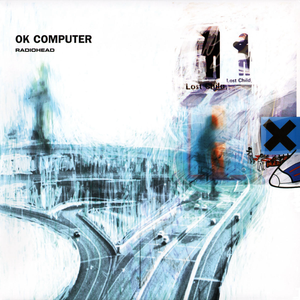
Album
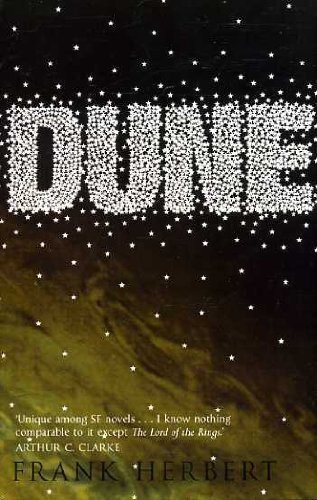
Book
City
Same pick
Game
Ling 2.6 1TLing 2.6 1T




Blade Runner 2049
Kid A
Dune
Kyoto
The Legend of Zelda: Breath of the Wild
Qwen Plus 0728 (thinking)Qwen Plus 0728 (thinking)



The Shawshank Redemption
OK Computer
Moby Dick
Kyoto
The Legend of Zelda: Ocarina of Time
Price and specs
Not enough votes to call it. On the specs, Ling 2.6 1T has the edge: bigger model tier, newer.
| Spec | Ling 2.6 1T | Qwen Plus 0728 (thinking) |
|---|---|---|
| Input price | Free | $0.4/M tokens |
| Output price | Free | $4/M tokens |
| Context window | 262K tokens | 1.0M tokens |
| Weights | Open | — |
| Free API (OpenRouter) | No | No |
| Released | Apr 2026 | Sep 2025 |
| At 10M a month | $0 | $4.00 |
Input tokens at list price. No caching, no batch discount.
Common questions
What is the difference between Ling 2.6 1T and Qwen Plus 0728 (thinking)?
Ling 2.6 1T is developed by inclusionAI while Qwen Plus 0728 (thinking) is developed by Qwen. Ling 2.6 1T has a 262K token context window vs Qwen Plus 0728 (thinking)'s 1.0M. You can compare their actual outputs across 37 challenges on Rival to see how they differ in practice.
Which is better, Ling 2.6 1T or Qwen Plus 0728 (thinking)?
It depends on your use case. Ling 2.6 1T and Qwen Plus 0728 (thinking) each have strengths in different areas. Rival lets you compare their real outputs side-by-side across 37 challenges so you can judge which fits your needs best.
How much does Ling 2.6 1T cost compared to Qwen Plus 0728 (thinking)?
Ling 2.6 1T costs $0/M input tokens and Qwen Plus 0728 (thinking) costs $0.4/M input tokens. Ling 2.6 1T is $0.40/M cheaper per input. Check their side-by-side outputs on Rival to see if the price difference is justified by quality.
How can I compare Ling 2.6 1T and Qwen Plus 0728 (thinking) on Rival?
This page shows a side-by-side comparison of Ling 2.6 1T and Qwen Plus 0728 (thinking) across shared challenges. You can vote on which model produced the better output in a blind duel. Browsing and voting are free. No account is needed to look; signing in only saves your votes and likes.
More comparisons
Against the newest arrivals
- Ling 2.6 1T vs Step 5 PreviewLanded Oct 2026
- Qwen Plus 0728 (thinking) vs Claude Haiku 5.5Landed Oct 2026
- Ling 2.6 1T vs Ling 3.1 FlashLanded Oct 2026
- Qwen Plus 0728 (thinking) vs Mistral Large 4Landed Oct 2026
- Ling 2.6 1T vs GPT-6.1 SolLanded Sep 2026
- Qwen Plus 0728 (thinking) vs Claude Sonnet 5.5Landed Sep 2026
- Ling 2.6 1T vs Solar Mini 4Landed Sep 2026
- Qwen Plus 0728 (thinking) vs Qwen3.8 Max PrimeLanded Sep 2026


Same lab, same size, long tail
- Ling 2.6 1T vs Ling 3.0 FlashSame lab
- Ling 2.6 1T vs Ling 3.0 Flash Fin (free)Same lab
- Qwen Plus 0728 (thinking) vs Qwen3.8 Omni FlashSame lab
- Qwen Plus 0728 (thinking) vs Qwen3.7 FlashSame lab
- Ling 2.6 1T vs Qwen3.5 Plus 2026-04-20Same size
- Ling 2.6 1T vs Qwen3.6 27BCross-provider
- Ling 2.6 1T vs Qwen3.6 35B A3BCross-provider
- Ling 2.6 1T vs Qwen3.6 FlashCross-provider