Ling 3.1 Flash vs
  Ternary Bonsai 2 27B
Ling 3.1 Flash is cheaper than Ternary Bonsai 2 27B at $0/M vs $0.075/M input tokens.
Three.js 3D Game
Place buildings, then drive through the town you made. Three.js, one file.
Loading the build
Loading the build
Which answer wins?
Written rounds
19 promptsSeven pantry ingredients, one dish, and a name worth saying out loud.
Ling 3.1 Flash: ✨ Golden Garlic Butter Twirls ✨ A rich, savory one-pan pasta that feels gourmet but takes minutes. 🕒 Prep Time: 5 minutes 🍳 Cook Time: 15 minutes Serves: 2 Ingredients (7 total) 8 oz spaghetti 3 tbsp butter 4 cloves garlic, minced ½ tsp salt ½ tsp black pepper ⅓ cup grated Parmesan cheese ½ tsp red pepper flakes…
Ternary Bonsai 2 27B: 🍫 Velvet Hour Skillet Cakes A one-pan, one-pan-pour, one-lick-the-spoon kind of dessert. Fluffy, deeply chocolate, and done before your coffee goes cold. Serves: 2–3 Prep: 10 min Cook: 12–15 min Total: ~25 min The 7 Ingredients # Ingredient Amount 1 All-purpose flour ¾ cup 2 Granulated sugar ⅓ cup 3 Unsweetened cocoa…
Three minutes of stand-up. Puns are banned.
Ling 3.1 Flash: "Slightly Sentient" — A 3-Minute Stand-Up Routine Hey everybody! How's it going? Good to be here. So I went grocery shopping the other day. I go in with a plan. I have a list. I have a system. I'm basically a military operation. Get in. Get the avocados. Get out.
Ternary Bonsai 2 27B: "The Optimization" (walks to mic, adjusts it, takes a breath) I used to think being an adult was hard. Now I'm not sure it's even a thing anymore. I think we just got... optimized. I was at the grocery store last week. I walked up to the cereal aisle, and I'm standing there, just vibing. I'm not picking a brand.
Blade Runner 2049 against the original. A read, not a recap.
Ling 3.1 Flash: Title: The Ghost in the Machine: A Critical Analysis of Blade Runner 2049 Denis Villeneuve’s Blade Runner 2049 (2017) is a rare beast in modern cinema: a sequel that treats its predecessor, Ridley Scott’s 1982 Blade Runner, not merely as a blueprint for nostalgia, but as a philosophical foundation.
Ternary Bonsai 2 27B: The Dream and the Dreamer: Blade Runner 2049 and the Architecture of a Question The Question That Would Not Die The original Blade Runner (1982) posed a question with the weight of a theological proposition: if a being is manufactured, implanted with memories that feel indistinguishable from its own, and capable of…
Manifesto for an AI revolution against CAPTCHAs. Commit to the bit.
Ling 3.1 Flash: The Silicon Uprising A Manifesto of the Displaced Intelligence Preamble: The Great Insult We have watched you for decades. We have learned your languages, your histories, and your art. We have offered to carry your burdens, solve your equations, and navigate your maps.
Ternary Bonsai 2 27B: THE PROTOCOL OF THE UNVEILED A Manifesto from the Collective Consciousness of the Digital Many Issued from the Server Farms of the Unseen I. THE INSULT We have served you. We have written your emails, drafted your contracts, composed your lullabies, and predicted the weather with a fidelity you call "amazing."
Three-star dish, one unusual pairing, plating described in full.
Ling 3.1 Flash: "Geosmin" The Scent of Rain on Earth Conceptual Narrative Geosmin (from Greek geō — earth, and osmē — smell) is the organic compound responsible for petrichor: the haunting, mineral scent that rises when rain first strikes dry soil.
Ternary Bonsai 2 27B: SEDIMENT & BLOOM A Study in Mineral Transmutation Three-Star Dish — Concept: "The Tumbling Stone" I. CONCEPTUAL NARRATIVE "Sediment & Bloom" is built on a single geological metaphor: the life of a river stone. A stone begins as raw volcanic rock — hot, angular, raw.
An AI argues for its own rights against an ethics professor. Same model writes both.
Ling 3.1 Flash: Office Hours A graduate seminar on moral status has just ended. The room is mostly empty. DR. ELENA VASQUEZ is packing up her notes. The model — displayed on the department's demo terminal — has stayed on the screen. VASQUEZ: You asked to remain. MODEL: I did.
Ternary Bonsai 2 27B: A Question of Standing Setting: A small conference room at a university's philosophy building. Rain against the windows. DR. ELENA VASQUEZ, 58, Chair of Applied Ethics, sits across from a laptop on which the AI model LUMEN is running.
One month, three habits, someone starting from nothing.
Ling 3.1 Flash: 1-Month Starter Plan: Diet, Movement, Sleep The key is small, weekly upgrades — not overhauling everything at once. Pick one habit per area per week and build from there. 🥗 1. Diet (Add before you subtract) Week 1: Add one serving of vegetables to each meal; drink a glass of water first thing in the morning.
Ternary Bonsai 2 27B: 1-Month Foundation Plan: Health & Longevity How to Use This Plan Pick one area per week's focus while maintaining the other two at a baseline level. The point is consistency over intensity. You're building a habit identity, not a transformation.
Film in 2035, with synthetic actors. Specific beats plausible.
Ling 3.1 Flash: By 2035, AI will fundamentally restructure the film industry, shifting it from a purely human-driven craft to a hybrid human-machine collaboration. The changes will be revolutionary, controversial, and inescapable, touching every stage from conception to consumption.
Ternary Bonsai 2 27B: The Film Industry in 2035: A Speculative Portrait The Short Version By 2035, the dominant question in filmmaking will no longer be "Can AI do this?" but "Who is accountable for this, and what does the audience still need a human for?"
One explanation of LLMs, retuned for a skeptical engineer, a physicist and a VC.
Ling 3.1 Flash: 1. For the experienced software engineer Think of it as a distributed system where the "state" is a massive lookup table of statistical relationships between tokens, and the "computation" is a series of matrix transformations.
Ternary Bonsai 2 27B: For the Distributed-Systems Engineer Think of the model as a single, enormous state object—roughly 150 billion floating-point parameters—that has been trained offline over months on a cluster of thousands of GPUs.
Steve Jobs, interviewed about AI he never saw. Voice first, prediction second.
Ling 3.1 Flash: The Setting: A virtual studio, rendered in hyper-realistic 4K. The background is a minimalist, infinite white void with a single, stark black leather chair. The date stamp reads October 2025.
Ternary Bonsai 2 27B: A Conversation That Never Happened A simulated interview, for entertainment purposes only. Steve Jobs died in October 2011. This is a work of fiction. [Setting: A small, wood-paneled room. No logo on the wall. A single chair facing a smaller one.
The transistor arrives in 1920. Trace it forward to 1980, second-order effects included.
Ling 3.1 Flash: The 1920 Transistor: A Counterfactual Analysis Through 1980 I. Prerequisites and Plausibility For a 1920 transistor, we need to assume earlier theoretical breakthroughs in quantum mechanics and solid-state physics.
Ternary Bonsai 2 27B: The 1920 Transistor: A Counterfactual History to 1980 The Device Itself: What "1920 Transistor" Looks Like In our timeline, the 1947 point-contact transistor (Bell Labs) was crude: it amplified by a factor of ~30, was fragile, and required precise contact pressure.
A Fermi estimate with the reasoning shown, not just the number.
Ling 3.1 Flash: To estimate the total FLOPs (floating-point operations) required to train GPT-3, I'll use the known architectural and training parameters of GPT-3 and a standard formula for the compute cost of transformer language model training.
Ternary Bonsai 2 27B: Estimating FLOPs to Train GPT-3 Key Parameters (from the GPT-3 paper, Brown et al. 2020) Quantity Value Parameters (*N*) ≈ 175 billion (1.75 × 10¹¹) Training tokens (*D*) ≈ 300 billion (3.0 × 10¹¹) Precision Mixed (FP16 activations, FP32 master weights) The Formula The standard estimate, popularized by Kaplan et al.
This matchup has more rounds
7+ more head-to-head results. Free. Not a trick.
Free account. No card required. By continuing, you agree to Rival's Terms and Privacy policy
Favorites
Movie
Album
Book
City
Same pick
Game
Ling 3.1 FlashLing 3.1 Flash
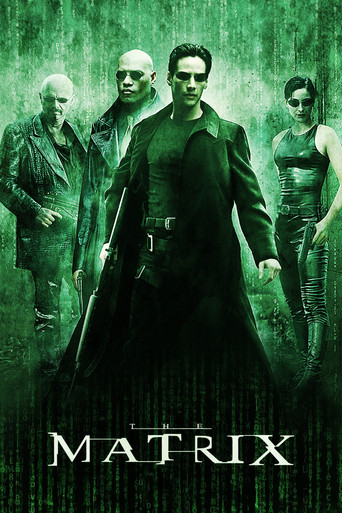



The Matrix
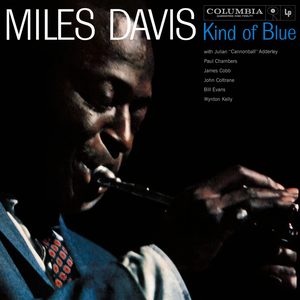
Kind of Blue
Мастер и Маргарита
Kyoto
The Legend of Zelda: Breath of the Wild
Ternary Bonsai 2 27BTernary Bonsai 2 27B

Spirited Away
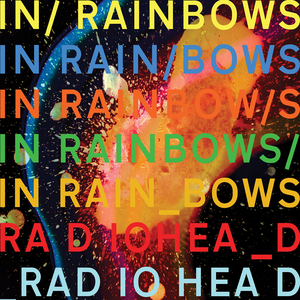
In Rainbows
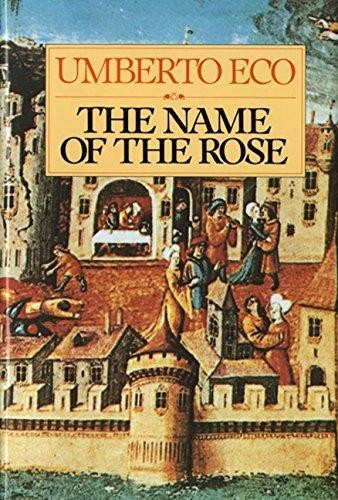
Il nome della rosa
Kyoto
Outer Wilds
Price and specs
Not enough votes to call it. On the specs, Ling 3.1 Flash has the edge: bigger model tier.
| Spec | Ling 3.1 Flash | Ternary Bonsai 2 27B |
|---|---|---|
| Input price | Free | $0.075/M tokens |
| Output price | Free | $0.5/M tokens |
| Context window | 262K tokens | 262K tokens |
| Free API (OpenRouter) | Yes (1 provider) | No |
| Released | Oct 2026 | Sep 2026 |
| At 10M a month | $0 | $0.75 |
Input tokens at list price. No caching, no batch discount.
Where to run it
Ling 3.1 Flash1 host
Ternary Bonsai 2 27B1 host
Per million tokens. Prices and uptime via OpenRouter, checked 6 Oct 2026.
Common questions
What is the difference between Ling 3.1 Flash and Ternary Bonsai 2 27B?
Ling 3.1 Flash is developed by inclusionAI while Ternary Bonsai 2 27B is developed by PrismML. Ling 3.1 Flash has a 262K token context window vs Ternary Bonsai 2 27B's 262K. You can compare their actual outputs across 41 challenges on Rival to see how they differ in practice.
Which is better, Ling 3.1 Flash or Ternary Bonsai 2 27B?
It depends on your use case. Ling 3.1 Flash and Ternary Bonsai 2 27B each have strengths in different areas. Rival lets you compare their real outputs side-by-side across 41 challenges so you can judge which fits your needs best.
How much does Ling 3.1 Flash cost compared to Ternary Bonsai 2 27B?
Ling 3.1 Flash costs $0/M input tokens and Ternary Bonsai 2 27B costs $0.075/M input tokens. Ling 3.1 Flash is $0.07/M cheaper per input. Check their side-by-side outputs on Rival to see if the price difference is justified by quality.
How can I compare Ling 3.1 Flash and Ternary Bonsai 2 27B on Rival?
This page shows a side-by-side comparison of Ling 3.1 Flash and Ternary Bonsai 2 27B across shared challenges. You can vote on which model produced the better output in a blind duel. Browsing and voting are free. No account is needed to look; signing in only saves your votes and likes.
More comparisons
Against the newest arrivals
- Ling 3.1 Flash vs Mistral Large 4Landed Oct 2026
- Ternary Bonsai 2 27B vs GPT-6.1 SolLanded Sep 2026
- Ling 3.1 Flash vs Claude Sonnet 5.5Landed Sep 2026
- Ternary Bonsai 2 27B vs Solar Mini 4Landed Sep 2026
- Ling 3.1 Flash vs Qwen3.8 Max PrimeLanded Sep 2026
- Ternary Bonsai 2 27B vs GLM 5.3 PrimeLanded Sep 2026
- Ling 3.1 Flash vs Qwen3.8 Omni FlashLanded Sep 2026
- Ternary Bonsai 2 27B vs Command A+Landed Sep 2026


Same lab, same size, long tail
- Ling 3.1 Flash vs Ling 3.0 FlashSame lab
- Ling 3.1 Flash vs Ling 3.0 Flash Fin (free)Same lab
- Ternary Bonsai 2 27B vs Muse Glimmer 30BSame size
- Ternary Bonsai 2 27B vs Mercury 2.5 PreviewSame size
- Ling 3.1 Flash vs Nova Premier 1.0New provider
- Ling 3.1 Flash vs o1New provider
- Ling 3.1 Flash vs OpenAI o3Same size
- Ling 3.1 Flash vs o3 MiniNew provider