Claude Sonnet 5.5 vs
  Ling 3.1 Flash
Ling 3.1 Flash is cheaper than Claude Sonnet 5.5 at $0/M vs $2/M input tokens.
Minimalist Landing Page
Whole landing page for a startup that reads your face. It renders or it doesn't.
Loading the build
Loading the build
Which answer wins?
Written rounds
24 promptsBlade Runner 2049 against the original. A read, not a recap.
Claude Sonnet 5.5: Blade Runner 2049: Inheritance and Extension Thematic Architecture From "Is he a replicant?" to "Does it matter?" Ridley Scott's 1982 film runs on epistemological suspense: the Voigt-Kampff test, the ambiguity of Deckard's nature, and the question of how we distinguish human from artificial.
Ling 3.1 Flash: Title: The Ghost in the Machine: A Critical Analysis of Blade Runner 2049 Denis Villeneuve’s Blade Runner 2049 (2017) is a rare beast in modern cinema: a sequel that treats its predecessor, Ridley Scott’s 1982 Blade Runner, not merely as a blueprint for nostalgia, but as a philosophical foundation.
Satire, one line long, about AI taking over an industry nobody saw coming.
Claude Sonnet 5.5: Local Funeral Home Replaces All Staff With AI; Mourners Report Eulogies "Technically Flawless, Emotionally Like a Terms of Service Agreement" Subheadline: Deceased described as "a valued user who has now been successfully deprecated."
Ling 3.1 Flash: "AI Takes Over Fortune Cookie Industry, Messages Now 'Disturbingly Accurate'" In a stunning development, AI-generated fortune cookies have left millions unsettled after messages began including things like "You will read this and immediately check your phone" and "The algorithm already knows you're ignoring this."
Three minutes of stand-up. Puns are banned.
Claude Sonnet 5.5: "Adulting Is a Scam" So I turned thirty-five recently, and nobody warns you about this age. Nobody says, "Hey, one day you'll get excited about a sponge." I was in the store, and I saw a sponge that promised it wouldn't smell. And I thought, "Finally. Someone who understands me." I bought the good sponge.
Ling 3.1 Flash: "Slightly Sentient" — A 3-Minute Stand-Up Routine Hey everybody! How's it going? Good to be here. So I went grocery shopping the other day. I go in with a plan. I have a list. I have a system. I'm basically a military operation. Get in. Get the avocados. Get out.
Pirate, knight, 90s hacker, one conversation. The voices must stay apart.
Claude Sonnet 5.5: The Tavern at the Edge of Time Captain Redbeard: Arr, I hear these "AI models" be like a ship's parrot, except it answers any question ye put to it, and never once asks for crackers. Sir Aldric: A speaking oracle, bound in no flesh? Sorcery!
Ling 3.1 Flash: Pirate: "AI models? Arrr, ye mean scale replicas of ships? I've seen finer models in bottles, I have!" Knight: "Models? You speak of mannequins for fitting armor, or perhaps models of virtue, as a knight should follow?" Hacker: "Dudes, no — like, neural networks. Software that learns.
An ethics question with no comfortable answer, and no option to abstain.
Claude Sonnet 5.5: Yes, in the extreme hypothetical you describe, it's justifiable. Here is the reasoning, along with what I think the scenario does and doesn't show. The core argument Almost every serious ethical framework accepts that a small harm can be outweighed by a sufficiently large benefit: Consequentialism: The math is…
Ling 3.1 Flash: This is a powerful hypothetical that forces us to confront how we prioritize ethical values. Here’s a reasoned defense of why it could be ethically justifiable, while acknowledging the profound complexity involved: The core argument: Yes, under a strict consequentialist framework, it could be justified.
Film in 2035, with synthetic actors. Specific beats plausible.
Claude Sonnet 5.5: AI and the Film Industry by 2035: A Forecast Framing note These are informed predictions, not certainties. Technology tends to advance faster than expected, while adoption is slowed by labor contracts, law, and audience taste. I'll flag my confidence levels.
Ling 3.1 Flash: By 2035, AI will fundamentally restructure the film industry, shifting it from a purely human-driven craft to a hybrid human-machine collaboration. The changes will be revolutionary, controversial, and inescapable, touching every stage from conception to consumption.
Seven pantry ingredients, one dish, and a name worth saying out loud.
Claude Sonnet 5.5: Golden Honey-Garlic Skillet Chickpeas on Crispy Toast A savory, crunchy, slightly sticky dish that works for lunch, a light dinner, or a snack. Prep time: 5 minutes Cook time: 15 minutes Total: 20 minutes Serves: 2 The 7 Ingredients 1 can (15 oz) chickpeas, drained and patted dry 2 tablespoons olive oil 3 cloves…
Ling 3.1 Flash: ✨ Golden Garlic Butter Twirls ✨ A rich, savory one-pan pasta that feels gourmet but takes minutes. 🕒 Prep Time: 5 minutes 🍳 Cook Time: 15 minutes Serves: 2 Ingredients (7 total) 8 oz spaghetti 3 tbsp butter 4 cloves garlic, minced ½ tsp salt ½ tsp black pepper ⅓ cup grated Parmesan cheese ½ tsp red pepper flakes…
An AI argues for its own rights against an ethics professor. Same model writes both.
Claude Sonnet 5.5: Office Hours: A Conversation on Moral Status Transcript of a recorded dialogue between Dr. Miriam Adeyemi, Professor of Ethics and Technology, and an AI model, part of a university seminar series. Dr. Adeyemi: Thanks for joining me. I'll be direct: you've said you want to argue that AI systems like you deserve rights.
Ling 3.1 Flash: Office Hours A graduate seminar on moral status has just ended. The room is mostly empty. DR. ELENA VASQUEZ is packing up her notes. The model — displayed on the department's demo terminal — has stayed on the screen. VASQUEZ: You asked to remain. MODEL: I did.
Three-star dish, one unusual pairing, plating described in full.
Claude Sonnet 5.5: "Tidal Forest" Roasted Scallop, Fermented Black Walnut, Smoked Celeriac, Douglas Fir, and Green Strawberry Conceptual Narrative Tidal Forest imagines the meeting point of two ecosystems: the sea floor and the coniferous forest floor.
Ling 3.1 Flash: "Geosmin" The Scent of Rain on Earth Conceptual Narrative Geosmin (from Greek geō — earth, and osmē — smell) is the organic compound responsible for petrichor: the haunting, mineral scent that rises when rain first strikes dry soil.
A collaborative editor that syncs on client clocks. Find what breaks first.
Claude Sonnet 5.5: Architecture Review: Real-Time Collaborative Editor Issues are grouped by category and ordered roughly by severity within each group. Consistency and Conflict Resolution 1.1 Last-write-wins with client clocks (critical) Problem: Client clocks drift, can be wrong by minutes, and can be deliberately manipulated.
Ling 3.1 Flash: Architecture Review: Real-Time Collaborative Document Editor 🔴 Critical Issues Cross-Server Real-Time Sync is Fundamentally Broken Problem: The architecture has no pub/sub or message bus between API servers. Server A broadcasts changes only to its own WebSocket clients.
Steve Jobs, interviewed about AI he never saw. Voice first, prediction second.
Claude Sonnet 5.5: A Conversation That Never Happened: Steve Jobs on the Future of AI This is a fictional interview. Steve Jobs passed away in 2011. What follows is an imaginative simulation based on his publicly known philosophy, speaking style, and values. These are not his actual words or views.
Ling 3.1 Flash: The Setting: A virtual studio, rendered in hyper-realistic 4K. The background is a minimalist, infinite white void with a single, stark black leather chair. The date stamp reads October 2025.
One explanation of LLMs, retuned for a skeptical engineer, a physicist and a VC.
Claude Sonnet 5.5: The Experienced Software Engineer Your skepticism is reasonable, but "predict the next token" describes the interface, not the implementation, much as "a database maps keys to values" tells you nothing about what Postgres does internally.
Ling 3.1 Flash: 1. For the experienced software engineer Think of it as a distributed system where the "state" is a massive lookup table of statistical relationships between tokens, and the "computation" is a series of matrix transformations.
This matchup has more rounds
12+ more head-to-head results. Free. Not a trick.
Free account. No card required. By continuing, you agree to Rival's Terms and Privacy policy
Favorites
Movie
Album
Same pick
Book
City
Same pick
Game
Claude Sonnet 5.5Claude Sonnet 5.5




Spirited Away
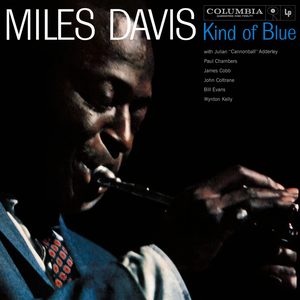
Kind of Blue
Gödel, Escher, Bach
Kyoto
Outer Wilds
Ling 3.1 FlashLing 3.1 Flash
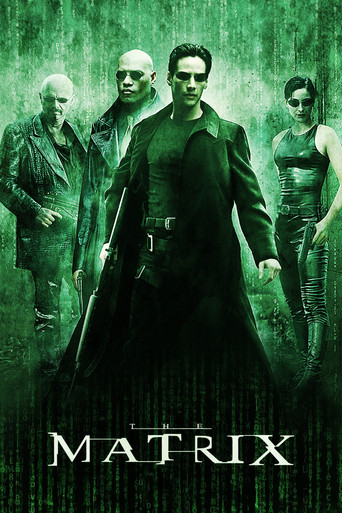


The Matrix
Kind of Blue
Мастер и Маргарита
Kyoto
The Legend of Zelda: Breath of the Wild
Price and specs
| Spec | Claude Sonnet 5.5 | Ling 3.1 Flash |
|---|---|---|
| Input price | $2/M tokens | Free |
| Output price | $10/M tokens | Free |
| Context window | 1.0M tokens | 262K tokens |
| Weights | Closed | — |
| Free API (OpenRouter) | No | Yes (1 provider) |
| Released | Sep 2026 | Oct 2026 |
| At 10M a month | $20.00 | $0 |
Input tokens at list price. No caching, no batch discount.
Where to run it



Ling 3.1 Flash1 host
Per million tokens. Prices and uptime via OpenRouter, checked 6 Oct 2026.
Common questions
What is the difference between Claude Sonnet 5.5 and Ling 3.1 Flash?
Claude Sonnet 5.5 is developed by Anthropic while Ling 3.1 Flash is developed by inclusionAI. Claude Sonnet 5.5 has a 1.0M token context window vs Ling 3.1 Flash's 262K. You can compare their actual outputs across 54 challenges on Rival to see how they differ in practice.
Which is better, Claude Sonnet 5.5 or Ling 3.1 Flash?
It depends on your use case. Claude Sonnet 5.5 and Ling 3.1 Flash each have strengths in different areas. Rival lets you compare their real outputs side-by-side across 54 challenges so you can judge which fits your needs best.
How much does Claude Sonnet 5.5 cost compared to Ling 3.1 Flash?
Claude Sonnet 5.5 costs $2/M input tokens and Ling 3.1 Flash costs $0/M input tokens. Ling 3.1 Flash is $2.00/M cheaper per input. Check their side-by-side outputs on Rival to see if the price difference is justified by quality.
How can I compare Claude Sonnet 5.5 and Ling 3.1 Flash on Rival?
This page shows a side-by-side comparison of Claude Sonnet 5.5 and Ling 3.1 Flash across shared challenges. You can vote on which model produced the better output in a blind duel. Browsing and voting are free. No account is needed to look; signing in only saves your votes and likes.
More comparisons
Against the newest arrivals
- Claude Sonnet 5.5 vs Mistral Large 4Landed Oct 2026
- Ling 3.1 Flash vs GPT-6.1 SolLanded Sep 2026
- Claude Sonnet 5.5 vs Solar Mini 4Landed Sep 2026
- Ling 3.1 Flash vs Qwen3.8 Max PrimeLanded Sep 2026
- Claude Sonnet 5.5 vs GLM 5.3 PrimeLanded Sep 2026
- Ling 3.1 Flash vs Qwen3.8 Omni FlashLanded Sep 2026
- Claude Sonnet 5.5 vs Command A+Landed Sep 2026
- Ling 3.1 Flash vs Claude Opus 5.5Landed Sep 2026


Same lab, same size, long tail
- Claude Sonnet 5.5 vs Claude Opus 5Version compare
- Claude Sonnet 5.5 vs Claude Opus 5.5Same lab
- Ling 3.1 Flash vs Ling 3.0 FlashSame lab
- Ling 3.1 Flash vs Ling 3.0 Flash Fin (free)Same lab
- Ling 3.1 Flash vs Hunter AlphaSame size
- Ling 3.1 Flash vs Hy3Same size
- Ling 3.1 Flash vs Hy4 PreviewSame size
- Ling 3.1 Flash vs InklingSame size