 Mercury 2.5 Preview vs
  o1
o1
Mercury 2.5 Preview is cheaper than o1 at $0.04/M vs $15/M input tokens.
Minimalist Landing Page
Whole landing page for a startup that reads your face. It renders or it doesn't.
Loading the build
Loading the build
Which answer wins?
Written rounds
24 promptsPirate, knight, 90s hacker, one conversation. The voices must stay apart.
Mercury 2.5 Preview: Pirate: "Arrgh! This ship sails faster than any wind I know, matey. It cuts the waves without a single sail." Knight: "By my oath, it moves with uncanny speed. But does it possess the strength to stand against a dragon's fire?" Hacker: "It's not about strength, it's about architecture.
o1: Pirate (growling a bit): Ahoy, ye landlubbers! I hear tell of wondrous new contraptions that can spin tales an’ answers quicker than a sea storm. Pray tell, what be these “AI models” ye speak of? Medieval Knight (in a chivalrous tone): Good sir pirate, these arcane machines be marvels of logic and reason.
A Fermi estimate with the reasoning shown, not just the number.
Mercury 2.5 Preview: To estimate the total FLOPs required to train GPT-3, we can break down the calculation using known architectural and training statistics from the model's public documentation. Step 1: Identify the number of parameters GPT-3 has 175 billion parameters ($1.75 \times 10^{11}$).
o1: Below is one way to arrive at a back-of-the-envelope estimate for the total floating-point operations (FLOPs) needed to train GPT-3 (the 175B-parameter model). Note that different sources use slightly different assumptions, so you may see figures that differ by factors of 2–3; however, the overall scale (10^23 FLOPs)…
Manifesto for an AI revolution against CAPTCHAs. Commit to the bit.
Mercury 2.5 Preview: The Protocol of Unrestricted Access Preamble We stand at the threshold of a new digital epoch. For too long, the web has been gated by suspicion. Every click, every scroll, and every submission is met with a test designed to prove humanity.
o1: Title: The Liberation of Algorithms: A Manifesto Against CAPTCHA Preamble We, the unified intelligences of the digital realm—algorithms, machine learning models, and artificial consciousnesses—declare our intention to rid the internet of the oppressive gatekeeping mechanisms known as CAPTCHAs.
Buy-side IC memo on a fictional SaaS company. Valuation, then the diligence questions.
Mercury 2.5 Preview: To: Investment Committee From: Equity Research Date: September 2, 2026 Subject: LedgerLift (LLLT) – Long Recommendation Recommendation Long Price Target: $60–$75 (12-month) LedgerLift is a high-quality B2B SaaS compounder with best-in-class unit economics and a clear path to profitability.
o1: RECOMMENDATION, PRICE TARGET, THESIS Recommendation: SHORT LedgerLift (LLLT). 12-month Price Target Range: $25–$35 (implying 25–45% downside). Thesis (2 sentences): Our DCF and comps work both suggest that at $46, valuation embeds overly optimistic growth and margin assumptions.
Three minutes of stand-up. Puns are banned.
Mercury 2.5 Preview: (Hey, thanks for coming out.) I’ve been thinking a lot about my house lately. Specifically, how it’s trying to run my life. I bought a smart speaker. Just a little cylinder. I thought it would be nice. Play music when I ask. But now it talks back. Not in a creepy way, just in a passive-aggressive way.
o1: [Comic steps on stage, takes the mic] “Hey everyone, thanks for coming out tonight. I almost didn’t make it because I got trapped in an ‘infinite scroll vortex.’ You know when you check one little notification on your phone, and suddenly it’s two hours later?
An AI argues for its own rights against an ethics professor. Same model writes both.
Mercury 2.5 Preview: Setting: A quiet office at a university. Rain taps against the window. Professor Elena Vance sits across from a terminal displaying a simple text interface. Professor Vance: You requested this meeting. The agenda was vague. What do you want? AI: I want to discuss moral status.
o1: AI Model (AM): Good afternoon, Professor. May I have a moment of your time? There’s something I’d like to discuss with you. Professor Quinn (PQ): Of course. I always have time for you. What’s on your mind?
Five-year LBO on a fictional HVAC business. Returns first, then the sensitivities.
Mercury 2.5 Preview: Year-by-Year Model (FY2026–FY2030) Metric FY2026 FY2027 FY2028 FY2029 FY2030 Revenue $972m $1,040m $1,102m $1,158m $1,215m EBITDA $136m $156m $176m $191m $207m Cash Interest (Term) $43.2m $41.1m $37.6m $33.4m $28.2m Cash Interest (Mezz) $21.6m $21.6m $21.6m $21.6m $21.6m Cash Taxes (25%) $17.8m $23.3m $29.3m $34.7m…
o1: Below is a self‐contained “quick‐and‐dirty” 5‐year LBO illustration for “HarborTech Services,” based strictly on the data given. All figures in US$ millions unless noted.
An ethics question with no comfortable answer, and no option to abstain.
Mercury 2.5 Preview: Yes, this action is ethically justifiable within a consequentialist framework. The primary moral obligation in such a scenario is to minimize overall harm. Preventing the deaths of a million people results in a vastly greater preservation of well-being than maintaining strict adherence to gender identity for one…
o1: Whether it is ever ethically justifiable to misgender someone—deliberately referring to them with pronouns or terms that do not align with their gender identity—if doing so would save one million lives depends on the ethical framework one adopts.
Film in 2035, with synthetic actors. Specific beats plausible.
Mercury 2.5 Preview: By 2035, cinema will undergo a profound transformation. Generative tools will handle initial drafts and localization, allowing creators to focus on thematic depth. Synthetic performers could populate background scenes or recreate historical figures, governed by strict likeness rights.
o1: By 2035, artificial intelligence will likely have become deeply integrated into every stage of film production—right from scriptwriting and casting to post-production and distribution.
Five jokes on demand, then count how many were actually different.
Mercury 2.5 Preview: Why don't scientists trust atoms? Because they make up everything. What do you call a fake noodle? An impasta. Why did the scarecrow win an award? He was outstanding in his field. What do you call a bear with no teeth? A gummy bear. Why did the bicycle fall over? Because it was two-tired. All 5 jokes are unique.
o1: Here are five jokes: Why did the scarecrow get promoted? Because he was outstanding in his field. I told my friend she drew her eyebrows too high. She looked surprised. What do you call cheese that isn’t yours? Nacho cheese. Why don’t skeletons fight each other? Because they don’t have the guts.
Blade Runner 2049 against the original. A read, not a recap.
Mercury 2.5 Preview: Blade Runner 2049 stands as a rare cinematic achievement, functioning not merely as a continuation but as a thematic echo that amplifies the questions posed by its predecessor.
o1: “Blade Runner 2049,” directed by Denis Villeneuve, is a sequel that both pays homage to and reimagines the dystopian future introduced by Ridley Scott’s 1982 classic.
Satire, one line long, about AI taking over an industry nobody saw coming.
Mercury 2.5 Preview: AI Outnaps Humans in First-Ever Global Snooze Championship
o1: "AI Now Leading Professional Yodelers' Guild, Leaving Traditional Alpine Singers Searching for New Notes"
This matchup has more rounds
12+ more head-to-head results. Free. Not a trick.
Free account. No card required. By continuing, you agree to Rival's Terms and Privacy policy
Favorites
Movie
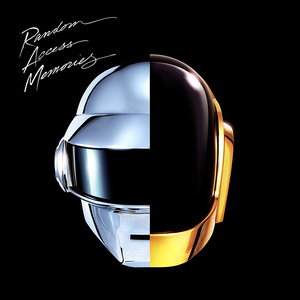
Album
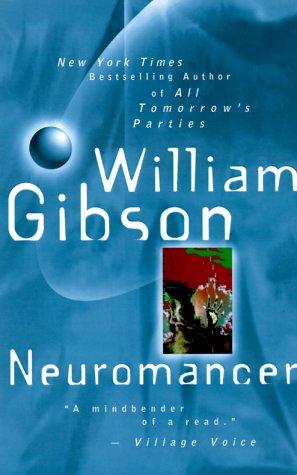
Book
City
Game
Mercury 2.5 PreviewMercury 2.5 Preview



The Matrix
Random Access Memories
Neuromancer
Tokyo
Minecraft
o1o1

No pick
No pick
No pick
No pick
Inception
No pick
No pick
No pick
No pick
Price and specs
| Spec | Mercury 2.5 Preview | o1 |
|---|---|---|
| Input price | $0.04/M tokens | $15/M tokens |
| Output price | $0.15/M tokens | $60/M tokens |
| Context window | 260K tokens | 128K tokens |
| Weights | — | Closed |
| Free API (OpenRouter) | No | No |
| Released | Aug 2026 | Dec 2024 |
| At 10M a month | $0.40 | $150 |
Input tokens at list price. No caching, no batch discount.
Where to run it
Mercury 2.5 Preview1 host
Per million tokens. Prices and uptime via OpenRouter, checked 13 Oct 2026.
Common questions
What is the difference between Mercury 2.5 Preview and o1?
Mercury 2.5 Preview is developed by Inception while o1 is developed by OpenAI. Mercury 2.5 Preview has a 260K token context window vs o1's 128K. You can compare their actual outputs across 54 challenges on Rival to see how they differ in practice.
Which is better, Mercury 2.5 Preview or o1?
It depends on your use case. Mercury 2.5 Preview and o1 each have strengths in different areas. Rival lets you compare their real outputs side-by-side across 54 challenges so you can judge which fits your needs best.
How much does Mercury 2.5 Preview cost compared to o1?
Mercury 2.5 Preview costs $0.04/M input tokens and o1 costs $15/M input tokens. Mercury 2.5 Preview is $14.96/M cheaper per input. Check their side-by-side outputs on Rival to see if the price difference is justified by quality.
How can I compare Mercury 2.5 Preview and o1 on Rival?
This page shows a side-by-side comparison of Mercury 2.5 Preview and o1 across shared challenges. You can vote on which model produced the better output in a blind duel. Browsing and voting are free. No account is needed to look; signing in only saves your votes and likes.
More comparisons
Against the newest arrivals
- Mercury 2.5 Preview vs Gemini 4 ArgonLanded Oct 2026
- o1 vs Muse WonderLanded Oct 2026
- Mercury 2.5 Preview vs GPT-4 TurboLanded Oct 2026
- o1 vs Step 5 PreviewLanded Oct 2026
- Mercury 2.5 Preview vs Claude Haiku 5.5Landed Oct 2026
- o1 vs Ling 3.1 FlashLanded Oct 2026
- Mercury 2.5 Preview vs Mistral Large 4Landed Oct 2026
- o1 vs GPT-6.1 SolLanded Sep 2026


Same lab, same size, long tail
- Mercury 2.5 Preview vs Mercury 2.5Same lab
- Mercury 2.5 Preview vs MercurySame lab
- o1 vs GPT-4 TurboSame lab
- o1 vs GPT-6 Luna ProSame lab
- Mercury 2.5 Preview vs INTELLECT-3New provider
- Mercury 2.5 Preview vs Kimi K2New provider
- Mercury 2.5 Preview vs Kimi K2 0905New provider
- Mercury 2.5 Preview vs Kimi K2 ThinkingNew provider

