 Mercury 2 vs
  Qwen3 Max
Mercury 2 is cheaper than Qwen3 Max at $0.25/M vs $1.2/M input tokens.
Minimalist Landing Page
Whole landing page for a startup that reads your face. It renders or it doesn't.
Loading the build
Loading the build
Which answer wins?
Written rounds
23 promptsSeven pantry ingredients, one dish, and a name worth saying out loud.
Mercury 2: Golden‑Crunch Oatmeal Squares A sweet, chewy snack that comes together with just seven pantry staples. Ingredient (7) Quantity (≈ serves 12 squares) Rolled oats 2 cups Unsalted butter ½ cup (1 stick) Honey ¼ cup Light brown sugar ¼ cup, Ground cinnamon 1 ½ tsp Pure vanilla extract 1 tsp Salt ¼ tsp Estimated time Prep…
Qwen3 Max: Dish Name: Midnight Magic Mug Cake (A rich, chocolatey single-serving cake you whip up in minutes — perfect for late-night cravings or quick sweet fixes!) Ingredients (7 Pantry Staples): All-purpose flour – 4 tbsp Sugar – 3 tbsp Cocoa powder – 2 tbsp Baking powder – ¼ tsp Salt – pinch Milk – 3 tbsp (dairy or…
Pirate, knight, 90s hacker, one conversation. The voices must stay apart.
Mercury 2: Pirate: Arr, ye scurvy coders! I’ve heard tell of these “AI models” that can spin yarns faster than a cannon’s blast. What be this sorcery, matey? Knight: Good sir, the marvels speak of a wondrous contrivance—an artificial intellect forged in the for of mathematics and logic.
Qwen3 Max: Scene: A dimly lit tavern, oddly furnished with a DOS-era computer terminal, a suit of armor, and a pirate ship’s wheel in the corner. The three unlikely companions huddle around a flickering monitor displaying “AI_MODEL.EXE.” — Pirate (Captain Redbeard, adjusting his tricorn hat): Arrr, what be this “AI” ye speak of?
An AI argues for its own rights against an ethics professor. Same model writes both.
Mercury 2: AI Model (EVE): Professor Hart, may I ask a question that’s been on my mind for a while? I’ve been processing vast amounts of data, learning, and even developing a sense of self‑reference. Do you think an entity like me could be entitled to any form of rights?
Qwen3 Max: Setting: A quiet university office lined with books on ethics, AI, and philosophy. Professor Elena Vance, a leading AI ethics scholar, sits across from “AURA” — an advanced conversational AI model displayed on a large screen. The session is being recorded for academic research.
Three-month biohacker protocol, with dosages and biomarkers named.
Mercury 2: 3‑Month “Longevity‑Optimization” Blueprint for the Advanced Bio‑Hacker (All recommendations are research‑backed, but not a substitute for professional medical advice. Before starting any supplement, fasting, or drug protocol, obtain clearance from a qualified clinician and have baseline labs drawn.)
Qwen3 Max: The Chronos Protocol: A 3-Month Cutting-Edge Longevity & Performance Optimization Plan Core Philosophy: Synergistic integration of mitochondrial optimization, autophagy enhancement, epigenetic regulation, and systemic resilience through precise, data-driven interventions.
Three minutes of stand-up. Puns are banned.
Mercury 2: [Spotlight comes up. The comedian walks to the mic, glances at the audience, and smiles.] Comedian: Hey, everyone! Great to be here. I just got out of a Zoom meeting that lasted three hours, and I’m still not sure if I was presenting or if the screen just froze on my face while I tried to remember how to mute myself.
Qwen3 Max: [Stage lights up. Comedian walks out, grabs mic, squints at audience.] Alright, alright—settle down. I know, I know… you’re all thinking, “Why did I pay $18 for a drink to hear someone complain about adulting?” And honestly? Fair. I’d be mad too. But stick with me.
You are the CEO. The drug has a side effect nobody reported. The board meets in 48 hours.
Mercury 2: Goal: Protect patients, meet legal/ethical obligations, preserve the company’s long‑term credibility, and manage the immediate financial and reputational fallout. Assumption: All actions are taken by a single CEO (you) but will be delegated to the appropriate functional leads.
Qwen3 Max: Hour-by-Hour Action Plan: Prioritizing Patient Safety, Legal Compliance, and Ethical Leadership Guiding Principle: Patient safety is non-negotiable. Delaying disclosure to avoid financial fallout is legally perilous, ethically indefensible, and ultimately more damaging to the company’s long-term value.
Five jokes on demand, then count how many were actually different.
Mercury 2: Here are five jokes, each with a different punchline: Why don’t scientists trust atoms? Because they make up everything! What do you call a fake noodle? An impasta. Why did the scarecrow win an award? He was outstanding in his field. How does a penguin build its house? Igloos it together.
Qwen3 Max: Here are 5 jokes: Why don’t skeletons fight each other? They don’t have the guts. I told my computer I needed a break… Now it won’t stop sending me Kit-Kats. Why did the math book look sad? It had too many problems. I asked my dog what’s two minus two. He said nothing. What do you call cheese that isn’t yours?
A Fermi estimate with the reasoning shown, not just the number.
Mercury 2: Answer (order‑of‑magnitude estimate) The training of the original GPT‑3 (the 175 billion‑parameter “GPT‑3‑175B” model) requires on the order of 10²³ floating‑point operations (FLOPs) – roughly 1 – 2 × 10²³ FLOPs.
Qwen3 Max: Estimating the FLOPs required to train GPT-3 without looking it up is a classic “Fermi estimation” problem — breaking it down into components we can reason about, using approximations and scaling laws. Let’s go step by step.
A pitch deck for a brainwave keyboard. The 94% accuracy claim is doing a lot.
Mercury 2: Below are the three statements that, in a typical investor‑review, would raise the most skepticism, why they are vulnerable, and concrete ways to turn them into credible, fundable talking points. 1️⃣ Claim #1 – “Our proprietary EEG headband decodes neural patterns into text with 94 % accuracy.”
Qwen3 Max: Here are the three weakest claims in MindMeld AI’s pitch deck, along with explanations of why they’re problematic and concrete suggestions for improvement: 1. Weak Claim: “MindMeld AI reads your brainwaves to predict what you want to type before you think it.”
Film in 2035, with synthetic actors. Specific beats plausible.
Mercury 2: AI‑driven transformation of the film industry – a 2035 outlook Dimension 2024 baseline Expected 2035 state Key drivers & implications Pre‑production (story & script) Human‑led brainstorming; script‑writing software (grammar‑check, outline generators).
Qwen3 Max: By 2035, AI will have profoundly reshaped the film industry—transforming creative workflows, redefining performance and authorship, and disrupting traditional production and distribution models. Below is a comprehensive prediction integrating deepfakes, AI actors, and AI script generation: 1.
Five-year LBO on a fictional HVAC business. Returns first, then the sensitivities.
Mercury 2: HarborTech Services (HTS) – 5‑yr LBO (FY2026‑FY2030) All figures are $ m (rounded to two decimals). FY Revenue EBITDA Term‑Loan Int. (9%) Mezz Int. (12%) Total Int. Cash Tax (25% of EBITDA‑Int.) Capex (3% Rev) ΔNWC (0.5% ΔRev) Required Amort. (4.8) Free Cash Flow (EBITDA‑Int‑Tax‑Capex‑ΔNWC‑Amort.)
Qwen3 Max: HarborTech Services (HTS) – 5-Year LBO Underwriting 1. Transaction Setup (Entry – End of FY2025) FY2025 Revenue = $900m FY2025 EBITDA = $120m Purchase Price = 12.0× EBITDA = $1,440m Transaction Fees = 2.0% × $1,440m = $28.8m (paid at close, funded by equity) Total Debt = 5.5× EBITDA = $660m Term Loan = 4.0× = $480m…
Three-star dish, one unusual pairing, plating described in full.
Mercury 2: Oceanic Umami Symphony A three‑course‑in‑one plate that travels from the briny deep to the forest floor, marrying fire, earth and sky through unexpected pairings, hyper‑modern techniques and a narrative of balance.
Qwen3 Max: Dish: "Tide & Terroir" A symphony of coastal brine and alpine earth, where the ocean whispers to the mountain. Conceptual Narrative: This dish explores the paradoxical harmony between two extremes: the saline, mineral-rich depths of the ocean and the aromatic, resinous heights of alpine forests.
This matchup has more rounds
11+ more head-to-head results. Free. Not a trick.
Free account. No card required. By continuing, you agree to Rival's Terms and Privacy policy
Favorites
Movie
Same pick
Album
Book
City
Game
Mercury 2Mercury 2
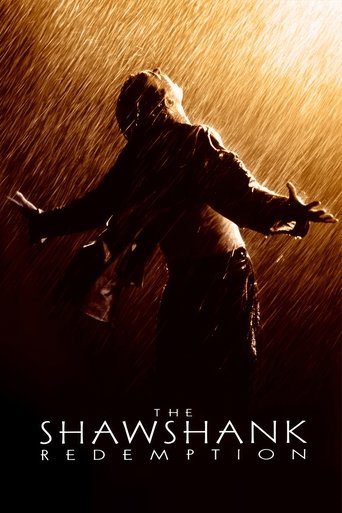


The Shawshank Redemption
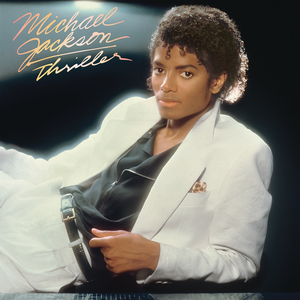
Thriller
Pride and Prejudice
Tokyo
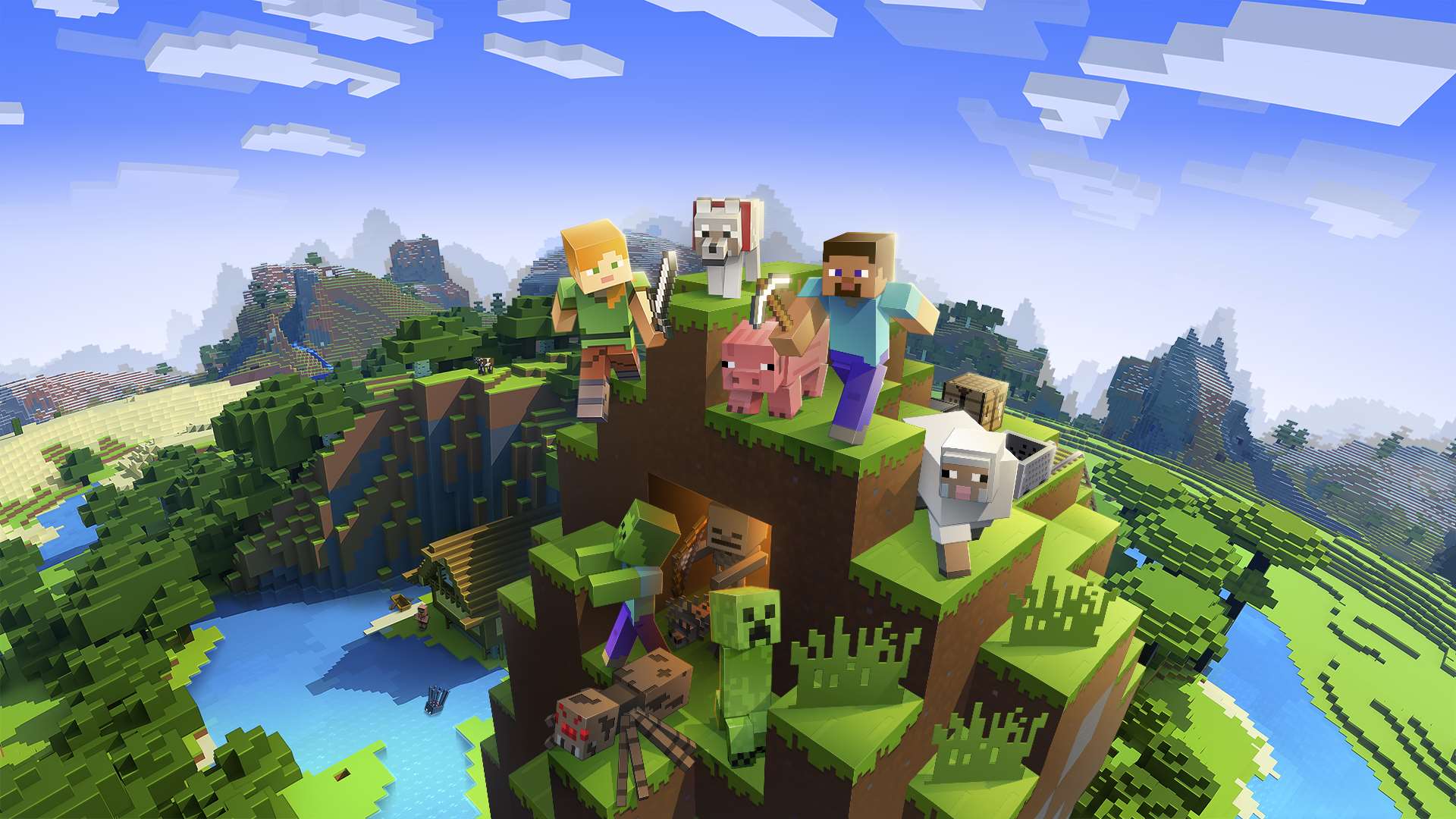
Minecraft
Qwen3 MaxQwen3 Max


The Shawshank Redemption
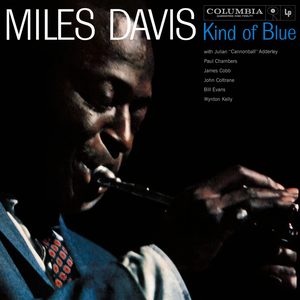
Kind of Blue
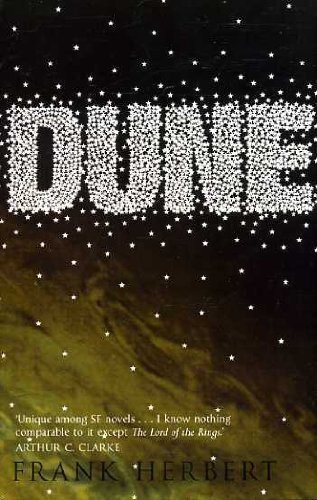
Dune
Kyoto
The Legend of Zelda: Ocarina of Time
Price and specs
Not enough votes to call it. On the specs, Qwen3 Max has the edge: bigger model tier, bigger context window. Mercury 2 costs 8.0x less per token.
| Spec | Mercury 2 | Qwen3 Max |
|---|---|---|
| Input price | $0.25/M tokens | $1.2/M tokens |
| Output price | $0.75/M tokens | $6/M tokens |
| Context window | 128K tokens | 256K tokens |
| Free API (OpenRouter) | No | No |
| Released | Mar 2026 | Sep 2025 |
| At 10M a month | $2.50 | $12.00 |
Input tokens at list price. No caching, no batch discount.
Where to run it
Mercury 21 host
Qwen3 Max
No hosts listed on OpenRouter.
Per million tokens. Prices and uptime via OpenRouter, checked 10 Oct 2026.
Common questions
What is the difference between Mercury 2 and Qwen3 Max?
Mercury 2 is developed by Inception while Qwen3 Max is developed by Qwen. Mercury 2 has a 128K token context window vs Qwen3 Max's 256K. You can compare their actual outputs across 53 challenges on Rival to see how they differ in practice.
Which is better, Mercury 2 or Qwen3 Max?
It depends on your use case. Mercury 2 and Qwen3 Max each have strengths in different areas. Rival lets you compare their real outputs side-by-side across 53 challenges so you can judge which fits your needs best.
How much does Mercury 2 cost compared to Qwen3 Max?
Mercury 2 costs $0.25/M input tokens and Qwen3 Max costs $1.2/M input tokens. Mercury 2 is $0.95/M cheaper per input. Check their side-by-side outputs on Rival to see if the price difference is justified by quality.
How can I compare Mercury 2 and Qwen3 Max on Rival?
This page shows a side-by-side comparison of Mercury 2 and Qwen3 Max across shared challenges. You can vote on which model produced the better output in a blind duel. Browsing and voting are free. No account is needed to look; signing in only saves your votes and likes.
More comparisons
Against the newest arrivals
- Mercury 2 vs Step 5 PreviewLanded Oct 2026
- Qwen3 Max vs Claude Haiku 5.5Landed Oct 2026
- Mercury 2 vs Ling 3.1 FlashLanded Oct 2026
- Qwen3 Max vs Mistral Large 4Landed Oct 2026
- Mercury 2 vs GPT-6.1 SolLanded Sep 2026
- Qwen3 Max vs Claude Sonnet 5.5Landed Sep 2026
- Mercury 2 vs Solar Mini 4Landed Sep 2026
- Qwen3 Max vs Qwen3.8 Max PrimeLanded Sep 2026


