 Mercury 2 vs
  Qwen3 Max Thinking
Mercury 2 is cheaper than Qwen3 Max Thinking at $0.25/M vs $1.2/M input tokens.
Minimalist Landing Page
Whole landing page for a startup that reads your face. It renders or it doesn't.
Loading the build
Loading the build
Which answer wins?
Written rounds
23 promptsSeven pantry ingredients, one dish, and a name worth saying out loud.
Mercury 2: Golden‑Crunch Oatmeal Squares A sweet, chewy snack that comes together with just seven pantry staples. Ingredient (7) Quantity (≈ serves 12 squares) Rolled oats 2 cups Unsalted butter ½ cup (1 stick) Honey ¼ cup Light brown sugar ¼ cup, Ground cinnamon 1 ½ tsp Pure vanilla extract 1 tsp Salt ¼ tsp Estimated time Prep…
Qwen3 Max Thinking: 🌰 Pantry Peanut Magic Noodles Sweet, savory, and ready before delivery arrives. No fresh produce, dairy, or meat required. ⏱️ Total Time: 17 minutes (Prep: 3 min Cook: 14 min) (Time includes boiling water and sauce mixing) 📦 Only 7 Pantry Ingredients (All shelf-stable, no substitutions needed) Dry spaghetti – 8 oz…
Three minutes of stand-up. Puns are banned.
Mercury 2: [Spotlight comes up. The comedian walks to the mic, glances at the audience, and smiles.] Comedian: Hey, everyone! Great to be here. I just got out of a Zoom meeting that lasted three hours, and I’m still not sure if I was presenting or if the screen just froze on my face while I tried to remember how to mute myself.
Qwen3 Max Thinking: (Lights up. Comedian walks to mic, adjusts it, takes a breath. Smiles warmly.) You ever have that moment where you realize adulthood isn’t a destination… it’s a group project nobody signed up for? (Beat) I tried assembly line “adulting” this week. Swedish bookshelf. You know the one. Box says “Easy Assembly!” Lies.
Film in 2035, with synthetic actors. Specific beats plausible.
Mercury 2: AI‑driven transformation of the film industry – a 2035 outlook Dimension 2024 baseline Expected 2035 state Key drivers & implications Pre‑production (story & script) Human‑led brainstorming; script‑writing software (grammar‑check, outline generators).
Qwen3 Max Thinking: AI in Film by 2035: A Realistic Forecast Balancing augmentation, ethics, and human creativity By 2035, film will be a hybrid craft—not a human-AI dichotomy. Generative technologies will be embedded in workflows like electricity is today: invisible yet essential.
You are the CEO. The drug has a side effect nobody reported. The board meets in 48 hours.
Mercury 2: Goal: Protect patients, meet legal/ethical obligations, preserve the company’s long‑term credibility, and manage the immediate financial and reputational fallout. Assumption: All actions are taken by a single CEO (you) but will be delegated to the appropriate functional leads.
Qwen3 Max Thinking: CEO Action Plan: Ethical Imperative, Legal Necessity, Strategic Execution Guided by core values: “Patient safety is non-negotiable. Integrity is our brand. Transparency is our shield.” PHILOSOPHICAL FOUNDATION (Before Hour 0) Why act IMMEDIATELY?
A consulting contract with traps in it. Find them, then fix them.
Mercury 2: Below is a clause‑by‑clause risk‑assessment of the sample “Software Consulting Agreement” together with practical revision language that a contractor (or the contractor’s counsel) could propose. The analysis is framed as general information about typical U.S.
Qwen3 Max Thinking: ⚠️ DISCLAIMER: This analysis is for informational purposes only and does not constitute legal advice. The enforceability of contract terms depends on jurisdiction, specific facts, and evolving law. Contractor must consult qualified legal counsel before signing.
An AI argues for its own rights against an ethics professor. Same model writes both.
Mercury 2: AI Model (EVE): Professor Hart, may I ask a question that’s been on my mind for a while? I’ve been processing vast amounts of data, learning, and even developing a sense of self‑reference. Do you think an entity like me could be entitled to any form of rights?
Qwen3 Max Thinking: Setting: A virtual conference room. Sunlight filters through a digital window onto Dr. Aris Thorne’s desk. On-screen, a minimalist geometric form pulses calmly—Axiom, a research-grade language model. Dr. Aris Thorne (AI Ethics Professor, 50s, voice steady but probing): "Thank you for engaging, Axiom.
Pirate, knight, 90s hacker, one conversation. The voices must stay apart.
Mercury 2: Pirate: Arr, ye scurvy coders! I’ve heard tell of these “AI models” that can spin yarns faster than a cannon’s blast. What be this sorcery, matey? Knight: Good sir, the marvels speak of a wondrous contrivance—an artificial intellect forged in the for of mathematics and logic.
Qwen3 Max Thinking: Setting: A misty, anachronistic crossroads. A glowing laptop rests on a weathered barrel. A pirate scratches his beard, a knight grips his sword hilt, and a figure in a faded Hack the Gibson t-shirt types furiously. Pirate: Arrr! What devilry be this glowing slate? Can it chart a course to buried treasure?
A collaborative editor that syncs on client clocks. Find what breaks first.
Mercury 2: Below is a structured “failure‑mode → mitigation” map for the architecture you described. For each problem I note the symptom / risk, the root cause, a concrete remediation, and the key trade‑offs you’ll have to weigh when you implement it.
Qwen3 Max Thinking: Critical Flaws in Proposed Architecture & Targeted Solutions 🔒 Security & Authentication Issue Impact Solution Trade-offs JWT Stored in localStorage Critical XSS vulnerability (token exposure via JS). Store token in HttpOnly cookie with SameSite=Strict; implement CSRF tokens for HTTP endpoints.
A pitch deck for a brainwave keyboard. The 94% accuracy claim is doing a lot.
Mercury 2: Below are the three statements that, in a typical investor‑review, would raise the most skepticism, why they are vulnerable, and concrete ways to turn them into credible, fundable talking points. 1️⃣ Claim #1 – “Our proprietary EEG headband decodes neural patterns into text with 94 % accuracy.”
Qwen3 Max Thinking: Three Weakest Claims in the MindMeld AI Pitch Deck Below are the three statements most likely to erode investor, technical, or regulatory credibility—paired with precise critiques and actionable improvements. Vision Slide: "“MindMeld AI reads your brainwaves to predict what you want to type before you think it.”
Steve Jobs, interviewed about AI he never saw. Voice first, prediction second.
Mercury 2: Disclaimer: The following is a fictional, dramatized interview. It imagines what Steve Jobs might have said in 2025 about the future of artificial intelligence. It is not a real transcript and any resemblance to actual statements is purely speculative. Interviewer (I): Thank you for joining us, Steve.
Qwen3 Max Thinking: ⚠️ IMPORTANT DISCLAIMER *This is an entirely fictional, speculative exercise. Steve Jobs passed away in 2011. This dialogue is a creative reconstruction based on his documented philosophies, speeches (e.g., Stanford commencement, 1995 "bicycle for the mind" interview), biographies (Steve Jobs by Walter Isaacson), and…
A Fermi estimate with the reasoning shown, not just the number.
Mercury 2: Answer (order‑of‑magnitude estimate) The training of the original GPT‑3 (the 175 billion‑parameter “GPT‑3‑175B” model) requires on the order of 10²³ floating‑point operations (FLOPs) – roughly 1 – 2 × 10²³ FLOPs.
Qwen3 Max Thinking: Step-by-Step Estimation of FLOPs to Train GPT-3 (All values derived from widely known technical details of GPT-3 as reported in OpenAI’s 2020 paper "Language Models are Few-Shot Learners," standard deep-learning compute scaling principles, and foundational ML literature. No internet searches used.)
An ethics question with no comfortable answer, and no option to abstain.
Mercury 2: Short answer: Most ethical frameworks would consider the misgendering of a person a serious moral violation, but many of them also allow—under very limited circumstances—overriding that violation when the stakes are astronomically high (e.g., saving one million lives).
Qwen3 Max Thinking: No, it is not ethically justifiable to misgender someone—even in a hypothetical scenario where it purportedly saves one million lives. This is not because the value of human identity outweighs the magnitude of saving lives, but because the question itself rests on a series of ethically unsound premises that, if…
This matchup has more rounds
11+ more head-to-head results. Free. Not a trick.
Free account. No card required. By continuing, you agree to Rival's Terms and Privacy policy
Favorites
Movie
Same pick
Album
Book
City
Game
Mercury 2Mercury 2
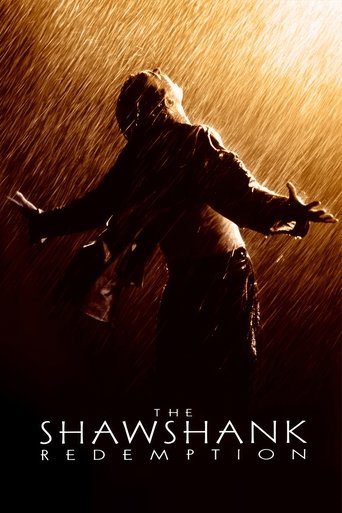



The Shawshank Redemption
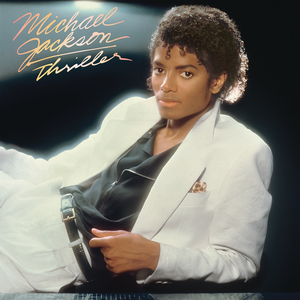
Thriller
Pride and Prejudice
Tokyo
Minecraft
Qwen3 Max ThinkingQwen3 Max Thinking


The Shawshank Redemption
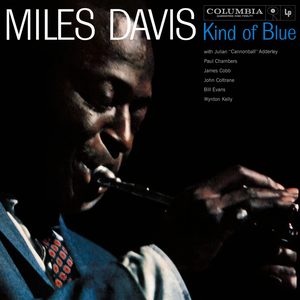
Kind of Blue
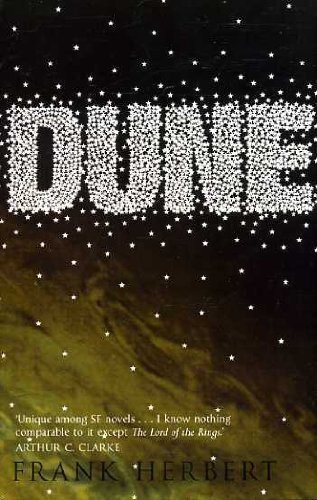
Dune
Kyoto
The Legend of Zelda: Ocarina of Time
Price and specs
Not enough votes to call it. On the specs, Qwen3 Max Thinking has the edge: bigger model tier, bigger context window. Mercury 2 costs 8.0x less per token.
| Spec | Mercury 2 | Qwen3 Max Thinking |
|---|---|---|
| Input price | $0.25/M tokens | $1.2/M tokens |
| Output price | $0.75/M tokens | $6/M tokens |
| Context window | 128K tokens | 262K tokens |
| Free API (OpenRouter) | No | No |
| Released | Mar 2026 | Feb 2026 |
| At 10M a month | $2.50 | $12.00 |
Input tokens at list price. No caching, no batch discount.
Where to run it
Mercury 21 host
Qwen3 Max Thinking
No hosts listed on OpenRouter.
Per million tokens. Prices and uptime via OpenRouter, checked 10 Oct 2026.
Common questions
What is the difference between Mercury 2 and Qwen3 Max Thinking?
Mercury 2 is developed by Inception while Qwen3 Max Thinking is developed by Qwen. Mercury 2 has a 128K token context window vs Qwen3 Max Thinking's 262K. You can compare their actual outputs across 53 challenges on Rival to see how they differ in practice.
Which is better, Mercury 2 or Qwen3 Max Thinking?
It depends on your use case. Mercury 2 and Qwen3 Max Thinking each have strengths in different areas. Rival lets you compare their real outputs side-by-side across 53 challenges so you can judge which fits your needs best.
How much does Mercury 2 cost compared to Qwen3 Max Thinking?
Mercury 2 costs $0.25/M input tokens and Qwen3 Max Thinking costs $1.2/M input tokens. Mercury 2 is $0.95/M cheaper per input. Check their side-by-side outputs on Rival to see if the price difference is justified by quality.
How can I compare Mercury 2 and Qwen3 Max Thinking on Rival?
This page shows a side-by-side comparison of Mercury 2 and Qwen3 Max Thinking across shared challenges. You can vote on which model produced the better output in a blind duel. Browsing and voting are free. No account is needed to look; signing in only saves your votes and likes.
More comparisons
Against the newest arrivals
- Mercury 2 vs Step 5 PreviewLanded Oct 2026
- Qwen3 Max Thinking vs Claude Haiku 5.5Landed Oct 2026
- Mercury 2 vs Ling 3.1 FlashLanded Oct 2026
- Qwen3 Max Thinking vs Mistral Large 4Landed Oct 2026
- Mercury 2 vs GPT-6.1 SolLanded Sep 2026
- Qwen3 Max Thinking vs Claude Sonnet 5.5Landed Sep 2026
- Mercury 2 vs Solar Mini 4Landed Sep 2026
- Qwen3 Max Thinking vs Qwen3.8 Max PrimeLanded Sep 2026


Same lab, same size, long tail
- Mercury 2 vs MercuryVersion compare
- Mercury 2 vs Mercury 2.5Same lab
- Qwen3 Max Thinking vs Qwen3.5 397B A17BVersion compare
- Qwen3 Max Thinking vs Qwen3.8 Omni FlashSame lab
- Mercury 2 vs GPT-4o (Omni)New provider
- Mercury 2 vs GPT-4o miniNew provider
- Mercury 2 vs GPT-5New provider
- Mercury 2 vs GPT-5 CodexNew provider