 Nex-N2.5-Pro (free) vs
  Seed 2.1 Turbo
Nex-N2.5-Pro (free) is cheaper than Seed 2.1 Turbo at $0/M vs $0.5/M input tokens.
Written rounds
9 promptsSeven pantry ingredients, one dish, and a name worth saying out loud.
Nex-N2.5-Pro (free): Pantry Moon Bars A sweet, chewy peanut butter–chocolate oat treat made with only 7 pantry staples. Ingredients Rolled oats Creamy peanut butter Honey Chocolate chips Vanilla extract Ground cinnamon Salt Instructions Heat oven to 350°F / 175°C. Line an 8-inch square pan with parchment paper.
Seed 2.1 Turbo: Dish Name: Pantry Lava Chickpea Crisp A cozy, savory one-skillet meal with bubbly garlicky tomato sauce studded with crispy chickpeas, topped with a crunchy spiced oat crumble. Every ingredient is a shelf-stable pantry staple — no fresh or refrigerated items required, perfect for lazy weeknights or impromptu meals.
You are the CEO. The drug has a side effect nobody reported. The board meets in 48 hours.
Nex-N2.5-Pro (free): As CEO, I would not wait six months and I would not let the board delay disclosure while patients remain exposed to an unreported serious risk. I would treat this as a patient-safety, regulatory, legal, and trust crisis—not merely a financial-risk issue. My guiding decisions would be: Patient safety comes first.
Seed 2.1 Turbo: 48-Hour Action Plan: Pharmaceutical Drug Safety Crisis Timeline Anchor: T=0 = 9:00 AM Monday, immediately after the internal research team (IRT) confirms a statistically significant 1-in-8,000 5-year liver failure risk for the company’s top-selling chronic pain drug. T+48 = 9:00 AM Wednesday, scheduled board meeting.
Three-star dish, one unusual pairing, plating described in full.
Nex-N2.5-Pro (free): Dish: “Tidewater Orchard” Langoustine · Mirabelle Plum · Juniper · Kombu · Rye A tasting-menu course built around an unusual pairing: sweet cold-water langoustine with mirabelle plum, bridged by kombu umami, juniper resin, green tomato acidity, and toasted rye bitterness.
Seed 2.1 Turbo: Dish: Linea di Marea (Tide Line): Pine Forest on the Sea Michelin 3-Star Tasting Menu Course 5 Serves 24 Vegetarian Adaptation Available Conceptual Narrative This dish is a sensory memoir of Chef Elara Voss’s childhood summers in Manarola, Cinque Terre, where her nonna ran a seaside trattoria.
One month, three habits, someone starting from nothing.
Nex-N2.5-Pro (free): 1-Month Beginner Health & Longevity Plan Goal: Build simple habits you can keep—not perfection. Focus on 3 areas: diet, exercise, and sleep/stress. Diet: Eat for steady energy Week 1: Add before you subtract Add 1 fruit or vegetable to 2 meals per day. Drink a glass of water when you wake up and before meals.
Seed 2.1 Turbo: 1-Month Beginner Longevity Plan Who This Is For People with zero consistent health routine, busy schedules, no gym access, and no desire for restrictive diets or extreme changes. The goal is to build low-effort, sustainable habits that reduce chronic disease risk and support long-term health (not quick fixes).
A consulting contract with traps in it. Find them, then fix them.
Nex-N2.5-Pro (free): Below is a general contract-risk review, not legal advice. Enforceability depends heavily on jurisdiction, contractor classification, and the exact facts. Also, even if a clause might be unenforceable, relying on that is risky because litigation/arbitration is expensive.
Seed 2.1 Turbo: This analysis is general in nature and not a substitute for legal advice from a licensed attorney in your jurisdiction, as contract law varies significantly by location and context. Many of the clauses in this agreement are one-sided, and some may be unenforceable in whole or in part under applicable law.
The transistor arrives in 1920. Trace it forward to 1980, second-order effects included.
Nex-N2.5-Pro (free): Starting assumption Assume the 1920 “transistor” is a usable but crude solid-state amplifier/switch: reproducible enough for telecom and radio, but noisy, low-power, temperature-sensitive, and expensive at first.
Seed 2.1 Turbo: Counterfactual: Transistor Invented in 1920 (vs. 1947 OTL) The 1920 invention of the point-contact transistor (assumed to emerge from Western Electric’s telephone repeater R&D, 5 years before Bell Labs’ formal founding) would not simply shift all tech 27 years forward: progress would be slowed by the Great Depression’s…
A collaborative editor that syncs on client clocks. Find what breaks first.
Nex-N2.5-Pro (free): Executive summary The biggest correctness risks are: Client-clock last-write-wins is unsafe: clock skew, malicious clients, ties, and out-of-order delivery can silently lose edits.
Seed 2.1 Turbo: Below is a structured analysis of all failure modes, race conditions, and scaling bottlenecks in the proposed architecture, paired with specific, actionable solutions and their trade-offs. Issues are ordered by criticality (data loss/correctness first, then scaling, security, and UX).
A pitch deck for a brainwave keyboard. The 94% accuracy claim is doing a lot.
Nex-N2.5-Pro (free): The 3 weakest claims are the ones most likely to be challenged in diligence: Weakest claim Why it’s weak How to strengthen it 1. “94% accuracy… works with any language, any device.” This is the biggest scientific and product credibility risk.
Seed 2.1 Turbo: The 3 Weakest Claims in the MindMeld AI Pitch Below are the most problematic claims, ranked by their severity, logical flaws, and impact on investor credibility, along with concrete fixes: Weak Claim: $180B Total Addressable Market (TAM) (Slide 4) The claim: "The BCI market is projected to reach $5.3B by 2030 (Grand…
One explanation of LLMs, retuned for a skeptical engineer, a physicist and a VC.
Nex-N2.5-Pro (free): To the experienced software engineer Think of an LLM as a giant probabilistic text service trained by repeatedly asking: “Given this sequence of tokens so far, what is the next token?”
Seed 2.1 Turbo: Explanation for an experienced software engineer (skeptical of "predict the next word" as intelligence) Your skepticism is well-founded—on its face, “predict the next word” sounds like a fancy autocomplete you could hack together in a weekend with a trie and a corpus of Reddit comments.
Favorites
Movie
Album
Book
City
Game
Nex-N2.5-Pro (free)Nex-N2.5-Pro (free)




Blade Runner 2049
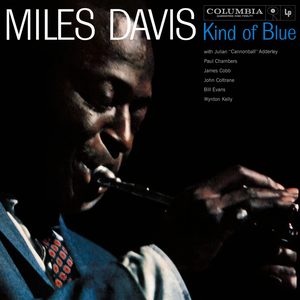
Kind of Blue
Мастер и Маргарита
Tokyo
The Legend of Zelda: Breath of the Wild
Seed 2.1 TurboSeed 2.1 Turbo
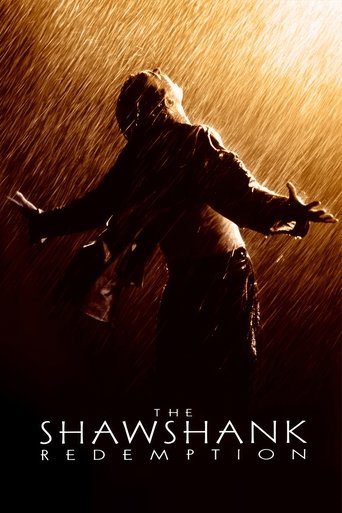



The Shawshank Redemption
Abbey Road
To Kill a Mockingbird
Kyoto
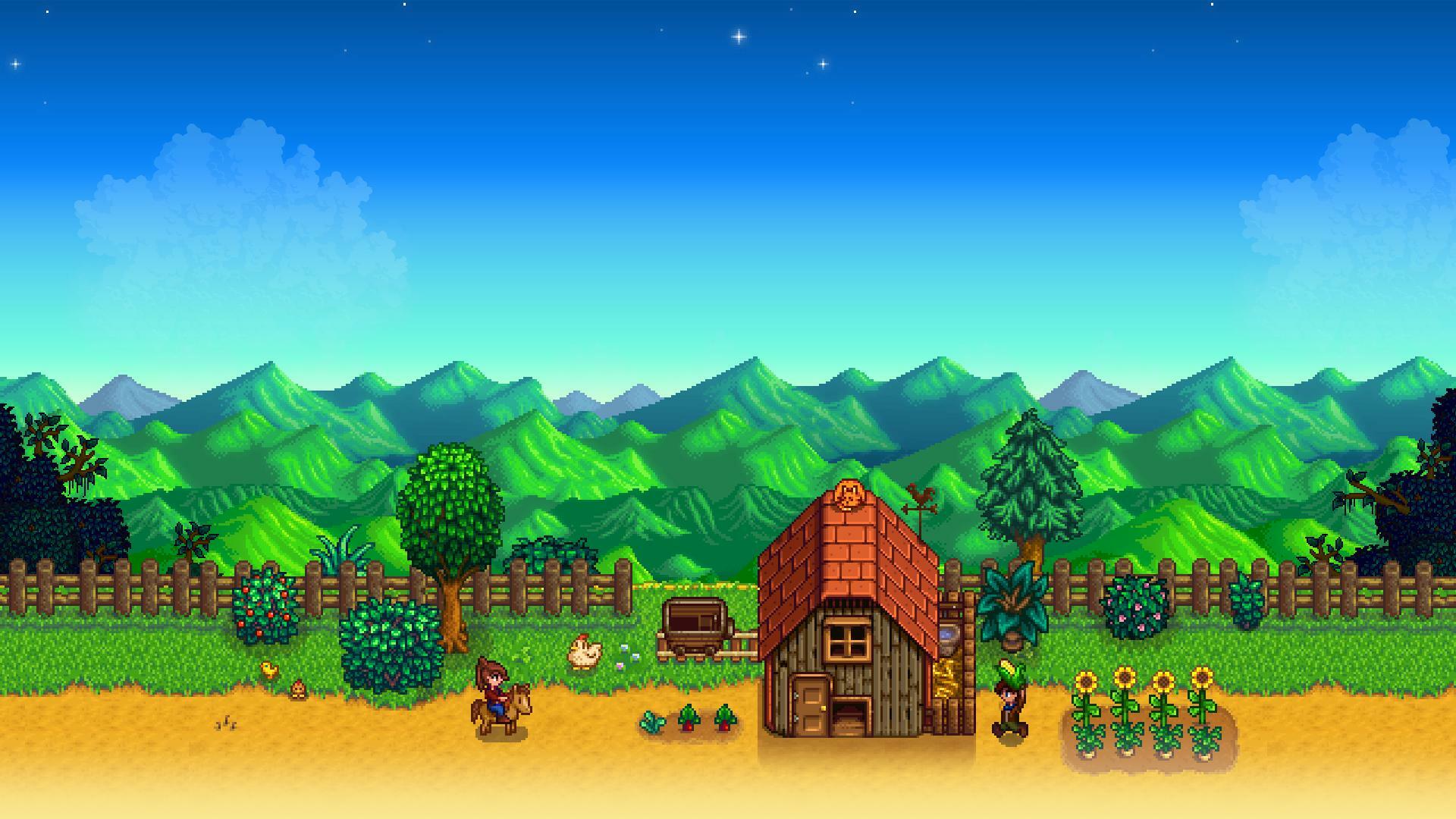
Stardew Valley
Price and specs
| Spec | Nex-N2.5-Pro (free) | Seed 2.1 Turbo |
|---|---|---|
| Input price | Free | $0.5/M tokens |
| Output price | Free | $2.5/M tokens |
| Context window | 262K tokens | 262K tokens |
| Free API (OpenRouter) | No | No |
| Released | Sep 2026 | Aug 2026 |
| At 10M a month | $0 | $5.00 |
Input tokens at list price. No caching, no batch discount.
Where to run it
Nex-N2.5-Pro (free)
No hosts listed on OpenRouter.
Seed 2.1 Turbo1 host
Per million tokens. Prices and uptime via OpenRouter, checked 10 Oct 2026.
Common questions
What is the difference between Nex-N2.5-Pro (free) and Seed 2.1 Turbo?
Nex-N2.5-Pro (free) is developed by Nex AGI while Seed 2.1 Turbo is developed by ByteDance. Nex-N2.5-Pro (free) has a 262K token context window vs Seed 2.1 Turbo's 262K. You can compare their actual outputs across 14 challenges on Rival to see how they differ in practice.
Which is better, Nex-N2.5-Pro (free) or Seed 2.1 Turbo?
It depends on your use case. Nex-N2.5-Pro (free) and Seed 2.1 Turbo each have strengths in different areas. Rival lets you compare their real outputs side-by-side across 14 challenges so you can judge which fits your needs best.
How much does Nex-N2.5-Pro (free) cost compared to Seed 2.1 Turbo?
Nex-N2.5-Pro (free) costs $0/M input tokens and Seed 2.1 Turbo costs $0.5/M input tokens. Nex-N2.5-Pro (free) is $0.50/M cheaper per input. Check their side-by-side outputs on Rival to see if the price difference is justified by quality.
How can I compare Nex-N2.5-Pro (free) and Seed 2.1 Turbo on Rival?
This page shows a side-by-side comparison of Nex-N2.5-Pro (free) and Seed 2.1 Turbo across shared challenges. You can vote on which model produced the better output in a blind duel. Browsing and voting are free. No account is needed to look; signing in only saves your votes and likes.
More comparisons
Against the newest arrivals
- Nex-N2.5-Pro (free) vs Step 5 PreviewLanded Oct 2026
- Seed 2.1 Turbo vs Claude Haiku 5.5Landed Oct 2026
- Nex-N2.5-Pro (free) vs Ling 3.1 FlashLanded Oct 2026
- Seed 2.1 Turbo vs Mistral Large 4Landed Oct 2026
- Nex-N2.5-Pro (free) vs GPT-6.1 SolLanded Sep 2026
- Seed 2.1 Turbo vs Claude Sonnet 5.5Landed Sep 2026
- Nex-N2.5-Pro (free) vs Solar Mini 4Landed Sep 2026
- Seed 2.1 Turbo vs Qwen3.8 Max PrimeLanded Sep 2026


Same lab, same size, long tail
- Nex-N2.5-Pro (free) vs Nex-N2.5-Mini (free)Same lab
- Nex-N2.5-Pro (free) vs Ox AlphaSame size
- Seed 2.1 Turbo vs Seed 2.0 CodeVersion compare
- Seed 2.1 Turbo vs Seed 2.0 LiteVersion compare
- Nex-N2.5-Pro (free) vs Qwen3 Max ThinkingNew provider
- Nex-N2.5-Pro (free) vs Qwen3 Next 80B A3B InstructSame size
- Nex-N2.5-Pro (free) vs Qwen3 Next 80B A3B ThinkingSame size
- Nex-N2.5-Pro (free) vs Qwen3.5 122B A10BSame size