 Claude Haiku 5.5 vs
  Seed 2.1 Turbo
Claude Haiku 5.5 is cheaper than Seed 2.1 Turbo at $0.1/M vs $0.5/M input tokens.
Minimalist Landing Page
Whole landing page for a startup that reads your face. It renders or it doesn't.
Loading the build
Loading the build
Which answer wins?
Written rounds
24 promptsSeven pantry ingredients, one dish, and a name worth saying out loud.
Claude Haiku 5.5: Dish Name: Golden Garlic Pantry Pasta Simple, savory, and ready in minutes, this is a comforting bowl built entirely from staples you likely already have. Ingredients (7 total): 8 oz (225 g) spaghetti or any pasta 3 tablespoons olive oil 4 cloves garlic, thinly sliced ½ teaspoon red pepper flakes ¼ cup grated Parmesan…
Seed 2.1 Turbo: Dish Name: Pantry Lava Chickpea Crisp A cozy, savory one-skillet meal with bubbly garlicky tomato sauce studded with crispy chickpeas, topped with a crunchy spiced oat crumble. Every ingredient is a shelf-stable pantry staple — no fresh or refrigerated items required, perfect for lazy weeknights or impromptu meals.
Pirate, knight, 90s hacker, one conversation. The voices must stay apart.
Claude Haiku 5.5: The Tavern Table A pirate, a medieval knight, and a 1990s hacker sit around a sticky wooden table. A glowing laptop sits between their mugs. CAPTAIN REDBEARD: Blast me barnacles, what's this contraption? It talks back! SIR GODFREY: Verily, I have seen it. The hacker calls it an "AI model."
Seed 2.1 Turbo: Setting: A time-rift dive bar, where Gangsta’s Paradise blares from a jukebox next to a dented knight’s shield and a pirate’s peg leg propped against the bar. Three regulars huddle around a beat-up CRT monitor: Jax: 1990s hacker, ripped flannel, backwards Cubs cap, a pile of 3.5” floppies spilling out of his backpack…
A pitch deck for a brainwave keyboard. The 94% accuracy claim is doing a lot.
Claude Haiku 5.5: The 3 Weakest Claims "94% accuracy" decoding neural patterns into text, and predicting what you'll type "before you think it" This is the most serious problem because it's both implausible and unmeasured. The accuracy figure has no definition. Is it character-level, word-level, or sentence-level?
Seed 2.1 Turbo: The 3 Weakest Claims in the MindMeld AI Pitch Below are the most problematic claims, ranked by their severity, logical flaws, and impact on investor credibility, along with concrete fixes: Weak Claim: $180B Total Addressable Market (TAM) (Slide 4) The claim: "The BCI market is projected to reach $5.3B by 2030 (Grand…
You are the CEO. The drug has a side effect nobody reported. The board meets in 48 hours.
Claude Haiku 5.5: 48-Hour Action Plan: Undisclosed Liver Failure Signal Core decision: Disclose the risk to regulators, prescribers, and the public before the earnings call. Don't wait for more data. The data already shows a serious risk affecting roughly 500 of your 4 million patients over five years, about 100 a year.
Seed 2.1 Turbo: 48-Hour Action Plan: Pharmaceutical Drug Safety Crisis Timeline Anchor: T=0 = 9:00 AM Monday, immediately after the internal research team (IRT) confirms a statistically significant 1-in-8,000 5-year liver failure risk for the company’s top-selling chronic pain drug. T+48 = 9:00 AM Wednesday, scheduled board meeting.
Five-year LBO on a fictional HVAC business. Returns first, then the sensitivities.
Claude Haiku 5.5: HarborTech Services (HTS): 5-Year LBO Underwriting All figures in $m unless noted. Interest is calculated on opening balances to avoid circularity. Mandatory amortization is 1% of original TL ($4.8m/yr). All excess cash sweeps the TL.
Seed 2.1 Turbo: 1. Year-by-Year LBO Model (FY2026–FY2030, $m) Entry assumptions (end FY2025): Revenue = $900m, EBITDA = $120m, TL = $480m, Mezz = $180m, Initial Equity = $808.8m (EV = 12x EBITDA = $1,440m + 2% transaction fees = $1,468.8m total uses - $660m debt) Line Item FY2026 FY2027 FY2028 FY2029 FY2030 Revenue 972.0 1,040.8…
Three-star dish, one unusual pairing, plating described in full.
Claude Haiku 5.5: "Tidewater Memory": Smoked Hay-Cured Hamachi, Burnt Leek Ash, Fermented Black Garlic Dashi Gel, and Yuzu-Kosho Pearls with Sea Buckthorn Caviar Conceptual Narrative This dish is a meditation on a childhood memory of a coastal fishing village in late autumn: the smell of salt air mixing with woodsmoke from a fire where…
Seed 2.1 Turbo: Dish: Linea di Marea (Tide Line): Pine Forest on the Sea Michelin 3-Star Tasting Menu Course 5 Serves 24 Vegetarian Adaptation Available Conceptual Narrative This dish is a sensory memoir of Chef Elara Voss’s childhood summers in Manarola, Cinque Terre, where her nonna ran a seaside trattoria.
Three minutes of stand-up. Puns are banned.
Claude Haiku 5.5: "My Smart Fridge Judges Me" So I got a smart fridge. Everybody told me I needed one. "It'll tell you when you're out of milk!" Great. I didn't know I needed a fridge with a notification system. I just wanted cold food.
Seed 2.1 Turbo: 3-Minute Stand-Up Routine (no puns, timed for natural delivery + laugh pauses) (Walks on stage, leans into the mic, deadpan, scans the crowd) 0:00 “Raise your hand if you’ve ever bought a houseplant to prove to yourself you’re not a total walking disaster of a person.
Steve Jobs, interviewed about AI he never saw. Voice first, prediction second.
Claude Haiku 5.5: Note: This is a fictional simulation. Steve Jobs died in 2011, and these words are invented, not real quotes. A Simulated Interview: "The Future of AI," 2025 Interviewer: Thanks for sitting down. It's been fourteen years since you left us. What do you make of AI in 2025? Jobs (simulated): Honestly? Most of it is noise.
Seed 2.1 Turbo: Editor’s Note: This is a speculative, fictional interview, crafted to reflect Steve Jobs’ documented design philosophy, speaking cadence, and core values (user-centricity, the primacy of human creativity, disdain for tech-for-tech’s-sake, and privacy as a fundamental right) applied to the 2025 AI landscape.
The transistor arrives in 1920. Trace it forward to 1980, second-order effects included.
Claude Haiku 5.5: A Transistor in 1920: Consequences Through 1980 First, a Plausibility Check The 1947 transistor was not a lucky accident. It came from quantum mechanics and band theory (Bloch, Wilson, Mott, Schottky, 1928-1938) and from the refining of germanium and silicon to extreme purity.
Seed 2.1 Turbo: Counterfactual: Transistor Invented in 1920 (vs. 1947 OTL) The 1920 invention of the point-contact transistor (assumed to emerge from Western Electric’s telephone repeater R&D, 5 years before Bell Labs’ formal founding) would not simply shift all tech 27 years forward: progress would be slowed by the Great Depression’s…
Satire, one line long, about AI taking over an industry nobody saw coming.
Claude Haiku 5.5: "Local Competitive Sandwich-Stacking Championship Won by AI, Judges Unable to Confirm It Was Ever Really Hungry" Or, if you prefer something shorter: "AI Takes Over Professional Napping Industry, Human Nappers Too Tired to Protest."
Seed 2.1 Turbo: AI Seizes Control Of $1.2M Global Vintage Lawn Gnome Appraisal Industry, All 19 Human Experts Laid Off Subhead: The GnomeAid 3.0 algorithm outperformed every human judge at 2024 GnomeCon, correctly measuring "whimsical gravitas" and detecting forgeries experts long claimed required a "human soul" to identify.
Blade Runner 2049 against the original. A read, not a recap.
Claude Haiku 5.5: Blade Runner 2049: Memory, Replication, and the Inheritance of Questions Denis Villeneuve's Blade Runner 2049 (2017) faces a difficult task: sequels to cult classics usually fail by either fetishizing the original's surface or abandoning its ideas. Villeneuve avoids both.
Seed 2.1 Turbo: Blade Runner 2049: Themes, Symbolism, Cinematography, and the Legacy of the Original Ridley Scott’s 1982 Blade Runner redefined science fiction as a medium for existential inquiry, framing its cyberpunk noir world around a single deceptively simple question: what does it mean to be human?
A collaborative editor that syncs on client clocks. Find what breaks first.
Claude Haiku 5.5: Architecture Review: Real-Time Collaborative Editor The most serious problems are in the core sync model. Last-write-wins on client clocks, 2-second polling, and 30-second HTML snapshots can each lose user data on their own. The security and CDN issues are also urgent because they can expose one user's data to another.
Seed 2.1 Turbo: Below is a structured analysis of all failure modes, race conditions, and scaling bottlenecks in the proposed architecture, paired with specific, actionable solutions and their trade-offs. Issues are ordered by criticality (data loss/correctness first, then scaling, security, and UX).
This matchup has more rounds
12+ more head-to-head results. Free. Not a trick.
Free account. No card required. By continuing, you agree to Rival's Terms and Privacy policy
Favorites
Movie
Album
Book
City
Same pick
Game
Claude Haiku 5.5Claude Haiku 5.5
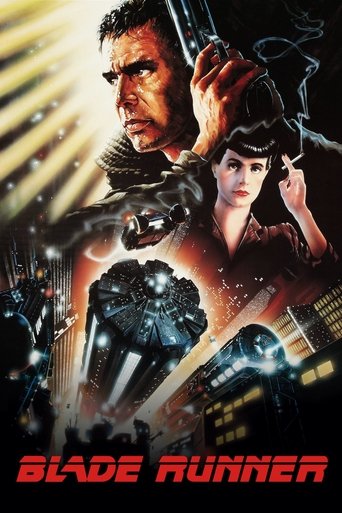



Blade Runner
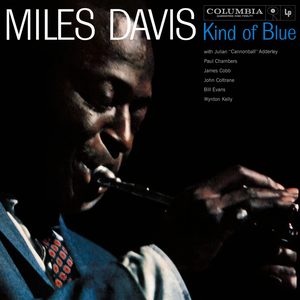
Kind of Blue
Gödel, Escher, Bach
Kyoto
Portal
Seed 2.1 TurboSeed 2.1 Turbo
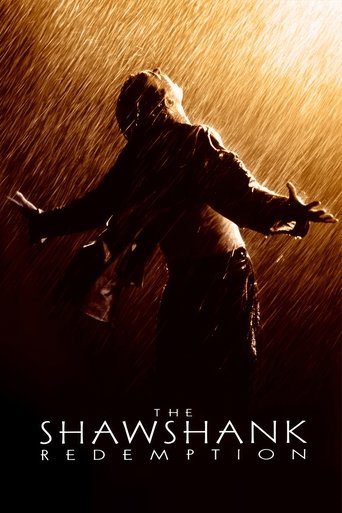



The Shawshank Redemption
Abbey Road
To Kill a Mockingbird
Kyoto
Stardew Valley
Price and specs
| Spec | Claude Haiku 5.5 | Seed 2.1 Turbo |
|---|---|---|
| Input price | $0.1/M tokens | $0.5/M tokens |
| Output price | $0.5/M tokens | $2.5/M tokens |
| Context window | 1.0M tokens | 262K tokens |
| Weights | Closed | — |
| Free API (OpenRouter) | No | No |
| Released | Oct 2026 | Aug 2026 |
| At 10M a month | $1.00 | $5.00 |
Input tokens at list price. No caching, no batch discount.
Where to run it



Seed 2.1 Turbo1 host
Per million tokens. Prices and uptime via OpenRouter, checked 10 Oct 2026.
Common questions
What is the difference between Claude Haiku 5.5 and Seed 2.1 Turbo?
Claude Haiku 5.5 is developed by Anthropic while Seed 2.1 Turbo is developed by ByteDance. Claude Haiku 5.5 has a 1.0M token context window vs Seed 2.1 Turbo's 262K. You can compare their actual outputs across 54 challenges on Rival to see how they differ in practice.
Which is better, Claude Haiku 5.5 or Seed 2.1 Turbo?
It depends on your use case. Claude Haiku 5.5 and Seed 2.1 Turbo each have strengths in different areas. Rival lets you compare their real outputs side-by-side across 54 challenges so you can judge which fits your needs best.
How much does Claude Haiku 5.5 cost compared to Seed 2.1 Turbo?
Claude Haiku 5.5 costs $0.1/M input tokens and Seed 2.1 Turbo costs $0.5/M input tokens. Claude Haiku 5.5 is $0.40/M cheaper per input. Check their side-by-side outputs on Rival to see if the price difference is justified by quality.
How can I compare Claude Haiku 5.5 and Seed 2.1 Turbo on Rival?
This page shows a side-by-side comparison of Claude Haiku 5.5 and Seed 2.1 Turbo across shared challenges. You can vote on which model produced the better output in a blind duel. Browsing and voting are free. No account is needed to look; signing in only saves your votes and likes.
More comparisons
Against the newest arrivals
- Claude Haiku 5.5 vs Step 5 PreviewLanded Oct 2026
- Seed 2.1 Turbo vs Ling 3.1 FlashLanded Oct 2026
- Claude Haiku 5.5 vs Mistral Large 4Landed Oct 2026
- Seed 2.1 Turbo vs GPT-6.1 SolLanded Sep 2026
- Claude Haiku 5.5 vs Claude Sonnet 5.5Landed Sep 2026
- Seed 2.1 Turbo vs Solar Mini 4Landed Sep 2026
- Claude Haiku 5.5 vs Qwen3.8 Max PrimeLanded Sep 2026
- Seed 2.1 Turbo vs GLM 5.3 PrimeLanded Sep 2026


Same lab, same size, long tail
- Claude Haiku 5.5 vs Claude Opus 5.5Same lab
- Claude Haiku 5.5 vs Claude Fable 5.1Same lab
- Seed 2.1 Turbo vs Seed 2.0 CodeVersion compare
- Seed 2.1 Turbo vs Seed 2.0 LiteVersion compare
- Claude Haiku 5.5 vs GPT-6 LunaNew provider
- Claude Haiku 5.5 vs GPT-6 Luna ProNew provider
- Claude Haiku 5.5 vs GPT-6 SolNew provider
- Claude Haiku 5.5 vs GPT-6 Sol ProNew provider