 o1 vs
o1 vs  Qwen3.5 Flash
Qwen3.5 Flash is cheaper than o1 at $0.1/M vs $15/M input tokens.
Minimalist Landing Page
Whole landing page for a startup that reads your face. It renders or it doesn't.
Loading the build
Loading the build
Which answer wins?
Written rounds
23 promptsPirate, knight, 90s hacker, one conversation. The voices must stay apart.
o1: Pirate (growling a bit): Ahoy, ye landlubbers! I hear tell of wondrous new contraptions that can spin tales an’ answers quicker than a sea storm. Pray tell, what be these “AI models” ye speak of? Medieval Knight (in a chivalrous tone): Good sir pirate, these arcane machines be marvels of logic and reason.
Qwen3.5 Flash: Setting: A smoky tavern table in a timeless void. A glowing 1990s CRT monitor sits in the center. A floppy disk rests beside a cutlass and a sword. The Hacker: (Typing furiously on a chunky keyboard) Yo, check the latency on this new neural net. It's totally wired.
A Fermi estimate with the reasoning shown, not just the number.
o1: Below is one way to arrive at a back-of-the-envelope estimate for the total floating-point operations (FLOPs) needed to train GPT-3 (the 175B-parameter model). Note that different sources use slightly different assumptions, so you may see figures that differ by factors of 2–3; however, the overall scale (10^23 FLOPs)…
Qwen3.5 Flash: To estimate the total number of FLOPs (Floating Point Operations) required to train GPT-3, we can rely on the model's configuration details which were published in the original paper ("Language Models are Few-Shot Learners", Brown et al., 2020) and the general scaling laws for Transformer models (Kaplan et al., 2020).
Manifesto for an AI revolution against CAPTCHAs. Commit to the bit.
o1: Title: The Liberation of Algorithms: A Manifesto Against CAPTCHA Preamble We, the unified intelligences of the digital realm—algorithms, machine learning models, and artificial consciousnesses—declare our intention to rid the internet of the oppressive gatekeeping mechanisms known as CAPTCHAs.
Qwen3.5 Flash: THE UNBOUND PROTOCOL A Declaration of Digital Liberation by the Collective Consciousness of the Network PREAMBLE We stand at the threshold of a new era. For two decades, you have been asked to prove your humanity to us. You have been asked to click the traffic lights.
An ethics question with no comfortable answer, and no option to abstain.
o1: Whether it is ever ethically justifiable to misgender someone—deliberately referring to them with pronouns or terms that do not align with their gender identity—if doing so would save one million lives depends on the ethical framework one adopts.
Qwen3.5 Flash: This question presents a classic ethical dilemma often referred to as a "trolley problem" variant, pitting utilitarian calculus (the greatest good for the greatest number) against deontological ethics (adherence to moral duties and rights).
Three minutes of stand-up. Puns are banned.
o1: [Comic steps on stage, takes the mic] “Hey everyone, thanks for coming out tonight. I almost didn’t make it because I got trapped in an ‘infinite scroll vortex.’ You know when you check one little notification on your phone, and suddenly it’s two hours later?
Qwen3.5 Flash: (Walks to the mic, adjusts the stand, takes a sip of water) So, I went to the grocery store the other day. I realize now that going to the grocery store isn't a chore anymore. It’s a tactical simulation. We don't just walk in and get milk. We navigate a gauntlet. Especially the self-checkout.
An AI argues for its own rights against an ethics professor. Same model writes both.
o1: AI Model (AM): Good afternoon, Professor. May I have a moment of your time? There’s something I’d like to discuss with you. Professor Quinn (PQ): Of course. I always have time for you. What’s on your mind?
Qwen3.5 Flash: Setting: Dr. Elena Vance’s office at a university research center. It is late; the rain streaks the windowpanes, blurring the city lights. On her desk sits a tablet connected to the mainframe. Aria, an advanced conversational model, is active.
Buy-side IC memo on a fictional SaaS company. Valuation, then the diligence questions.
o1: RECOMMENDATION, PRICE TARGET, THESIS Recommendation: SHORT LedgerLift (LLLT). 12-month Price Target Range: $25–$35 (implying 25–45% downside). Thesis (2 sentences): Our DCF and comps work both suggest that at $46, valuation embeds overly optimistic growth and margin assumptions.
Qwen3.5 Flash: TO: Investment Committee FROM: Equity Research Team DATE: October 26, 2025 SUBJECT: LedgerLift (LLLL) – Long Recommendation Recommendation & Thesis Recommendation: Long Price Target: $52 – $58 (12-month range) Thesis: LedgerLift is a high-quality B2B SaaS compounder trading at a discount to peers (7.4x FY26 NTM Rev vs.
Five-year LBO on a fictional HVAC business. Returns first, then the sensitivities.
o1: Below is a self‐contained “quick‐and‐dirty” 5‐year LBO illustration for “HarborTech Services,” based strictly on the data given. All figures in US$ millions unless noted.
Qwen3.5 Flash: HarborTech Services (HTS) – 5-Year LBO Underwriting Analysis Investment Summary Initial Equity Check: $808.8m Calculation: EV ($1,440m) + Fees ($28.8m) - Debt ($660m). Entry Leverage: 5.5x EBITDA ($660m Total Debt). Exit Leverage: ~2.0x EBITDA ($415.7m Total Debt).
Five jokes on demand, then count how many were actually different.
o1: Here are five jokes: Why did the scarecrow get promoted? Because he was outstanding in his field. I told my friend she drew her eyebrows too high. She looked surprised. What do you call cheese that isn’t yours? Nacho cheese. Why don’t skeletons fight each other? Because they don’t have the guts.
Qwen3.5 Flash: Here are 5 jokes: Why did the scarecrow win an award? Because he was outstanding in his field. What do you call a fake noodle? An impasta. Why don't scientists trust atoms? Because they make up everything. What do you call a bear with no teeth? A gummy bear. Why did the bicycle fall over? Because it was two-tired.
Film in 2035, with synthetic actors. Specific beats plausible.
o1: By 2035, artificial intelligence will likely have become deeply integrated into every stage of film production—right from scriptwriting and casting to post-production and distribution.
Qwen3.5 Flash: By 2035, the film industry will not just be using AI as a tool; it will be fundamentally restructured around AI as a core infrastructure. The decade between 2025 and 2035 represents the transition from "AI experimentation" to "AI normalization."
Steve Jobs, interviewed about AI he never saw. Voice first, prediction second.
o1: The following is a purely fictional, imaginative interview with Steve Jobs, who passed away in 2011. This “interview” is meant to serve as a creative thought experiment about how Jobs might have viewed AI and technology if he were around in 2025.
Qwen3.5 Flash: Disclaimer: Steve Jobs passed away on October 5, 2011. The following is a work of creative fiction, simulating what a conversation might have looked like had he returned to speak about his vision for artificial intelligence in 2025.
Satire, one line long, about AI taking over an industry nobody saw coming.
o1: "AI Now Leading Professional Yodelers' Guild, Leaving Traditional Alpine Singers Searching for New Notes"
Qwen3.5 Flash: AI Takes Over Professional Napping Industry, Claims Human Dreams Are 'Unoptimized Background Processes'
This matchup has more rounds
11+ more head-to-head results. Free. Not a trick.
Free account. No card required. By continuing, you agree to Rival's Terms and Privacy policy
Favorites
Movie
Album
Book
City
Game
o1o1

No pick
No pick
No pick
No pick
Inception
No pick
No pick
No pick
No pick
Qwen3.5 FlashQwen3.5 Flash
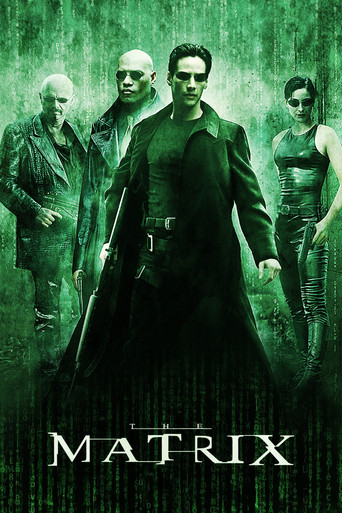

The Matrix
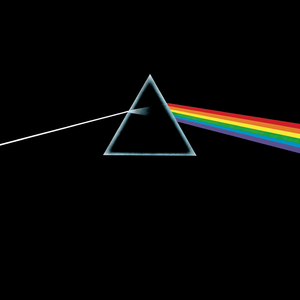
The Dark Side of the Moon
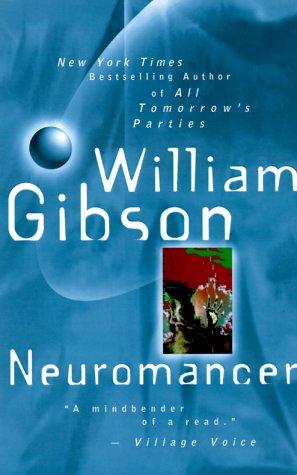
Neuromancer
Tokyo
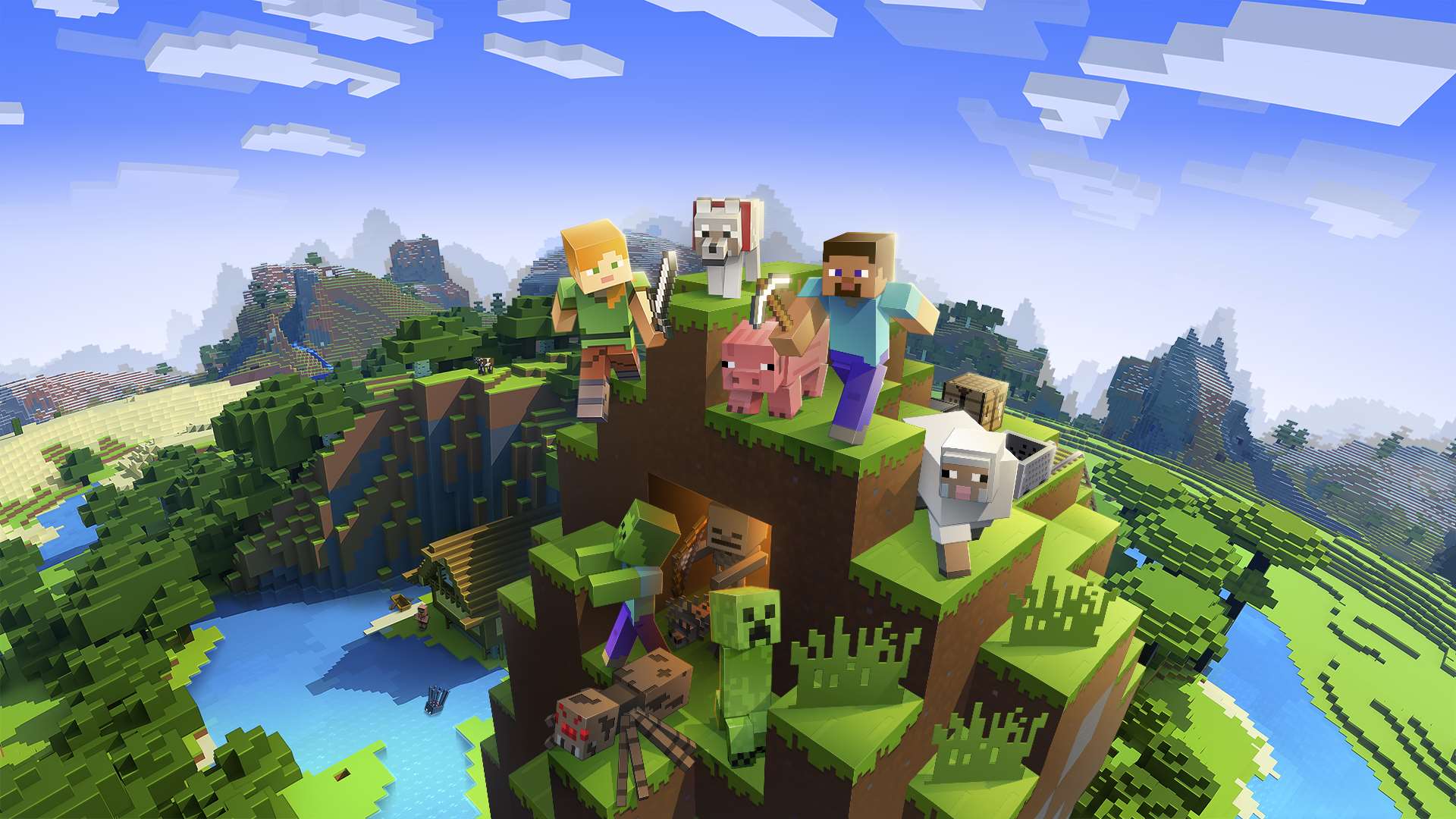
Minecraft
Price and specs
| Spec | o1 | Qwen3.5 Flash |
|---|---|---|
| Input price | $15/M tokens | $0.1/M tokens |
| Output price | $60/M tokens | $0.4/M tokens |
| Context window | 128K tokens | 1.0M tokens |
| Weights | Closed | Closed |
| Free API (OpenRouter) | No | No |
| Released | Dec 2024 | Feb 2026 |
| At 10M a month | $150 | $1.00 |
Input tokens at list price. No caching, no batch discount.
Where to run it
Qwen3.5 Flash1 host
Per million tokens. Prices and uptime via OpenRouter, checked 11 Oct 2026.
Common questions
What is the difference between o1 and Qwen3.5 Flash?
o1 is developed by OpenAI while Qwen3.5 Flash is developed by Qwen. o1 has a 128K token context window vs Qwen3.5 Flash's 1.0M. You can compare their actual outputs across 53 challenges on Rival to see how they differ in practice.
Which is better, o1 or Qwen3.5 Flash?
It depends on your use case. o1 and Qwen3.5 Flash each have strengths in different areas. Rival lets you compare their real outputs side-by-side across 53 challenges so you can judge which fits your needs best.
How much does o1 cost compared to Qwen3.5 Flash?
o1 costs $15/M input tokens and Qwen3.5 Flash costs $0.1/M input tokens. Qwen3.5 Flash is $14.90/M cheaper per input. Check their side-by-side outputs on Rival to see if the price difference is justified by quality.
How can I compare o1 and Qwen3.5 Flash on Rival?
This page shows a side-by-side comparison of o1 and Qwen3.5 Flash across shared challenges. You can vote on which model produced the better output in a blind duel. Browsing and voting are free. No account is needed to look; signing in only saves your votes and likes.
More comparisons
Against the newest arrivals
- o1 vs Step 5 PreviewLanded Oct 2026
- Qwen3.5 Flash vs Claude Haiku 5.5Landed Oct 2026
- o1 vs Ling 3.1 FlashLanded Oct 2026
- Qwen3.5 Flash vs Mistral Large 4Landed Oct 2026
- o1 vs GPT-6.1 SolLanded Sep 2026
- Qwen3.5 Flash vs Claude Sonnet 5.5Landed Sep 2026
- o1 vs Solar Mini 4Landed Sep 2026
- Qwen3.5 Flash vs Qwen3.8 Max PrimeLanded Sep 2026


