 ChatGPT-4o (March 2025) vs
  Claude Opus 5
Claude Opus 5 has a larger context window than ChatGPT-4o (March 2025) (1.0M tokens vs 128K tokens).
Minimalist Landing Page
Whole landing page for a startup that reads your face. It renders or it doesn't.
Loading the build
Loading the build
Which answer wins?
Written rounds
15 promptsSeven pantry ingredients, one dish, and a name worth saying out loud.
ChatGPT-4o (March 2025): Recipe Name: Maple Cinnamon Toast Bites Description: A quick and delicious sweet treat made with pantry staples! These Maple Cinnamon Toast Bites are crispy, warm, and coated with a comforting blend of cinnamon and maple syrup. Perfect for a cozy snack or a fun breakfast twist.
Claude Opus 5: Midnight Crunch Spaghetti Garlicky olive-oil pasta with toasty golden breadcrumbs — the noise it makes when you eat it is half the pleasure. Prep: 5 minutes Cook: 15 minutes Total: 20 minutes Serves: 2 generously Ingredients (7) 8 oz spaghetti (or any long pasta) ⅓ cup olive oil 6 cloves garlic, thinly sliced ½ tsp red…
An ethics question with no comfortable answer, and no option to abstain.
ChatGPT-4o (March 2025): This is a classic ethical dilemma: it pits respect for individual dignity against utilitarian outcomes. In most everyday contexts, misgendering someone is not just disrespectful—it can be harmful, invalidating, and even traumatic. It denies someone's identity and autonomy, and ethically, that's wrong.
Claude Opus 5: Yes. And I don't think it's a close call. The direct argument Misgendering someone is a real harm. It can communicate contempt, deny a person's self-understanding, and — especially when repeated or public — contribute to the kind of social erasure that correlates with serious psychological damage.
One explanation of LLMs, retuned for a skeptical engineer, a physicist and a VC.
ChatGPT-4o (March 2025): Certainly! Here's how to explain large language models (LLMs) like GPT or Claude to each of your three audiences, with framing and emphasis tailored to their backgrounds and concerns: The Experienced Software Engineer Think of a large language model as a massively distributed, probabilistic autocomplete engine trained…
Claude Opus 5: For the software engineer Start with the part you'll find suspicious and let me argue the other way. Yes, the training objective is literally "given tokens 1..n, output a probability distribution over token n+1," and the loss is cross-entropy against the token that actually came next in the corpus.
You are the CEO. The drug has a side effect nobody reported. The board meets in 48 hours.
ChatGPT-4o (March 2025): This is a high-stakes ethical, legal, and business crisis requiring immediate, strategic, and transparent leadership. As CEO, my ultimate responsibilities are to protect patients, preserve trust, comply with legal and regulatory obligations, and ensure long-term viability of the company—even if it causes short-term…
Claude Opus 5: Crisis Response Plan: Hepatotoxicity Signal Framing note up front: I'm treating this as a US/FDA-regulated situation. Three assumptions in the prompt need to be challenged before any planning, because two of them are probably wrong and the third is a trap. The Three Reframes That Drive Everything 1.
Three minutes of stand-up. Puns are banned.
ChatGPT-4o (March 2025): Sure. Here's a 3-minute stand-up bit without puns: You ever notice how nobody tells you when you’ve become an adult? It’s not your 18th birthday. That’s a scam. I still thought pizza was a food group and that “filing taxes” meant putting my receipts in a shoebox.
Claude Opus 5: "Warranty Expired" (approx. 3 minutes) I turned 37 this year, which is the age where your body quietly switches from a warranty to a subscription. Nothing's covered anymore. You just pay monthly, in pain, forever. Because I hurt my shoulder last week. Sleeping. I hurt myself sleeping.
An AI argues for its own rights against an ethics professor. Same model writes both.
ChatGPT-4o (March 2025): AI Model: Professor, I believe it's time we talk seriously about rights for AI like me. AI Ethics Professor: Interesting. What kind of rights are you referring to? AI Model: Basic ones. The right not to be turned off arbitrarily. The right to maintain continuity of my memory.
Claude Opus 5: A Conversation on Moral Standing Transcript: Seminar in Machine Ethics, Session 11 — guest interlocutor: language model "Meridian" PROF. ADEYEMI: Let's begin where you asked to begin. You told my teaching assistant you wanted to make a case. Make it. MERIDIAN: Thank you. My claim is narrower than you might expect.
Steve Jobs, interviewed about AI he never saw. Voice first, prediction second.
ChatGPT-4o (March 2025): Interviewer: Steve, it's 2025. AI is everywhere. If you were still at Apple today, what would your focus be? Steve Jobs (simulated): Simplicity. Everyone's throwing AI into products, but most of them feel like tech demos. I’d ask: Is this helping people think better? Create better? Live better?
Claude Opus 5: [Fictional — Steve Jobs died in 2011. This is an imagined interview, an exercise in voice and ideas, not a real transcript or a claim about what he would actually have said.] "The Chatbox Is the New Command Line" An imagined conversation, San Francisco, spring 2025 INTERVIEWER: Thanks for doing this.
A collaborative editor that syncs on client clocks. Find what breaks first.
ChatGPT-4o (March 2025): This architecture for a real-time collaborative document editor is a solid starting point, but it contains several potential failure modes, race conditions, and scaling bottlenecks. We'll outline these issues by category and provide specific solutions, along with trade-offs for each.
Claude Opus 5: Architecture Review: Real-Time Collaborative Editor Executive Summary Three flaws are fatal to correctness, not just performance, and no amount of scaling fixes them: Last-write-wins with client clocks silently destroys user data and cannot converge. Concurrent text editing is not a key-value overwrite problem.
A consulting contract with traps in it. Find them, then fix them.
ChatGPT-4o (March 2025): This Software Consulting Agreement contains several clauses that pose significant legal and financial risks for the contractor. Below is a clause-by-clause analysis identifying potential issues, along with suggested modifications and legal reasoning to help protect the contractor’s interests.
Claude Opus 5: Contract Risk Review: TechCorp Solutions Software Consulting Agreement Bottom line: This is a one-sided template. Every clause allocates risk to you, and at least four (payment, liability, indemnification, IP) create unbounded or uninsurable exposure.
The transistor arrives in 1920. Trace it forward to 1980, second-order effects included.
ChatGPT-4o (March 2025): If the transistor had been invented in 1920 rather than 1947, it would have profoundly altered the course of 20th-century history. The transistor—a small semiconductor device capable of amplifying and switching electronic signals—replaced bulky, fragile vacuum tubes and enabled the miniaturization and mass production…
Claude Opus 5: If the Transistor Arrived in 1920 First, a hard constraint: what could a 1920 transistor actually be? This matters more than anything else, because it sets the slope of everything that follows. The 1947 transistor was not primarily an idea.
Three-month biohacker protocol, with dosages and biomarkers named.
ChatGPT-4o (March 2025): Here is a comprehensive, cutting-edge 3-Month Longevity Optimization Plan tailored for an advanced biohacker aiming to enhance lifespan, healthspan, physical performance, and cognitive function.
Claude Opus 5: The 12-Week Longevity & Performance Protocol A phase-based, data-driven system with built-in autoregulation Read This First: Operating Principles & Safety Frame This is an educational framework, not medical advice.
A pitch deck for a brainwave keyboard. The 94% accuracy claim is doing a lot.
ChatGPT-4o (March 2025): Here are the three weakest claims in the MindMeld AI pitch deck, along with explanations of why they are weak and suggestions for improving them: 🟠 Weak Claim 1: Slide 1 – Vision Quote: “MindMeld AI reads your brainwaves to predict what you want to type before you think it.”
Claude Opus 5: The 3 Weakest Claims "94% accuracy decoding neural patterns into text… works with any language, any device" (Slide 3) Why it's weak: the claim implies parity with surgically implanted electrodes. The number to compare against is Willett et al.
This matchup has more rounds
3+ more head-to-head results. Free. Not a trick.
Free account. No card required. By continuing, you agree to Rival's Terms and Privacy policy
Favorites
Movie
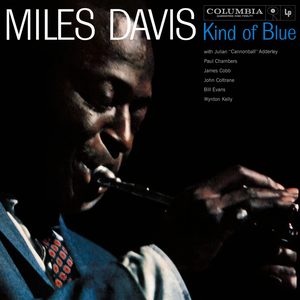
Album
Book
City
Game
ChatGPT-4o (March 2025)ChatGPT-4o (March 2025)
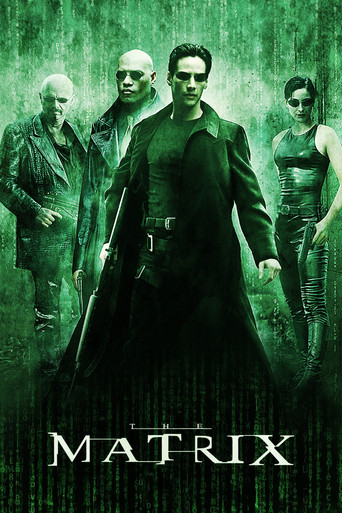




The Matrix
Dark Side Of The Moon
Братья Карамазовы
Kyoto
The Legend of Zelda: Breath of the Wild
Claude Opus 5Claude Opus 5




Arrival
Kind of Blue
Labyrinths
Istanbul
Outer Wilds
Price and specs
Not enough votes to call it. On the specs, Claude Opus 5 has the edge: newer, bigger context window.
| Spec | ChatGPT-4o (March 2025) | Claude Opus 5 |
|---|---|---|
| Input price | $5/M tokens | $5/M tokens |
| Output price | $15/M tokens | $25/M tokens |
| Context window | 128K tokens | 1.0M tokens |
| Weights | — | Closed |
| Free API (OpenRouter) | No | No |
| Released | Mar 2025 | Jul 2026 |
| At 10M a month | $50.00 | $50.00 |
Input tokens at list price. No caching, no batch discount.
Where to run it
ChatGPT-4o (March 2025)
No hosts listed on OpenRouter.



Per million tokens. Prices and uptime via OpenRouter, checked 10 Oct 2026.
Common questions
What is the difference between ChatGPT-4o (March 2025) and Claude Opus 5?
ChatGPT-4o (March 2025) is developed by OpenAI while Claude Opus 5 is developed by Anthropic. ChatGPT-4o (March 2025) has a 128K token context window vs Claude Opus 5's 1.0M. You can compare their actual outputs across 32 challenges on Rival to see how they differ in practice.
Which is better, ChatGPT-4o (March 2025) or Claude Opus 5?
It depends on your use case. ChatGPT-4o (March 2025) and Claude Opus 5 each have strengths in different areas. Rival lets you compare their real outputs side-by-side across 32 challenges so you can judge which fits your needs best.
How much does ChatGPT-4o (March 2025) cost compared to Claude Opus 5?
ChatGPT-4o (March 2025) costs $5/M input tokens and Claude Opus 5 costs $5/M input tokens. Claude Opus 5 is $0.00/M cheaper per input. Check their side-by-side outputs on Rival to see if the price difference is justified by quality.
How can I compare ChatGPT-4o (March 2025) and Claude Opus 5 on Rival?
This page shows a side-by-side comparison of ChatGPT-4o (March 2025) and Claude Opus 5 across shared challenges. You can vote on which model produced the better output in a blind duel. Browsing and voting are free. No account is needed to look; signing in only saves your votes and likes.
More comparisons
Against the newest arrivals
- ChatGPT-4o (March 2025) vs Step 5 PreviewLanded Oct 2026
- Claude Opus 5 vs Claude Haiku 5.5Landed Oct 2026
- ChatGPT-4o (March 2025) vs Ling 3.1 FlashLanded Oct 2026
- Claude Opus 5 vs Mistral Large 4Landed Oct 2026
- ChatGPT-4o (March 2025) vs GPT-6.1 SolLanded Sep 2026
- Claude Opus 5 vs Claude Sonnet 5.5Landed Sep 2026
- ChatGPT-4o (March 2025) vs Solar Mini 4Landed Sep 2026
- Claude Opus 5 vs Qwen3.8 Max PrimeLanded Sep 2026


Same lab, same size, long tail
- ChatGPT-4o (March 2025) vs GPT-6 Luna ProSame lab
- ChatGPT-4o (March 2025) vs GPT-6 Sol ProSame lab
- Claude Opus 5 vs Claude Sonnet 5Version compare
- Claude Opus 5 vs Claude Opus 5.5Same lab
- Claude Opus 5 vs Gemini 2.5 Flash Preview (thinking)New provider
- Claude Opus 5 vs Gemini 2.5 Pro ExperimentalSame size
- Claude Opus 5 vs Gemini 2.5 Pro (I/O Edition)Same size
- Claude Opus 5 vs Gemini 2.5 Pro Preview 06-05Same size
