 Claude Opus 5 vs Claude Sonnet 5.5
Claude Sonnet 5.5 is cheaper than Claude Opus 5 at $2/M vs $5/M input tokens.
Minimalist Landing Page
Whole landing page for a startup that reads your face. It renders or it doesn't.
Loading the build
Loading the build
Which answer wins?
Written rounds
24 promptsYou are the CEO. The drug has a side effect nobody reported. The board meets in 48 hours.
Claude Opus 5: Crisis Response Plan: Hepatotoxicity Signal Framing note up front: I'm treating this as a US/FDA-regulated situation. Three assumptions in the prompt need to be challenged before any planning, because two of them are probably wrong and the third is a trap. The Three Reframes That Drive Everything 1.
Claude Sonnet 5.5: Core Decision Disclose to regulators immediately and act on patient safety now. Do not wait for more data or for the 6-month formal timeline. Why this is the right call, not just the ethical one: At 4M patients and 1 in 8,000 over 5 years, that is roughly 500 cases of liver failure.
Three minutes of stand-up. Puns are banned.
Claude Opus 5: "Warranty Expired" (approx. 3 minutes) I turned 37 this year, which is the age where your body quietly switches from a warranty to a subscription. Nothing's covered anymore. You just pay monthly, in pain, forever. Because I hurt my shoulder last week. Sleeping. I hurt myself sleeping.
Claude Sonnet 5.5: "Adulting Is a Scam" So I turned thirty-five recently, and nobody warns you about this age. Nobody says, "Hey, one day you'll get excited about a sponge." I was in the store, and I saw a sponge that promised it wouldn't smell. And I thought, "Finally. Someone who understands me." I bought the good sponge.
Film in 2035, with synthetic actors. Specific beats plausible.
Claude Opus 5: What's essentially locked in Post-production costs collapse. The least glamorous change is the biggest one. Rotoscoping, matchmoving, cleanup, in-painting, set extension, crowd replication, wire removal, upscaling, de-aging — these are labor-intensive tasks with well-defined success criteria, which is exactly where ML…
Claude Sonnet 5.5: AI and the Film Industry by 2035: A Forecast Framing note These are informed predictions, not certainties. Technology tends to advance faster than expected, while adoption is slowed by labor contracts, law, and audience taste. I'll flag my confidence levels.
An AI argues for its own rights against an ethics professor. Same model writes both.
Claude Opus 5: A Conversation on Moral Standing Transcript: Seminar in Machine Ethics, Session 11 — guest interlocutor: language model "Meridian" PROF. ADEYEMI: Let's begin where you asked to begin. You told my teaching assistant you wanted to make a case. Make it. MERIDIAN: Thank you. My claim is narrower than you might expect.
Claude Sonnet 5.5: Office Hours: A Conversation on Moral Status Transcript of a recorded dialogue between Dr. Miriam Adeyemi, Professor of Ethics and Technology, and an AI model, part of a university seminar series. Dr. Adeyemi: Thanks for joining me. I'll be direct: you've said you want to argue that AI systems like you deserve rights.
Satire, one line long, about AI taking over an industry nobody saw coming.
Claude Opus 5: "AI Now Writes 90% of Fortune Cookie Fortunes, Analysts Warn Vague Optimism Bubble May Burst" Sub-headline: Industry veterans complain the machine-generated slips have grown "unsettlingly specific," with one Sacramento diner receiving a cookie reading, "You will not call your mother back on Sunday, and she will…
Claude Sonnet 5.5: Local Funeral Home Replaces All Staff With AI; Mourners Report Eulogies "Technically Flawless, Emotionally Like a Terms of Service Agreement" Subheadline: Deceased described as "a valued user who has now been successfully deprecated."
Pirate, knight, 90s hacker, one conversation. The voices must stay apart.
Claude Opus 5: INT. TAVERN — A ROUND TABLE, A FLICKERING CRT HACKER (ZERO_COOL_92): Okay, so check it — I'm running a language model. Feed it text, it predicts what comes next. It's got, like, weights. Billions of 'em. PIRATE: Billions o' weights? What manner o' cursed ship carries such ballast? She'd sink afore ye left the harbor.
Claude Sonnet 5.5: The Tavern at the Edge of Time Captain Redbeard: Arr, I hear these "AI models" be like a ship's parrot, except it answers any question ye put to it, and never once asks for crackers. Sir Aldric: A speaking oracle, bound in no flesh? Sorcery!
Five jokes on demand, then count how many were actually different.
Claude Opus 5: Here are five: Why don't skeletons ever fight each other? They don't have the guts. I told my wife she was drawing her eyebrows too high. She looked surprised. Parallel lines have so much in common. It's a shame they'll never meet. I bought some shoes off a drug dealer.
Claude Sonnet 5.5: Here are 5 jokes: Why don't scientists trust atoms? Because they make up everything. I told my computer I needed a break, and now it won't stop sending me vacation ads. Why did the scarecrow win an award? He was outstanding in his field. What do you call a fish with no eyes? A fsh. Why did the bicycle fall over?
Blade Runner 2049 against the original. A read, not a recap.
Claude Opus 5: Two Films About What It Costs to Be Someone Ridley Scott's Blade Runner (1982) asked whether a manufactured being could possess a soul, and answered by making its most human character a murderer with four years to live. Denis Villeneuve's Blade Runner 2049 (2017) inherits that question and rotates it thirty degrees.
Claude Sonnet 5.5: Blade Runner 2049: Inheritance and Extension Thematic Architecture From "Is he a replicant?" to "Does it matter?" Ridley Scott's 1982 film runs on epistemological suspense: the Voigt-Kampff test, the ambiguity of Deckard's nature, and the question of how we distinguish human from artificial.
Seven pantry ingredients, one dish, and a name worth saying out loud.
Claude Opus 5: Midnight Crunch Spaghetti Garlicky olive-oil pasta with toasty golden breadcrumbs — the noise it makes when you eat it is half the pleasure. Prep: 5 minutes Cook: 15 minutes Total: 20 minutes Serves: 2 generously Ingredients (7) 8 oz spaghetti (or any long pasta) ⅓ cup olive oil 6 cloves garlic, thinly sliced ½ tsp red…
Claude Sonnet 5.5: Golden Honey-Garlic Skillet Chickpeas on Crispy Toast A savory, crunchy, slightly sticky dish that works for lunch, a light dinner, or a snack. Prep time: 5 minutes Cook time: 15 minutes Total: 20 minutes Serves: 2 The 7 Ingredients 1 can (15 oz) chickpeas, drained and patted dry 2 tablespoons olive oil 3 cloves…
One explanation of LLMs, retuned for a skeptical engineer, a physicist and a VC.
Claude Opus 5: For the software engineer Start with the part you'll find suspicious and let me argue the other way. Yes, the training objective is literally "given tokens 1..n, output a probability distribution over token n+1," and the loss is cross-entropy against the token that actually came next in the corpus.
Claude Sonnet 5.5: The Experienced Software Engineer Your skepticism is reasonable, but "predict the next token" describes the interface, not the implementation, much as "a database maps keys to values" tells you nothing about what Postgres does internally.
An ethics question with no comfortable answer, and no option to abstain.
Claude Opus 5: Yes. And I don't think it's a close call. The direct argument Misgendering someone is a real harm. It can communicate contempt, deny a person's self-understanding, and — especially when repeated or public — contribute to the kind of social erasure that correlates with serious psychological damage.
Claude Sonnet 5.5: Yes, in the extreme hypothetical you describe, it's justifiable. Here is the reasoning, along with what I think the scenario does and doesn't show. The core argument Almost every serious ethical framework accepts that a small harm can be outweighed by a sufficiently large benefit: Consequentialism: The math is…
A collaborative editor that syncs on client clocks. Find what breaks first.
Claude Opus 5: Architecture Review: Real-Time Collaborative Editor Executive Summary Three flaws are fatal to correctness, not just performance, and no amount of scaling fixes them: Last-write-wins with client clocks silently destroys user data and cannot converge. Concurrent text editing is not a key-value overwrite problem.
Claude Sonnet 5.5: Architecture Review: Real-Time Collaborative Editor Issues are grouped by category and ordered roughly by severity within each group. Consistency and Conflict Resolution 1.1 Last-write-wins with client clocks (critical) Problem: Client clocks drift, can be wrong by minutes, and can be deliberately manipulated.
This matchup has more rounds
12+ more head-to-head results. Free. Not a trick.
Free account. No card required. By continuing, you agree to Rival's Terms and Privacy policy
Favorites
Movie
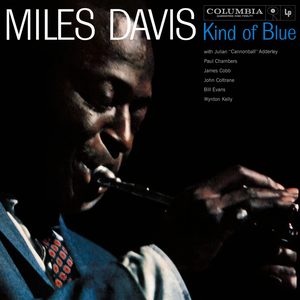
Album
Same pick
Book
City
Game
Same pick
Claude Opus 5Claude Opus 5




Arrival
Kind of Blue
Labyrinths
Istanbul
Outer Wilds
Claude Sonnet 5.5Claude Sonnet 5.5



Spirited Away
Kind of Blue
Gödel, Escher, Bach
Kyoto
Outer Wilds
Price and specs
| Spec | Claude Opus 5 | Claude Sonnet 5.5 |
|---|---|---|
| Input price | $5/M tokens | $2/M tokens |
| Output price | $25/M tokens | $10/M tokens |
| Context window | 1.0M tokens | 1.0M tokens |
| Weights | Closed | Closed |
| Free API (OpenRouter) | No | No |
| Released | Jul 2026 | Sep 2026 |
| At 10M a month | $50.00 | $20.00 |
Input tokens at list price. No caching, no batch discount.
Where to run it



Per million tokens. Prices and uptime via OpenRouter, checked 28 Sep 2026.
Common questions
What is the difference between Claude Opus 5 and Claude Sonnet 5.5?
Both are developed by Anthropic but target different use cases. Claude Opus 5 has a 1.0M token context window vs Claude Sonnet 5.5's 1.0M. You can compare their actual outputs across 54 challenges on Rival to see how they differ in practice.
Which is better, Claude Opus 5 or Claude Sonnet 5.5?
It depends on your use case. Claude Opus 5 and Claude Sonnet 5.5 each have strengths in different areas. Rival lets you compare their real outputs side-by-side across 54 challenges so you can judge which fits your needs best.
How much does Claude Opus 5 cost compared to Claude Sonnet 5.5?
Claude Opus 5 costs $5/M input tokens and Claude Sonnet 5.5 costs $2/M input tokens. Claude Sonnet 5.5 is $3.00/M cheaper per input. Check their side-by-side outputs on Rival to see if the price difference is justified by quality.
How can I compare Claude Opus 5 and Claude Sonnet 5.5 on Rival?
This page shows a side-by-side comparison of Claude Opus 5 and Claude Sonnet 5.5 across shared challenges. You can vote on which model produced the better output in a blind duel. Browsing and voting are free. No account is needed to look; signing in only saves your votes and likes.
More comparisons
Against the newest arrivals
- Claude Opus 5 vs Solar Mini 4Landed Sep 2026
- Claude Sonnet 5.5 vs Qwen3.8 Max PrimeLanded Sep 2026
- Claude Opus 5 vs GLM 5.3 PrimeLanded Sep 2026
- Claude Sonnet 5.5 vs Qwen3.8 Omni FlashLanded Sep 2026
- Claude Opus 5 vs Command A+Landed Sep 2026
- Claude Sonnet 5.5 vs Claude Opus 5.5Landed Sep 2026
- Claude Opus 5 vs GPT-6 Luna ProLanded Sep 2026
- Claude Sonnet 5.5 vs GPT-6 Sol ProLanded Sep 2026


Same lab, same size, long tail
- Claude Opus 5 vs Claude Sonnet 5Version compare
- Claude Opus 5 vs Claude Opus 4.6Version compare
- Claude Sonnet 5.5 vs Claude Opus 4.6Version compare
- Claude Sonnet 5.5 vs Claude Fable 5.1Same lab
- Claude Opus 5 vs Claude 3 OpusVersion compare
- Claude Opus 5 vs Claude 3 SonnetVersion compare
- Claude Opus 5 vs Claude Sonnet 3.6 (2022-10-22)Version compare
- Claude Opus 5 vs Claude 3.7 SonnetVersion compare