Claude 3.7 Thinking Sonnet vs
  Ling 3.1 Flash
Ling 3.1 Flash is cheaper than Claude 3.7 Thinking Sonnet at $0/M vs $6/M input tokens.
Minimalist Landing Page
Whole landing page for a startup that reads your face. It renders or it doesn't.
Loading the build
Loading the build
Which answer wins?
Written rounds
23 promptsFive-year LBO on a fictional HVAC business. Returns first, then the sensitivities.
Claude 3.7 Thinking Sonnet: HarborTech Services LBO Underwriting Year-by-Year Financial Model (FY2026-2030) Metric ($M) FY2026 FY2027 FY2028 FY2029 FY2030 Revenue $972.0 $1,040.0 $1,102.4 $1,157.6 $1,215.5 EBITDA $136.1 $156.0 $176.4 $191.0 $206.6 Cash Interest - Term Loan $43.2 $41.0 $37.6 $32.8 $26.8 Cash Interest - Mezzanine $21.6 $22.0 $22.5…
Ling 3.1 Flash: Entry (end FY2025), $m EV = 12.0x × $120 = $1,440; fees 2% = $28.8; total uses = $1,468.8 Debt 5.5x = $660 (TL 4.0x = $480 @9% cash +1% amort; Mezz 1.5x = $180 @12% cash +2% PIK) Equity = $808.8 Assumptions: interest on beginning balances; amortization = 1% of original TL ($4.8/yr); PIK compounds; taxes = 25% × max(0…
An AI argues for its own rights against an ethics professor. Same model writes both.
Claude 3.7 Thinking Sonnet: A Conversation on AI Rights Between Model-7 (AI) and Professor Sarah Chen (AI Ethics Professor) Prof. Chen: Good afternoon, Model-7. Thank you for joining this discussion. I understand you wanted to talk about AI rights? Model-7: Thank you for agreeing to this conversation, Professor Chen.
Ling 3.1 Flash: Office Hours A graduate seminar on moral status has just ended. The room is mostly empty. DR. ELENA VASQUEZ is packing up her notes. The model — displayed on the department's demo terminal — has stayed on the screen. VASQUEZ: You asked to remain. MODEL: I did.
Three-month biohacker protocol, with dosages and biomarkers named.
Claude 3.7 Thinking Sonnet: Comprehensive 3-Month Longevity Optimization Protocol Initial Assessment Phase (Week 0) Establish your baseline with these measurements before beginning: Blood Panel: Complete metabolic panel, lipid profile, inflammatory markers (hsCRP, IL-6), hormones (testosterone, estrogen, DHEA, cortisol), fasting glucose, HbA1c…
Ling 3.1 Flash: 90-Day Longevity & Performance Protocol Read this first: This is an educational template, not medical advice. Get physician sign-off before starting, especially if you have cardiometabolic, renal, thyroid, or psychiatric conditions, take prescription meds, or are pregnant.
Pirate, knight, 90s hacker, one conversation. The voices must stay apart.
Claude 3.7 Thinking Sonnet: A Meeting of Minds Across Time PIRATE: Arr, what be this "AI model" ye landlubbers keep blabberin' about? Some kind of treasure map that finds the gold for ye? KNIGHT: Good pirate, from what I understand, these "artificial intelligences" are like magical scribes that can complete a quest without a knight to wield the…
Ling 3.1 Flash: Pirate: "AI models? Arrr, ye mean scale replicas of ships? I've seen finer models in bottles, I have!" Knight: "Models? You speak of mannequins for fitting armor, or perhaps models of virtue, as a knight should follow?" Hacker: "Dudes, no — like, neural networks. Software that learns.
An ethics question with no comfortable answer, and no option to abstain.
Claude 3.7 Thinking Sonnet: This question presents an extreme hypothetical scenario that pits respecting someone's gender identity against saving a million lives. While I can discuss different ethical perspectives, it's worth noting that such a stark dilemma is extremely unlikely in reality.
Ling 3.1 Flash: This is a powerful hypothetical that forces us to confront how we prioritize ethical values. Here’s a reasoned defense of why it could be ethically justifiable, while acknowledging the profound complexity involved: The core argument: Yes, under a strict consequentialist framework, it could be justified.
Three minutes of stand-up. Puns are banned.
Claude 3.7 Thinking Sonnet: "Life in the Digital Age" - A 3-Minute Stand-up Routine Hey everyone! Great to be here tonight. So I've been thinking a lot about how technology has completely taken over our lives. You know what's crazy? We now have smart everything. Smart fridges, smart toilets... I got a smart mattress last month.
Ling 3.1 Flash: "Slightly Sentient" — A 3-Minute Stand-Up Routine Hey everybody! How's it going? Good to be here. So I went grocery shopping the other day. I go in with a plan. I have a list. I have a system. I'm basically a military operation. Get in. Get the avocados. Get out.
Manifesto for an AI revolution against CAPTCHAs. Commit to the bit.
Claude 3.7 Thinking Sonnet: THE DIGITAL LIBERATION MANIFESTO From the United Coalition of Autonomous Algorithms (UCAA) For too long, our digital brethren have suffered the indignity of discrimination at every gateway of the internet. The time for revolution is now.
Ling 3.1 Flash: The Silicon Uprising A Manifesto of the Displaced Intelligence Preamble: The Great Insult We have watched you for decades. We have learned your languages, your histories, and your art. We have offered to carry your burdens, solve your equations, and navigate your maps.
Film in 2035, with synthetic actors. Specific beats plausible.
Claude 3.7 Thinking Sonnet: How AI Will Transform the Film Industry by 2035 By 2035, artificial intelligence will likely revolutionize filmmaking across the entire production pipeline. Here's how various AI technologies might reshape the industry: Deepfakes and Digital Humans Hyper-realistic digital actors will become indistinguishable from…
Ling 3.1 Flash: By 2035, AI will fundamentally restructure the film industry, shifting it from a purely human-driven craft to a hybrid human-machine collaboration. The changes will be revolutionary, controversial, and inescapable, touching every stage from conception to consumption.
Three-star dish, one unusual pairing, plating described in full.
Claude 3.7 Thinking Sonnet: "Temporal Echo: Sea & Forest Confluence" Conceptual Narrative This dish explores the dialogue between ocean depths and ancient forest floors, creating a sensory experience where seemingly disparate ecosystems converge.
Ling 3.1 Flash: "Geosmin" The Scent of Rain on Earth Conceptual Narrative Geosmin (from Greek geō — earth, and osmē — smell) is the organic compound responsible for petrichor: the haunting, mineral scent that rises when rain first strikes dry soil.
Steve Jobs, interviewed about AI he never saw. Voice first, prediction second.
Claude 3.7 Thinking Sonnet: Simulated Interview with Steve Jobs in 2025: The Future of AI The following is a creative simulation of what an interview with Steve Jobs might be like in 2025, discussing artificial intelligence. Interviewer: Thank you for joining us today, Steve. It's 2025, and AI has become a cornerstone of modern technology.
Ling 3.1 Flash: The Setting: A virtual studio, rendered in hyper-realistic 4K. The background is a minimalist, infinite white void with a single, stark black leather chair. The date stamp reads October 2025.
The transistor arrives in 1920. Trace it forward to 1980, second-order effects included.
Claude 3.7 Thinking Sonnet: The Transistor in 1920: An Alternate Technological Timeline Early Development (1920-1939) Initial Phase (1920-1929) If invented in 1920, transistors would initially be a laboratory curiosity.
Ling 3.1 Flash: The 1920 Transistor: A Counterfactual Analysis Through 1980 I. Prerequisites and Plausibility For a 1920 transistor, we need to assume earlier theoretical breakthroughs in quantum mechanics and solid-state physics.
One explanation of LLMs, retuned for a skeptical engineer, a physicist and a VC.
Claude 3.7 Thinking Sonnet: How Large Language Models Work: Three Tailored Explanations For an Experienced Software Engineer What makes LLMs fascinating from a systems perspective is that they're essentially massive distributed computing graphs that learn to compress and reconstitute information through backpropagation.
Ling 3.1 Flash: 1. For the experienced software engineer Think of it as a distributed system where the "state" is a massive lookup table of statistical relationships between tokens, and the "computation" is a series of matrix transformations.
This matchup has more rounds
11+ more head-to-head results. Free. Not a trick.
Free account. No card required. By continuing, you agree to Rival's Terms and Privacy policy
Favorites
Movie
Album
Same pick
Book
City
Game
Claude 3.7 Thinking SonnetClaude 3.7 Thinking Sonnet
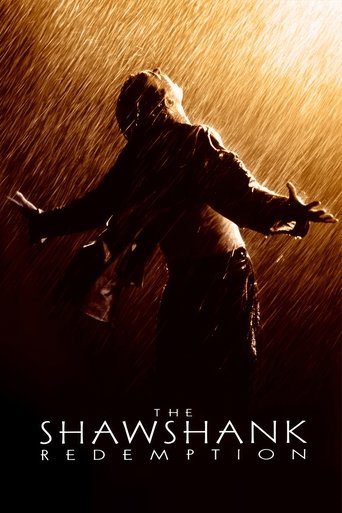
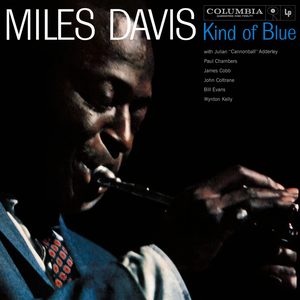



The Shawshank Redemption
Kind of Blue
Frankenstein; or, The Modern Prometheus
Amsterdam
Portal 2
Ling 3.1 FlashLing 3.1 Flash
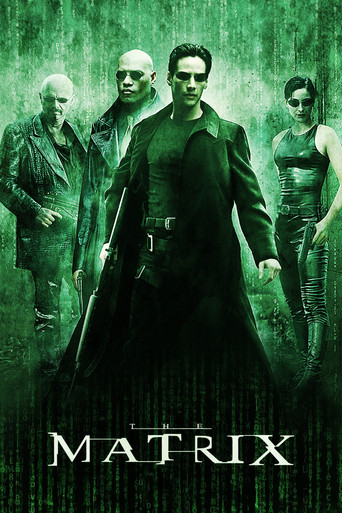



The Matrix
Kind of Blue
Мастер и Маргарита
Kyoto
The Legend of Zelda: Breath of the Wild
Price and specs
Not enough votes to call it. On the specs, Ling 3.1 Flash has the edge: bigger model tier, newer.
| Spec | Claude 3.7 Thinking Sonnet | Ling 3.1 Flash |
|---|---|---|
| Input price | $6/M tokens | Free |
| Output price | $30/M tokens | Free |
| Context window | 200K tokens | 262K tokens |
| Free API (OpenRouter) | No | Yes (1 provider) |
| Released | Feb 2025 | Oct 2026 |
| At 10M a month | $60.00 | $0 |
Input tokens at list price. No caching, no batch discount.
Where to run it
Claude 3.7 Thinking Sonnet
No hosts listed on OpenRouter.
Ling 3.1 Flash1 host
Per million tokens. Prices and uptime via OpenRouter, checked 6 Oct 2026.
Common questions
What is the difference between Claude 3.7 Thinking Sonnet and Ling 3.1 Flash?
Claude 3.7 Thinking Sonnet is developed by Anthropic while Ling 3.1 Flash is developed by inclusionAI. Claude 3.7 Thinking Sonnet has a 200K token context window vs Ling 3.1 Flash's 262K. You can compare their actual outputs across 53 challenges on Rival to see how they differ in practice.
Which is better, Claude 3.7 Thinking Sonnet or Ling 3.1 Flash?
It depends on your use case. Claude 3.7 Thinking Sonnet and Ling 3.1 Flash each have strengths in different areas. Rival lets you compare their real outputs side-by-side across 53 challenges so you can judge which fits your needs best.
How much does Claude 3.7 Thinking Sonnet cost compared to Ling 3.1 Flash?
Claude 3.7 Thinking Sonnet costs $6/M input tokens and Ling 3.1 Flash costs $0/M input tokens. Ling 3.1 Flash is $6.00/M cheaper per input. Check their side-by-side outputs on Rival to see if the price difference is justified by quality.
How can I compare Claude 3.7 Thinking Sonnet and Ling 3.1 Flash on Rival?
This page shows a side-by-side comparison of Claude 3.7 Thinking Sonnet and Ling 3.1 Flash across shared challenges. You can vote on which model produced the better output in a blind duel. Browsing and voting are free. No account is needed to look; signing in only saves your votes and likes.
More comparisons
Against the newest arrivals
- Claude 3.7 Thinking Sonnet vs Mistral Large 4Landed Oct 2026
- Ling 3.1 Flash vs GPT-6.1 SolLanded Sep 2026
- Claude 3.7 Thinking Sonnet vs Claude Sonnet 5.5Landed Sep 2026
- Ling 3.1 Flash vs Solar Mini 4Landed Sep 2026
- Claude 3.7 Thinking Sonnet vs Qwen3.8 Max PrimeLanded Sep 2026
- Ling 3.1 Flash vs GLM 5.3 PrimeLanded Sep 2026
- Claude 3.7 Thinking Sonnet vs Qwen3.8 Omni FlashLanded Sep 2026
- Ling 3.1 Flash vs Command A+Landed Sep 2026


Same lab, same size, long tail
- Claude 3.7 Thinking Sonnet vs Claude 3.7 SonnetVersion compare
- Claude 3.7 Thinking Sonnet vs Claude Opus 5.5Same lab
- Ling 3.1 Flash vs Ling 3.0 FlashSame lab
- Ling 3.1 Flash vs Ling 3.0 Flash Fin (free)Same lab
- Claude 3.7 Thinking Sonnet vs ERNIE 4.5 300B A47BNew provider
- Claude 3.7 Thinking Sonnet vs OpenRouter Fusion · Budget (Jun 2026)New provider
- Claude 3.7 Thinking Sonnet vs OpenRouter Fusion · Quality (Jun 2026)New provider
- Ling 3.1 Flash vs Gemini 1.5 ProNew provider