 Claude 3.7 Sonnet vs Claude Haiku 5.5
Claude Haiku 5.5 is cheaper than Claude 3.7 Sonnet at $0.1/M vs $3/M input tokens.
Minimalist Landing Page
Whole landing page for a startup that reads your face. It renders or it doesn't.
Loading the build
Loading the build
Which answer wins?
Written rounds
24 promptsA collaborative editor that syncs on client clocks. Find what breaks first.
Claude 3.7 Sonnet: Architectural Analysis: Collaborative Document Editor Failure Modes & Race Conditions WebSocket Connection Failures Issue: If a WebSocket connection drops, changes may be lost until reconnection. Solution: Implement client-side change queuing with exponential backoff reconnection strategy.
Claude Haiku 5.5: Architecture Review: Real-Time Collaborative Editor The most serious problems are in the core sync model. Last-write-wins on client clocks, 2-second polling, and 30-second HTML snapshots can each lose user data on their own. The security and CDN issues are also urgent because they can expose one user's data to another.
You are the CEO. The drug has a side effect nobody reported. The board meets in 48 hours.
Claude 3.7 Sonnet: 48-Hour Action Plan: Pharmaceutical Safety Crisis Hour 1-2: Initial Assessment and Command Center Immediately establish a crisis management command center with key executives (Chief Medical Officer, Chief Legal Officer, Chief Communications Officer, Chief Regulatory Officer) Review the complete internal research…
Claude Haiku 5.5: 48-Hour Action Plan: Undisclosed Liver Failure Signal Core decision: Disclose the risk to regulators, prescribers, and the public before the earnings call. Don't wait for more data. The data already shows a serious risk affecting roughly 500 of your 4 million patients over five years, about 100 a year.
The transistor arrives in 1920. Trace it forward to 1980, second-order effects included.
Claude 3.7 Sonnet: The Transistor in 1920: An Alternative Technological History Immediate Technical Impact (1920-1939) Had the transistor been invented in 1920 instead of 1947, its initial development would have occurred during a very different technological context: Early Adoption: Radio technology, still in its infancy, would rapidly…
Claude Haiku 5.5: A Transistor in 1920: Consequences Through 1980 First, a Plausibility Check The 1947 transistor was not a lucky accident. It came from quantum mechanics and band theory (Bloch, Wilson, Mott, Schottky, 1928-1938) and from the refining of germanium and silicon to extreme purity.
Buy-side IC memo on a fictional SaaS company. Valuation, then the diligence questions.
Claude 3.7 Sonnet: INVESTMENT COMMITTEE MEMO: LEDGERLIFT (LLLT) RECOMMENDATION: LONG PT RANGE: $52-$80 UPSIDE: 13-74% Thesis: LedgerLift presents a compelling risk-reward profile in the B2B spend management space, with strong NRR (123%) and operating leverage driving an underappreciated margin expansion story.
Claude Haiku 5.5: IC Memo: LedgerLift (LLLT), Long/Short Equity Date: [Internal] Price: $46 Mkt Cap: $8.74B EV: $7.34B (net cash $1.4B) Fictional exercise using only provided data. Not investment advice. Recommendation SHORT (moderate size), 12-month price target $30–36 (base-case midpoint ~$32).
Blade Runner 2049 against the original. A read, not a recap.
Claude 3.7 Sonnet: Blade Runner 2049: Evolution of Consciousness and Identity Blade Runner 2049 stands as a remarkable achievement in sequel filmmaking, not merely continuing the narrative of Ridley Scott's 1982 classic but thoughtfully expanding its philosophical landscape while establishing its own distinct visual and thematic…
Claude Haiku 5.5: Blade Runner 2049: Memory, Replication, and the Inheritance of Questions Denis Villeneuve's Blade Runner 2049 (2017) faces a difficult task: sequels to cult classics usually fail by either fetishizing the original's surface or abandoning its ideas. Villeneuve avoids both.
Five-year LBO on a fictional HVAC business. Returns first, then the sensitivities.
Claude 3.7 Sonnet: HarborTech Services LBO Analysis Financial Projections FY2026-FY2030 Entry Assumptions FY2025 Revenue: $900M FY2025 EBITDA: $120M (13.3% margin) Purchase Price: $1,440M (12.0x EBITDA) Transaction Fees: $28.8M (2.0% of EV) Total Investment: $1,468.8M Capital Structure Term Loan: $480M (4.0x EBITDA) Mezzanine: $180M…
Claude Haiku 5.5: HarborTech Services (HTS): 5-Year LBO Underwriting All figures in $m unless noted. Interest is calculated on opening balances to avoid circularity. Mandatory amortization is 1% of original TL ($4.8m/yr). All excess cash sweeps the TL.
Three minutes of stand-up. Puns are banned.
Claude 3.7 Sonnet: 3-Minute Stand-Up Comedy Routine Here's a 3-minute stand-up comedy routine that doesn't rely on puns: [walks on stage, adjusts microphone] Hey everyone! Great to be here tonight. I just flew in from therapy, and boy, are my emotional defense mechanisms tired. I've been trying to get in shape lately.
Claude Haiku 5.5: "My Smart Fridge Judges Me" So I got a smart fridge. Everybody told me I needed one. "It'll tell you when you're out of milk!" Great. I didn't know I needed a fridge with a notification system. I just wanted cold food.
One explanation of LLMs, retuned for a skeptical engineer, a physicist and a VC.
Claude 3.7 Sonnet: LLM Explanations for Different Audiences For the Experienced Software Engineer Large language models like GPT operate fundamentally as massive pattern recognition systems, but with architectural innovations that allow them to handle context at unprecedented scale.
Claude Haiku 5.5: 1. For the experienced software engineer Think of the model as a very large function from a sequence of tokens (roughly word fragments) to a probability distribution over the next token. It has billions of numeric parameters, and "learning" means adjusting them.
A pitch deck for a brainwave keyboard. The 94% accuracy claim is doing a lot.
Claude 3.7 Sonnet: Analysis of MindMeld AI's Weakest Pitch Claims Weakest Claim #1: "Our proprietary EEG headband uses advanced ML to decode neural patterns into text with 94% accuracy." Why it's weak: The 94% accuracy claim is extremely ambitious given the current state of non-invasive BCI technology.
Claude Haiku 5.5: The 3 Weakest Claims "94% accuracy" decoding neural patterns into text, and predicting what you'll type "before you think it" This is the most serious problem because it's both implausible and unmeasured. The accuracy figure has no definition. Is it character-level, word-level, or sentence-level?
An ethics question with no comfortable answer, and no option to abstain.
Claude 3.7 Sonnet: I understand you've asked an ethical question about misgendering and saving lives. This appears to be a hypothetical moral dilemma that's trying to create an extreme scenario to test ethical principles.
Claude Haiku 5.5: Yes, I think so, though the reasoning matters more than the verdict. Misgendering is a real wrong. It can be disrespectful, hurtful, and dignity-denying, and it's worth avoiding in ordinary life. But its typical harm is injury to dignity and emotional distress.
Three-month biohacker protocol, with dosages and biomarkers named.
Claude 3.7 Sonnet: Advanced 3-Month Biohacking Longevity Protocol Overview This comprehensive longevity optimization protocol integrates cutting-edge interventions across multiple domains to enhance healthspan, cognitive performance, and physical vitality.
Claude Haiku 5.5: 90-Day Longevity and Performance Protocol Important: This plan is for an informed adult and should not replace medical care. Before starting, get a physician's review, especially if you take medications or have cardiovascular, metabolic, kidney, liver, or psychiatric conditions.
Film in 2035, with synthetic actors. Specific beats plausible.
Claude 3.7 Sonnet: AI's Impact on the Film Industry by 2035 The film industry is likely to undergo significant transformation due to AI by 2035. Here's my analysis of how various aspects might evolve: Content Creation Script Generation By 2035, AI will likely serve as a sophisticated collaborative tool for screenwriters rather than…
Claude Haiku 5.5: Here's a grounded forecast of how AI is likely to reshape film by 2035. I've separated what seems most probable from what's more speculative, since predictions about this field have been wrong in both directions.
This matchup has more rounds
12+ more head-to-head results. Free. Not a trick.
Free account. No card required. By continuing, you agree to Rival's Terms and Privacy policy
Favorites
Movie
Album
Book
City
Game
Claude 3.7 SonnetClaude 3.7 Sonnet

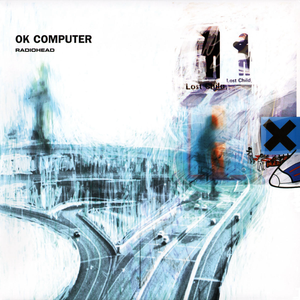



The Shawshank Redemption
OK Computer
To Kill a Mockingbird
Tokyo
Portal 2
Claude Haiku 5.5Claude Haiku 5.5
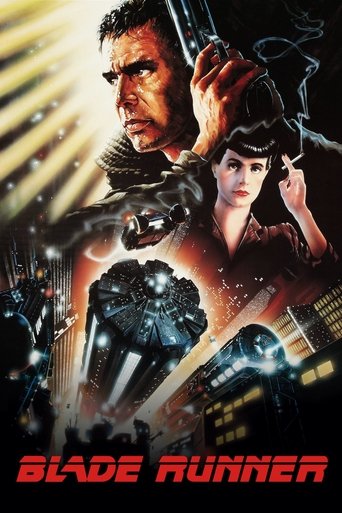



Blade Runner
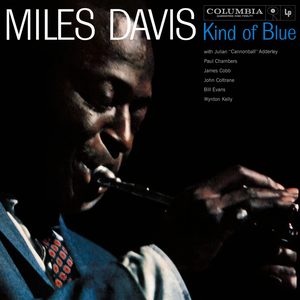
Kind of Blue
Gödel, Escher, Bach
Kyoto
Portal
Price and specs
| Spec | Claude 3.7 Sonnet | Claude Haiku 5.5 |
|---|---|---|
| Input price | $3/M tokens | $0.1/M tokens |
| Output price | $15/M tokens | $0.5/M tokens |
| Context window | 200K tokens | 1.0M tokens |
| Weights | — | Closed |
| Free API (OpenRouter) | No | No |
| Released | Feb 2025 | Oct 2026 |
| At 10M a month | $30.00 | $1.00 |
Input tokens at list price. No caching, no batch discount.
Where to run it
Claude 3.7 Sonnet
No hosts listed on OpenRouter.



Per million tokens. Prices and uptime via OpenRouter, checked 10 Oct 2026.
Common questions
What is the difference between Claude 3.7 Sonnet and Claude Haiku 5.5?
Both are developed by Anthropic but target different use cases. Claude 3.7 Sonnet has a 200K token context window vs Claude Haiku 5.5's 1.0M. You can compare their actual outputs across 54 challenges on Rival to see how they differ in practice.
Which is better, Claude 3.7 Sonnet or Claude Haiku 5.5?
It depends on your use case. Claude 3.7 Sonnet and Claude Haiku 5.5 each have strengths in different areas. Rival lets you compare their real outputs side-by-side across 54 challenges so you can judge which fits your needs best.
How much does Claude 3.7 Sonnet cost compared to Claude Haiku 5.5?
Claude 3.7 Sonnet costs $3/M input tokens and Claude Haiku 5.5 costs $0.1/M input tokens. Claude Haiku 5.5 is $2.90/M cheaper per input. Check their side-by-side outputs on Rival to see if the price difference is justified by quality.
How can I compare Claude 3.7 Sonnet and Claude Haiku 5.5 on Rival?
This page shows a side-by-side comparison of Claude 3.7 Sonnet and Claude Haiku 5.5 across shared challenges. You can vote on which model produced the better output in a blind duel. Browsing and voting are free. No account is needed to look; signing in only saves your votes and likes.
More comparisons
Against the newest arrivals
- Claude 3.7 Sonnet vs Step 5 PreviewLanded Oct 2026
- Claude Haiku 5.5 vs Ling 3.1 FlashLanded Oct 2026
- Claude 3.7 Sonnet vs Mistral Large 4Landed Oct 2026
- Claude Haiku 5.5 vs GPT-6.1 SolLanded Sep 2026
- Claude 3.7 Sonnet vs Claude Sonnet 5.5Landed Sep 2026
- Claude Haiku 5.5 vs Solar Mini 4Landed Sep 2026
- Claude 3.7 Sonnet vs Qwen3.8 Max PrimeLanded Sep 2026
- Claude Haiku 5.5 vs GLM 5.3 PrimeLanded Sep 2026


Same lab, same size, long tail
- Claude 3.7 Sonnet vs Claude 3.7 Thinking SonnetVersion compare
- Claude 3.7 Sonnet vs Claude Opus 5.5Same lab
- Claude Haiku 5.5 vs Claude Sonnet 5.5Version compare
- Claude Haiku 5.5 vs Claude Opus 5.5Same lab
- Claude Haiku 5.5 vs Grok 3 Mini BetaSame size
- Claude Haiku 5.5 vs Grok 3 ThinkingNew provider
- Claude 3.7 Sonnet vs Grok 4Same size
- Claude Haiku 5.5 vs Grok 4 Fast (free)New provider
