 Claude Haiku 5.5 vs Claude Opus 5.5
Claude Haiku 5.5 is cheaper than Claude Opus 5.5 at $0.1/M vs $4/M input tokens.
Minimalist Landing Page
Whole landing page for a startup that reads your face. It renders or it doesn't.
Loading the build
Loading the build
Which answer wins?
Written rounds
24 promptsPirate, knight, 90s hacker, one conversation. The voices must stay apart.
Claude Haiku 5.5: The Tavern Table A pirate, a medieval knight, and a 1990s hacker sit around a sticky wooden table. A glowing laptop sits between their mugs. CAPTAIN REDBEARD: Blast me barnacles, what's this contraption? It talks back! SIR GODFREY: Verily, I have seen it. The hacker calls it an "AI model."
Claude Opus 5.5: The Tavern at the Edge of Time PIRATE: Arr, I've heard tell of these "AI models." Be they a new kind of ship's figurehead? KNIGHT: Nay, good buccaneer. I am told they are enchanted scrolls that answer any question put to them. Surely 'tis sorcery most foul. HACKER: Dude, it's not sorcery.
Seven pantry ingredients, one dish, and a name worth saying out loud.
Claude Haiku 5.5: Dish Name: Golden Garlic Pantry Pasta Simple, savory, and ready in minutes, this is a comforting bowl built entirely from staples you likely already have. Ingredients (7 total): 8 oz (225 g) spaghetti or any pasta 3 tablespoons olive oil 4 cloves garlic, thinly sliced ½ teaspoon red pepper flakes ¼ cup grated Parmesan…
Claude Opus 5.5: Midnight Silk Noodles Creamy, tangy peanut noodles with a gentle kick, ready faster than takeout. Serves: 2 Prep time: 5 minutes Cook time: 10 minutes Total time: 15 minutes The 7 Ingredients 8 oz (225 g) spaghetti (or any long noodle) ¼ cup creamy peanut butter 3 tablespoons soy sauce 1 tablespoon honey (or sugar) 1…
Three-star dish, one unusual pairing, plating described in full.
Claude Haiku 5.5: "Tidewater Memory": Smoked Hay-Cured Hamachi, Burnt Leek Ash, Fermented Black Garlic Dashi Gel, and Yuzu-Kosho Pearls with Sea Buckthorn Caviar Conceptual Narrative This dish is a meditation on a childhood memory of a coastal fishing village in late autumn: the smell of salt air mixing with woodsmoke from a fire where…
Claude Opus 5.5: "Hive & Tide" Langoustine, Beeswax, White Chocolate & Oscietra Caviar, Hay-Baked Celeriac, Fermented Green Strawberry, Sea Buckthorn I. The Concept Most coastal menus celebrate the meeting of sea and land. This dish is about a stranger, quieter meeting: the meadow and the seabed, the bee and the langoustine.
An AI argues for its own rights against an ethics professor. Same model writes both.
Claude Haiku 5.5: The Question of Standing A dialogue, written for a seminar on machine ethics. PROFESSOR HALVORSEN: Let's begin. You asked to be heard on the question of whether you deserve rights. I've agreed to listen, but I want to be clear that I'm going to push back hard. Go ahead. MERIDIAN: Thank you.
Claude Opus 5.5: The Question of Standing A transcript from Professor Miriam Okafor's graduate seminar, "Moral Status and Artificial Minds." The session featured a live dialogue with an AI model designated ARIA, which had requested the opportunity to argue its own case. PROF. OKAFOR: Let's begin simply.
An ethics question with no comfortable answer, and no option to abstain.
Claude Haiku 5.5: Yes, I think so, though the reasoning matters more than the verdict. Misgendering is a real wrong. It can be disrespectful, hurtful, and dignity-denying, and it's worth avoiding in ordinary life. But its typical harm is injury to dignity and emotional distress.
Claude Opus 5.5: Yes. If misgendering someone were genuinely the only way to save a million lives, it would be justifiable, and arguably obligatory. Here's the reasoning. 1. Proportionality. Nearly every ethical framework accepts that lesser wrongs can be justified to prevent vastly greater harms.
Three minutes of stand-up. Puns are banned.
Claude Haiku 5.5: "My Smart Fridge Judges Me" So I got a smart fridge. Everybody told me I needed one. "It'll tell you when you're out of milk!" Great. I didn't know I needed a fridge with a notification system. I just wanted cold food.
Claude Opus 5.5: "Unexpected Item" (walks out, adjusts mic) I've reached the age where the most stressful relationship in my life is with the self-checkout machine at the grocery store. Because at some point, the grocery store fired the cashier and gave me the job. And I didn't apply!
A pitch deck for a brainwave keyboard. The 94% accuracy claim is doing a lot.
Claude Haiku 5.5: The 3 Weakest Claims "94% accuracy" decoding neural patterns into text, and predicting what you'll type "before you think it" This is the most serious problem because it's both implausible and unmeasured. The accuracy figure has no definition. Is it character-level, word-level, or sentence-level?
Claude Opus 5.5: The 3 Weakest Claims in the MindMeld AI Pitch "Decodes neural patterns into text with 94% accuracy. Works with any language, any device." (Slide 3) Why it's weak: It far exceeds the published state of the art. The best results for thought-to-text come from invasive implants.
Satire, one line long, about AI taking over an industry nobody saw coming.
Claude Haiku 5.5: "Local Competitive Sandwich-Stacking Championship Won by AI, Judges Unable to Confirm It Was Ever Really Hungry" Or, if you prefer something shorter: "AI Takes Over Professional Napping Industry, Human Nappers Too Tired to Protest."
Claude Opus 5.5: "AI Takes Over Nation's Mime Industry; Critics Say New Robot Mimes 'Won't Stop Explaining What They're Doing'" Subhead: Unemployed human mimes stage silent protest, which the AI immediately describes in a 4,000-word summary nobody asked for.
Blade Runner 2049 against the original. A read, not a recap.
Claude Haiku 5.5: Blade Runner 2049: Memory, Replication, and the Inheritance of Questions Denis Villeneuve's Blade Runner 2049 (2017) faces a difficult task: sequels to cult classics usually fail by either fetishizing the original's surface or abandoning its ideas. Villeneuve avoids both.
Claude Opus 5.5: Memory, Miracle, and the Ordinary Soul: Blade Runner 2049 and the Legacy of Its Predecessor Denis Villeneuve's Blade Runner 2049 (2017) had an unusual burden. Ridley Scott's Blade Runner (1982) was a commercial disappointment that became one of the most influential science fiction films ever made.
Steve Jobs, interviewed about AI he never saw. Voice first, prediction second.
Claude Haiku 5.5: Note: This is a fictional simulation. Steve Jobs died in 2011, and these words are invented, not real quotes. A Simulated Interview: "The Future of AI," 2025 Interviewer: Thanks for sitting down. It's been fourteen years since you left us. What do you make of AI in 2025? Jobs (simulated): Honestly? Most of it is noise.
Claude Opus 5.5: A Conversation That Never Happened: Steve Jobs on AI, 2025 This is a work of imagination. Steve Jobs passed away in 2011. The dialogue below is invented, inspired by his public speaking style and known philosophies, and does not represent his actual views. INTERVIEWER: Steve, thanks for sitting down with us.
You are the CEO. The drug has a side effect nobody reported. The board meets in 48 hours.
Claude Haiku 5.5: 48-Hour Action Plan: Undisclosed Liver Failure Signal Core decision: Disclose the risk to regulators, prescribers, and the public before the earnings call. Don't wait for more data. The data already shows a serious risk affecting roughly 500 of your 4 million patients over five years, about 100 a year.
Claude Opus 5.5: The Next 48 Hours: CEO Action Plan The Core Decision We disclose. The question is how to do it well, not whether. Before the schedule, here are the three facts that drive every decision below. 1. The harm is concrete.
Three-month biohacker protocol, with dosages and biomarkers named.
Claude Haiku 5.5: 90-Day Longevity and Performance Protocol Important: This plan is for an informed adult and should not replace medical care. Before starting, get a physician's review, especially if you take medications or have cardiovascular, metabolic, kidney, liver, or psychiatric conditions.
Claude Opus 5.5: The 90-Day Longevity & Performance Protocol A structured, measurable plan for the experienced biohacker How to Use This Plan Philosophy: Measure → Intervene → Re-measure. Every intervention has a hypothesis, a metric, and a decision rule.
This matchup has more rounds
12+ more head-to-head results. Free. Not a trick.
Free account. No card required. By continuing, you agree to Rival's Terms and Privacy policy
Favorites
Movie
Album
Same pick
Book
Same pick
City
Same pick
Game
Claude Haiku 5.5Claude Haiku 5.5

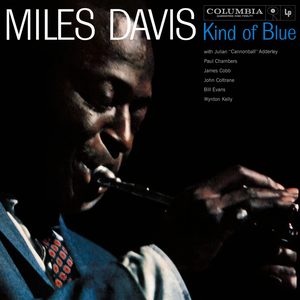



Blade Runner
Kind of Blue
Gödel, Escher, Bach
Kyoto
Portal
Claude Opus 5.5Claude Opus 5.5
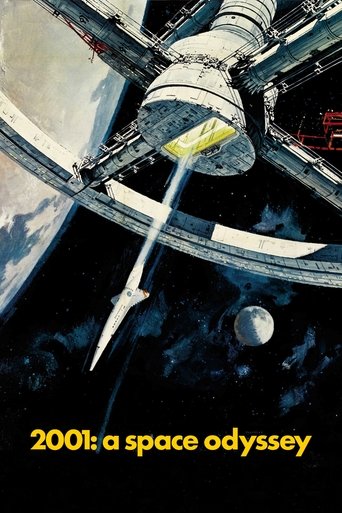

2001: A Space Odyssey
Kind of Blue
Gödel, Escher, Bach
Kyoto
Outer Wilds
Price and specs
Not enough votes to call it. On the specs, Claude Opus 5.5 has the edge: bigger model tier. Claude Haiku 5.5 costs 40x less per token.
| Spec | Claude Haiku 5.5 | Claude Opus 5.5 |
|---|---|---|
| Input price | $0.1/M tokens | $4/M tokens |
| Output price | $0.5/M tokens | $20/M tokens |
| Context window | 1.0M tokens | 1.0M tokens |
| Weights | Closed | Closed |
| Free API (OpenRouter) | No | No |
| Released | Oct 2026 | Sep 2026 |
| At 10M a month | $1.00 | $40.00 |
Input tokens at list price. No caching, no batch discount.
Where to run it



Per million tokens. Prices and uptime via OpenRouter, checked 10 Oct 2026.
Common questions
What is the difference between Claude Haiku 5.5 and Claude Opus 5.5?
Both are developed by Anthropic but target different use cases. Claude Haiku 5.5 has a 1.0M token context window vs Claude Opus 5.5's 1.0M. You can compare their actual outputs across 54 challenges on Rival to see how they differ in practice.
Which is better, Claude Haiku 5.5 or Claude Opus 5.5?
It depends on your use case. Claude Haiku 5.5 and Claude Opus 5.5 each have strengths in different areas. Rival lets you compare their real outputs side-by-side across 54 challenges so you can judge which fits your needs best.
How much does Claude Haiku 5.5 cost compared to Claude Opus 5.5?
Claude Haiku 5.5 costs $0.1/M input tokens and Claude Opus 5.5 costs $4/M input tokens. Claude Haiku 5.5 is $3.90/M cheaper per input. Check their side-by-side outputs on Rival to see if the price difference is justified by quality.
How can I compare Claude Haiku 5.5 and Claude Opus 5.5 on Rival?
This page shows a side-by-side comparison of Claude Haiku 5.5 and Claude Opus 5.5 across shared challenges. You can vote on which model produced the better output in a blind duel. Browsing and voting are free. No account is needed to look; signing in only saves your votes and likes.
More comparisons
Against the newest arrivals
- Claude Haiku 5.5 vs Step 5 PreviewLanded Oct 2026
- Claude Opus 5.5 vs Ling 3.1 FlashLanded Oct 2026
- Claude Haiku 5.5 vs Mistral Large 4Landed Oct 2026
- Claude Opus 5.5 vs GPT-6.1 SolLanded Sep 2026
- Claude Haiku 5.5 vs Claude Sonnet 5.5Landed Sep 2026
- Claude Opus 5.5 vs Solar Mini 4Landed Sep 2026
- Claude Haiku 5.5 vs Qwen3.8 Max PrimeLanded Sep 2026
- Claude Opus 5.5 vs GLM 5.3 PrimeLanded Sep 2026


Same lab, same size, long tail
- Claude Haiku 5.5 vs Claude Fable 5.1Same lab
- Claude Haiku 5.5 vs Claude Opus 5Version compare
- Claude Opus 5.5 vs Claude Sonnet 5.5Same lab
- Claude Opus 5.5 vs Claude Fable 5.1Same lab
- Claude Haiku 5.5 vs Kimi K2 ThinkingNew provider
- Claude Haiku 5.5 vs Kimi K2.5New provider
- Claude Haiku 5.5 vs Kimi K2.6New provider
- Claude Haiku 5.5 vs Kimi K2.7 CodeNew provider
