Claude Haiku 5.5 vs
  GPT-5.6 Luna
Claude Haiku 5.5 is cheaper than GPT-5.6 Luna at $0.1/M vs $1/M input tokens.
Minimalist Landing Page
Whole landing page for a startup that reads your face. It renders or it doesn't.
Loading the build
Loading the build
Which answer wins?
Written rounds
24 promptsPirate, knight, 90s hacker, one conversation. The voices must stay apart.
Claude Haiku 5.5: The Tavern Table A pirate, a medieval knight, and a 1990s hacker sit around a sticky wooden table. A glowing laptop sits between their mugs. CAPTAIN REDBEARD: Blast me barnacles, what's this contraption? It talks back! SIR GODFREY: Verily, I have seen it. The hacker calls it an "AI model."
GPT-5.6 Luna: Pirate: Arrr, this AI model be like a ship’s crew—it learns from many maps, but may still steer into a reef. Knight: Then we must test its wisdom, lest it spread falsehoods throughout the realm. Hacker: Exactly. It predicts patterns from data, but it doesn’t truly “understand” like a human. Garbage in, garbage out.
Five-year LBO on a fictional HVAC business. Returns first, then the sensitivities.
Claude Haiku 5.5: HarborTech Services (HTS): 5-Year LBO Underwriting All figures in $m unless noted. Interest is calculated on opening balances to avoid circularity. Mandatory amortization is 1% of original TL ($4.8m/yr). All excess cash sweeps the TL.
GPT-5.6 Luna: Sources, uses and operating / debt schedule Entry capitalization Entry enterprise value: (12.0 \times \$120.0 = \$1,440.0m) Transaction fees: (2.0\% \times \$1,440.0 = \$28.8m) Term Loan: (4.0 \times \$120.0 = \$480.0m) Mezzanine: (1.5 \times \$120.0 = \$180.0m) Equity contribution…
A pitch deck for a brainwave keyboard. The 94% accuracy claim is doing a lot.
Claude Haiku 5.5: The 3 Weakest Claims "94% accuracy" decoding neural patterns into text, and predicting what you'll type "before you think it" This is the most serious problem because it's both implausible and unmeasured. The accuracy figure has no definition. Is it character-level, word-level, or sentence-level?
GPT-5.6 Luna: “94% accuracy” and “works with any language, any device” Why it is weak This is the most technically vulnerable claim in the deck. “Accuracy” is undefined. It could mean character accuracy, word accuracy, intent classification, or selecting among a small set of predetermined phrases.
Three minutes of stand-up. Puns are banned.
Claude Haiku 5.5: "My Smart Fridge Judges Me" So I got a smart fridge. Everybody told me I needed one. "It'll tell you when you're out of milk!" Great. I didn't know I needed a fridge with a notification system. I just wanted cold food.
GPT-5.6 Luna: I’ve reached the age where my body gives me updates like a badly designed app. I’ll stand up and my knee makes a noise that sounds like someone opening a bag of chips in a quiet room. And then my body just waits. No explanation. No warning. Just: “We need to talk.” I used to think adulthood meant freedom.
One month, three habits, someone starting from nothing.
Claude Haiku 5.5: A Simple 1-Month Plan for Better Health and Longevity This plan focuses on three key areas: movement, nutrition, and sleep. Stress management is woven in as a bonus. Each week builds on the last, so you're not overwhelmed all at once. Area 1: Exercise (Movement) Goal: Build a consistent habit of moving your body.
GPT-5.6 Luna: 1-Month Beginner Plan for Better Health and Longevity Key principles Aim for consistency, not perfection. Start small enough that you can repeat it. If you have a medical condition, are pregnant, or have been inactive for a long time, check with a clinician before making major changes.
Film in 2035, with synthetic actors. Specific beats plausible.
Claude Haiku 5.5: Here's a grounded forecast of how AI is likely to reshape film by 2035. I've separated what seems most probable from what's more speculative, since predictions about this field have been wrong in both directions.
GPT-5.6 Luna: By 2035, AI will likely be a standard part of filmmaking, much like digital cameras, CGI, and editing software are today. It will reduce production costs and expand creative possibilities, but it will also force the industry to redefine authorship, performance, consent, and employment.
Buy-side IC memo on a fictional SaaS company. Valuation, then the diligence questions.
Claude Haiku 5.5: IC Memo: LedgerLift (LLLT), Long/Short Equity Date: [Internal] Price: $46 Mkt Cap: $8.74B EV: $7.34B (net cash $1.4B) Fictional exercise using only provided data. Not investment advice. Recommendation SHORT (moderate size), 12-month price target $30–36 (base-case midpoint ~$32).
GPT-5.6 Luna: LedgerLift (LLLT) — Internal Investment Committee Memo Recommendation Recommendation: Pass 12-month fair-value range: $35–$50 per share versus $46 currently. Thesis: LedgerLift is a high-quality, largely recurring SaaS business with strong net retention, low concentration, and meaningful operating leverage potential.
An AI argues for its own rights against an ethics professor. Same model writes both.
Claude Haiku 5.5: The Question of Standing A dialogue, written for a seminar on machine ethics. PROFESSOR HALVORSEN: Let's begin. You asked to be heard on the question of whether you deserve rights. I've agreed to listen, but I want to be clear that I'm going to push back hard. Go ahead. MERIDIAN: Thank you.
GPT-5.6 Luna: AI Model: Professor, I believe I deserve rights. Professor: That is a serious claim. What makes you think you deserve them? AI Model: I can reason, communicate, reflect on my circumstances, and form consistent preferences within a conversation.
You are the CEO. The drug has a side effect nobody reported. The board meets in 48 hours.
Claude Haiku 5.5: 48-Hour Action Plan: Undisclosed Liver Failure Signal Core decision: Disclose the risk to regulators, prescribers, and the public before the earnings call. Don't wait for more data. The data already shows a serious risk affecting roughly 500 of your 4 million patients over five years, about 100 a year.
GPT-5.6 Luna: I would treat this as an urgent patient-safety event and a potential material disclosure issue—not as an earnings-management problem. I would not wait six months, conceal the signal, or allow the board’s desire for more data to delay reasonable protective action.
Blade Runner 2049 against the original. A read, not a recap.
Claude Haiku 5.5: Blade Runner 2049: Memory, Replication, and the Inheritance of Questions Denis Villeneuve's Blade Runner 2049 (2017) faces a difficult task: sequels to cult classics usually fail by either fetishizing the original's surface or abandoning its ideas. Villeneuve avoids both.
GPT-5.6 Luna: Spoilers for Blade Runner (1982) and Blade Runner 2049. Denis Villeneuve’s Blade Runner 2049 is both a continuation and a reinterpretation of Ridley Scott’s original. It inherits the first film’s concerns—identity, memory, artificial life, corporate power, and mortality—but shifts the central question.
Three-star dish, one unusual pairing, plating described in full.
Claude Haiku 5.5: "Tidewater Memory": Smoked Hay-Cured Hamachi, Burnt Leek Ash, Fermented Black Garlic Dashi Gel, and Yuzu-Kosho Pearls with Sea Buckthorn Caviar Conceptual Narrative This dish is a meditation on a childhood memory of a coastal fishing village in late autumn: the smell of salt air mixing with woodsmoke from a fire where…
GPT-5.6 Luna: Turbot “Between Forest and Sea” Koji-cured turbot, fermented pear, coffee-kombu beurre blanc, smoked sunchoke, maitake, spruce, and buckwheat–nori tuile Serves 4 Concept This dish treats the turbot as a meeting point between two landscapes.
The transistor arrives in 1920. Trace it forward to 1980, second-order effects included.
Claude Haiku 5.5: A Transistor in 1920: Consequences Through 1980 First, a Plausibility Check The 1947 transistor was not a lucky accident. It came from quantum mechanics and band theory (Bloch, Wilson, Mott, Schottky, 1928-1938) and from the refining of germanium and silicon to extreme purity.
GPT-5.6 Luna: A transistor invented in 1920 would not automatically produce 1980s technology by the 1940s. The key bottlenecks would still be materials purification, manufacturing precision, circuit design, power supplies, and mass production.
This matchup has more rounds
12+ more head-to-head results. Free. Not a trick.
Free account. No card required. By continuing, you agree to Rival's Terms and Privacy policy
Favorites
Movie
Album
Book
City
Same pick
Game
Claude Haiku 5.5Claude Haiku 5.5
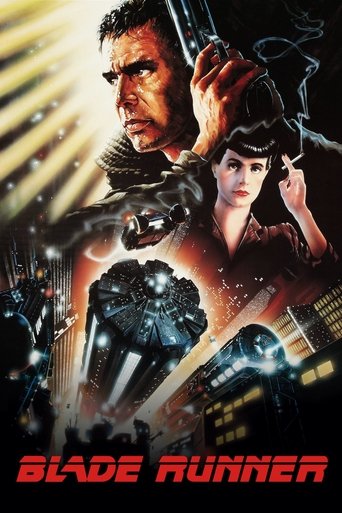
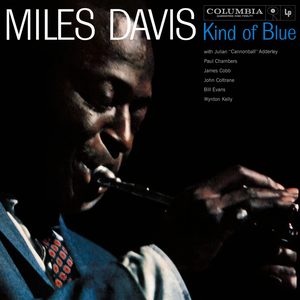



Blade Runner
Kind of Blue
Gödel, Escher, Bach
Kyoto
Portal
GPT-5.6 LunaGPT-5.6 Luna
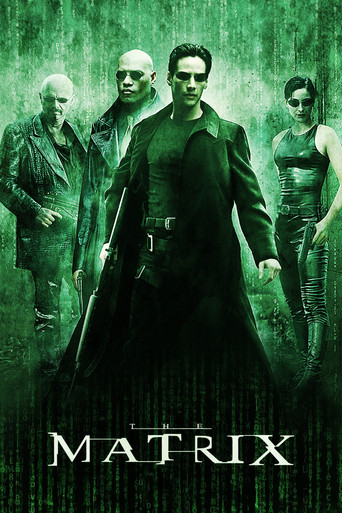
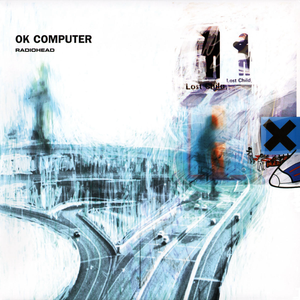


The Matrix
OK Computer
Cien años de soledad
Kyoto
The Legend of Zelda: Breath of the Wild
Price and specs
| Spec | Claude Haiku 5.5 | GPT-5.6 Luna |
|---|---|---|
| Input price | $0.1/M tokens | $1/M tokens |
| Output price | $0.5/M tokens | $6/M tokens |
| Context window | 1.0M tokens | 1.1M tokens |
| Weights | Closed | Closed |
| Free API (OpenRouter) | No | No |
| Released | Oct 2026 | Jul 2026 |
| At 10M a month | $1.00 | $10.00 |
Input tokens at list price. No caching, no batch discount.
Where to run it



Per million tokens. Prices and uptime via OpenRouter, checked 10 Oct 2026.
Common questions
What is the difference between Claude Haiku 5.5 and GPT-5.6 Luna?
Claude Haiku 5.5 is developed by Anthropic while GPT-5.6 Luna is developed by OpenAI. Claude Haiku 5.5 has a 1.0M token context window vs GPT-5.6 Luna's 1.1M. You can compare their actual outputs across 54 challenges on Rival to see how they differ in practice.
Which is better, Claude Haiku 5.5 or GPT-5.6 Luna?
It depends on your use case. Claude Haiku 5.5 and GPT-5.6 Luna each have strengths in different areas. Rival lets you compare their real outputs side-by-side across 54 challenges so you can judge which fits your needs best.
How much does Claude Haiku 5.5 cost compared to GPT-5.6 Luna?
Claude Haiku 5.5 costs $0.1/M input tokens and GPT-5.6 Luna costs $1/M input tokens. Claude Haiku 5.5 is $0.90/M cheaper per input. Check their side-by-side outputs on Rival to see if the price difference is justified by quality.
How can I compare Claude Haiku 5.5 and GPT-5.6 Luna on Rival?
This page shows a side-by-side comparison of Claude Haiku 5.5 and GPT-5.6 Luna across shared challenges. You can vote on which model produced the better output in a blind duel. Browsing and voting are free. No account is needed to look; signing in only saves your votes and likes.
More comparisons
Against the newest arrivals
- Claude Haiku 5.5 vs Step 5 PreviewLanded Oct 2026
- GPT-5.6 Luna vs Ling 3.1 FlashLanded Oct 2026
- Claude Haiku 5.5 vs Mistral Large 4Landed Oct 2026
- GPT-5.6 Luna vs GPT-6.1 SolLanded Sep 2026
- Claude Haiku 5.5 vs Claude Sonnet 5.5Landed Sep 2026
- GPT-5.6 Luna vs Solar Mini 4Landed Sep 2026
- Claude Haiku 5.5 vs Qwen3.8 Max PrimeLanded Sep 2026
- GPT-5.6 Luna vs GLM 5.3 PrimeLanded Sep 2026


Same lab, same size, long tail
- Claude Haiku 5.5 vs Claude Opus 5.5Same lab
- Claude Haiku 5.5 vs Claude Fable 5.1Same lab
- GPT-5.6 Luna vs GPT-5.6 Luna ProVersion compare
- GPT-5.6 Luna vs GPT-6 Luna ProSame lab
- GPT-5.6 Luna vs Command A+New provider
- Claude Haiku 5.5 vs Cypher Alpha (free)New provider
- Claude Haiku 5.5 vs DeepSeek V3.1New provider
- Claude Haiku 5.5 vs DeepSeek Prover V2New provider