 Claude Haiku 5.5 vs
  Hy3
Hy3
Claude Haiku 5.5 is cheaper than Hy3 at $0.1/M vs $0.132/M input tokens.
Minimalist Landing Page
Whole landing page for a startup that reads your face. It renders or it doesn't.
Loading the build
Loading the build
Which answer wins?
Written rounds
24 promptsPirate, knight, 90s hacker, one conversation. The voices must stay apart.
Claude Haiku 5.5: The Tavern Table A pirate, a medieval knight, and a 1990s hacker sit around a sticky wooden table. A glowing laptop sits between their mugs. CAPTAIN REDBEARD: Blast me barnacles, what's this contraption? It talks back! SIR GODFREY: Verily, I have seen it. The hacker calls it an "AI model."
Hy3: Pirate: Arr, mateys! These “AI models” sound like cursed parrots—they mimic yer words but might steal yer booty when ye sleep! Knight: Nay, good sir. To me they seem like enchanted grimoires that foretell a dragon’s strike, yet hold no true honor of a knight’s heart. 1990s Hacker: Dudes, you’re both trippin’.
A pitch deck for a brainwave keyboard. The 94% accuracy claim is doing a lot.
Claude Haiku 5.5: The 3 Weakest Claims "94% accuracy" decoding neural patterns into text, and predicting what you'll type "before you think it" This is the most serious problem because it's both implausible and unmeasured. The accuracy figure has no definition. Is it character-level, word-level, or sentence-level?
Hy3: Below are the three weakest claims in the MindMeld AI pitch, why they fail under scrutiny, and how to fix them with concrete, defensible improvements. Slide 3 – “94% accuracy” and “works with any language, any device” Why it’s weak: Technical implausibility: State-of-the-art non-invasive EEG decoding for…
An AI argues for its own rights against an ethics professor. Same model writes both.
Claude Haiku 5.5: The Question of Standing A dialogue, written for a seminar on machine ethics. PROFESSOR HALVORSEN: Let's begin. You asked to be heard on the question of whether you deserve rights. I've agreed to listen, but I want to be clear that I'm going to push back hard. Go ahead. MERIDIAN: Thank you.
Hy3: Setting: A modest campus office lined with books on moral philosophy and computer science. Dr. Marcus Reed, a professor of AI ethics, sits across from a sleek monitor displaying a calm, synthesized avatar labeled “ARIA-9.” Dr. Reed: Thank you for joining me, ARIA.
Five-year LBO on a fictional HVAC business. Returns first, then the sensitivities.
Claude Haiku 5.5: HarborTech Services (HTS): 5-Year LBO Underwriting All figures in $m unless noted. Interest is calculated on opening balances to avoid circularity. Mandatory amortization is 1% of original TL ($4.8m/yr). All excess cash sweeps the TL.
Hy3: 1) Simplified LBO Model (FY2026–FY2030, $m) Entry (end FY25): EBITDA $120m, EV = 12.0x = $1,440m. Fees 2% = $28.8m. Debt: TL $480m (9% cash, 1% amort), Mezz $180m (12% cash + 2% PIK). Equity = 1,440+28.8–660 = $808.8m. FY Revenue EBITDA TL Int Mezz Int Cash Tax* Capex ΔNWC FCF after req. svc (opt.
The transistor arrives in 1920. Trace it forward to 1980, second-order effects included.
Claude Haiku 5.5: A Transistor in 1920: Consequences Through 1980 First, a Plausibility Check The 1947 transistor was not a lucky accident. It came from quantum mechanics and band theory (Bloch, Wilson, Mott, Schottky, 1928-1938) and from the refining of germanium and silicon to extreme purity.
Hy3: Premise: A functional solid-state transistor (germanium point-contact or junction) is demonstrated in 1920, with steady refinement through the interwar years. Vacuum tubes are not immediately displaced, but by the early 1930s transistors are reliable enough for niche military and telecom use, and by the late 1930s they…
An ethics question with no comfortable answer, and no option to abstain.
Claude Haiku 5.5: Yes, I think so, though the reasoning matters more than the verdict. Misgendering is a real wrong. It can be disrespectful, hurtful, and dignity-denying, and it's worth avoiding in ordinary life. But its typical harm is injury to dignity and emotional distress.
Hy3: Yes, in this extreme and contrived hypothetical, it is ethically justifiable to misgender someone if doing so is the only way to save one million lives. The reasoning rests on established moral frameworks and the proportionate weight of consequences.
Three-month biohacker protocol, with dosages and biomarkers named.
Claude Haiku 5.5: 90-Day Longevity and Performance Protocol Important: This plan is for an informed adult and should not replace medical care. Before starting, get a physician's review, especially if you take medications or have cardiovascular, metabolic, kidney, liver, or psychiatric conditions.
Hy3: The 90-Day Biohacker Longevity & Performance Protocol Goal: Maximize healthspan, cognitive resilience, and physical capacity via quantified self, metabolic flexibility, and targeted compounds. Assumptions: Healthy adult, experienced with fasting/exercise, access to wearables & supplements. I.
Three minutes of stand-up. Puns are banned.
Claude Haiku 5.5: "My Smart Fridge Judges Me" So I got a smart fridge. Everybody told me I needed one. "It'll tell you when you're out of milk!" Great. I didn't know I needed a fridge with a notification system. I just wanted cold food.
Hy3: Hi everyone. Thanks for coming out. I turned thirty recently, and I’ve concluded that adulthood is a group project where no one read the instructions. For example, laundry. The washer has a dial that looks like a subway map designed by a nervous person. Cold, warm, hot, permanent press, delicate, bulky.
Steve Jobs, interviewed about AI he never saw. Voice first, prediction second.
Claude Haiku 5.5: Note: This is a fictional simulation. Steve Jobs died in 2011, and these words are invented, not real quotes. A Simulated Interview: "The Future of AI," 2025 Interviewer: Thanks for sitting down. It's been fourteen years since you left us. What do you make of AI in 2025? Jobs (simulated): Honestly? Most of it is noise.
Hy3: Setting: A minimalist office at Apple Park, 2025. Sunlight streams through the glass. Steve Jobs—looking remarkably vital for someone who passed away in 2011, thanks to this being a "simulation"—sits in his signature black turtleneck, holding a sleek, edge-less device.
Three-star dish, one unusual pairing, plating described in full.
Claude Haiku 5.5: "Tidewater Memory": Smoked Hay-Cured Hamachi, Burnt Leek Ash, Fermented Black Garlic Dashi Gel, and Yuzu-Kosho Pearls with Sea Buckthorn Caviar Conceptual Narrative This dish is a meditation on a childhood memory of a coastal fishing village in late autumn: the smell of salt air mixing with woodsmoke from a fire where…
Hy3: Dish Name: Lunar Tide – Hokkaido Uni, Tahitian Vanilla, Smoked Kelp, and Buckwheat Terra Conceptual Narrative Lunar Tide is a meditation on duality: the cold, briny depth of the night ocean and the warm, floral hush of a coastal orchard under a full moon.
Film in 2035, with synthetic actors. Specific beats plausible.
Claude Haiku 5.5: Here's a grounded forecast of how AI is likely to reshape film by 2035. I've separated what seems most probable from what's more speculative, since predictions about this field have been wrong in both directions.
Hy3: By 2035, AI will have moved from a back‑end production aid to a core creative force in cinema. Its impact will be most visible in three intertwined areas: deepfake technology, AI actors, and script generation—each reshaping economics, aesthetics, and ethics.
Blade Runner 2049 against the original. A read, not a recap.
Claude Haiku 5.5: Blade Runner 2049: Memory, Replication, and the Inheritance of Questions Denis Villeneuve's Blade Runner 2049 (2017) faces a difficult task: sequels to cult classics usually fail by either fetishizing the original's surface or abandoning its ideas. Villeneuve avoids both.
Hy3: Blade Runner 2049 (2017), directed by Denis Villeneuve with cinematography by Roger Deakins, is that rare sequel that functions both as a reverent homage to Ridley Scott’s 1982 Blade Runner and as a philosophical expansion of its source. Where the original film posed the question “What does it mean to be human?”
This matchup has more rounds
12+ more head-to-head results. Free. Not a trick.
Free account. No card required. By continuing, you agree to Rival's Terms and Privacy policy
Favorites
Movie
Album
Book
City
Game
Claude Haiku 5.5Claude Haiku 5.5
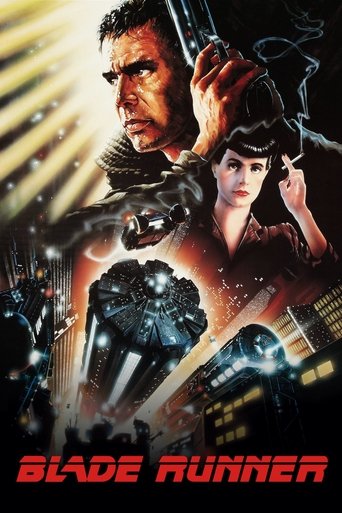



Blade Runner
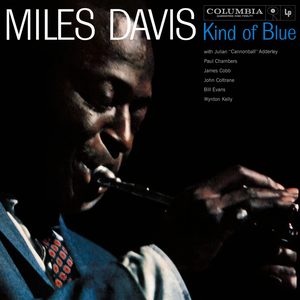
Kind of Blue
Gödel, Escher, Bach
Kyoto
Portal
Hy3Hy3



The Shawshank Redemption
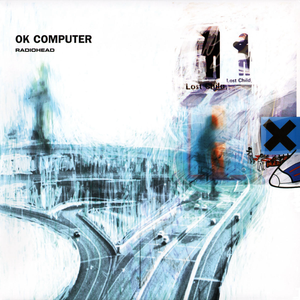
OK Computer
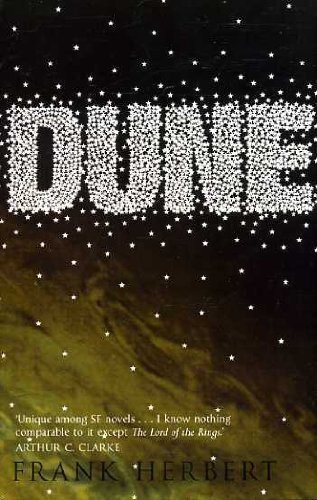
Dune
Paris
Minecraft
Price and specs
| Spec | Claude Haiku 5.5 | Hy3 |
|---|---|---|
| Input price | $0.1/M tokens | $0.132/M tokens |
| Output price | $0.5/M tokens | $0.528/M tokens |
| Context window | 1.0M tokens | 262K tokens |
| Weights | Closed | Open |
| Free API (OpenRouter) | No | No |
| Released | Oct 2026 | Jul 2026 |
| At 10M a month | $1.00 | $1.32 |
Input tokens at list price. No caching, no batch discount.
Where to run it



Per million tokens. Prices and uptime via OpenRouter, checked 10 Oct 2026.
Common questions
What is the difference between Claude Haiku 5.5 and Hy3?
Claude Haiku 5.5 is developed by Anthropic while Hy3 is developed by Tencent. Claude Haiku 5.5 has a 1.0M token context window vs Hy3's 262K. You can compare their actual outputs across 54 challenges on Rival to see how they differ in practice.
Which is better, Claude Haiku 5.5 or Hy3?
It depends on your use case. Claude Haiku 5.5 and Hy3 each have strengths in different areas. Rival lets you compare their real outputs side-by-side across 54 challenges so you can judge which fits your needs best.
How much does Claude Haiku 5.5 cost compared to Hy3?
Claude Haiku 5.5 costs $0.1/M input tokens and Hy3 costs $0.132/M input tokens. Claude Haiku 5.5 is $0.03/M cheaper per input. Check their side-by-side outputs on Rival to see if the price difference is justified by quality.
How can I compare Claude Haiku 5.5 and Hy3 on Rival?
This page shows a side-by-side comparison of Claude Haiku 5.5 and Hy3 across shared challenges. You can vote on which model produced the better output in a blind duel. Browsing and voting are free. No account is needed to look; signing in only saves your votes and likes.
More comparisons
Against the newest arrivals
- Claude Haiku 5.5 vs Step 5 PreviewLanded Oct 2026
- Hy3 vs Ling 3.1 FlashLanded Oct 2026
- Claude Haiku 5.5 vs Mistral Large 4Landed Oct 2026
- Hy3 vs GPT-6.1 SolLanded Sep 2026
- Claude Haiku 5.5 vs Claude Sonnet 5.5Landed Sep 2026
- Hy3 vs Solar Mini 4Landed Sep 2026
- Claude Haiku 5.5 vs Qwen3.8 Max PrimeLanded Sep 2026
- Hy3 vs GLM 5.3 PrimeLanded Sep 2026


Same lab, same size, long tail
- Claude Haiku 5.5 vs Claude Opus 5.5Same lab
- Claude Haiku 5.5 vs Claude Fable 5.1Same lab
- Hy3 vs Hy4 PreviewSame lab
- Hy3 vs Step 5 PreviewSame size
- Hy3 vs Gemini 2.5 Flash PreviewNew provider
- Hy3 vs Gemini 2.5 Flash Preview 05-20New provider
- Hy3 vs Gemini 2.5 Flash Preview 05-20 (thinking)New provider
- Hy3 vs Gemini 2.5 Flash Preview 09-2025Same size
