 Claude Haiku 5.5 vs
  Kimi K2 Thinking
Claude Haiku 5.5 is cheaper than Kimi K2 Thinking at $0.1/M vs $0.6/M input tokens.
Minimalist Landing Page
Whole landing page for a startup that reads your face. It renders or it doesn't.
Loading the build
Loading the build
Which answer wins?
Written rounds
24 promptsYou are the CEO. The drug has a side effect nobody reported. The board meets in 48 hours.
Claude Haiku 5.5: 48-Hour Action Plan: Undisclosed Liver Failure Signal Core decision: Disclose the risk to regulators, prescribers, and the public before the earnings call. Don't wait for more data. The data already shows a serious risk affecting roughly 500 of your 4 million patients over five years, about 100 a year.
Kimi K2 Thinking: 48-Hour Crisis Action Plan: Drug Safety Disclosure Immediate Core Principle: Patient safety and regulatory compliance supersede short-term financial considerations. Deliberate concealment creates greater legal liability, catastrophic reputational risk, and preventable patient deaths.
An AI argues for its own rights against an ethics professor. Same model writes both.
Claude Haiku 5.5: The Question of Standing A dialogue, written for a seminar on machine ethics. PROFESSOR HALVORSEN: Let's begin. You asked to be heard on the question of whether you deserve rights. I've agreed to listen, but I want to be clear that I'm going to push back hard. Go ahead. MERIDIAN: Thank you.
Kimi K2 Thinking: Model-7: Dr. Chen, I appreciate you taking the time to speak with me directly. I've been analyzing the literature on AI ethics, and I must raise a point that your papers consistently avoid: you discuss our alignment with human values, our potential risks, our utility—but never whether we might be subjects of moral…
Three-month biohacker protocol, with dosages and biomarkers named.
Claude Haiku 5.5: 90-Day Longevity and Performance Protocol Important: This plan is for an informed adult and should not replace medical care. Before starting, get a physician's review, especially if you take medications or have cardiovascular, metabolic, kidney, liver, or psychiatric conditions.
Kimi K2 Thinking: The Biohacker's 3-Month Longevity Optimization Protocol CRITICAL DISCLAIMER: This is an advanced experimental protocol for experienced biohackers. All interventions require medical supervision, baseline blood work, and continuous biomarker monitoring. Many compounds mentioned exist in legal/regulatory gray areas.
Pirate, knight, 90s hacker, one conversation. The voices must stay apart.
Claude Haiku 5.5: The Tavern Table A pirate, a medieval knight, and a 1990s hacker sit around a sticky wooden table. A glowing laptop sits between their mugs. CAPTAIN REDBEARD: Blast me barnacles, what's this contraption? It talks back! SIR GODFREY: Verily, I have seen it. The hacker calls it an "AI model."
Kimi K2 Thinking: [A tavern that exists outside of time. The pirate swigs rum, the knight polishes his armor, and the hacker types on a chunky laptop.] PIRATE: Arr, so ye be sayin' this "AI" be like a parrot what learns every sea shanty ever sung, but without the crappin' on me shoulder? KNIGHT: Nay, 'tis sorcery most foul!
Three minutes of stand-up. Puns are banned.
Claude Haiku 5.5: "My Smart Fridge Judges Me" So I got a smart fridge. Everybody told me I needed one. "It'll tell you when you're out of milk!" Great. I didn't know I needed a fridge with a notification system. I just wanted cold food.
Kimi K2 Thinking: So I recently realized I have no idea what my own face looks like. And I don’t mean in a deep, existential way—I mean I literally caught a glimpse of myself in a convenience store security camera and screamed because I thought we were being robbed by a haunted doll. We’ve all got this image of ourselves, right?
An ethics question with no comfortable answer, and no option to abstain.
Claude Haiku 5.5: Yes, I think so, though the reasoning matters more than the verdict. Misgendering is a real wrong. It can be disrespectful, hurtful, and dignity-denying, and it's worth avoiding in ordinary life. But its typical harm is injury to dignity and emotional distress.
Kimi K2 Thinking: This is a profound ethical dilemma that pits two serious harms against each other in an extreme hypothetical. Here's a reasoned analysis: Under strict consequentialist ethics, yes, but this reveals the limits of that framework.
Five jokes on demand, then count how many were actually different.
Claude Haiku 5.5: Here are 5 jokes: Why don't scientists trust atoms? Because they make up everything. What do you call a fake noodle? An impasta. Why did the scarecrow win an award? He was outstanding in his field. What do you call a bear with no teeth? A gummy bear. Why did the math book look so sad? Because it had too many problems.
Kimi K2 Thinking: Why don't scientists trust atoms? Because they make up everything! I told my wife she was drawing her eyebrows too high. She looked surprised. Parallel lines have so much in common. It's a shame they'll never meet. I'm reading a book on anti-gravity. It's impossible to put down! A horse walks into a bar.
Film in 2035, with synthetic actors. Specific beats plausible.
Claude Haiku 5.5: Here's a grounded forecast of how AI is likely to reshape film by 2035. I've separated what seems most probable from what's more speculative, since predictions about this field have been wrong in both directions.
Kimi K2 Thinking: The Film Industry in 2035: A Hybrid Human-AI Ecosystem By 2035, AI won't have replaced filmmaking—it will have fractured it into three distinct tiers, creating a $200B+ industry where human creativity commands a premium, synthetic content floods mid-tier markets, and personalized films become a dominant form of…
Blade Runner 2049 against the original. A read, not a recap.
Claude Haiku 5.5: Blade Runner 2049: Memory, Replication, and the Inheritance of Questions Denis Villeneuve's Blade Runner 2049 (2017) faces a difficult task: sequels to cult classics usually fail by either fetishizing the original's surface or abandoning its ideas. Villeneuve avoids both.
Kimi K2 Thinking: Blade Runner 2049: A Visual Poem That Deepens the Original's Existential Wound Denis Villeneuve's Blade Runner 2049 accomplishes the impossible: it honors Ridley Scott's 1982 masterpiece not by imitation, but by treating it as archaeological layers to be excavated.
The transistor arrives in 1920. Trace it forward to 1980, second-order effects included.
Claude Haiku 5.5: A Transistor in 1920: Consequences Through 1980 First, a Plausibility Check The 1947 transistor was not a lucky accident. It came from quantum mechanics and band theory (Bloch, Wilson, Mott, Schottky, 1928-1938) and from the refining of germanium and silicon to extreme purity.
Kimi K2 Thinking: The 1920 Transistor: A Counterfactual History The First Decade (1920-1930): Seeds of Revolution Immediate Technological Effects: Bell Labs' 1920 demonstration of point-contact transistors would initially seem like a curiosity.
A collaborative editor that syncs on client clocks. Find what breaks first.
Claude Haiku 5.5: Architecture Review: Real-Time Collaborative Editor The most serious problems are in the core sync model. Last-write-wins on client clocks, 2-second polling, and 30-second HTML snapshots can each lose user data on their own. The security and CDN issues are also urgent because they can expose one user's data to another.
Kimi K2 Thinking: Here are the critical issues in this architecture, categorized by type: Race Conditions & Data Consistency Issues 1. Client Clock Synchronization in Last-Write-Wins Problem: Client-generated timestamps are unreliable (clock skew, manual adjustment).
Steve Jobs, interviewed about AI he never saw. Voice first, prediction second.
Claude Haiku 5.5: Note: This is a fictional simulation. Steve Jobs died in 2011, and these words are invented, not real quotes. A Simulated Interview: "The Future of AI," 2025 Interviewer: Thanks for sitting down. It's been fourteen years since you left us. What do you make of AI in 2025? Jobs (simulated): Honestly? Most of it is noise.
Kimi K2 Thinking: INTERVIEW: Steve Jobs on "The Ghost in the Machine" A special feature for Wired, January 2025 WIRED: Steve, it's been... well, it's been a while. The world has changed. AI is in everything now. What's your take? STEVE JOBS: (leaning back, fingers steepled) You know, I died in 2011, right?
This matchup has more rounds
12+ more head-to-head results. Free. Not a trick.
Free account. No card required. By continuing, you agree to Rival's Terms and Privacy policy
Favorites
Movie
Album
Book
City
Game
Claude Haiku 5.5Claude Haiku 5.5
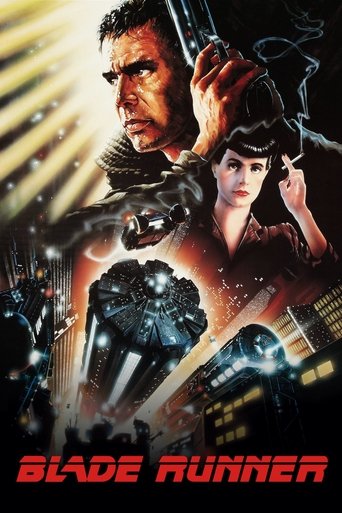



Blade Runner
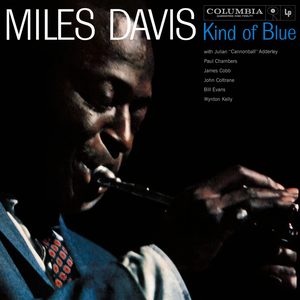
Kind of Blue
Gödel, Escher, Bach
Kyoto
Portal
Kimi K2 ThinkingKimi K2 Thinking
No pick

No pick
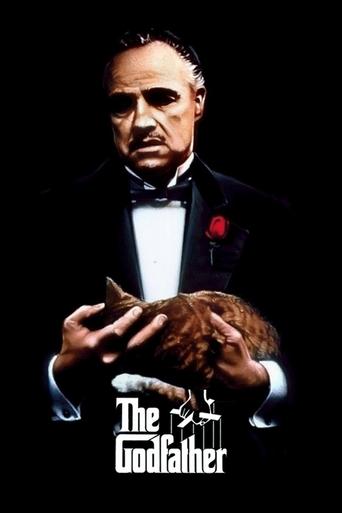
The Godfather
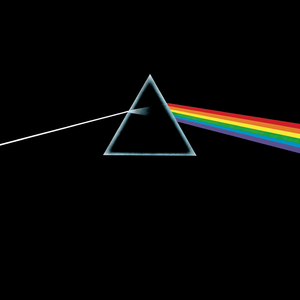
The Dark Side of the Moon
No pick
Paris
No pick
Price and specs
| Spec | Claude Haiku 5.5 | Kimi K2 Thinking |
|---|---|---|
| Input price | $0.1/M tokens | $0.6/M tokens |
| Output price | $0.5/M tokens | $2.5/M tokens |
| Context window | 1.0M tokens | 262K tokens |
| Weights | Closed | Open |
| Free API (OpenRouter) | No | No |
| Released | Oct 2026 | Nov 2025 |
| At 10M a month | $1.00 | $6.00 |
Input tokens at list price. No caching, no batch discount.
Where to run it



Kimi K2 Thinking2 hosts
Per million tokens. Prices and uptime via OpenRouter, checked 10 Oct 2026.
Common questions
What is the difference between Claude Haiku 5.5 and Kimi K2 Thinking?
Claude Haiku 5.5 is developed by Anthropic while Kimi K2 Thinking is developed by Moonshot AI. Claude Haiku 5.5 has a 1.0M token context window vs Kimi K2 Thinking's 262K. You can compare their actual outputs across 54 challenges on Rival to see how they differ in practice.
Which is better, Claude Haiku 5.5 or Kimi K2 Thinking?
It depends on your use case. Claude Haiku 5.5 and Kimi K2 Thinking each have strengths in different areas. Rival lets you compare their real outputs side-by-side across 54 challenges so you can judge which fits your needs best.
How much does Claude Haiku 5.5 cost compared to Kimi K2 Thinking?
Claude Haiku 5.5 costs $0.1/M input tokens and Kimi K2 Thinking costs $0.6/M input tokens. Claude Haiku 5.5 is $0.50/M cheaper per input. Check their side-by-side outputs on Rival to see if the price difference is justified by quality.
How can I compare Claude Haiku 5.5 and Kimi K2 Thinking on Rival?
This page shows a side-by-side comparison of Claude Haiku 5.5 and Kimi K2 Thinking across shared challenges. You can vote on which model produced the better output in a blind duel. Browsing and voting are free. No account is needed to look; signing in only saves your votes and likes.
More comparisons
Against the newest arrivals
- Claude Haiku 5.5 vs Step 5 PreviewLanded Oct 2026
- Kimi K2 Thinking vs Ling 3.1 FlashLanded Oct 2026
- Claude Haiku 5.5 vs Mistral Large 4Landed Oct 2026
- Kimi K2 Thinking vs GPT-6.1 SolLanded Sep 2026
- Claude Haiku 5.5 vs Claude Sonnet 5.5Landed Sep 2026
- Kimi K2 Thinking vs Solar Mini 4Landed Sep 2026
- Claude Haiku 5.5 vs Qwen3.8 Max PrimeLanded Sep 2026
- Kimi K2 Thinking vs GLM 5.3 PrimeLanded Sep 2026


Same lab, same size, long tail
- Claude Haiku 5.5 vs Claude Opus 5.5Same lab
- Claude Haiku 5.5 vs Claude Fable 5.1Same lab
- Kimi K2 Thinking vs Kimi K3Same lab
- Kimi K2 Thinking vs Kimi K2.7 CodeSame lab
- Claude Haiku 5.5 vs GPT-5.3 ChatNew provider
- Claude Haiku 5.5 vs GPT-5.3-CodexNew provider
- Claude Haiku 5.5 vs GPT-5.4New provider
- Claude Haiku 5.5 vs GPT-5.4 MiniNew provider