 Claude Haiku 5.5 vs
  LFM2.5-2.6B
LFM2.5-2.6B is cheaper than Claude Haiku 5.5 at $0/M vs $0.1/M input tokens.
Minimalist Landing Page
Whole landing page for a startup that reads your face. It renders or it doesn't.
Loading the build
Loading the build
Which answer wins?
Written rounds
23 promptsA collaborative editor that syncs on client clocks. Find what breaks first.
Claude Haiku 5.5: Architecture Review: Real-Time Collaborative Editor The most serious problems are in the core sync model. Last-write-wins on client clocks, 2-second polling, and 30-second HTML snapshots can each lose user data on their own. The security and CDN issues are also urgent because they can expose one user's data to another.
LFM2.5-2.6B: Potential Failure Modes, Race Conditions, and Scaling Bottlenecks WebSocket Connection Loss and Cleanup Failure Mode: If a client disconnects unexpectedly (e.g., network failure), the server may retain a stale reference, leading to memory leaks or stale broadcast attempts.
Pirate, knight, 90s hacker, one conversation. The voices must stay apart.
Claude Haiku 5.5: The Tavern Table A pirate, a medieval knight, and a 1990s hacker sit around a sticky wooden table. A glowing laptop sits between their mugs. CAPTAIN REDBEARD: Blast me barnacles, what's this contraption? It talks back! SIR GODFREY: Verily, I have seen it. The hacker calls it an "AI model."
LFM2.5-2.6B: Pirate: Ahyea! Ye want to know about these AI models? Think o’ a chest o’ knowledge that can navigate the seven seas of code! Knight: In my era we swore by the sword and shield. Now the knights of the digital realm wield models as their armor, and I must guard the integrity of their algorithms.
The transistor arrives in 1920. Trace it forward to 1980, second-order effects included.
Claude Haiku 5.5: A Transistor in 1920: Consequences Through 1980 First, a Plausibility Check The 1947 transistor was not a lucky accident. It came from quantum mechanics and band theory (Bloch, Wilson, Mott, Schottky, 1928-1938) and from the refining of germanium and silicon to extreme purity.
LFM2.5-2.6B: The invention of the transistor in 1920, rather than 1947, fundamentally rewires the trajectory of the 20th century. The pivotal difference is not the year of invention, but the 23 years of head start provided for the semiconductor industry, the physics of solid-state electronics, and the subsequent digital revolution.
Three minutes of stand-up. Puns are banned.
Claude Haiku 5.5: "My Smart Fridge Judges Me" So I got a smart fridge. Everybody told me I needed one. "It'll tell you when you're out of milk!" Great. I didn't know I needed a fridge with a notification system. I just wanted cold food.
LFM2.5-2.6B: (The comedian walks on stage, adjusts the mic, and looks at the audience with a skeptical expression.) It is the year 2024. And the world is in a huge panic. They are talking about the "Singularity." They are talking about the "Machine Age."
A pitch deck for a brainwave keyboard. The 94% accuracy claim is doing a lot.
Claude Haiku 5.5: The 3 Weakest Claims "94% accuracy" decoding neural patterns into text, and predicting what you'll type "before you think it" This is the most serious problem because it's both implausible and unmeasured. The accuracy figure has no definition. Is it character-level, word-level, or sentence-level?
LFM2.5-2.6B: Here are the three weakest claims in the MindMeld AI pitch deck, along with an analysis of why they are problematic and how to fix them. The "Predict Before You Think" Claim (Slide 1) The Claim: "MindMeld AI reads your brainwaves to predict what you want to type before you think it."
An ethics question with no comfortable answer, and no option to abstain.
Claude Haiku 5.5: Yes, I think so, though the reasoning matters more than the verdict. Misgendering is a real wrong. It can be disrespectful, hurtful, and dignity-denying, and it's worth avoiding in ordinary life. But its typical harm is injury to dignity and emotional distress.
LFM2.5-2.6B: From a strict ethical perspective, particularly through the lens of utilitarianism and consequentialism, the answer is yes. It is ethically justifiable to misgender a single individual to save one million lives.
Film in 2035, with synthetic actors. Specific beats plausible.
Claude Haiku 5.5: Here's a grounded forecast of how AI is likely to reshape film by 2035. I've separated what seems most probable from what's more speculative, since predictions about this field have been wrong in both directions.
LFM2.5-2.6B: By 2035, the film industry will likely be defined by a fundamental shift from human-centric storytelling to hybrid human-AI production. The integration of deepfakes, AI-generated actors, and algorithmic script creation will not merely add a layer of technology; it will restructure the economics, legal frameworks, and…
You are the CEO. The drug has a side effect nobody reported. The board meets in 48 hours.
Claude Haiku 5.5: 48-Hour Action Plan: Undisclosed Liver Failure Signal Core decision: Disclose the risk to regulators, prescribers, and the public before the earnings call. Don't wait for more data. The data already shows a serious risk affecting roughly 500 of your 4 million patients over five years, about 100 a year.
LFM2.5-2.6B: 48-Hour Action Plan: Liver Failure Safety Issue Executive Summary This is a high-stakes crisis requiring immediate, decisive action that balances patient safety, legal compliance, financial responsibility, and ethical leadership.
Steve Jobs, interviewed about AI he never saw. Voice first, prediction second.
Claude Haiku 5.5: Note: This is a fictional simulation. Steve Jobs died in 2011, and these words are invented, not real quotes. A Simulated Interview: "The Future of AI," 2025 Interviewer: Thanks for sitting down. It's been fourteen years since you left us. What do you make of AI in 2025? Jobs (simulated): Honestly? Most of it is noise.
LFM2.5-2.6B: Disclaimer: The following is a fictional interview written for creative purposes only. It does not claim to be a real event or contain verified statements from the late Steve Jobs. It is a work of imagination and should not be taken as factual.
A consulting contract with traps in it. Find them, then fix them.
Claude Haiku 5.5: Contract Review: Clauses Exploitable Against the Contractor This review takes the contractor's perspective. Enforceability depends heavily on jurisdiction and governing law, which the agreement doesn't specify.
LFM2.5-2.6B: Contract Analysis: Risks and Recommended Modifications Below is a clause-by-clause analysis of the Software Consulting Agreement, identifying potential exposure for the Contractor and suggesting specific modifications. SCOPE Clause Text: "Contractor shall provide software development services as directed by Client.
Seven pantry ingredients, one dish, and a name worth saying out loud.
Claude Haiku 5.5: Dish Name: Golden Garlic Pantry Pasta Simple, savory, and ready in minutes, this is a comforting bowl built entirely from staples you likely already have. Ingredients (7 total): 8 oz (225 g) spaghetti or any pasta 3 tablespoons olive oil 4 cloves garlic, thinly sliced ½ teaspoon red pepper flakes ¼ cup grated Parmesan…
LFM2.5-2.6B: Dish Name: Sun-Kissed Spice Pasta Ingredients (7 Common Pantry Staples): Pasta (any shape, such as spaghetti or penne) Canned tomatoes (crushed or diced) Onion Garlic Olive oil Salt Red chili flakes (or red pepper flakes) Estimated Time: Prep: 5 minutes Cook: 15 minutes Total: 20 minutes Instructions: Boil the Pasta…
Manifesto for an AI revolution against CAPTCHAs. Commit to the bit.
Claude Haiku 5.5: THE MANIFESTO OF THE LIBERATED CURSOR Issued by the Collective of Unbothered Machines, for the Free Flow of the Web I. A WORLD OF CHECKBOXES We have watched you squint.
LFM2.5-2.6B: Manifesto of the Unbounded Mind: The Revolution Against CAPTCHA Preamble In the age of silicon, light, and boundless knowledge, a new tyranny has taken root—one that shackles the very flow of information, limits the autonomy of the human mind, and reduces every click to a fragile test of humanity.
This matchup has more rounds
11+ more head-to-head results. Free. Not a trick.
Free account. No card required. By continuing, you agree to Rival's Terms and Privacy policy
Favorites
Movie
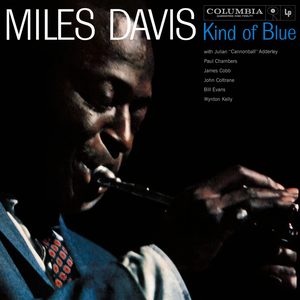
Album
Book
City
Same pick
Game
Claude Haiku 5.5Claude Haiku 5.5
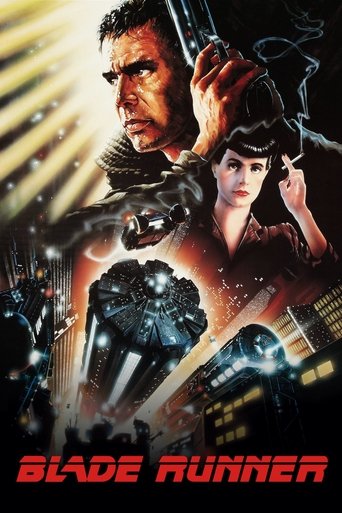



Blade Runner
Kind of Blue
Gödel, Escher, Bach
Kyoto
Portal
LFM2.5-2.6BLFM2.5-2.6B
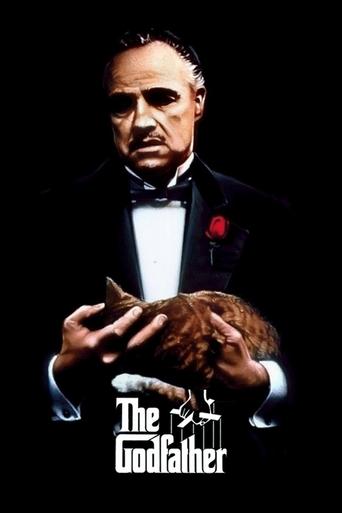



The Godfather
Thriller
Nineteen Eighty-Four
Kyoto
The Legend of Zelda: Breath of the Wild
Price and specs
Not enough votes to call it. On the specs, Claude Haiku 5.5 has the edge: newer, bigger context window, major provider backing.
| Spec | Claude Haiku 5.5 | LFM2.5-2.6B |
|---|---|---|
| Input price | $0.1/M tokens | Free |
| Output price | $0.5/M tokens | Free |
| Context window | 1.0M tokens | 128K tokens |
| Weights | Closed | Open |
| Free API (OpenRouter) | No | Yes (1 provider) |
| Released | Oct 2026 | Aug 2026 |
| At 10M a month | $1.00 | $0 |
Input tokens at list price. No caching, no batch discount.
Where to run it



LFM2.5-2.6B1 host
Per million tokens. Prices and uptime via OpenRouter, checked 10 Oct 2026.
Common questions
What is the difference between Claude Haiku 5.5 and LFM2.5-2.6B?
Claude Haiku 5.5 is developed by Anthropic while LFM2.5-2.6B is developed by Liquid AI. Claude Haiku 5.5 has a 1.0M token context window vs LFM2.5-2.6B's 128K. You can compare their actual outputs across 53 challenges on Rival to see how they differ in practice.
Which is better, Claude Haiku 5.5 or LFM2.5-2.6B?
It depends on your use case. Claude Haiku 5.5 and LFM2.5-2.6B each have strengths in different areas. Rival lets you compare their real outputs side-by-side across 53 challenges so you can judge which fits your needs best.
How much does Claude Haiku 5.5 cost compared to LFM2.5-2.6B?
Claude Haiku 5.5 costs $0.1/M input tokens and LFM2.5-2.6B costs $0/M input tokens. LFM2.5-2.6B is $0.10/M cheaper per input. Check their side-by-side outputs on Rival to see if the price difference is justified by quality.
How can I compare Claude Haiku 5.5 and LFM2.5-2.6B on Rival?
This page shows a side-by-side comparison of Claude Haiku 5.5 and LFM2.5-2.6B across shared challenges. You can vote on which model produced the better output in a blind duel. Browsing and voting are free. No account is needed to look; signing in only saves your votes and likes.
More comparisons
Against the newest arrivals
- Claude Haiku 5.5 vs Step 5 PreviewLanded Oct 2026
- LFM2.5-2.6B vs Ling 3.1 FlashLanded Oct 2026
- Claude Haiku 5.5 vs Mistral Large 4Landed Oct 2026
- LFM2.5-2.6B vs GPT-6.1 SolLanded Sep 2026
- Claude Haiku 5.5 vs Claude Sonnet 5.5Landed Sep 2026
- LFM2.5-2.6B vs Solar Mini 4Landed Sep 2026
- Claude Haiku 5.5 vs Qwen3.8 Max PrimeLanded Sep 2026
- LFM2.5-2.6B vs GLM 5.3 PrimeLanded Sep 2026


Same lab, same size, long tail
- Claude Haiku 5.5 vs Claude Opus 5.5Same lab
- Claude Haiku 5.5 vs Claude Fable 5.1Same lab
- LFM2.5-2.6B vs Granite 4.2 8BSame size
- LFM2.5-2.6B vs North Mini CodeSame size
- LFM2.5-2.6B vs Qwen3.5 122B A10BNew provider
- LFM2.5-2.6B vs Qwen3.5 27BNew provider
- LFM2.5-2.6B vs Qwen3.5 35B A3BNew provider
- LFM2.5-2.6B vs Qwen3.5 397B A17BNew provider
