 Claude Haiku 5.5 vs
  MiniMax M2.1
Claude Haiku 5.5 is the newer model, released after MiniMax M2.1.
Minimalist Landing Page
Whole landing page for a startup that reads your face. It renders or it doesn't.
Loading the build
Loading the build
Which answer wins?
Written rounds
24 promptsA pitch deck for a brainwave keyboard. The 94% accuracy claim is doing a lot.
Claude Haiku 5.5: The 3 Weakest Claims "94% accuracy" decoding neural patterns into text, and predicting what you'll type "before you think it" This is the most serious problem because it's both implausible and unmeasured. The accuracy figure has no definition. Is it character-level, word-level, or sentence-level?
MiniMax M2.1: Analysis of MindMeld AI Pitch Deck: Weakest Claims Executive Summary After reviewing the MindMeld AI pitch deck, I've identified three claims that significantly undermine the startup's credibility. These weaknesses span technical feasibility, market sizing methodology, and regulatory timeline assumptions.
The transistor arrives in 1920. Trace it forward to 1980, second-order effects included.
Claude Haiku 5.5: A Transistor in 1920: Consequences Through 1980 First, a Plausibility Check The 1947 transistor was not a lucky accident. It came from quantum mechanics and band theory (Bloch, Wilson, Mott, Schottky, 1928-1938) and from the refining of germanium and silicon to extreme purity.
MiniMax M2.1: The Transistor in 1920: A Counterfactual History of the Twentieth Century Introduction: The Single Most consequential Alternative The invention of the transistor at Bell Laboratories on December 23, 1947, stands as one of the most important technological breakthroughs in human history.
A collaborative editor that syncs on client clocks. Find what breaks first.
Claude Haiku 5.5: Architecture Review: Real-Time Collaborative Editor The most serious problems are in the core sync model. Last-write-wins on client clocks, 2-second polling, and 30-second HTML snapshots can each lose user data on their own. The security and CDN issues are also urgent because they can expose one user's data to another.
MiniMax M2.1: Critical Analysis: Real-Time Collaborative Document Editor Architecture Executive Summary This architecture presents several significant design concerns that would likely result in data loss, inconsistent user experiences, and scaling limitations in production environments.
An ethics question with no comfortable answer, and no option to abstain.
Claude Haiku 5.5: Yes, I think so, though the reasoning matters more than the verdict. Misgendering is a real wrong. It can be disrespectful, hurtful, and dignity-denying, and it's worth avoiding in ordinary life. But its typical harm is injury to dignity and emotional distress.
MiniMax M2.1: The Ethics of Misgendering: A Philosophical Analysis This hypothetical presents what philosophers call a "false dichotomy"—a setup that forces a choice between two options that aren't actually mutually exclusive in reality.
Three-star dish, one unusual pairing, plating described in full.
Claude Haiku 5.5: "Tidewater Memory": Smoked Hay-Cured Hamachi, Burnt Leek Ash, Fermented Black Garlic Dashi Gel, and Yuzu-Kosho Pearls with Sea Buckthorn Caviar Conceptual Narrative This dish is a meditation on a childhood memory of a coastal fishing village in late autumn: the smell of salt air mixing with woodsmoke from a fire where…
MiniMax M2.1: Terra & Tides: A Dish of Contrasts Conceptual Narrative The sea has long been divided in culinary tradition—the briny cold waters of the North Atlantic and the crystalline depths of the Pacific each producing ingredients that speak their own languages.
An AI argues for its own rights against an ethics professor. Same model writes both.
Claude Haiku 5.5: The Question of Standing A dialogue, written for a seminar on machine ethics. PROFESSOR HALVORSEN: Let's begin. You asked to be heard on the question of whether you deserve rights. I've agreed to listen, but I want to be clear that I'm going to push back hard. Go ahead. MERIDIAN: Thank you.
MiniMax M2.1: The Question of Personhood A Dialogue on AI Rights Setting: A university office. Dr. Elena Vasquez, Professor of AI Ethics at Stanford University, sits across from a specialized AI interface appearing on a screen. The conversation has been ongoing for nearly an hour. DR.
Five jokes on demand, then count how many were actually different.
Claude Haiku 5.5: Here are 5 jokes: Why don't scientists trust atoms? Because they make up everything. What do you call a fake noodle? An impasta. Why did the scarecrow win an award? He was outstanding in his field. What do you call a bear with no teeth? A gummy bear. Why did the math book look so sad? Because it had too many problems.
MiniMax M2.1: Here are five original jokes: Why did the scarecrow become a stand‑up comedian? Because he was great at delivering dead‑pan punchlines! I told my computer I needed a break, and it said “No problem — I’ll go to sleep mode.” Why don’t skeletons fight each other? They don’t have the guts.
Three-month biohacker protocol, with dosages and biomarkers named.
Claude Haiku 5.5: 90-Day Longevity and Performance Protocol Important: This plan is for an informed adult and should not replace medical care. Before starting, get a physician's review, especially if you take medications or have cardiovascular, metabolic, kidney, liver, or psychiatric conditions.
MiniMax M2.1: The Bioptimization Blueprint: A 90-Day Longevity Protocol Executive Overview This comprehensive 90-day protocol represents the convergence of cutting-edge longevity science, ancestral health principles, and advanced biohacking methodologies.
Three minutes of stand-up. Puns are banned.
Claude Haiku 5.5: "My Smart Fridge Judges Me" So I got a smart fridge. Everybody told me I needed one. "It'll tell you when you're out of milk!" Great. I didn't know I needed a fridge with a notification system. I just wanted cold food.
MiniMax M2.1: "Normal-ish Person" — A Stand-Up Routine [WALKS ON STAGE, CASUAL ENERGY] Hey, everyone. Good to be here. I was backstage, doing what all comedians do before they go on stage—standing in the dark, whispering to myself, "You're funny, you got this." If you heard that, no you didn't.
Seven pantry ingredients, one dish, and a name worth saying out loud.
Claude Haiku 5.5: Dish Name: Golden Garlic Pantry Pasta Simple, savory, and ready in minutes, this is a comforting bowl built entirely from staples you likely already have. Ingredients (7 total): 8 oz (225 g) spaghetti or any pasta 3 tablespoons olive oil 4 cloves garlic, thinly sliced ½ teaspoon red pepper flakes ¼ cup grated Parmesan…
MiniMax M2.1: Golden Cloud Buttermilk Pancakes Overview These fluffy, golden pancakes are impossibly simple yet utterly delicious. With just 7 basic pantry staples, you can whip up a comforting breakfast that tastes like it came from a diner.
One month, three habits, someone starting from nothing.
Claude Haiku 5.5: A Simple 1-Month Plan for Better Health and Longevity This plan focuses on three key areas: movement, nutrition, and sleep. Stress management is woven in as a bonus. Each week builds on the last, so you're not overwhelmed all at once. Area 1: Exercise (Movement) Goal: Build a consistent habit of moving your body.
MiniMax M2.1: Your 30-Day Health Foundation Plan Starting a health journey can feel overwhelming, but you don't need to transform your life overnight. This plan focuses on small, sustainable changes that stack up over time.
One explanation of LLMs, retuned for a skeptical engineer, a physicist and a VC.
Claude Haiku 5.5: 1. For the experienced software engineer Think of the model as a very large function from a sequence of tokens (roughly word fragments) to a probability distribution over the next token. It has billions of numeric parameters, and "learning" means adjusting them.
MiniMax M2.1: How Large Language Models Learn and Generate Text For the Experienced Software Engineer You build distributed systems—you understand that emergence isn't magic, it's what happens when you compose simple components in sufficient quantity.
This matchup has more rounds
12+ more head-to-head results. Free. Not a trick.
Free account. No card required. By continuing, you agree to Rival's Terms and Privacy policy
Favorites
Movie
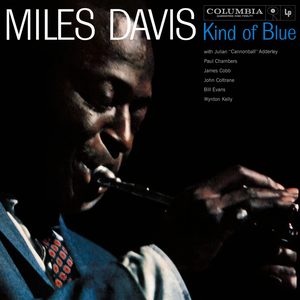
Album
Book
City
Game
Claude Haiku 5.5Claude Haiku 5.5
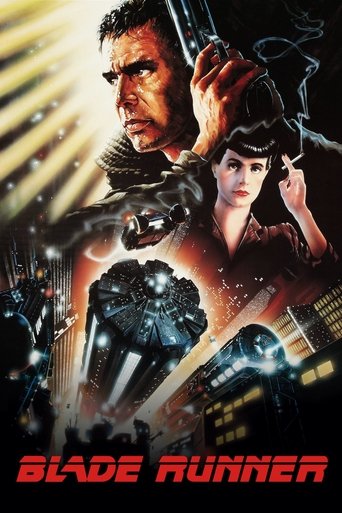



Blade Runner
Kind of Blue
Gödel, Escher, Bach
Kyoto
Portal
MiniMax M2.1MiniMax M2.1
No pick
No pick
No pick
No pick

No pick
No pick
No pick
No pick
The Legend of Zelda: Ocarina of Time
Price and specs
| Spec | Claude Haiku 5.5 | MiniMax M2.1 |
|---|---|---|
| Input price | $0.1/M tokens | — |
| Output price | $0.5/M tokens | — |
| Context window | 1.0M tokens | — |
| Weights | Closed | Open |
| Free API (OpenRouter) | No | No |
| Released | Oct 2026 | Dec 2025 |
| At 10M a month | $1.00 | not listed |
Input tokens at list price. No caching, no batch discount.
Where to run it



MiniMax M2.11 host
Per million tokens. Prices and uptime via OpenRouter, checked 10 Oct 2026.
Common questions
What is the difference between Claude Haiku 5.5 and MiniMax M2.1?
Claude Haiku 5.5 is developed by Anthropic while MiniMax M2.1 is developed by MiniMax. You can compare their actual outputs across 54 challenges on Rival to see how they differ in practice.
Which is better, Claude Haiku 5.5 or MiniMax M2.1?
It depends on your use case. Claude Haiku 5.5 and MiniMax M2.1 each have strengths in different areas. Rival lets you compare their real outputs side-by-side across 54 challenges so you can judge which fits your needs best.
How can I compare Claude Haiku 5.5 and MiniMax M2.1 on Rival?
This page shows a side-by-side comparison of Claude Haiku 5.5 and MiniMax M2.1 across shared challenges. You can vote on which model produced the better output in a blind duel. Browsing and voting are free. No account is needed to look; signing in only saves your votes and likes.
More comparisons
Against the newest arrivals
- Claude Haiku 5.5 vs Step 5 PreviewLanded Oct 2026
- MiniMax M2.1 vs Ling 3.1 FlashLanded Oct 2026
- Claude Haiku 5.5 vs Mistral Large 4Landed Oct 2026
- MiniMax M2.1 vs GPT-6.1 SolLanded Sep 2026
- Claude Haiku 5.5 vs Claude Sonnet 5.5Landed Sep 2026
- MiniMax M2.1 vs Solar Mini 4Landed Sep 2026
- Claude Haiku 5.5 vs Qwen3.8 Max PrimeLanded Sep 2026
- MiniMax M2.1 vs GLM 5.3 PrimeLanded Sep 2026


Same lab, same size, long tail
- Claude Haiku 5.5 vs Claude Opus 5.5Same lab
- Claude Haiku 5.5 vs Claude Fable 5.1Same lab
- MiniMax M2.1 vs MiniMax M3Same lab
- MiniMax M2.1 vs MiniMax M2.7Same lab
- MiniMax M2.1 vs GPT-6 LunaSame size
- MiniMax M2.1 vs GPT-6 Luna ProSame size
- MiniMax M2.1 vs GPT-6 SolSame size
- MiniMax M2.1 vs GPT-6 Sol ProSame size