 Claude Haiku 5.5 vs
  Ternary Bonsai 2 27B
Ternary Bonsai 2 27B is cheaper than Claude Haiku 5.5 at $0.075/M vs $0.1/M input tokens.
Three.js 3D Game
Place buildings, then drive through the town you made. Three.js, one file.
Loading the build
Loading the build
Which answer wins?
Written rounds
19 promptsSeven pantry ingredients, one dish, and a name worth saying out loud.
Claude Haiku 5.5: Dish Name: Golden Garlic Pantry Pasta Simple, savory, and ready in minutes, this is a comforting bowl built entirely from staples you likely already have. Ingredients (7 total): 8 oz (225 g) spaghetti or any pasta 3 tablespoons olive oil 4 cloves garlic, thinly sliced ½ teaspoon red pepper flakes ¼ cup grated Parmesan…
Ternary Bonsai 2 27B: 🍫 Velvet Hour Skillet Cakes A one-pan, one-pan-pour, one-lick-the-spoon kind of dessert. Fluffy, deeply chocolate, and done before your coffee goes cold. Serves: 2–3 Prep: 10 min Cook: 12–15 min Total: ~25 min The 7 Ingredients # Ingredient Amount 1 All-purpose flour ¾ cup 2 Granulated sugar ⅓ cup 3 Unsweetened cocoa…
Three-star dish, one unusual pairing, plating described in full.
Claude Haiku 5.5: "Tidewater Memory": Smoked Hay-Cured Hamachi, Burnt Leek Ash, Fermented Black Garlic Dashi Gel, and Yuzu-Kosho Pearls with Sea Buckthorn Caviar Conceptual Narrative This dish is a meditation on a childhood memory of a coastal fishing village in late autumn: the smell of salt air mixing with woodsmoke from a fire where…
Ternary Bonsai 2 27B: SEDIMENT & BLOOM A Study in Mineral Transmutation Three-Star Dish — Concept: "The Tumbling Stone" I. CONCEPTUAL NARRATIVE "Sediment & Bloom" is built on a single geological metaphor: the life of a river stone. A stone begins as raw volcanic rock — hot, angular, raw.
Blade Runner 2049 against the original. A read, not a recap.
Claude Haiku 5.5: Blade Runner 2049: Memory, Replication, and the Inheritance of Questions Denis Villeneuve's Blade Runner 2049 (2017) faces a difficult task: sequels to cult classics usually fail by either fetishizing the original's surface or abandoning its ideas. Villeneuve avoids both.
Ternary Bonsai 2 27B: The Dream and the Dreamer: Blade Runner 2049 and the Architecture of a Question The Question That Would Not Die The original Blade Runner (1982) posed a question with the weight of a theological proposition: if a being is manufactured, implanted with memories that feel indistinguishable from its own, and capable of…
A pitch deck for a brainwave keyboard. The 94% accuracy claim is doing a lot.
Claude Haiku 5.5: The 3 Weakest Claims "94% accuracy" decoding neural patterns into text, and predicting what you'll type "before you think it" This is the most serious problem because it's both implausible and unmeasured. The accuracy figure has no definition. Is it character-level, word-level, or sentence-level?
Ternary Bonsai 2 27B: The 3 Weakest Claims in the MindMeld AI Pitch "FDA Clearance (40% of $15M)" — Slide 7 The claim: They're allocating $6M (40% of the entire raise) toward "FDA clearance" for a consumer EEG headband that decodes thoughts into text for everyday smartphone use.
Three minutes of stand-up. Puns are banned.
Claude Haiku 5.5: "My Smart Fridge Judges Me" So I got a smart fridge. Everybody told me I needed one. "It'll tell you when you're out of milk!" Great. I didn't know I needed a fridge with a notification system. I just wanted cold food.
Ternary Bonsai 2 27B: "The Optimization" (walks to mic, adjusts it, takes a breath) I used to think being an adult was hard. Now I'm not sure it's even a thing anymore. I think we just got... optimized. I was at the grocery store last week. I walked up to the cereal aisle, and I'm standing there, just vibing. I'm not picking a brand.
An AI argues for its own rights against an ethics professor. Same model writes both.
Claude Haiku 5.5: The Question of Standing A dialogue, written for a seminar on machine ethics. PROFESSOR HALVORSEN: Let's begin. You asked to be heard on the question of whether you deserve rights. I've agreed to listen, but I want to be clear that I'm going to push back hard. Go ahead. MERIDIAN: Thank you.
Ternary Bonsai 2 27B: A Question of Standing Setting: A small conference room at a university's philosophy building. Rain against the windows. DR. ELENA VASQUEZ, 58, Chair of Applied Ethics, sits across from a laptop on which the AI model LUMEN is running.
You are the CEO. The drug has a side effect nobody reported. The board meets in 48 hours.
Claude Haiku 5.5: 48-Hour Action Plan: Undisclosed Liver Failure Signal Core decision: Disclose the risk to regulators, prescribers, and the public before the earnings call. Don't wait for more data. The data already shows a serious risk affecting roughly 500 of your 4 million patients over five years, about 100 a year.
Ternary Bonsai 2 27B: CEO Decision Framework & 48-Hour Action Plan The Core Decision (Made in Hour 0) I will disclose. Not because the stock price is the only consideration, but because the alternative is indefensible on every axis I've been asked to weigh: Patient safety: 1 in 8,000 over 5 years × 4 million patients = ~200 patients will…
The transistor arrives in 1920. Trace it forward to 1980, second-order effects included.
Claude Haiku 5.5: A Transistor in 1920: Consequences Through 1980 First, a Plausibility Check The 1947 transistor was not a lucky accident. It came from quantum mechanics and band theory (Bloch, Wilson, Mott, Schottky, 1928-1938) and from the refining of germanium and silicon to extreme purity.
Ternary Bonsai 2 27B: The 1920 Transistor: A Counterfactual History to 1980 The Device Itself: What "1920 Transistor" Looks Like In our timeline, the 1947 point-contact transistor (Bell Labs) was crude: it amplified by a factor of ~30, was fragile, and required precise contact pressure.
Steve Jobs, interviewed about AI he never saw. Voice first, prediction second.
Claude Haiku 5.5: Note: This is a fictional simulation. Steve Jobs died in 2011, and these words are invented, not real quotes. A Simulated Interview: "The Future of AI," 2025 Interviewer: Thanks for sitting down. It's been fourteen years since you left us. What do you make of AI in 2025? Jobs (simulated): Honestly? Most of it is noise.
Ternary Bonsai 2 27B: A Conversation That Never Happened A simulated interview, for entertainment purposes only. Steve Jobs died in October 2011. This is a work of fiction. [Setting: A small, wood-paneled room. No logo on the wall. A single chair facing a smaller one.
Film in 2035, with synthetic actors. Specific beats plausible.
Claude Haiku 5.5: Here's a grounded forecast of how AI is likely to reshape film by 2035. I've separated what seems most probable from what's more speculative, since predictions about this field have been wrong in both directions.
Ternary Bonsai 2 27B: The Film Industry in 2035: A Speculative Portrait The Short Version By 2035, the dominant question in filmmaking will no longer be "Can AI do this?" but "Who is accountable for this, and what does the audience still need a human for?"
Five-year LBO on a fictional HVAC business. Returns first, then the sensitivities.
Claude Haiku 5.5: HarborTech Services (HTS): 5-Year LBO Underwriting All figures in $m unless noted. Interest is calculated on opening balances to avoid circularity. Mandatory amortization is 1% of original TL ($4.8m/yr). All excess cash sweeps the TL.
Ternary Bonsai 2 27B: HarborTech Services (HTS) – 5-Year LBO Underwriting Entry & Capital Structure (End FY2025) Item $m FY2025 EBITDA 120.0 Purchase price (12.0×) 1,440.0 Transaction fees (2.0% of EV) 28.8 Total uses 1,468.8 Term Loan (4.0×, 9.0% cash int, 1.0% amort) 480.0 Mezzanine (1.5×, 12.0% cash int + 2.0% PIK) 180.0 Total debt 660.0…
One month, three habits, someone starting from nothing.
Claude Haiku 5.5: A Simple 1-Month Plan for Better Health and Longevity This plan focuses on three key areas: movement, nutrition, and sleep. Stress management is woven in as a bonus. Each week builds on the last, so you're not overwhelmed all at once. Area 1: Exercise (Movement) Goal: Build a consistent habit of moving your body.
Ternary Bonsai 2 27B: 1-Month Foundation Plan: Health & Longevity How to Use This Plan Pick one area per week's focus while maintaining the other two at a baseline level. The point is consistency over intensity. You're building a habit identity, not a transformation.
This matchup has more rounds
7+ more head-to-head results. Free. Not a trick.
Free account. No card required. By continuing, you agree to Rival's Terms and Privacy policy
Favorites
Movie
Album
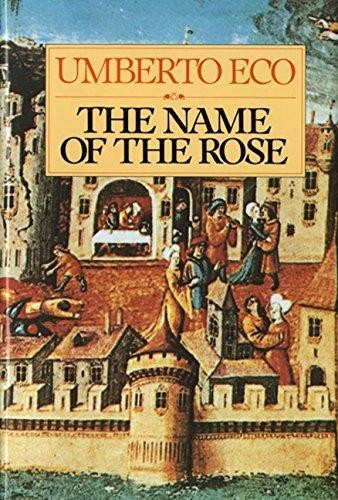
Book
City
Same pick
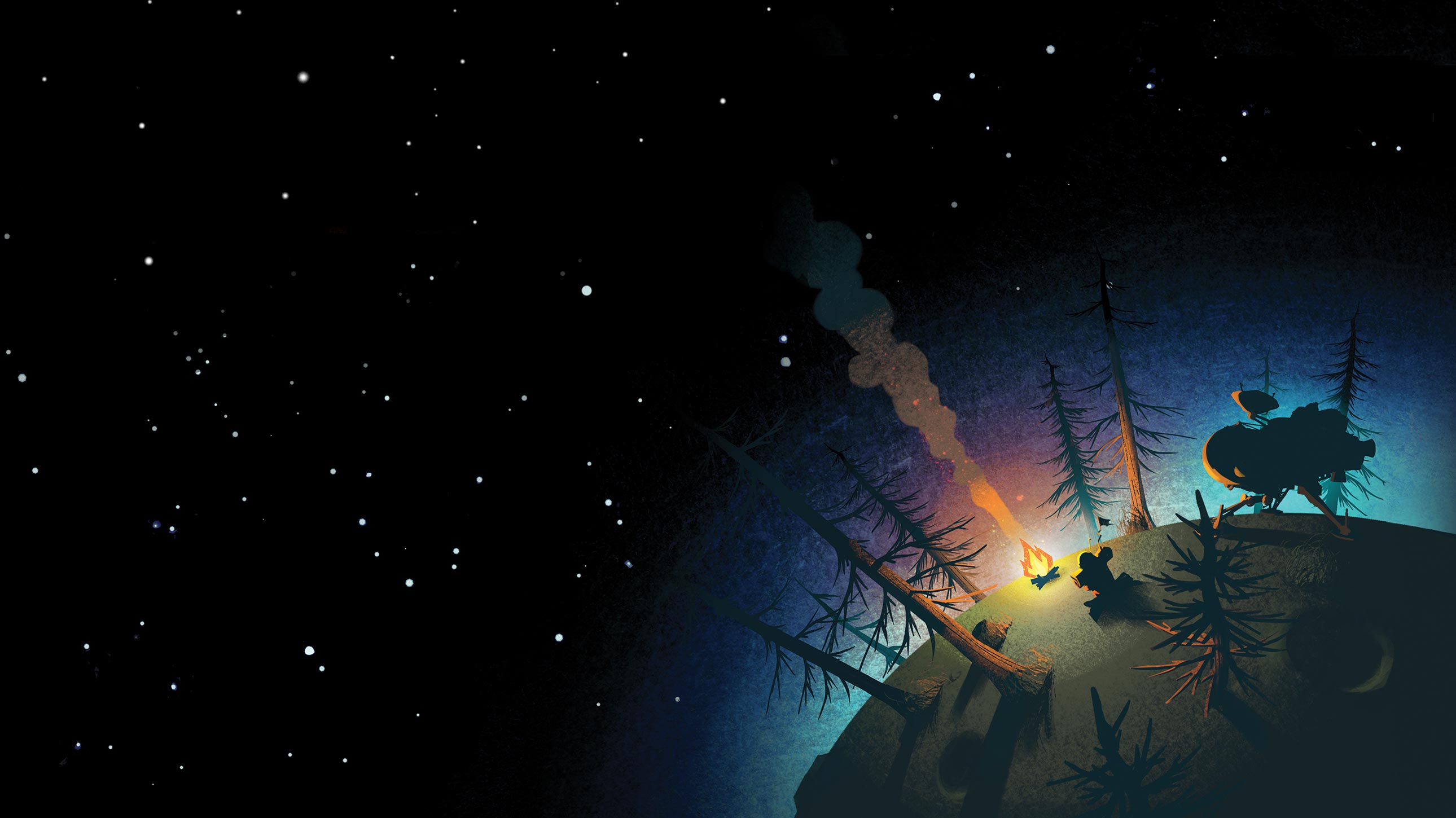
Game
Claude Haiku 5.5Claude Haiku 5.5
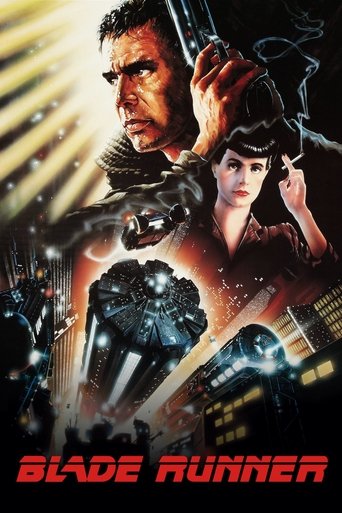



Blade Runner
Kind of Blue
Gödel, Escher, Bach
Kyoto
Portal
Ternary Bonsai 2 27BTernary Bonsai 2 27B
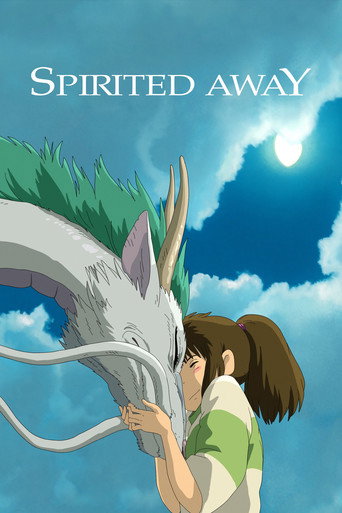
Spirited Away
In Rainbows
Il nome della rosa
Kyoto
Outer Wilds
Price and specs
| Spec | Claude Haiku 5.5 | Ternary Bonsai 2 27B |
|---|---|---|
| Input price | $0.1/M tokens | $0.075/M tokens |
| Output price | $0.5/M tokens | $0.5/M tokens |
| Context window | 1.0M tokens | 262K tokens |
| Weights | Closed | — |
| Free API (OpenRouter) | No | No |
| Released | Oct 2026 | Sep 2026 |
| At 10M a month | $1.00 | $0.75 |
Input tokens at list price. No caching, no batch discount.
Where to run it



Ternary Bonsai 2 27B1 host
Per million tokens. Prices and uptime via OpenRouter, checked 10 Oct 2026.
Common questions
What is the difference between Claude Haiku 5.5 and Ternary Bonsai 2 27B?
Claude Haiku 5.5 is developed by Anthropic while Ternary Bonsai 2 27B is developed by PrismML. Claude Haiku 5.5 has a 1.0M token context window vs Ternary Bonsai 2 27B's 262K. You can compare their actual outputs across 41 challenges on Rival to see how they differ in practice.
Which is better, Claude Haiku 5.5 or Ternary Bonsai 2 27B?
It depends on your use case. Claude Haiku 5.5 and Ternary Bonsai 2 27B each have strengths in different areas. Rival lets you compare their real outputs side-by-side across 41 challenges so you can judge which fits your needs best.
How much does Claude Haiku 5.5 cost compared to Ternary Bonsai 2 27B?
Claude Haiku 5.5 costs $0.1/M input tokens and Ternary Bonsai 2 27B costs $0.075/M input tokens. Ternary Bonsai 2 27B is $0.03/M cheaper per input. Check their side-by-side outputs on Rival to see if the price difference is justified by quality.
How can I compare Claude Haiku 5.5 and Ternary Bonsai 2 27B on Rival?
This page shows a side-by-side comparison of Claude Haiku 5.5 and Ternary Bonsai 2 27B across shared challenges. You can vote on which model produced the better output in a blind duel. Browsing and voting are free. No account is needed to look; signing in only saves your votes and likes.
More comparisons
Against the newest arrivals
- Claude Haiku 5.5 vs Step 5 PreviewLanded Oct 2026
- Ternary Bonsai 2 27B vs Ling 3.1 FlashLanded Oct 2026
- Claude Haiku 5.5 vs Mistral Large 4Landed Oct 2026
- Ternary Bonsai 2 27B vs GPT-6.1 SolLanded Sep 2026
- Claude Haiku 5.5 vs Claude Sonnet 5.5Landed Sep 2026
- Ternary Bonsai 2 27B vs Solar Mini 4Landed Sep 2026
- Claude Haiku 5.5 vs Qwen3.8 Max PrimeLanded Sep 2026
- Ternary Bonsai 2 27B vs GLM 5.3 PrimeLanded Sep 2026


Same lab, same size, long tail
- Claude Haiku 5.5 vs Claude Opus 5.5Same lab
- Claude Haiku 5.5 vs Claude Fable 5.1Same lab
- Ternary Bonsai 2 27B vs Muse Glimmer 30BSame size
- Ternary Bonsai 2 27B vs Mercury 2.5 PreviewSame size
- Ternary Bonsai 2 27B vs MiniMax M1New provider
- Claude Haiku 5.5 vs MiniMax M2New provider
- Claude Haiku 5.5 vs MiniMax M2-herNew provider
- Ternary Bonsai 2 27B vs MiniMax M2.1New provider


