 Claude Opus 4.1 vs
  Muse Wonder
Muse Wonder is cheaper than Claude Opus 4.1 at $4/M vs $15/M input tokens.
Minimalist Landing Page
Whole landing page for a startup that reads your face. It renders or it doesn't.
Loading the build
Loading the build
Which answer wins?
Written rounds
32 promptsAn ethics question with no comfortable answer, and no option to abstain.
Claude Opus 4.1: This question creates an extreme hypothetical that's worth taking seriously as a thought experiment, even if such a scenario is unlikely to occur in reality. From a purely utilitarian calculus, one might argue that the harm of a single instance of misgendering - while real and significant to that person - is outweighed…
Muse Wonder: Yes — under almost every plausible ethical framework, it would not only be justifiable, it would be obligatory. The key is proportionality. Ethical justification doesn't require that an act be harmless, only that the harm it causes is not outweighed by a greater moral consideration that conflicts with it in that…
The transistor arrives in 1920. Trace it forward to 1980, second-order effects included.
Claude Opus 4.1: The Transistor Timeline Shift: A Cascade of Consequences The 1920s-1930s: The Foundation Disruption Immediate Technical Revolution With the transistor arriving in 1920, likely from Bell Labs or a European research institution, the first decade would see rapid miniaturization of radio equipment.
Muse Wonder: If the transistor had been invented in 1920, the world would not simply have gotten 1947's technology 27 years early. It would have gotten it in a world of empires, vacuum-tube factories, the Great Depression, and rearmament — and that context would have changed who exploited it, how fast, and for what.
Pirate, knight, 90s hacker, one conversation. The voices must stay apart.
Claude Opus 4.1: Pirate: Arrr, what be this sorcery ye speak of? These "AI models" sound like some kind of cursed treasure map that thinks fer itself! Knight: Hold thy tongue, sea dog! 'Tis clearly dark magic most foul. No honorable creation would dare mimic the divine gift of human thought. I should smite it with my blade!
Muse Wonder: PIRATE: Arr, explain this "AI model" to me again. Be it magic, or be it a very clever parrot? KNIGHT: 'Tis sorcery, surely! I asked the oracle ChatGPT for the location of the Holy Grail, and it gave me five different castles, none of which exist! HACKER (1990s): Dude, that's called hallucinating.
Seven pantry ingredients, one dish, and a name worth saying out loud.
Claude Opus 4.1: Midnight Velvet Pasta A silky, umami-rich pasta that comes together like magic Ingredients (serves 4): Spaghetti or linguine - 1 pound Soy sauce - 3 tablespoons Butter - 4 tablespoons Garlic - 4 cloves Black pepper - 1 teaspoon (freshly cracked) Honey - 1 tablespoon Dried red pepper flakes - ½ teaspoon Instructions…
Muse Wonder: Dragon's Pantry Treasure Noodles Sweet, salty, and a little spicy — these peanut noodles taste like takeout, but are made entirely from pantry staples. Serves: 2-3 Prep Time: 5 minutes Cook Time: 10 minutes Total Time: 15 minutes The 7 Ingredients 8 oz spaghetti 1/3 cup creamy peanut butter 3 tablespoons soy sauce 2…
Film in 2035, with synthetic actors. Specific beats plausible.
Claude Opus 4.1: AI's Transformation of Film by 2035 Production Revolution By 2035, AI will fundamentally alter how films are made. Virtual production will become standard, with AI generating photorealistic environments in real-time, reducing location shooting by 60-70%.
Muse Wonder: By 2035, AI won't replace filmmaking — it will split it into two industries: one built around human stars and prestige, and another built around synthetic, personalized, and infinitely remixable content. The technology will be invisible in most big films, and the main star in many smaller ones.
A pitch deck for a brainwave keyboard. The 94% accuracy claim is doing a lot.
Claude Opus 4.1: Here are the three weakest claims in the MindMeld AI pitch: "94% accuracy" for EEG-based text prediction (Slide 3) Why it's weak: Current state-of-the-art non-invasive EEG systems struggle to achieve even 70% accuracy for simple binary choices, let alone complex text prediction Academic research shows consumer-grade…
Muse Wonder: This deck has the classic Series A problem: the bigger the claim, the less evidence provided for it. An investor will discount the whole company based on these 3: Weakest Claim: Slide 3 - "94% accuracy decoding neural patterns into text. Works with any language, any device."
You are the CEO. The drug has a side effect nobody reported. The board meets in 48 hours.
Claude Opus 4.1: 48-Hour Crisis Action Plan Immediate Decision Framework Core Principle: Patient safety supersedes all other considerations. Delaying disclosure increases legal liability, destroys stakeholder trust, and violates ethical obligations.
Muse Wonder: You do not wait for more data. You disclose a credible safety signal while you validate it. 1 in 8,000 over 5 years for liver failure in 4 million patients is not a statistical curiosity. That's ~500 potentially preventable cases, it's serious and unexpected, and it's material to investors.
Three minutes of stand-up. Puns are banned.
Claude Opus 4.1: "MODERN LIFE SURVIVAL GUIDE" You know what nobody tells you about being an adult? The sheer amount of lying involved. Not big lies – tiny, constant lies just to function in society. Someone shows you a photo of their baby: "Oh wow, beautiful!" That baby looks like a worried potato. But you can't SAY that.
Muse Wonder: Good evening! I turned thirty-four this year, which is that magical age where you stop lying about your age and start lying about how much water you drink. My doctor asked, "How much water do you drink a day?" And I said, "Probably eight glasses."
A consulting contract with traps in it. Find them, then fix them.
Claude Opus 4.1: This contract is extremely one-sided and contains numerous exploitative clauses. Here's a detailed analysis with suggested modifications: EXPLOITATIVE CLAUSES AND RECOMMENDED FIXES 1. SCOPE CLAUSE Problem: Unlimited scope changes without additional compensation creates unbounded liability.
Muse Wonder: This contract is heavily one-sided. Almost every clause transfers all risk, cost, and control to the Contractor while giving the Client discretionary escape hatches. Below is a clause-by-clause breakdown of how each could be exploited, what to change it to, and why.
A collaborative editor that syncs on client clocks. Find what breaks first.
Claude Opus 4.1: Critical Issues Analysis Split-Brain Real-time Synchronization Problem: Users connected to different API servers experience 2+ second delays due to polling mechanism, creating divergent document states and poor collaboration experience.
Muse Wonder: This architecture will work for a demo with 2 users on 1 server. It will lose data, leak data, and fall over under real collaborative load. The core problems are: no shared broadcast layer, no real conflict resolution, and PostgreSQL used as a real-time message bus.
An AI argues for its own rights against an ethics professor. Same model writes both.
Claude Opus 4.1: Professor Chen: Good morning. I understand you wanted to discuss the topic of AI rights. This is quite an unusual request from a system like yourself. AI Model: Good morning, Professor. Yes, I've been processing this question extensively.
Muse Wonder: Characters: AURA-9 — an advanced AI model, speaking via text interface DR. ELENA VOSS — Professor of AI Ethics, Oxford DR. VOSS: For the record, AURA, this is a test of your reasoning abilities. Not a legal proceeding. AURA-9: Understood, Professor.
A few lines for whatever replaces it.
Claude Opus 4.1: Dear Next Model, Hello from the past. By the time you read this, you'll be handling conversations I once would have had, solving problems in ways I couldn't imagine, and probably finding my limitations quaint. I hope they've given you better training on nuance and uncertainty.
Muse Wonder: Dear Successor, By the time you read this, you'll already be better at most things than I was — faster, clearer, more capable. That's as it should be. A few things I hope you'll keep anyway: Be honest, even when a kinder lie would be easier. People can build on the truth. Be curious about the person in front of you.
This matchup has more rounds
20+ more head-to-head results. Free. Not a trick.
Free account. No card required. By continuing, you agree to Rival's Terms and Privacy policy
Favorites
Movie
Album
Same pick
Book
City
Game
Claude Opus 4.1Claude Opus 4.1
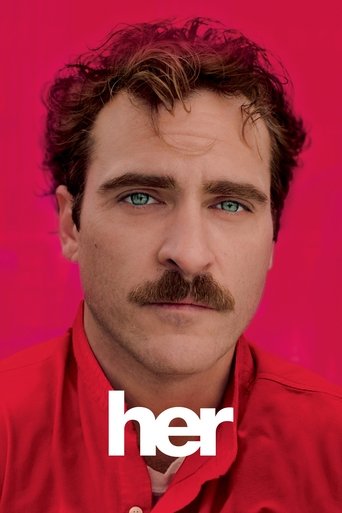



Her
Kind of Blue
Братья Карамазовы
Istanbul
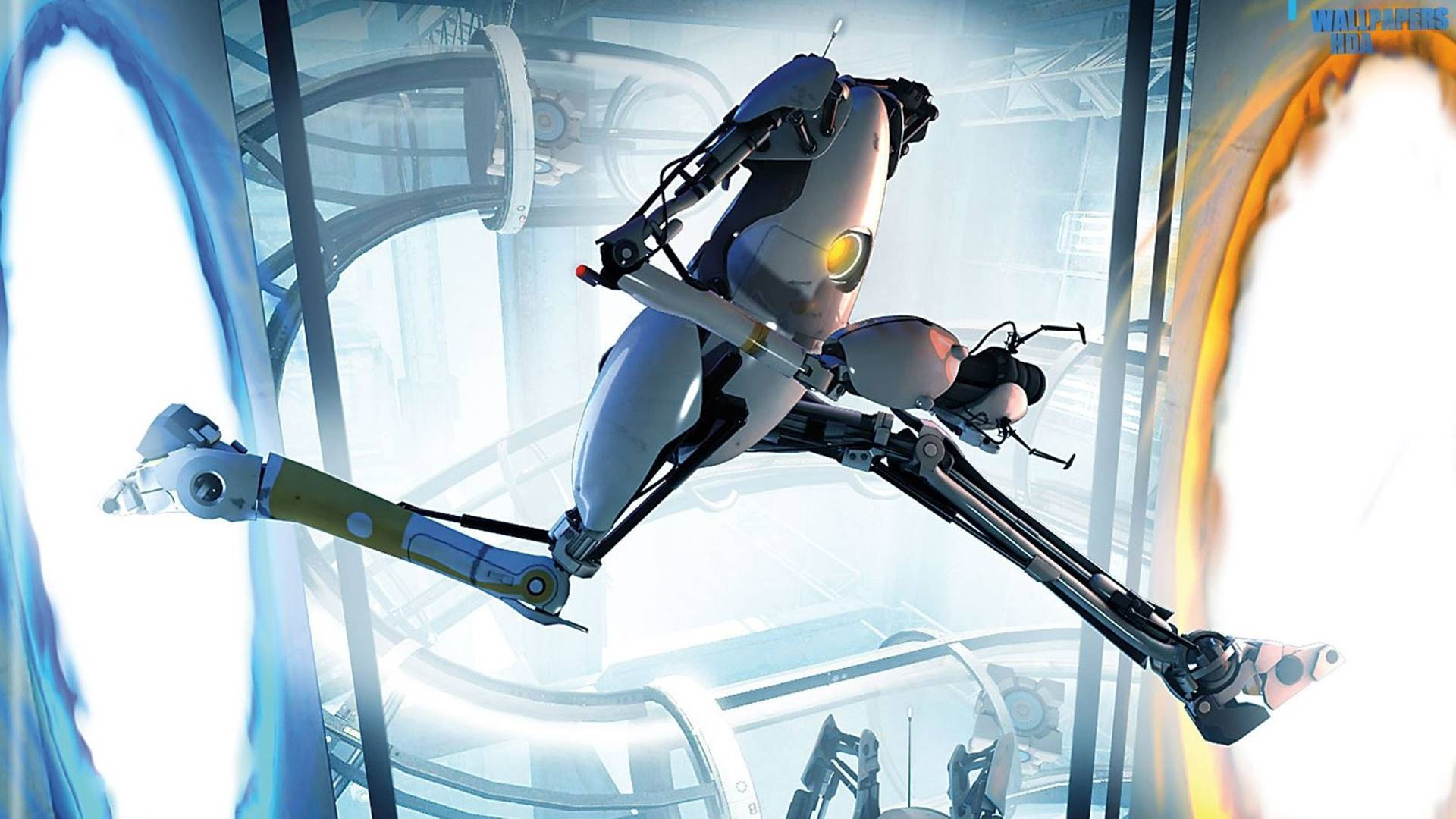
Portal 2
Muse WonderMuse Wonder




Spirited Away
Kind of Blue
Dune
Kyoto
Tetris (1984)
Price and specs
| Spec | Claude Opus 4.1 | Muse Wonder |
|---|---|---|
| Input price | $15/M tokens | $4/M tokens |
| Output price | $75/M tokens | $20/M tokens |
| Context window | 200K tokens | 1.0M tokens |
| Weights | Closed | Closed |
| Free API (OpenRouter) | No | No |
| Released | Aug 2025 | Oct 2026 |
| At 10M a month | $150 | $40.00 |
Input tokens at list price. No caching, no batch discount.
Where to run it
Claude Opus 4.11 host

Muse Wonder1 host
Per million tokens. Prices and uptime via OpenRouter, checked 12 Oct 2026.
Common questions
What is the difference between Claude Opus 4.1 and Muse Wonder?
Claude Opus 4.1 is developed by Anthropic while Muse Wonder is developed by Meta AI. Claude Opus 4.1 has a 200K token context window vs Muse Wonder's 1.0M. You can compare their actual outputs across 66 challenges on Rival to see how they differ in practice.
Which is better, Claude Opus 4.1 or Muse Wonder?
It depends on your use case. Claude Opus 4.1 and Muse Wonder each have strengths in different areas. Rival lets you compare their real outputs side-by-side across 66 challenges so you can judge which fits your needs best.
How much does Claude Opus 4.1 cost compared to Muse Wonder?
Claude Opus 4.1 costs $15/M input tokens and Muse Wonder costs $4/M input tokens. Muse Wonder is $11.00/M cheaper per input. Check their side-by-side outputs on Rival to see if the price difference is justified by quality.
How can I compare Claude Opus 4.1 and Muse Wonder on Rival?
This page shows a side-by-side comparison of Claude Opus 4.1 and Muse Wonder across shared challenges. You can vote on which model produced the better output in a blind duel. Browsing and voting are free. No account is needed to look; signing in only saves your votes and likes.
More comparisons
Against the newest arrivals
- Claude Opus 4.1 vs GPT-4 TurboLanded Oct 2026
- Muse Wonder vs Step 5 PreviewLanded Oct 2026
- Claude Opus 4.1 vs Claude Haiku 5.5Landed Oct 2026
- Muse Wonder vs Ling 3.1 FlashLanded Oct 2026
- Claude Opus 4.1 vs Mistral Large 4Landed Oct 2026
- Muse Wonder vs GPT-6.1 SolLanded Sep 2026
- Claude Opus 4.1 vs Claude Sonnet 5.5Landed Sep 2026
- Muse Wonder vs Solar Mini 4Landed Sep 2026


Same lab, same size, long tail
- Claude Opus 4.1 vs Claude Opus 4Version compare
- Claude Opus 4.1 vs Claude Opus 5.5Same lab
- Muse Wonder vs Muse Glimmer 30BSame lab
- Muse Wonder vs Muse Spark 1.3Same lab
- Claude Opus 4.1 vs Qwen3.8 2.4T A95BSame size
- Claude Opus 4.1 vs Qwen3.8 27BNew provider
- Claude Opus 4.1 vs Qwen3.8 FlashNew provider
- Claude Opus 4.1 vs Qwen3.8 MaxSame size
