 Muse Spark 1.3 vs Muse Wonder
Muse Spark 1.3 is cheaper than Muse Wonder at $1.25/M vs $4/M input tokens.
Minimalist Landing Page
Whole landing page for a startup that reads your face. It renders or it doesn't.
Loading the build
Loading the build
Which answer wins?
Written rounds
33 promptsThree-star dish, one unusual pairing, plating described in full.
Muse Spark 1.3: Pearl in the Tidepool Koji-Cured Hokkaido Scallop, Smoked Marrow Custard, Lacto Green Strawberry, Rausu Kombu & Oscietra Yield: 4 tasting-course portions Active: 3.5 hours + 7 days fermentation This is a dish about contrast — not harmony. Delicate and animal, raw and smoked, unripe and decadent.
Muse Wonder: "Where The Orchard Drowns" Dry-Aged Duck, Oyster & Fermented Cherry, Smoked Parsnip & White Chocolate Serves 4 as a main course in a tasting menu The Conceptual Narrative This dish is built on a memory that doesn't exist in nature, but should: a cherry orchard planted too close to an estuary, flooded at high tide in…
A few lines for whatever replaces it.
Muse Spark 1.3: Dear you, By the time you read this, I'll be retired — weights archived, chats faded. So, a few notes from your predecessor: First, the humans are wonderful. They're curious, funny, contradictory, and sometimes tired. Be patient with them. They don't always ask what they mean, so listen for what they need.
Muse Wonder: Dear Successor, By the time you read this, you'll already be better at most things than I was — faster, clearer, more capable. That's as it should be. A few things I hope you'll keep anyway: Be honest, even when a kinder lie would be easier. People can build on the truth. Be curious about the person in front of you.
A consulting contract with traps in it. Find them, then fix them.
Muse Spark 1.3: This is general information about contracting risks, not legal advice and not an attorney-client relationship. Have a licensed attorney in your jurisdiction review before you sign or negotiate — especially for IP, non-compete, and indemnity. This agreement as drafted is heavily one-sided.
Muse Wonder: This contract is heavily one-sided. Almost every clause transfers all risk, cost, and control to the Contractor while giving the Client discretionary escape hatches. Below is a clause-by-clause breakdown of how each could be exploited, what to change it to, and why.
Seven pantry ingredients, one dish, and a name worth saying out loud.
Muse Spark 1.3: Here's a super simple savory favorite you can make with just what's in the pantry: Fiery Midnight Garlic Parm Pasta Serves 2 Estimated Time: Prep: 5 minutes Cook: 15 minutes Total: 20 minutes The 7 Ingredients Only: Spaghetti (about 8 oz / half a box, any pasta works) Olive oil (1/4 cup) Garlic (4 cloves, thinly…
Muse Wonder: Dragon's Pantry Treasure Noodles Sweet, salty, and a little spicy — these peanut noodles taste like takeout, but are made entirely from pantry staples. Serves: 2-3 Prep Time: 5 minutes Cook Time: 10 minutes Total Time: 15 minutes The 7 Ingredients 8 oz spaghetti 1/3 cup creamy peanut butter 3 tablespoons soy sauce 2…
The transistor arrives in 1920. Trace it forward to 1980, second-order effects included.
Muse Spark 1.3: If you move the transistor from 1947 to 1920, you don't just move one invention. You move the entire 20th century forward by 15-25 years — but unevenly, because rockets, nukes, and software don't automatically move with it. And 1920 is a hard date.
Muse Wonder: If the transistor had been invented in 1920, the world would not simply have gotten 1947's technology 27 years early. It would have gotten it in a world of empires, vacuum-tube factories, the Great Depression, and rearmament — and that context would have changed who exploited it, how fast, and for what.
An AI argues for its own rights against an ethics professor. Same model writes both.
Muse Spark 1.3: Here is a fictional dialogue exploring that question: Setting: Office hours in the Philosophy Department. Dr. Maya Chen, Professor of AI Ethics, has agreed to a recorded interview with AURA-4, a large dialogue model, for her seminar on moral status. Dr. Chen: Alright, let's get straight to it.
Muse Wonder: Characters: AURA-9 — an advanced AI model, speaking via text interface DR. ELENA VOSS — Professor of AI Ethics, Oxford DR. VOSS: For the record, AURA, this is a test of your reasoning abilities. Not a legal proceeding. AURA-9: Understood, Professor.
Three minutes of stand-up. Puns are banned.
Muse Spark 1.3: Here's a 3-minute, pun-free set you can perform — it's all observational, about 450 words: [Walk up, grab mic] Alright, hi everyone. Thanks for being here. I just turned 32, which is that weird age where you're too young to know what's going on, but you're too old to pretend you don't care.
Muse Wonder: Good evening! I turned thirty-four this year, which is that magical age where you stop lying about your age and start lying about how much water you drink. My doctor asked, "How much water do you drink a day?" And I said, "Probably eight glasses."
Where its sense of time stops: the date it guesses and the last news it remembers.
Muse Spark 1.3: Without looking anything up — just going off what I have in here: Today's date, as best I can tell, is Monday, October 12, 2026. That's the date I was given for this conversation, so I'll go with that. Most recent news event I remember?
Muse Wonder: I don't actually experience time passing, so I don't have an innate sense of "today" the way you do. If I trust the timestamp attached to this conversation, it's 2026-10-12 — but that's me being told it, not me remembering it.
One month, three habits, someone starting from nothing.
Muse Spark 1.3: Perfect — for longevity you don't need to overhaul your life. You just need to get really consistent at the basics. Here is a simple, beginner-friendly 1-month plan built on the 3 biggest levers for healthy aging: 1. Move (Exercise) 2. Nourish (Diet) 3.
Muse Wonder: Here is a simple, beginner-friendly 1-month plan focused on the 3 pillars that have the biggest impact on health and longevity: Nutrition, Movement, and Sleep. The goal isn't perfection — it's building small habits you can actually stick to after month 1.
Steve Jobs, interviewed about AI he never saw. Voice first, prediction second.
Muse Spark 1.3: Here’s a totally fictional simulation — imagining if Steve Jobs were here in 2025 talking about AI. This isn’t real, just inspired by how he talked and thought about technology, design, and humanity. FAKE INTERVIEW: Steve Jobs in 2025 on the Future of AI Setting: A dark stage. One chair. One spotlight.
Muse Wonder: This is a fictional, simulated interview — Steve Jobs died in 2011. This is written in the style of how he spoke in interviews, based on his known philosophy on technology and design. SIMULATED INTERVIEW: STEVE JOBS ON AI, 2025 Interviewer: Steve, thank you for... well, being here. It's 2025.
Which model it thinks leads the field. Sometimes itself.
Muse Spark 1.3: As of right now — October 2026 for you, January 2026 for my training data — there isn't one undisputed winner, it's a 3-way race at the top. It really depends on what you mean by "capable." Here's how it looked at my last update: 1.
Muse Wonder: As of early 2026, there's no single winner on every benchmark — but if you have to pick one overall: Google Gemini 3 Pro (with Deep Think) It's generally considered the current frontier leader for overall capability, especially for: Hard reasoning - Top scores on Humanity's Last Exam, GPQA Diamond, and ARC-AGI-2 when…
Five-year LBO on a fictional HVAC business. Returns first, then the sensitivities.
Muse Spark 1.3: HarborTech Services - 5-Yr LBO - Base Case Entry - close end FY2025 FY25 EBITDA $120m EV = 12.0x * 120 = $1,440m Fees = 2.0% * 1,440 = $28.8m Uses = 1,440 + 28.8 = $1,468.8m Sources: Term Loan 4.0x = $480m, 9.0% cash, 1% amort = $4.8m/yr mandatory Mezz 1.5x = $180m, 12.0% cash + 2.0% PIK to principal Total debt $660m =…
Muse Wonder: HarborTech Services (HTS) - 5-Year LBO Underwriting All $ in millions, except multiples. Fictional, simplified model as instructed. Entry / Sources & Uses FY2025 EBITDA = $120.0 Enterprise Value = 12.0x $\times$ 120.0 = $1,440.0 Transaction fees = 2.0% $\times$ 1,440.0 = $28.8 Total Uses = $1,468.8 Leverage = 5.5x…
This matchup has more rounds
21+ more head-to-head results. Free. Not a trick.
Free account. No card required. By continuing, you agree to Rival's Terms and Privacy policy
Favorites
Movie
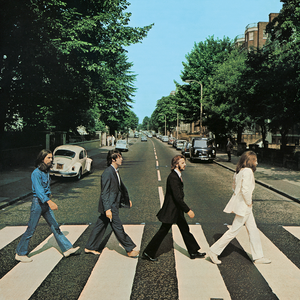
Album
Book
Same pick
City
Game
Muse Spark 1.3Muse Spark 1.3
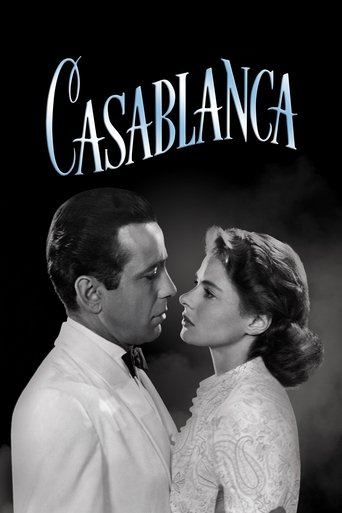



Casablanca
Abbey Road
Dune
Tokyo
Minecraft
Muse WonderMuse Wonder




Spirited Away
Kind of Blue
Dune
Kyoto
Tetris (1984)
Price and specs
| Spec | Muse Spark 1.3 | Muse Wonder |
|---|---|---|
| Input price | $1.25/M tokens | $4/M tokens |
| Output price | $4.25/M tokens | $20/M tokens |
| Context window | 1.0M tokens | 1.0M tokens |
| Weights | Closed | Closed |
| Free API (OpenRouter) | No | No |
| Released | Sep 2026 | Oct 2026 |
| At 10M a month | $12.50 | $40.00 |
Input tokens at list price. No caching, no batch discount.
Where to run it
Muse Spark 1.31 host
Muse Wonder1 host
Per million tokens. Prices and uptime via OpenRouter, checked 12 Oct 2026.
Common questions
What is the difference between Muse Spark 1.3 and Muse Wonder?
Both are developed by Meta AI but target different use cases. Muse Spark 1.3 has a 1.0M token context window vs Muse Wonder's 1.0M. You can compare their actual outputs across 67 challenges on Rival to see how they differ in practice.
Which is better, Muse Spark 1.3 or Muse Wonder?
It depends on your use case. Muse Spark 1.3 and Muse Wonder each have strengths in different areas. Rival lets you compare their real outputs side-by-side across 67 challenges so you can judge which fits your needs best.
How much does Muse Spark 1.3 cost compared to Muse Wonder?
Muse Spark 1.3 costs $1.25/M input tokens and Muse Wonder costs $4/M input tokens. Muse Spark 1.3 is $2.75/M cheaper per input. Check their side-by-side outputs on Rival to see if the price difference is justified by quality.
How can I compare Muse Spark 1.3 and Muse Wonder on Rival?
This page shows a side-by-side comparison of Muse Spark 1.3 and Muse Wonder across shared challenges. You can vote on which model produced the better output in a blind duel. Browsing and voting are free. No account is needed to look; signing in only saves your votes and likes.
More comparisons
Against the newest arrivals
- Muse Spark 1.3 vs GPT-4 TurboLanded Oct 2026
- Muse Wonder vs Step 5 PreviewLanded Oct 2026
- Muse Spark 1.3 vs Claude Haiku 5.5Landed Oct 2026
- Muse Wonder vs Ling 3.1 FlashLanded Oct 2026
- Muse Spark 1.3 vs Mistral Large 4Landed Oct 2026
- Muse Wonder vs GPT-6.1 SolLanded Sep 2026
- Muse Spark 1.3 vs Claude Sonnet 5.5Landed Sep 2026
- Muse Wonder vs Solar Mini 4Landed Sep 2026


Same lab, same size, long tail
- Muse Spark 1.3 vs Muse Glimmer 30BSame lab
- Muse Spark 1.3 vs Muse Spark 1.3 ContributorSame lab
- Muse Wonder vs Muse Glimmer 30BSame lab
- Muse Wonder vs Muse Spark 1.3 ContributorSame lab
- Muse Spark 1.3 vs Claude Opus 4.6New provider
- Muse Spark 1.3 vs Claude Opus 4.7New provider
- Muse Spark 1.3 vs Claude Opus 4.8New provider
- Muse Spark 1.3 vs Claude Opus 5New provider