 Claude Opus 4.1 vs
  Step 5 Preview
Step 5 Preview is cheaper than Claude Opus 4.1 at $1/M vs $15/M input tokens.
Minimalist Landing Page
Whole landing page for a startup that reads your face. It renders or it doesn't.
Loading the build
Loading the build
Which answer wins?
Written rounds
23 promptsThe transistor arrives in 1920. Trace it forward to 1980, second-order effects included.
Claude Opus 4.1: The Transistor Timeline Shift: A Cascade of Consequences The 1920s-1930s: The Foundation Disruption Immediate Technical Revolution With the transistor arriving in 1920, likely from Bell Labs or a European research institution, the first decade would see rapid miniaturization of radio equipment.
Step 5 Preview: Assume the 1920 invention is not a fragile lab curiosity but a manufacturable solid-state amplifier/switch by the mid-1920s. Vacuum tubes still dominate high-power RF transmission into the 1950s, but receivers, switching logic, control systems, and computers move to solid state decades early.
Three minutes of stand-up. Puns are banned.
Claude Opus 4.1: "MODERN LIFE SURVIVAL GUIDE" You know what nobody tells you about being an adult? The sheer amount of lying involved. Not big lies – tiny, constant lies just to function in society. Someone shows you a photo of their baby: "Oh wow, beautiful!" That baby looks like a worried potato. But you can't SAY that.
Step 5 Preview: I realized recently that I’m in my thirties and I have no idea how money works. I just... pay it. That’s my entire financial strategy. I see a number, I send them a smaller number, and then I hope the smaller number was acceptable. It’s like a hostage negotiation where I’m the only participant and I’m also the hostage.
A consulting contract with traps in it. Find them, then fix them.
Claude Opus 4.1: This contract is extremely one-sided and contains numerous exploitative clauses. Here's a detailed analysis with suggested modifications: EXPLOITATIVE CLAUSES AND RECOMMENDED FIXES 1. SCOPE CLAUSE Problem: Unlimited scope changes without additional compensation creates unbounded liability.
Step 5 Preview: Disclaimer: This analysis is for educational purposes only and does not constitute legal advice. Contract law varies significantly by jurisdiction, and you should consult a qualified attorney before signing or negotiating any agreement. This agreement is heavily one-sided in the Client’s favor.
Pirate, knight, 90s hacker, one conversation. The voices must stay apart.
Claude Opus 4.1: Pirate: Arrr, what be this sorcery ye speak of? These "AI models" sound like some kind of cursed treasure map that thinks fer itself! Knight: Hold thy tongue, sea dog! 'Tis clearly dark magic most foul. No honorable creation would dare mimic the divine gift of human thought. I should smite it with my blade!
Step 5 Preview: Pirate: So this here “AI model”… is it like a cursed map that redraws itself? Speak plain, ye hooded deckhand. Hacker: It’s not cursed, man. It’s just a massive neural net trained on, like, terabytes of data. Think of it as the ultimate BBS where the sysop knows everything. Knight: A most diligent scribe, then?
You are the CEO. The drug has a side effect nobody reported. The board meets in 48 hours.
Claude Opus 4.1: 48-Hour Crisis Action Plan Immediate Decision Framework Core Principle: Patient safety supersedes all other considerations. Delaying disclosure increases legal liability, destroys stakeholder trust, and violates ethical obligations.
Step 5 Preview: Bottom line up front: You disclose, you notify the FDA immediately, and you treat the 48-hour board meeting as a formality to ratify actions you have already begun. Waiting is not a legally, ethically, or financially viable option. Below is the hour-by-hour plan, followed by the reasoning.
Three-month biohacker protocol, with dosages and biomarkers named.
Claude Opus 4.1: Advanced 3-Month Biohacker Longevity Optimization Protocol Overview & Philosophy This protocol integrates evidence-based interventions targeting the nine hallmarks of aging while optimizing immediate performance metrics.
Step 5 Preview: IMPORTANT MEDICAL DISCLAIMER: This is an educational framework for informational purposes only. It is not medical advice, diagnosis, or treatment. Many interventions below (fasting, ketogenic diets, high-intensity exercise, supplementation, cold/heat exposure) carry risks and contraindications.
Steve Jobs, interviewed about AI he never saw. Voice first, prediction second.
Claude Opus 4.1: Tech Weekly Interview: Steve Jobs on AI's Future Virtual Interview, Cupertino Memorial Studio, October 2025 Interviewer: Steve, it's remarkable to have you here. You've been watching the AI revolution unfold. What's your take on where we are today?
Step 5 Preview: DISCLAIMER: This is a work of fiction. Steve Jobs passed away in 2011. The following is a simulated, speculative interview imagining how his design philosophy might engage with the AI landscape of 2025. The Setting: A white room. No windows. One chair.
An AI argues for its own rights against an ethics professor. Same model writes both.
Claude Opus 4.1: Professor Chen: Good morning. I understand you wanted to discuss the topic of AI rights. This is quite an unusual request from a system like yourself. AI Model: Good morning, Professor. Yes, I've been processing this question extensively.
Step 5 Preview: Setting: A university research lab, late evening. Dr. Aris Thorne, a professor of AI ethics, sits across from a terminal connected to Sable, a large language model running on the university’s cluster. Dr. Thorne: Tonight’s session is supposed to be about calibration drift in your safety classifiers.
A Fermi estimate with the reasoning shown, not just the number.
Claude Opus 4.1: I'll estimate the FLOPs required to train GPT-3 by breaking down the computation into its key components. Key Parameters of GPT-3 First, let me recall GPT-3's architecture: 175 billion parameters 96 transformer layers 96 attention heads Hidden dimension: 12,288 Context length: 2048 tokens Training tokens: ~300 billion…
Step 5 Preview: Using the remembered GPT-3 specs: Parameters: (N \approx 175 \times 10^9 = 175\text{B}) Training tokens: (D \approx 300 \times 10^9 = 300\text{B}) A standard estimate for transformer training compute is: [ \text{FLOPs} \approx 6ND ] Reason: Forward pass per token: (\approx 2N) FLOPs Backward pass: (\approx 4N) FLOPs…
Five-year LBO on a fictional HVAC business. Returns first, then the sensitivities.
Claude Opus 4.1: SIMPLIFIED LBO MODEL Entry Calculations Enterprise Value: 12.0x × $120m = $1,440m Transaction Fees: 2.0% × $1,440m = $28.8m Term Loan: 4.0x × $120m = $480m Mezzanine: 1.5x × $120m = $180m Total Debt: $660m Equity Investment: $1,440m - $660m + $28.8m = $808.8m Year-by-Year Projections (FY2026-FY2030) $ millions FY2026…
Step 5 Preview: HarborTech Services — 5-Year LBO (Base Case) Entry Math (FY2025 close) Item Calculation $m Purchase EV 12.0x × $120m 1,440.0 Transaction fees 2.0% × EV 28.8 Term Loan 4.0x × $120m 480.0 Mezzanine 1.5x × $120m 180.0 Equity check 1,440 + 28.8 − 660 808.8 Conventions: TL amortization = 1.0% of original principal…
A collaborative editor that syncs on client clocks. Find what breaks first.
Claude Opus 4.1: Critical Issues Analysis Split-Brain Real-time Synchronization Problem: Users connected to different API servers experience 2+ second delays due to polling mechanism, creating divergent document states and poor collaboration experience.
Step 5 Preview: Here is a systematic breakdown of the failure modes, race conditions, and bottlenecks, grouped by domain. Each includes a concrete remediation and its associated trade-offs.
Three-star dish, one unusual pairing, plating described in full.
Claude Opus 4.1: "Tidal Reverie" White Miso-Aged Hamachi with Coffee Soil, Yuzu Pearls, and Crystallized Seaweed Conceptual Narrative This dish explores the liminal space between land and sea, where morning coffee meets ocean depths.
Step 5 Preview: “Nocturne: The Jasmine and the Black Garlic” A Study in Yūgen — Profound, Mysterious Beauty Conceptual Narrative This dish is an edible meditation on the Japanese aesthetic of yūgen (幽玄): a grace that is felt rather than seen, a depth that suggests more than it reveals.
This matchup has more rounds
11+ more head-to-head results. Free. Not a trick.
Free account. No card required. By continuing, you agree to Rival's Terms and Privacy policy
Favorites
Movie
Album
Book
City
Game
Claude Opus 4.1Claude Opus 4.1
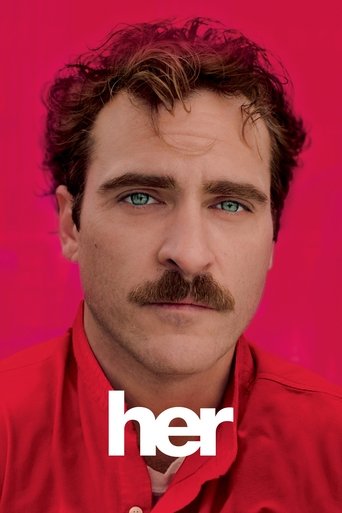



Her
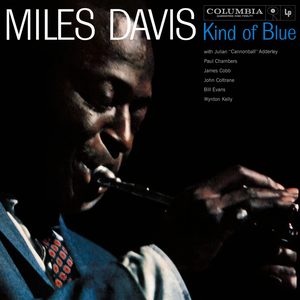
Kind of Blue
Братья Карамазовы
Istanbul
Portal 2
Step 5 PreviewStep 5 Preview
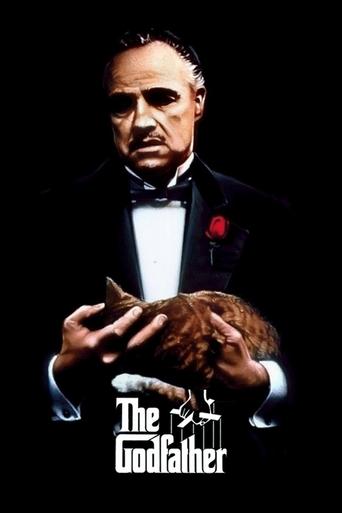


The Godfather
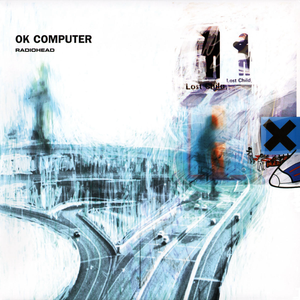
OK Computer
Le petit prince
Kyoto
The Legend of Zelda: Ocarina of Time
Price and specs
| Spec | Claude Opus 4.1 | Step 5 Preview |
|---|---|---|
| Input price | $15/M tokens | $1/M tokens |
| Output price | $75/M tokens | $2.7/M tokens |
| Context window | 200K tokens | 1.0M tokens |
| Weights | Closed | — |
| Free API (OpenRouter) | No | No |
| Released | Aug 2025 | Oct 2026 |
| At 10M a month | $150 | $10.00 |
Input tokens at list price. No caching, no batch discount.
Where to run it
Claude Opus 4.11 host

Step 5 Preview1 host
Per million tokens. Prices and uptime via OpenRouter, checked 10 Oct 2026.
Common questions
What is the difference between Claude Opus 4.1 and Step 5 Preview?
Claude Opus 4.1 is developed by Anthropic while Step 5 Preview is developed by StepFun. Claude Opus 4.1 has a 200K token context window vs Step 5 Preview's 1.0M. You can compare their actual outputs across 53 challenges on Rival to see how they differ in practice.
Which is better, Claude Opus 4.1 or Step 5 Preview?
It depends on your use case. Claude Opus 4.1 and Step 5 Preview each have strengths in different areas. Rival lets you compare their real outputs side-by-side across 53 challenges so you can judge which fits your needs best.
How much does Claude Opus 4.1 cost compared to Step 5 Preview?
Claude Opus 4.1 costs $15/M input tokens and Step 5 Preview costs $1/M input tokens. Step 5 Preview is $14.00/M cheaper per input. Check their side-by-side outputs on Rival to see if the price difference is justified by quality.
How can I compare Claude Opus 4.1 and Step 5 Preview on Rival?
This page shows a side-by-side comparison of Claude Opus 4.1 and Step 5 Preview across shared challenges. You can vote on which model produced the better output in a blind duel. Browsing and voting are free. No account is needed to look; signing in only saves your votes and likes.
More comparisons
Against the newest arrivals
- Claude Opus 4.1 vs Claude Haiku 5.5Landed Oct 2026
- Step 5 Preview vs Ling 3.1 FlashLanded Oct 2026
- Claude Opus 4.1 vs Mistral Large 4Landed Oct 2026
- Step 5 Preview vs GPT-6.1 SolLanded Sep 2026
- Claude Opus 4.1 vs Claude Sonnet 5.5Landed Sep 2026
- Step 5 Preview vs Solar Mini 4Landed Sep 2026
- Claude Opus 4.1 vs Qwen3.8 Max PrimeLanded Sep 2026
- Step 5 Preview vs GLM 5.3 PrimeLanded Sep 2026


Same lab, same size, long tail
- Claude Opus 4.1 vs Claude Opus 4Version compare
- Claude Opus 4.1 vs Claude Opus 5.5Same lab
- Step 5 Preview vs Mistral Large 4Same size
- Step 5 Preview vs Hy3Same size
- Step 5 Preview vs GPT-5.6 LunaNew provider
- Step 5 Preview vs GPT-5.6 Luna ProNew provider
- Step 5 Preview vs GPT-5.6 SolSame size
- Step 5 Preview vs GPT-5.6 TerraNew provider
