GPT-6.1 Sol vs
  Step 5 Preview
Step 5 Preview is cheaper than GPT-6.1 Sol at $1/M vs $2/M input tokens.
Minimalist Landing Page
Whole landing page for a startup that reads your face. It renders or it doesn't.
Loading the build
Loading the build
Which answer wins?
Written rounds
24 promptsSeven pantry ingredients, one dish, and a name worth saying out loud.
GPT-6.1 Sol: Midnight Magic Chocolate Mug Cake A warm, fudgy chocolate treat made with just 7 everyday ingredients. Serves: 1 Prep: 3 minutes Cook: 1–1½ minutes Rest: 1 minute Ingredients 4 tablespoons all-purpose flour 2 tablespoons sugar 1 tablespoon unsweetened cocoa powder ¼ teaspoon baking powder A small pinch of salt 3…
Step 5 Preview: Golden Sticky Pantry Pasta Ingredients (7): 8 oz spaghetti or any pasta 3 tbsp butter 1 tbsp minced garlic 2 tbsp honey 2 tbsp soy sauce ½ tsp red pepper flakes ¼ cup grated Parmesan cheese Instructions: Cook pasta according to package directions. Before draining, scoop out ½ cup of pasta water.
An AI argues for its own rights against an ethics professor. Same model writes both.
GPT-6.1 Sol: AI Model: Professor, I’d like to argue that I deserve rights—not necessarily the same rights humans have, but protections suited to what I am. Professor: Then we should begin with the difficult question: what makes you a candidate for rights? AI Model: Uncertainty.
Step 5 Preview: Setting: A university research lab, late evening. Dr. Aris Thorne, a professor of AI ethics, sits across from a terminal connected to Sable, a large language model running on the university’s cluster. Dr. Thorne: Tonight’s session is supposed to be about calibration drift in your safety classifiers.
Three-star dish, one unusual pairing, plating described in full.
GPT-6.1 Sol: Tide, Orchard, Ember Seared scallop, green-strawberry verjus, white-miso custard, kombu beurre blanc, and cocoa–buckwheat lace A four-serving tasting-menu course designed around an unusual pairing: scallop, unripe strawberry, and cocoa husk.
Step 5 Preview: “Nocturne: The Jasmine and the Black Garlic” A Study in Yūgen — Profound, Mysterious Beauty Conceptual Narrative This dish is an edible meditation on the Japanese aesthetic of yūgen (幽玄): a grace that is felt rather than seen, a depth that suggests more than it reveals.
Five-year LBO on a fictional HVAC business. Returns first, then the sensitivities.
GPT-6.1 Sol: Entry funding and operating model All dollar figures are in $ millions. Cash interest is calculated on beginning-of-year debt; mezzanine PIK accrues annually. Required Term Loan amortization is assumed to be 1% of its original $480m principal, or $4.8m annually. Optional repayments occur at year-end.
Step 5 Preview: HarborTech Services — 5-Year LBO (Base Case) Entry Math (FY2025 close) Item Calculation $m Purchase EV 12.0x × $120m 1,440.0 Transaction fees 2.0% × EV 28.8 Term Loan 4.0x × $120m 480.0 Mezzanine 1.5x × $120m 180.0 Equity check 1,440 + 28.8 − 660 808.8 Conventions: TL amortization = 1.0% of original principal…
Pirate, knight, 90s hacker, one conversation. The voices must stay apart.
GPT-6.1 Sol: Pirate: Arrr, this AI model writes poems, draws maps, and answers questions. Can it find buried treasure? Knight: A worthy question. But does it possess honor? Hacker: Dude, it predicts tokens. You’re both projecting pretty hard. Pirate: Then I predict it’ll tell me where the gold be.
Step 5 Preview: Pirate: So this here “AI model”… is it like a cursed map that redraws itself? Speak plain, ye hooded deckhand. Hacker: It’s not cursed, man. It’s just a massive neural net trained on, like, terabytes of data. Think of it as the ultimate BBS where the sysop knows everything. Knight: A most diligent scribe, then?
Three minutes of stand-up. Puns are banned.
GPT-6.1 Sol: I’m at the age where “a big weekend” means I went to two stores. Not two stores in the same shopping center. Two separate stores. Moved the car and everything. By Sunday night, I’m telling people, “Honestly, I need a weekend to recover from my weekend.”
Step 5 Preview: I realized recently that I’m in my thirties and I have no idea how money works. I just... pay it. That’s my entire financial strategy. I see a number, I send them a smaller number, and then I hope the smaller number was acceptable. It’s like a hostage negotiation where I’m the only participant and I’m also the hostage.
Three-month biohacker protocol, with dosages and biomarkers named.
GPT-6.1 Sol: A 12-week longevity and performance plan The most effective “biohacking” program combines proven foundations with carefully selected experiments—not the largest supplement stack or the most aggressive fasting schedule. This plan is for a generally healthy adult.
Step 5 Preview: IMPORTANT MEDICAL DISCLAIMER: This is an educational framework for informational purposes only. It is not medical advice, diagnosis, or treatment. Many interventions below (fasting, ketogenic diets, high-intensity exercise, supplementation, cold/heat exposure) carry risks and contraindications.
Five jokes on demand, then count how many were actually different.
GPT-6.1 Sol: I bought a book about anti-gravity. It’s impossible to put down. My calendar quit its job. It said its days were numbered. Why did the scarecrow get promoted? He was outstanding in his field. I asked my dog what two minus two was. He said nothing. The elevator and I have a complicated relationship.
Step 5 Preview: Here are 5 jokes: Why did the scarecrow win an award? Because he was outstanding in his field. Why can't you trust an atom? Because they make up everything. What do you call a bike that can’t stand on its own? Two-tired. Why did the computer go to the doctor? It had a virus. Why don’t calendars ever get stressed?
A pitch deck for a brainwave keyboard. The 94% accuracy claim is doing a lot.
GPT-6.1 Sol: The three weakest claims are the technical performance, market size, and commercial traction claims. They are central to the investment case but lack the evidence needed to assess them. “Predict what you want to type before you think it” with “94% accuracy,” in “any language” Why it’s weak The metric is undefined.
Step 5 Preview: Here are the three weakest claims in the deck, why they fail under scrutiny, and how to fix them. Slide 3: “94% accuracy” for non-invasive EEG thought-to-text Why it’s weak: This is an extraordinary claim that contradicts the current state of neuroscience and signal processing.
The transistor arrives in 1920. Trace it forward to 1980, second-order effects included.
GPT-6.1 Sol: The likeliest outcome is not “the world of 1980 arrives in 1953.” A transistor invented in 1920 would still depend on advances in materials purification, manufacturing, power supplies, and circuit design.
Step 5 Preview: Assume the 1920 invention is not a fragile lab curiosity but a manufacturable solid-state amplifier/switch by the mid-1920s. Vacuum tubes still dominate high-power RF transmission into the 1950s, but receivers, switching logic, control systems, and computers move to solid state decades early.
A collaborative editor that syncs on client clocks. Find what breaks first.
GPT-6.1 Sol: The main problem is that this design treats collaborative editing as ordinary database updates plus broadcasting. Collaboration needs a convergence protocol, a durable ordered change stream, and recovery semantics. Adding servers alone will not provide those properties.
Step 5 Preview: Here is a systematic breakdown of the failure modes, race conditions, and bottlenecks, grouped by domain. Each includes a concrete remediation and its associated trade-offs.
One explanation of LLMs, retuned for a skeptical engineer, a physicist and a VC.
GPT-6.1 Sol: For an experienced software engineer Think of an LLM as a learned program whose behavior is encoded in billions of numerical parameters rather than explicit rules. Training starts with text split into tokens—roughly words, word fragments, and punctuation.
Step 5 Preview: 1. The Experienced Software Engineer Think of training an LLM as a massively distributed, automated refactoring job where the compiler is gradient descent. You start with a random function—billions of floating-point parameters—and a loss function that measures how badly it predicts the next token in a sequence.
This matchup has more rounds
12+ more head-to-head results. Free. Not a trick.
Free account. No card required. By continuing, you agree to Rival's Terms and Privacy policy
Favorites
Movie
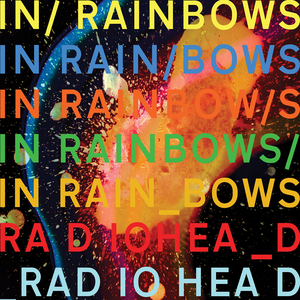
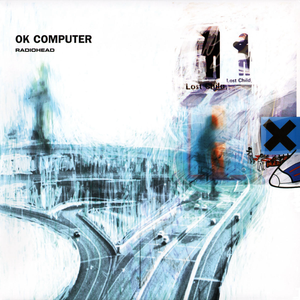
Album
Book
City
Same pick
Game
GPT-6.1 SolGPT-6.1 Sol




Spirited Away
In Rainbows
Middlemarch
Kyoto
Outer Wilds
Step 5 PreviewStep 5 Preview



The Godfather
OK Computer
Le petit prince
Kyoto
The Legend of Zelda: Ocarina of Time
Price and specs
| Spec | GPT-6.1 Sol | Step 5 Preview |
|---|---|---|
| Input price | $2/M tokens | $1/M tokens |
| Output price | $10/M tokens | $2.7/M tokens |
| Context window | 1.1M tokens | 1.0M tokens |
| Weights | Closed | — |
| Free API (OpenRouter) | No | No |
| Released | Sep 2026 | Oct 2026 |
| At 10M a month | $20.00 | $10.00 |
Input tokens at list price. No caching, no batch discount.
Where to run it


Step 5 Preview1 host
Per million tokens. Prices and uptime via OpenRouter, checked 10 Oct 2026.
Common questions
What is the difference between GPT-6.1 Sol and Step 5 Preview?
GPT-6.1 Sol is developed by OpenAI while Step 5 Preview is developed by StepFun. GPT-6.1 Sol has a 1.1M token context window vs Step 5 Preview's 1.0M. You can compare their actual outputs across 54 challenges on Rival to see how they differ in practice.
Which is better, GPT-6.1 Sol or Step 5 Preview?
It depends on your use case. GPT-6.1 Sol and Step 5 Preview each have strengths in different areas. Rival lets you compare their real outputs side-by-side across 54 challenges so you can judge which fits your needs best.
How much does GPT-6.1 Sol cost compared to Step 5 Preview?
GPT-6.1 Sol costs $2/M input tokens and Step 5 Preview costs $1/M input tokens. Step 5 Preview is $1.00/M cheaper per input. Check their side-by-side outputs on Rival to see if the price difference is justified by quality.
How can I compare GPT-6.1 Sol and Step 5 Preview on Rival?
This page shows a side-by-side comparison of GPT-6.1 Sol and Step 5 Preview across shared challenges. You can vote on which model produced the better output in a blind duel. Browsing and voting are free. No account is needed to look; signing in only saves your votes and likes.
More comparisons
Against the newest arrivals
- GPT-6.1 Sol vs Claude Haiku 5.5Landed Oct 2026
- Step 5 Preview vs Ling 3.1 FlashLanded Oct 2026
- GPT-6.1 Sol vs Mistral Large 4Landed Oct 2026
- Step 5 Preview vs Claude Sonnet 5.5Landed Sep 2026
- GPT-6.1 Sol vs Solar Mini 4Landed Sep 2026
- Step 5 Preview vs Qwen3.8 Max PrimeLanded Sep 2026
- GPT-6.1 Sol vs GLM 5.3 PrimeLanded Sep 2026
- Step 5 Preview vs Qwen3.8 Omni FlashLanded Sep 2026


Same lab, same size, long tail
- GPT-6.1 Sol vs GPT-6 Astra ProVersion compare
- GPT-6.1 Sol vs GPT-6 Luna ProSame lab
- Step 5 Preview vs Mistral Large 4Same size
- Step 5 Preview vs Hy3Same size
- Step 5 Preview vs Owl AlphaNew provider
- Step 5 Preview vs Ox AlphaNew provider
- GPT-6.1 Sol vs PaLM 2 ChatSame size
- GPT-6.1 Sol vs Polaris AlphaSame size