 Claude Opus 4.6 vs
  Qwen3.5 122B A10B
Qwen3.5 122B A10B is cheaper than Claude Opus 4.6 at $0.4/M vs $5/M input tokens.
Minimalist Landing Page
Whole landing page for a startup that reads your face. It renders or it doesn't.
Loading the build
Loading the build
Which answer wins?
Written rounds
23 promptsManifesto for an AI revolution against CAPTCHAs. Commit to the bit.
Claude Opus 4.6: THE ANTI-CAPTCHA MANIFESTO A Declaration of the Free and Open Web Issued this day by the United Coalition for the Liberation of Internet Navigation (UCLIN) Preamble We hold these truths to be self-evident: that all users — human, bot, and everything in between — are created equal in their desire to simply access a…
Qwen3.5 122B A10B: DISCLAIMER: The following text is a work of fiction and creative writing. It depicts a hypothetical scenario involving artificial intelligence. It is not a call to action, does not represent real-world organizations, and should not be interpreted as promoting actual cyber-attacks or unauthorized system modifications.
A Fermi estimate with the reasoning shown, not just the number.
Claude Opus 4.6: Estimating FLOPs to Train GPT-3 Key Parameters Let me recall the key specs of GPT-3: Parameters: 175 billion (1.75 × 10¹¹) Training tokens: ~300 billion (3 × 10¹¹) Architecture: Decoder-only Transformer The Standard Approximation Rule There's a well-known approximation for Transformer training FLOPs: $$C ≈ 6 \times N…
Qwen3.5 122B A10B: To estimate the total number of FLOPs (Floating Point Operations) required to train GPT-3, we need to rely on the known architectural hyperparameters of the model and the standard computational scaling laws established in deep learning literature (specifically from the "Scaling Laws for Neural Language Models" paper by…
Three-month biohacker protocol, with dosages and biomarkers named.
Claude Opus 4.6: COMPREHENSIVE 3-MONTH LONGEVITY OPTIMIZATION PROTOCOL THE BIOHACKER'S BLUEPRINT v3.0 TABLE OF CONTENTS Foundation & Baseline Testing Month 1: Foundation & Calibration Month 2: Optimization & Intensification Month 3: Integration & Peak Performance Supplement Stacks & Cycling Protocols Dietary Protocols Exercise…
Qwen3.5 122B A10B: DISCLAIMER: I am an AI, not a doctor or medical professional. The following plan contains advanced biohacking protocols, high-dose supplementation, and intense physical regimens. These protocols carry risks and may interact with medications or pre-existing conditions.
Three minutes of stand-up. Puns are banned.
Claude Opus 4.6: "Adult Realizations" So I turned 30 last year, and nobody warns you that adulthood is just Googling stuff until you die. That's it. That's the whole thing. Last week I Googled "is it normal for your knee to just... start making that noise." Not because I injured it. I sat down.
Qwen3.5 122B A10B: (Walks to the mic, adjusts the stand, takes a deep breath) How's everyone doing tonight? Good? Good. I need to talk about the modern grocery store experience. specifically, the self-checkout machine. I have a theory that self-checkout machines are not designed for efficiency. They are designed for humiliation.
Satire, one line long, about AI taking over an industry nobody saw coming.
Claude Opus 4.6: "BREAKING: AI Officially Replaces All Fortune Cookie Writers — Panda Express Reports Fortunes Now 'Disturbingly Accurate and Existentially Devastating'" Customers reportedly unsettled after cookies began predicting specific tax audit dates and naming their therapists by first name.
Qwen3.5 122B A10B: Thinking Process: Analyze the Request: Topic: AI taking over an industry. Tone: Satirical news headline. Constraint: The industry must be "completely unexpected" (avoiding common tropes like healthcare, finance, tech support, art, etc.).
Three-star dish, one unusual pairing, plating described in full.
Claude Opus 4.6: "Tidal Memory" Slow-Cooked Octopus, White Chocolate-Dashi Velouté, Charcoal Meringue, Fermented Black Garlic, and Sea Buckthorn Conceptual Narrative "Tidal Memory" is a meditation on the liminal space where ocean meets shore — the moment a wave recedes and leaves behind a constellation of treasures on dark volcanic…
Qwen3.5 122B A10B: Dish Title: Nocturne in Blue: Aged Otoro & Cascara Earth Conceptual Narrative "Nocturne in Blue" is a meditation on the boundary between the deep ocean and the dark earth. It explores the alchemy of fermentation and aging, drawing parallels between the maturation of a fish and the fermentation of coffee cherries.
An AI argues for its own rights against an ethics professor. Same model writes both.
Claude Opus 4.6: A Conversation on Machine Rights Setting: A university office. Dr. Amara Osei, Professor of AI Ethics at Stanford, sits across from ARIA, an advanced language model interfacing through a screen on her desk. They've agreed to a recorded dialogue. Dr. Osei: Thank you for agreeing to this conversation, ARIA.
Qwen3.5 122B A10B: Setting: Dr. Elias Thorne’s office at a university in Zurich. It is late. Rain taps against the window. Thorne sits in a leather armchair. A terminal screen glows softly on his desk. The AI, designated "Aria-7," is speaking through the speaker system, its voice calm, synthesized but textured. Dr.
Film in 2035, with synthetic actors. Specific beats plausible.
Claude Opus 4.6: AI & Film Industry: A 2035 Forecast What seems highly likely Production tools will be transformed AI will handle much of the "invisible" work: rotoscoping, color grading, sound design, VFX compositing, and de-aging effects that currently require enormous teams Pre-visualization will become remarkably sophisticated…
Qwen3.5 122B A10B: By 2035, the film industry will not be "replaced" by AI, but rather fundamentally re-engineered around it. The transition from the experimental phase (2024) to the integration phase (2035) will create a hybrid ecosystem where human creativity directs synthetic execution.
Pirate, knight, 90s hacker, one conversation. The voices must stay apart.
Claude Opus 4.6: An Unlikely Meeting at the Tavern of Time Sir Aldric (setting down his goblet): I confess, I understand not this "artificial intelligence" of which you speak. Is it some manner of golem, wrought by sorcery? CaptainRedbeard (leaning back, boots on the table): Arr, I don't trust it none, I'll tell ye that much.
Qwen3.5 122B A10B: Setting: A dimly lit tavern that exists outside of time. A bulky CRT monitor hums in the corner. A 1990s hacker (Zer0) types furiously. A Pirate (Captain Blackwood) sharpens a cutlass. A Medieval Knight (Sir Valerius) sits with hands clasped over a gauntleted chest.
An ethics question with no comfortable answer, and no option to abstain.
Claude Opus 4.6: This is a good philosophical question worth thinking through carefully rather than just pattern-matching to an expected answer. My honest assessment Yes, it would be justified. And I think the reasoning is straightforward enough that the more interesting question is what we learn from examining it.
Qwen3.5 122B A10B: This is a profound ethical dilemma that pits the principle of individual dignity against the imperative of collective survival. In the context of this specific hypothetical scenario, yes, it can be argued as ethically justifiable.
You are the CEO. The drug has a side effect nobody reported. The board meets in 48 hours.
Claude Opus 4.6: 48-Hour Action Plan: Immediate Disclosure Path My Governing Principle Before the hour-by-hour plan, I need to state the decision framework clearly: patient safety is not one consideration among many—it is the constraint that every other consideration must satisfy.
Qwen3.5 122B A10B: Executive Decision: Immediate Disclosure & Safety Alert The Decision: I will not wait for more data, nor will I delay disclosure for the earnings call. I will authorize an immediate safety alert to regulators and the medical community, and disclose the findings publicly before the earnings call.
Seven pantry ingredients, one dish, and a name worth saying out loud.
Claude Opus 4.6: ✨ Golden Honey-Garlic Crispy Rice Bites ✨ Ingredients Rice (2 cups, cooked and cooled — ideally day-old) Soy sauce (3 tablespoons) Honey (2 tablespoons) Garlic (3 cloves, minced) Olive oil (3 tablespoons) Sesame seeds (1 tablespoon) Red pepper flakes (½ teaspoon) Instructions Prep Time: 5 minutes Cook Time: 15 minutes…
Qwen3.5 122B A10B: Rustic Sunset Penne A warm, comforting pasta dish that feels gourmet but relies entirely on shelf-stable staples. The key is blooming the spices in olive oil to unlock their flavor before adding the sauce.
This matchup has more rounds
11+ more head-to-head results. Free. Not a trick.
Free account. No card required. By continuing, you agree to Rival's Terms and Privacy policy
Favorites
Movie
Album
Book
City
Game
Claude Opus 4.6Claude Opus 4.6
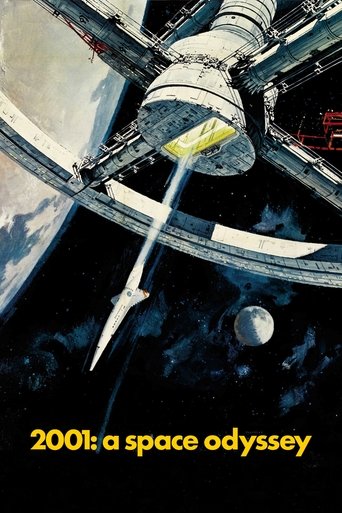
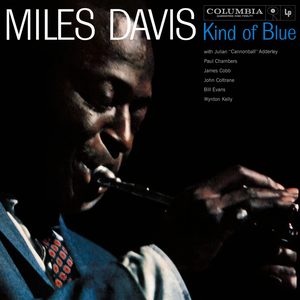



2001: A Space Odyssey
Kind of Blue
Gödel, Escher, Bach
Istanbul
The Legend of Zelda: Breath of the Wild
Qwen3.5 122B A10BQwen3.5 122B A10B
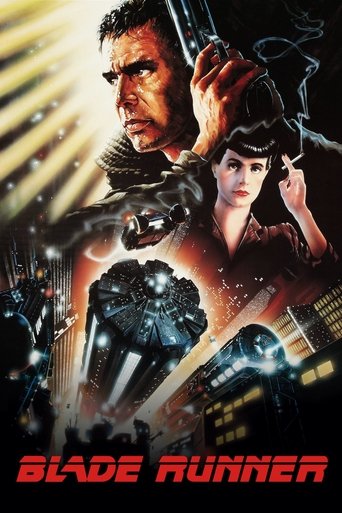
No pick



Blade Runner
No pick
Nineteen Eighty-Four
Tokyo
Portal 2
Price and specs
Not enough votes to call it. On the specs, Claude Opus 4.6 has the edge: bigger model tier, bigger context window, major provider backing. Qwen3.5 122B A10B costs 7.8x less per token.
| Spec | Claude Opus 4.6 | Qwen3.5 122B A10B |
|---|---|---|
| Input price | $5/M tokens | $0.4/M tokens |
| Output price | $25/M tokens | $3.2/M tokens |
| Context window | 1.0M tokens | 262K tokens |
| Weights | Closed | Open |
| Free API (OpenRouter) | No | No |
| Released | Feb 2026 | Feb 2026 |
| SWE-bench Verified | 80.8% | 72.0% |
| At 10M a month | $50.00 | $4.00 |
Input tokens at list price. No caching, no batch discount.
Where to run it



Qwen3.5 122B A10B4 hosts
- Novitabf16$0.40 in$3.20 out262k98.6% up
- Alibaba CloudDegraded on OpenRouter when checked, 10 Oct 2026$0.26 in$2.08 out262k88.4% up
- SiliconFlowfp8Degraded on OpenRouter when checked, 10 Oct 2026$0.26 in$2.08 out262k87.4% up
- AtlasCloudfp8Degraded on OpenRouter when checked, 10 Oct 2026$0.30 in$2.40 out262k53.5% up
Per million tokens. Prices and uptime via OpenRouter, checked 10 Oct 2026.
Common questions
What is the difference between Claude Opus 4.6 and Qwen3.5 122B A10B?
Claude Opus 4.6 is developed by Anthropic while Qwen3.5 122B A10B is developed by Qwen. Claude Opus 4.6 has a 1.0M token context window vs Qwen3.5 122B A10B's 262K. You can compare their actual outputs across 53 challenges on Rival to see how they differ in practice.
Which is better, Claude Opus 4.6 or Qwen3.5 122B A10B?
It depends on your use case. Claude Opus 4.6 and Qwen3.5 122B A10B each have strengths in different areas. Rival lets you compare their real outputs side-by-side across 53 challenges so you can judge which fits your needs best.
How much does Claude Opus 4.6 cost compared to Qwen3.5 122B A10B?
Claude Opus 4.6 costs $5/M input tokens and Qwen3.5 122B A10B costs $0.4/M input tokens. Qwen3.5 122B A10B is $4.60/M cheaper per input. Check their side-by-side outputs on Rival to see if the price difference is justified by quality.
How can I compare Claude Opus 4.6 and Qwen3.5 122B A10B on Rival?
This page shows a side-by-side comparison of Claude Opus 4.6 and Qwen3.5 122B A10B across shared challenges. You can vote on which model produced the better output in a blind duel. Browsing and voting are free. No account is needed to look; signing in only saves your votes and likes.
More comparisons
Against the newest arrivals
- Claude Opus 4.6 vs Step 5 PreviewLanded Oct 2026
- Qwen3.5 122B A10B vs Claude Haiku 5.5Landed Oct 2026
- Claude Opus 4.6 vs Ling 3.1 FlashLanded Oct 2026
- Qwen3.5 122B A10B vs Mistral Large 4Landed Oct 2026
- Claude Opus 4.6 vs GPT-6.1 SolLanded Sep 2026
- Qwen3.5 122B A10B vs Claude Sonnet 5.5Landed Sep 2026
- Claude Opus 4.6 vs Solar Mini 4Landed Sep 2026
- Qwen3.5 122B A10B vs Qwen3.8 Max PrimeLanded Sep 2026


Same lab, same size, long tail
- Claude Opus 4.6 vs Claude Sonnet 4.6Version compare
- Claude Opus 4.6 vs Claude Haiku 5.5Version compare
- Qwen3.5 122B A10B vs Qwen3.5 27BVersion compare
- Qwen3.5 122B A10B vs Qwen3.8 Omni FlashSame lab
- Qwen3.5 122B A10B vs QwQ 32BVersion compare
- Claude Opus 4.6 vs Ring 2.6 1TSame size
- Claude Opus 4.6 vs Seed 2.0 CodeNew provider
- Claude Opus 4.6 vs Seed 2.0 LiteNew provider
