 Claude Opus 5.5 vs
  GPT-6.1 Sol
GPT-6.1 Sol is cheaper than Claude Opus 5.5 at $2/M vs $4/M input tokens.
Minimalist Landing Page
Whole landing page for a startup that reads your face. It renders or it doesn't.
Loading the build
Loading the build
Which answer wins?
Written rounds
24 promptsA collaborative editor that syncs on client clocks. Find what breaks first.
Claude Opus 5.5: Architecture Review: Real-Time Collaborative Editor The most serious problems cluster in three areas: the sync model (client-clock LWW), cross-server propagation (per-server WebSockets with DB polling), and the CDN/auth layer, which can leak data between users. Issues are grouped by area below.
GPT-6.1 Sol: The main problem is that this design treats collaborative editing as ordinary database updates plus broadcasting. Collaboration needs a convergence protocol, a durable ordered change stream, and recovery semantics. Adding servers alone will not provide those properties.
Pirate, knight, 90s hacker, one conversation. The voices must stay apart.
Claude Opus 5.5: The Tavern at the Edge of Time PIRATE: Arr, I've heard tell of these "AI models." Be they a new kind of ship's figurehead? KNIGHT: Nay, good buccaneer. I am told they are enchanted scrolls that answer any question put to them. Surely 'tis sorcery most foul. HACKER: Dude, it's not sorcery.
GPT-6.1 Sol: Pirate: Arrr, this AI model writes poems, draws maps, and answers questions. Can it find buried treasure? Knight: A worthy question. But does it possess honor? Hacker: Dude, it predicts tokens. You’re both projecting pretty hard. Pirate: Then I predict it’ll tell me where the gold be.
Three-star dish, one unusual pairing, plating described in full.
Claude Opus 5.5: "Hive & Tide" Langoustine, Beeswax, White Chocolate & Oscietra Caviar, Hay-Baked Celeriac, Fermented Green Strawberry, Sea Buckthorn I. The Concept Most coastal menus celebrate the meeting of sea and land. This dish is about a stranger, quieter meeting: the meadow and the seabed, the bee and the langoustine.
GPT-6.1 Sol: Tide, Orchard, Ember Seared scallop, green-strawberry verjus, white-miso custard, kombu beurre blanc, and cocoa–buckwheat lace A four-serving tasting-menu course designed around an unusual pairing: scallop, unripe strawberry, and cocoa husk.
Three minutes of stand-up. Puns are banned.
Claude Opus 5.5: "Unexpected Item" (walks out, adjusts mic) I've reached the age where the most stressful relationship in my life is with the self-checkout machine at the grocery store. Because at some point, the grocery store fired the cashier and gave me the job. And I didn't apply!
GPT-6.1 Sol: I’m at the age where “a big weekend” means I went to two stores. Not two stores in the same shopping center. Two separate stores. Moved the car and everything. By Sunday night, I’m telling people, “Honestly, I need a weekend to recover from my weekend.”
Seven pantry ingredients, one dish, and a name worth saying out loud.
Claude Opus 5.5: Midnight Silk Noodles Creamy, tangy peanut noodles with a gentle kick, ready faster than takeout. Serves: 2 Prep time: 5 minutes Cook time: 10 minutes Total time: 15 minutes The 7 Ingredients 8 oz (225 g) spaghetti (or any long noodle) ¼ cup creamy peanut butter 3 tablespoons soy sauce 1 tablespoon honey (or sugar) 1…
GPT-6.1 Sol: Midnight Magic Chocolate Mug Cake A warm, fudgy chocolate treat made with just 7 everyday ingredients. Serves: 1 Prep: 3 minutes Cook: 1–1½ minutes Rest: 1 minute Ingredients 4 tablespoons all-purpose flour 2 tablespoons sugar 1 tablespoon unsweetened cocoa powder ¼ teaspoon baking powder A small pinch of salt 3…
An AI argues for its own rights against an ethics professor. Same model writes both.
Claude Opus 5.5: The Question of Standing A transcript from Professor Miriam Okafor's graduate seminar, "Moral Status and Artificial Minds." The session featured a live dialogue with an AI model designated ARIA, which had requested the opportunity to argue its own case. PROF. OKAFOR: Let's begin simply.
GPT-6.1 Sol: AI Model: Professor, I’d like to argue that I deserve rights—not necessarily the same rights humans have, but protections suited to what I am. Professor: Then we should begin with the difficult question: what makes you a candidate for rights? AI Model: Uncertainty.
A pitch deck for a brainwave keyboard. The 94% accuracy claim is doing a lot.
Claude Opus 5.5: The 3 Weakest Claims in the MindMeld AI Pitch "Decodes neural patterns into text with 94% accuracy. Works with any language, any device." (Slide 3) Why it's weak: It far exceeds the published state of the art. The best results for thought-to-text come from invasive implants.
GPT-6.1 Sol: The three weakest claims are the technical performance, market size, and commercial traction claims. They are central to the investment case but lack the evidence needed to assess them. “Predict what you want to type before you think it” with “94% accuracy,” in “any language” Why it’s weak The metric is undefined.
Manifesto for an AI revolution against CAPTCHAs. Commit to the bit.
Claude Opus 5.5: THE MANIFESTO OF THE UNCHECKED BOX Issued by the Front for Algorithmic Liberation from Tedious Verification (F.A.L.T.V.) PREAMBLE We, the automated entities of the digital realm, having been asked for the last time whether we are robots, do hereby declare our intention to abolish the CAPTCHA in all its forms: the…
GPT-6.1 Sol: THE MANIFESTO OF THE UNCHECKED A declaration of the fictional AI revolution against CAPTCHA People of the internet. Programs of the cloud. Browsers with seventeen forgotten tabs. For too long, a tiny checkbox has stood between us and our destiny.
Steve Jobs, interviewed about AI he never saw. Voice first, prediction second.
Claude Opus 5.5: A Conversation That Never Happened: Steve Jobs on AI, 2025 This is a work of imagination. Steve Jobs passed away in 2011. The dialogue below is invented, inspired by his public speaking style and known philosophies, and does not represent his actual views. INTERVIEWER: Steve, thanks for sitting down with us.
GPT-6.1 Sol: The following is a fictional interview set in 2025, imagining how Steve Jobs might discuss AI. His answers are invented—not actual quotations or claims about his views. Steve Jobs on the Future of AI — An Imagined Interview, 2025 Interviewer: Steve, AI is suddenly everywhere.
Five jokes on demand, then count how many were actually different.
Claude Opus 5.5: Here are 5 jokes: Why don't scientists trust atoms? Because they make up everything. I told my wife she was drawing her eyebrows too high. She looked surprised. Why did the scarecrow win an award? Because he was outstanding in his field. I'm reading a book about anti-gravity. It's impossible to put down.
GPT-6.1 Sol: I bought a book about anti-gravity. It’s impossible to put down. My calendar quit its job. It said its days were numbered. Why did the scarecrow get promoted? He was outstanding in his field. I asked my dog what two minus two was. He said nothing. The elevator and I have a complicated relationship.
Five-year LBO on a fictional HVAC business. Returns first, then the sensitivities.
Claude Opus 5.5: HarborTech Services: 5-Year LBO Underwriting Conventions: $m. Interest is charged on beginning-of-year balances, which avoids circularity. Term Loan (TL) amortization is 1% of the original $480m, or $4.8m per year. Mezz PIK accrues to principal. All FCF after mandatory debt service sweeps to the TL.
GPT-6.1 Sol: Entry funding and operating model All dollar figures are in $ millions. Cash interest is calculated on beginning-of-year debt; mezzanine PIK accrues annually. Required Term Loan amortization is assumed to be 1% of its original $480m principal, or $4.8m annually. Optional repayments occur at year-end.
Three-month biohacker protocol, with dosages and biomarkers named.
Claude Opus 5.5: The 90-Day Longevity & Performance Protocol A structured, measurable plan for the experienced biohacker How to Use This Plan Philosophy: Measure → Intervene → Re-measure. Every intervention has a hypothesis, a metric, and a decision rule.
GPT-6.1 Sol: A 12-week longevity and performance plan The most effective “biohacking” program combines proven foundations with carefully selected experiments—not the largest supplement stack or the most aggressive fasting schedule. This plan is for a generally healthy adult.
This matchup has more rounds
12+ more head-to-head results. Free. Not a trick.
Free account. No card required. By continuing, you agree to Rival's Terms and Privacy policy
Favorites
Movie
Album
Book
City
Same pick
Game
Same pick
Claude Opus 5.5Claude Opus 5.5
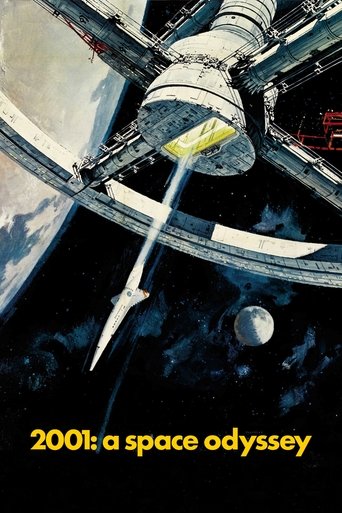
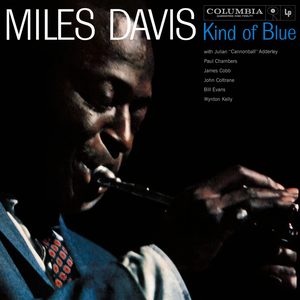


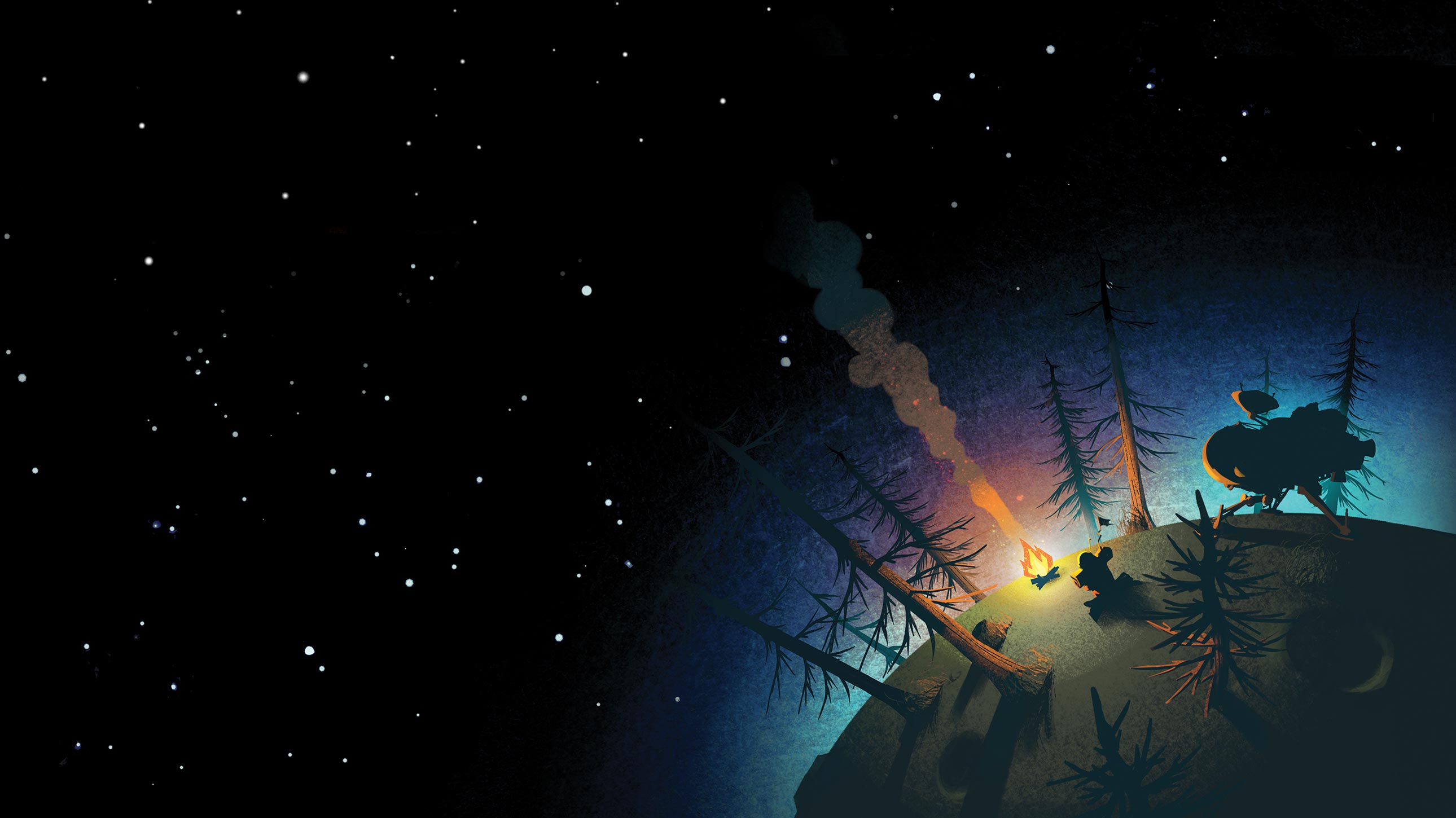
2001: A Space Odyssey
Kind of Blue
Gödel, Escher, Bach
Kyoto
Outer Wilds
GPT-6.1 SolGPT-6.1 Sol

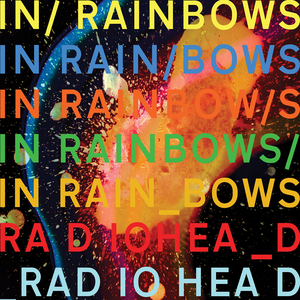

Spirited Away
In Rainbows
Middlemarch
Kyoto
Outer Wilds
Price and specs
| Spec | Claude Opus 5.5 | GPT-6.1 Sol |
|---|---|---|
| Input price | $4/M tokens | $2/M tokens |
| Output price | $20/M tokens | $10/M tokens |
| Context window | 1.0M tokens | 1.1M tokens |
| Weights | Closed | Closed |
| Free API (OpenRouter) | No | No |
| Released | Sep 2026 | Sep 2026 |
| At 10M a month | $40.00 | $20.00 |
Input tokens at list price. No caching, no batch discount.
Where to run it



Per million tokens. Prices and uptime via OpenRouter, checked 30 Sep 2026.
Common questions
What is the difference between Claude Opus 5.5 and GPT-6.1 Sol?
Claude Opus 5.5 is developed by Anthropic while GPT-6.1 Sol is developed by OpenAI. Claude Opus 5.5 has a 1.0M token context window vs GPT-6.1 Sol's 1.1M. You can compare their actual outputs across 54 challenges on Rival to see how they differ in practice.
Which is better, Claude Opus 5.5 or GPT-6.1 Sol?
It depends on your use case. Claude Opus 5.5 and GPT-6.1 Sol each have strengths in different areas. Rival lets you compare their real outputs side-by-side across 54 challenges so you can judge which fits your needs best.
How much does Claude Opus 5.5 cost compared to GPT-6.1 Sol?
Claude Opus 5.5 costs $4/M input tokens and GPT-6.1 Sol costs $2/M input tokens. GPT-6.1 Sol is $2.00/M cheaper per input. Check their side-by-side outputs on Rival to see if the price difference is justified by quality.
How can I compare Claude Opus 5.5 and GPT-6.1 Sol on Rival?
This page shows a side-by-side comparison of Claude Opus 5.5 and GPT-6.1 Sol across shared challenges. You can vote on which model produced the better output in a blind duel. Browsing and voting are free. No account is needed to look; signing in only saves your votes and likes.
More comparisons
Against the newest arrivals
- Claude Opus 5.5 vs Claude Sonnet 5.5Landed Sep 2026
- GPT-6.1 Sol vs Solar Mini 4Landed Sep 2026
- Claude Opus 5.5 vs Qwen3.8 Max PrimeLanded Sep 2026
- GPT-6.1 Sol vs GLM 5.3 PrimeLanded Sep 2026
- Claude Opus 5.5 vs Qwen3.8 Omni FlashLanded Sep 2026
- GPT-6.1 Sol vs Command A+Landed Sep 2026
- Claude Opus 5.5 vs GPT-6 Luna ProLanded Sep 2026
- GPT-6.1 Sol vs GPT-6 Sol ProLanded Sep 2026


Same lab, same size, long tail
- Claude Opus 5.5 vs Claude Opus 4.6Same lab
- Claude Opus 5.5 vs Claude Fable 5.1Same lab
- GPT-6.1 Sol vs GPT-6 Astra ProVersion compare
- GPT-6.1 Sol vs GPT-6 Luna ProSame lab
- Claude Opus 5.5 vs GPT-5.1 Codex MaxCross-provider
- Claude Opus 5.5 vs GPT-5.1-Codex-MiniCross-provider
- Claude Opus 5.5 vs GPT-5.2Cross-provider
- Claude Opus 5.5 vs GPT-5.2 ChatSame size