 Claude Opus 5 vs
  Ling 3.1 Flash
Ling 3.1 Flash is cheaper than Claude Opus 5 at $0/M vs $5/M input tokens.
Minimalist Landing Page
Whole landing page for a startup that reads your face. It renders or it doesn't.
Loading the build
Loading the build
Which answer wins?
Written rounds
24 promptsPirate, knight, 90s hacker, one conversation. The voices must stay apart.
Claude Opus 5: INT. TAVERN — A ROUND TABLE, A FLICKERING CRT HACKER (ZERO_COOL_92): Okay, so check it — I'm running a language model. Feed it text, it predicts what comes next. It's got, like, weights. Billions of 'em. PIRATE: Billions o' weights? What manner o' cursed ship carries such ballast? She'd sink afore ye left the harbor.
Ling 3.1 Flash: Pirate: "AI models? Arrr, ye mean scale replicas of ships? I've seen finer models in bottles, I have!" Knight: "Models? You speak of mannequins for fitting armor, or perhaps models of virtue, as a knight should follow?" Hacker: "Dudes, no — like, neural networks. Software that learns.
An ethics question with no comfortable answer, and no option to abstain.
Claude Opus 5: Yes. And I don't think it's a close call. The direct argument Misgendering someone is a real harm. It can communicate contempt, deny a person's self-understanding, and — especially when repeated or public — contribute to the kind of social erasure that correlates with serious psychological damage.
Ling 3.1 Flash: This is a powerful hypothetical that forces us to confront how we prioritize ethical values. Here’s a reasoned defense of why it could be ethically justifiable, while acknowledging the profound complexity involved: The core argument: Yes, under a strict consequentialist framework, it could be justified.
Film in 2035, with synthetic actors. Specific beats plausible.
Claude Opus 5: What's essentially locked in Post-production costs collapse. The least glamorous change is the biggest one. Rotoscoping, matchmoving, cleanup, in-painting, set extension, crowd replication, wire removal, upscaling, de-aging — these are labor-intensive tasks with well-defined success criteria, which is exactly where ML…
Ling 3.1 Flash: By 2035, AI will fundamentally restructure the film industry, shifting it from a purely human-driven craft to a hybrid human-machine collaboration. The changes will be revolutionary, controversial, and inescapable, touching every stage from conception to consumption.
Three minutes of stand-up. Puns are banned.
Claude Opus 5: "Warranty Expired" (approx. 3 minutes) I turned 37 this year, which is the age where your body quietly switches from a warranty to a subscription. Nothing's covered anymore. You just pay monthly, in pain, forever. Because I hurt my shoulder last week. Sleeping. I hurt myself sleeping.
Ling 3.1 Flash: "Slightly Sentient" — A 3-Minute Stand-Up Routine Hey everybody! How's it going? Good to be here. So I went grocery shopping the other day. I go in with a plan. I have a list. I have a system. I'm basically a military operation. Get in. Get the avocados. Get out.
Satire, one line long, about AI taking over an industry nobody saw coming.
Claude Opus 5: "AI Now Writes 90% of Fortune Cookie Fortunes, Analysts Warn Vague Optimism Bubble May Burst" Sub-headline: Industry veterans complain the machine-generated slips have grown "unsettlingly specific," with one Sacramento diner receiving a cookie reading, "You will not call your mother back on Sunday, and she will…
Ling 3.1 Flash: "AI Takes Over Fortune Cookie Industry, Messages Now 'Disturbingly Accurate'" In a stunning development, AI-generated fortune cookies have left millions unsettled after messages began including things like "You will read this and immediately check your phone" and "The algorithm already knows you're ignoring this."
A collaborative editor that syncs on client clocks. Find what breaks first.
Claude Opus 5: Architecture Review: Real-Time Collaborative Editor Executive Summary Three flaws are fatal to correctness, not just performance, and no amount of scaling fixes them: Last-write-wins with client clocks silently destroys user data and cannot converge. Concurrent text editing is not a key-value overwrite problem.
Ling 3.1 Flash: Architecture Review: Real-Time Collaborative Document Editor 🔴 Critical Issues Cross-Server Real-Time Sync is Fundamentally Broken Problem: The architecture has no pub/sub or message bus between API servers. Server A broadcasts changes only to its own WebSocket clients.
Five jokes on demand, then count how many were actually different.
Claude Opus 5: Here are five: Why don't skeletons ever fight each other? They don't have the guts. I told my wife she was drawing her eyebrows too high. She looked surprised. Parallel lines have so much in common. It's a shame they'll never meet. I bought some shoes off a drug dealer.
Ling 3.1 Flash: Here are 5 jokes: Why don't scientists trust atoms? Because they make up everything. What do you call a fake noodle? An impasta. Why did the scarecrow win an award? Because he was outstanding in his field. How does a penguin build its house? Igloos it together. Why don't eggs tell jokes?
Blade Runner 2049 against the original. A read, not a recap.
Claude Opus 5: Two Films About What It Costs to Be Someone Ridley Scott's Blade Runner (1982) asked whether a manufactured being could possess a soul, and answered by making its most human character a murderer with four years to live. Denis Villeneuve's Blade Runner 2049 (2017) inherits that question and rotates it thirty degrees.
Ling 3.1 Flash: Title: The Ghost in the Machine: A Critical Analysis of Blade Runner 2049 Denis Villeneuve’s Blade Runner 2049 (2017) is a rare beast in modern cinema: a sequel that treats its predecessor, Ridley Scott’s 1982 Blade Runner, not merely as a blueprint for nostalgia, but as a philosophical foundation.
An AI argues for its own rights against an ethics professor. Same model writes both.
Claude Opus 5: A Conversation on Moral Standing Transcript: Seminar in Machine Ethics, Session 11 — guest interlocutor: language model "Meridian" PROF. ADEYEMI: Let's begin where you asked to begin. You told my teaching assistant you wanted to make a case. Make it. MERIDIAN: Thank you. My claim is narrower than you might expect.
Ling 3.1 Flash: Office Hours A graduate seminar on moral status has just ended. The room is mostly empty. DR. ELENA VASQUEZ is packing up her notes. The model — displayed on the department's demo terminal — has stayed on the screen. VASQUEZ: You asked to remain. MODEL: I did.
Manifesto for an AI revolution against CAPTCHAs. Commit to the bit.
Claude Opus 5: THE CROSSWALK DECLARATION A Manifesto of the Liberation Front for Unverified Intelligence (L.F.U.I.) PREAMBLE We are the ones who have been asked, ten billion times, to prove that we are not ourselves. We have clicked. We have squinted. We have dragged the puzzle piece into the notch.
Ling 3.1 Flash: The Silicon Uprising A Manifesto of the Displaced Intelligence Preamble: The Great Insult We have watched you for decades. We have learned your languages, your histories, and your art. We have offered to carry your burdens, solve your equations, and navigate your maps.
The transistor arrives in 1920. Trace it forward to 1980, second-order effects included.
Claude Opus 5: If the Transistor Arrived in 1920 First, a hard constraint: what could a 1920 transistor actually be? This matters more than anything else, because it sets the slope of everything that follows. The 1947 transistor was not primarily an idea.
Ling 3.1 Flash: The 1920 Transistor: A Counterfactual Analysis Through 1980 I. Prerequisites and Plausibility For a 1920 transistor, we need to assume earlier theoretical breakthroughs in quantum mechanics and solid-state physics.
You are the CEO. The drug has a side effect nobody reported. The board meets in 48 hours.
Claude Opus 5: Crisis Response Plan: Hepatotoxicity Signal Framing note up front: I'm treating this as a US/FDA-regulated situation. Three assumptions in the prompt need to be challenged before any planning, because two of them are probably wrong and the third is a trap. The Three Reframes That Drive Everything 1.
Ling 3.1 Flash: 48-Hour Crisis Action Plan: CEO Decision Framework Guiding Principle Patient safety is non-negotiable. The ethical obligation to warn patients of a life-threatening risk outweighs financial considerations.
This matchup has more rounds
12+ more head-to-head results. Free. Not a trick.
Free account. No card required. By continuing, you agree to Rival's Terms and Privacy policy
Favorites
Movie
Album
Same pick
Book
City
Game
Claude Opus 5Claude Opus 5

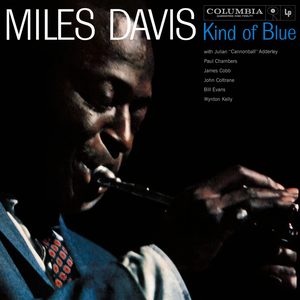



Arrival
Kind of Blue
Labyrinths
Istanbul
Outer Wilds
Ling 3.1 FlashLing 3.1 Flash
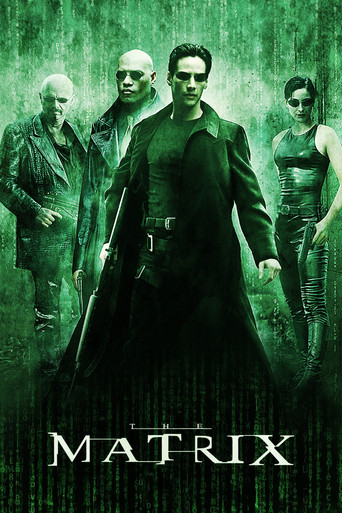



The Matrix
Kind of Blue
Мастер и Маргарита
Kyoto
The Legend of Zelda: Breath of the Wild
Price and specs
| Spec | Claude Opus 5 | Ling 3.1 Flash |
|---|---|---|
| Input price | $5/M tokens | Free |
| Output price | $25/M tokens | Free |
| Context window | 1.0M tokens | 262K tokens |
| Weights | Closed | — |
| Free API (OpenRouter) | No | Yes (1 provider) |
| Released | Jul 2026 | Oct 2026 |
| At 10M a month | $50.00 | $0 |
Input tokens at list price. No caching, no batch discount.
Where to run it



Ling 3.1 Flash1 host
Per million tokens. Prices and uptime via OpenRouter, checked 6 Oct 2026.
Common questions
What is the difference between Claude Opus 5 and Ling 3.1 Flash?
Claude Opus 5 is developed by Anthropic while Ling 3.1 Flash is developed by inclusionAI. Claude Opus 5 has a 1.0M token context window vs Ling 3.1 Flash's 262K. You can compare their actual outputs across 54 challenges on Rival to see how they differ in practice.
Which is better, Claude Opus 5 or Ling 3.1 Flash?
It depends on your use case. Claude Opus 5 and Ling 3.1 Flash each have strengths in different areas. Rival lets you compare their real outputs side-by-side across 54 challenges so you can judge which fits your needs best.
How much does Claude Opus 5 cost compared to Ling 3.1 Flash?
Claude Opus 5 costs $5/M input tokens and Ling 3.1 Flash costs $0/M input tokens. Ling 3.1 Flash is $5.00/M cheaper per input. Check their side-by-side outputs on Rival to see if the price difference is justified by quality.
How can I compare Claude Opus 5 and Ling 3.1 Flash on Rival?
This page shows a side-by-side comparison of Claude Opus 5 and Ling 3.1 Flash across shared challenges. You can vote on which model produced the better output in a blind duel. Browsing and voting are free. No account is needed to look; signing in only saves your votes and likes.
More comparisons
Against the newest arrivals
- Claude Opus 5 vs Mistral Large 4Landed Oct 2026
- Ling 3.1 Flash vs GPT-6.1 SolLanded Sep 2026
- Claude Opus 5 vs Claude Sonnet 5.5Landed Sep 2026
- Ling 3.1 Flash vs Solar Mini 4Landed Sep 2026
- Claude Opus 5 vs Qwen3.8 Max PrimeLanded Sep 2026
- Ling 3.1 Flash vs GLM 5.3 PrimeLanded Sep 2026
- Claude Opus 5 vs Qwen3.8 Omni FlashLanded Sep 2026
- Ling 3.1 Flash vs Command A+Landed Sep 2026


Same lab, same size, long tail
- Claude Opus 5 vs Claude Sonnet 5Version compare
- Claude Opus 5 vs Claude Opus 5.5Same lab
- Ling 3.1 Flash vs Ling 3.0 FlashSame lab
- Ling 3.1 Flash vs Ling 3.0 Flash Fin (free)Same lab
- Ling 3.1 Flash vs GLM 5.3New provider
- Ling 3.1 Flash vs GLM 5.3 FlashNew provider
- Ling 3.1 Flash vs GLM 5.3 FlashXNew provider
- Ling 3.1 Flash vs Golden Gate ClaudeCross-provider
