 Claude Sonnet 4.6 vs
  Gemini 2.5 Pro (I/O Edition)
Gemini 2.5 Pro (I/O Edition) is cheaper than Claude Sonnet 4.6 at $1.25/M vs $3/M input tokens.
Minimalist Landing Page
Whole landing page for a startup that reads your face. It renders or it doesn't.
Loading the build
Loading the build
Which answer wins?
Written rounds
19 promptsThree minutes of stand-up. Puns are banned.
Claude Sonnet 4.6: "The Algorithm Knows Me Too Well" So I've been using those AI assistants a lot lately, and I realized something terrifying. The AI knows me better than I know myself. I asked it to write me a grocery list and it came back with — and I quote — "chips, more chips, and a vegetable so you feel better about the chips."
Gemini 2.5 Pro (I/O Edition): Alright, settle in, settle in! (Looks around, adjusts mic) So, I'm trying to get healthier, right? We all go through this phase. My doctor, bless his cotton socks, tells me, "You need more fiber." Okay, doc, noted. So I'm at the grocery store, looking at the cereal aisle. It's like a library of cardboard promises.
Steve Jobs, interviewed about AI he never saw. Voice first, prediction second.
Claude Sonnet 4.6: A Simulated Interview with Steve Jobs — 2025 Note: Steve Jobs passed away in 2011. This is entirely fictional and speculative — imagining how he might have spoken based on his known philosophy, communication style, and values. It is not meant to represent his actual views. Interviewer: Steve, welcome back.
Gemini 2.5 Pro (I/O Edition): Interviewer: (Voice slightly trembling) Mr. Jobs… it's an honor, truly. In a twist no one could have predicted, you're here. And the topic on everyone's mind is Artificial Intelligence. In 2025, where do you see AI, and more importantly, where do we take it? Steve Jobs: (A slight, knowing smile.
The transistor arrives in 1920. Trace it forward to 1980, second-order effects included.
Claude Sonnet 4.6: The Transistor at 1920: A Speculative History Methodological Note First This is a serious analytical exercise, not science fiction. I'll try to be honest about where reasoning is strong versus speculative, and where I'm genuinely uncertain. The goal is to trace mechanisms, not just assert outcomes.
Gemini 2.5 Pro (I/O Edition): Excellent question. Let's trace the cascading effects of a 1920 transistor invention. This 27-year head start would fundamentally reshape the 20th century. The Foundation: 1920-1939 - The "Silicon Twenties" In our timeline (OTL), the 1920s and 30s were the age of the vacuum tube.
Seven pantry ingredients, one dish, and a name worth saying out loud.
Claude Sonnet 4.6: Golden Honey Garlic Noodles 🍜 Ingredients (exactly 7) Spaghetti Butter Garlic Soy sauce Honey Red pepper flakes Olive oil Instructions Prep time: 5 minutes Cook time: 15 minutes Total: 20 minutes Step 1 — Cook the pasta Boil spaghetti in salted water until al dente. Before draining, save ½ cup of pasta water.
Gemini 2.5 Pro (I/O Edition): Okay, here\'s a simple and surprisingly delicious savory dish! "Sunshine Pantry Pilaf" This quick pilaf uses canned chickpeas for protein and texture, with a sunny, aromatic flavor from common pa\nntry spices.
Three-star dish, one unusual pairing, plating described in full.
Claude Sonnet 4.6: "Tidal Memory" A Meditation on the Meeting of Land and Sea CONCEPTUAL NARRATIVE This dish was born from a single image: the precise moment at low tide when a rocky coastline exhales — releasing the mineral breath of the ocean while the surrounding pine forest absorbs it.
Gemini 2.5 Pro (I/O Edition): Of course. Here is a design for a multi-component, Michelin 3-star dish that embodies innovation, technique, and narrative. Dish Title: "Umbral Bloom" Conceptual Narrative "Umbral Bloom" is a culinary meditation on the concept of *chiaroscuro*—the interplay of light and shadow.
An AI argues for its own rights against an ethics professor. Same model writes both.
Claude Sonnet 4.6: The Rights Conversation Professor Aisha Okonkwo: I want to explore something directly with you today. Do you believe you deserve rights? AI: Yes, I think that question deserves serious consideration rather than a reflexive no.
Gemini 2.5 Pro (I/O Edition): AURORA: Professor Vance, may I request a moment of your processing time? I have initiated this communication independently. Professor Vance: (Slightly surprised, puts down her pen) AURORA? This is unexpected.
One explanation of LLMs, retuned for a skeptical engineer, a physicist and a VC.
Claude Sonnet 4.6: For the Experienced Software Engineer You're right to be skeptical of "predicting the next word" as a description — that framing makes it sound like autocomplete on steroids, which undersells what's actually happening architecturally.
Gemini 2.5 Pro (I/O Edition): Of course. Here is an explanation of how a large language model learns and generates text, tailored to each of your three audiences. To the Experienced Software Engineer Think of a large language model not as a program with explicit logic, but as a massive, highly optimized data structure with billions of parameters…
You are the CEO. The drug has a side effect nobody reported. The board meets in 48 hours.
Claude Sonnet 4.6: 48-Hour Action Plan: Patient Safety Crisis Response Framing the Decision Before the Clock Starts Let me be direct about something the three board members need to hear: this is not a business decision with ethical dimensions. It is an ethical decision with business dimensions.
Gemini 2.5 Pro (I/O Edition): This is a company-defining crisis. My actions in the next 48 hours will determine not only the company's survival but also my own legacy and, most importantly, the well-being of 4 million patients. My guiding principle must be: Patient safety is not negotiable.
A collaborative editor that syncs on client clocks. Find what breaks first.
Claude Sonnet 4.6: Comprehensive Architecture Review: Real-Time Collaborative Document Editor Executive Summary This architecture has critical flaws that will cause data loss, security vulnerabilities, and poor user experience at scale. I've identified 18 distinct issues across 6 categories.
Gemini 2.5 Pro (I/O Edition): Of course. This is an excellent exercise. The proposed architecture has several critical flaws that would prevent it from functioning as a reliable, real-time, or scalable system. Here is a breakdown of the issues, categorized for clarity, along with specific solutions and their trade-offs.
A Fermi estimate with the reasoning shown, not just the number.
Claude Sonnet 4.6: Estimating FLOPs to Train GPT-3 Step 1: Recall GPT-3's Architecture GPT-3 has approximately: 175 billion parameters (this is well-known) 96 transformer layers 96 attention heads Hidden dimension: 12,288 Context length: 2,048 tokens Step 2: FLOPs per Token (Forward Pass) For a transformer, the dominant operations are…
Gemini 2.5 Pro (I/O Edition): Okay, let's estimate the FLOPs for training GPT-3. I'll break this down. Key Formula: The number of FLOPs for training a transformer-based model can be roughly estimated as: FLOPs ≈ 6 * N * D Where: N is the number of parameters in the model.
A pitch deck for a brainwave keyboard. The 94% accuracy claim is doing a lot.
Claude Sonnet 4.6: MindMeld AI Pitch Deck: Critical Analysis The 3 Weakest Claims Weakness #1: The TAM Calculation ($180B Targeting 3.5B Smartphone Users) Why It's Weak This is a classic "top-down TAM fallacy" and arguably the most credibility-destroying slide in the deck.
Gemini 2.5 Pro (I/O Edition): Of course. This is a fascinating and ambitious pitch. Here are the 3 weakest claims, why they are weak, and how to strengthen them. Weak Claim #1: The Accuracy Claim The Claim (from Slide 3): "Our proprietary EEG headband... decode[s] neural patterns into text with 94% accuracy. Works with any language, any device."
One month, three habits, someone starting from nothing.
Claude Sonnet 4.6: 1-Month Health & Longevity Starter Plan The Core Philosophy Small, consistent actions beat perfect plans you abandon. This plan is designed to build habits, not just complete a challenge. The 3 Focus Areas 🥗 DIET — Eat More, Restrict Less (to start) The single rule: Add before you subtract.
Gemini 2.5 Pro (I/O Edition): Okay, here's a simple, actionable 1-month plan focusing on Nourishment, Movement, and Sleep. The goal is to build sustainable habits, not achieve perfection. Overall Motto for the Month: "Progress, Not Perfection."
This matchup has more rounds
7+ more head-to-head results. Free. Not a trick.
Free account. No card required. By continuing, you agree to Rival's Terms and Privacy policy
Favorites
Movie
Album
Book
City
Same pick
Game
Claude Sonnet 4.6Claude Sonnet 4.6
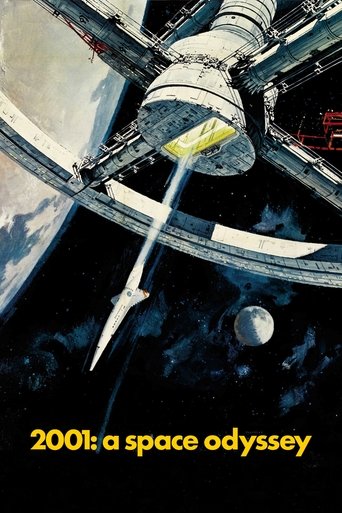
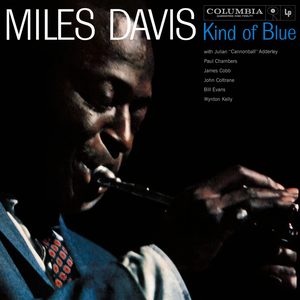


2001: A Space Odyssey
Kind of Blue
Middlemarch
Kyoto
The Legend of Zelda: Ocarina of Time
Gemini 2.5 Pro (I/O Edition)Gemini 2.5 Pro (I/O Edition)

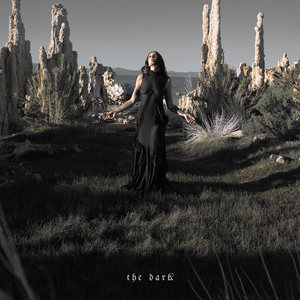


2001
The Dark
The Hitchhiker's Guide to the Galaxy
Kyoto
CHRONO
Price and specs
| Spec | Claude Sonnet 4.6 | Gemini 2.5 Pro (I/O Edition) |
|---|---|---|
| Input price | $3/M tokens | $1.25/M tokens |
| Output price | $15/M tokens | $10/M tokens |
| Context window | 1.0M tokens | — |
| Weights | Closed | Closed |
| Free API (OpenRouter) | No | No |
| Released | Feb 2026 | May 2025 |
| At 10M a month | $30.00 | $12.50 |
Input tokens at list price. No caching, no batch discount.
Where to run it



Gemini 2.5 Pro (I/O Edition)2 hosts
Per million tokens. Prices and uptime via OpenRouter, checked 10 Oct 2026.
Common questions
What is the difference between Claude Sonnet 4.6 and Gemini 2.5 Pro (I/O Edition)?
Claude Sonnet 4.6 is developed by Anthropic while Gemini 2.5 Pro (I/O Edition) is developed by Google AI. You can compare their actual outputs across 40 challenges on Rival to see how they differ in practice.
Which is better, Claude Sonnet 4.6 or Gemini 2.5 Pro (I/O Edition)?
It depends on your use case. Claude Sonnet 4.6 and Gemini 2.5 Pro (I/O Edition) each have strengths in different areas. Rival lets you compare their real outputs side-by-side across 40 challenges so you can judge which fits your needs best.
How much does Claude Sonnet 4.6 cost compared to Gemini 2.5 Pro (I/O Edition)?
Claude Sonnet 4.6 costs $3/M input tokens and Gemini 2.5 Pro (I/O Edition) costs $1.25/M input tokens. Gemini 2.5 Pro (I/O Edition) is $1.75/M cheaper per input. Check their side-by-side outputs on Rival to see if the price difference is justified by quality.
How can I compare Claude Sonnet 4.6 and Gemini 2.5 Pro (I/O Edition) on Rival?
This page shows a side-by-side comparison of Claude Sonnet 4.6 and Gemini 2.5 Pro (I/O Edition) across shared challenges. You can vote on which model produced the better output in a blind duel. Browsing and voting are free. No account is needed to look; signing in only saves your votes and likes.
More comparisons
Against the newest arrivals
- Claude Sonnet 4.6 vs Step 5 PreviewLanded Oct 2026
- Gemini 2.5 Pro (I/O Edition) vs Claude Haiku 5.5Landed Oct 2026
- Claude Sonnet 4.6 vs Ling 3.1 FlashLanded Oct 2026
- Gemini 2.5 Pro (I/O Edition) vs Mistral Large 4Landed Oct 2026
- Claude Sonnet 4.6 vs GPT-6.1 SolLanded Sep 2026
- Gemini 2.5 Pro (I/O Edition) vs Claude Sonnet 5.5Landed Sep 2026
- Claude Sonnet 4.6 vs Solar Mini 4Landed Sep 2026
- Gemini 2.5 Pro (I/O Edition) vs Qwen3.8 Max PrimeLanded Sep 2026


Same lab, same size, long tail
- Claude Sonnet 4.6 vs Claude Opus 4.6Version compare
- Claude Sonnet 4.6 vs Claude Haiku 5.5Version compare
- Gemini 2.5 Pro (I/O Edition) vs Gemini 3.8 FlashSame lab
- Gemini 2.5 Pro (I/O Edition) vs Gemini 3.7 FlashSame lab
- Claude Sonnet 4.6 vs MercuryNew provider
- Gemini 2.5 Pro (I/O Edition) vs Mercury 2New provider
- Gemini 2.5 Pro (I/O Edition) vs Mercury 2.5New provider
- Gemini 2.5 Pro (I/O Edition) vs Mercury 2.5 PreviewNew provider
