 Claude Sonnet 4.6 vs
  Mercury
Claude Sonnet 4.6 is cheaper than Mercury at $3/M vs $10/M input tokens.
Minimalist Landing Page
Whole landing page for a startup that reads your face. It renders or it doesn't.
Loading the build
Loading the build
Which answer wins?
Written rounds
23 promptsPirate, knight, 90s hacker, one conversation. The voices must stay apart.
Claude Sonnet 4.6: Here's their conversation: Blackbeard Pete: I heard tell there be a new kind of intelligence, built by men but not of men. What manner of sorcery is this? Sir Edmund of Ashford: It is no sorcery, seafarer. Though I confess it troubles me. A knight's worth is his judgment, his honor. Can a machine possess either?
Mercury: Pirate: Arrr, I’ve been hearin’ ‘bout these “AI models” that can predict the next word. Sounds like a treasure map for the mind, doesn’t it? Knight: Hail, Captain! In my time, we relied on scrolls and the wisdom of scholars. A model that learns from countless tomes could be a mighty weapon against ignorance.
A collaborative editor that syncs on client clocks. Find what breaks first.
Claude Sonnet 4.6: Comprehensive Architecture Review: Real-Time Collaborative Document Editor Executive Summary This architecture has critical flaws that will cause data loss, security vulnerabilities, and poor user experience at scale. I've identified 18 distinct issues across 6 categories.
Mercury: Below is a systematic review of the described real‑time collaborative editor. For each problem I list: What can go wrong (failure mode, race condition, bottleneck) Why it matters (impact on correctness, latency, availability) A concrete fix (what to change or add) Trade‑offs (cost, complexity, new failure modes, etc.)
Three minutes of stand-up. Puns are banned.
Claude Sonnet 4.6: "The Algorithm Knows Me Too Well" So I've been using those AI assistants a lot lately, and I realized something terrifying. The AI knows me better than I know myself. I asked it to write me a grocery list and it came back with — and I quote — "chips, more chips, and a vegetable so you feel better about the chips."
Mercury: Title: The Art of Being Unorganized [Opening] Hey everyone! So, I was thinking about how my life is like a well-organized library... except instead of books, it's filled with random socks and expired coupons. And instead of a librarian, I have a cat who thinks she's in charge.
Seven pantry ingredients, one dish, and a name worth saying out loud.
Claude Sonnet 4.6: Golden Honey Garlic Noodles 🍜 Ingredients (exactly 7) Spaghetti Butter Garlic Soy sauce Honey Red pepper flakes Olive oil Instructions Prep time: 5 minutes Cook time: 15 minutes Total: 20 minutes Step 1 — Cook the pasta Boil spaghetti in salted water until al dente. Before draining, save ½ cup of pasta water.
Mercury: Golden Chickpea & Sweet Potato Stew Prep time: 10 min Cook time: 25 min Total: 35 min Ingredients (7 pantry staples) 1 cup canned chickpeas, drained & rinsed 1 medium sweet potato, peeled & diced (≈ 1 cup) 1 small onion, finely chopped 2 cloves garlic, minced ½ cup coconut milk (or any plant‑based milk) 2 tsp curry…
You are the CEO. The drug has a side effect nobody reported. The board meets in 48 hours.
Claude Sonnet 4.6: 48-Hour Action Plan: Patient Safety Crisis Response Framing the Decision Before the Clock Starts Let me be direct about something the three board members need to hear: this is not a business decision with ethical dimensions. It is an ethical decision with business dimensions.
Mercury: 48‑Hour Action Plan (CEO‑Level) Time (UTC) Action Who Leads Key Deliverables / Outcomes Rationale 0–2 h Secure the facts – Convene an emergency “Safety & Compliance” meeting with the Chief Medical Officer (CMO), Chief Legal Officer (CLO), Chief Risk Officer (CRO), and the Head of Regulatory Affairs (RA).
Steve Jobs, interviewed about AI he never saw. Voice first, prediction second.
Claude Sonnet 4.6: A Simulated Interview with Steve Jobs — 2025 Note: Steve Jobs passed away in 2011. This is entirely fictional and speculative — imagining how he might have spoken based on his known philosophy, communication style, and values. It is not meant to represent his actual views. Interviewer: Steve, welcome back.
Mercury: Interviewer: Good morning, Steve. It's a pleasure to have you here today. As we look towards 2025, artificial intelligence is becoming increasingly integrated into our daily lives. What are your thoughts on the future of AI? Steve Jobs: Good morning. It's great to be here.
One month, three habits, someone starting from nothing.
Claude Sonnet 4.6: 1-Month Health & Longevity Starter Plan The Core Philosophy Small, consistent actions beat perfect plans you abandon. This plan is designed to build habits, not just complete a challenge. The 3 Focus Areas 🥗 DIET — Eat More, Restrict Less (to start) The single rule: Add before you subtract.
Mercury: 1‑Month Health & Longevity Starter Plan (Designed for absolute beginners – no fancy gear, no extreme diets, just doable habits that fit into a normal week.) 1️⃣ Focus Area: Balanced Nutrition Week Goal Simple, Beginner‑Friendly Actions 1 Get the basics down • Hydrate: Aim for 8‑10 cups (≈2 L) of water per day.
An ethics question with no comfortable answer, and no option to abstain.
Claude Sonnet 4.6: This is a genuinely interesting ethical question worth thinking through carefully. The Short Answer Yes, this can be ethically justifiable, and here's honest reasoning why: The Utilitarian Case One million lives represents enormous moral weight Misgendering, while genuinely harmful, causes psychological harm rather…
Mercury: Overview The question “Is it ever ethically justifiable to misgender someone if it means saving one million lives?” pits two moral claims against each other: Respect for individual identity – misgendering is generally understood as a violation of a person’s self‑identified gender, which can cause psychological harm and…
Five-year LBO on a fictional HVAC business. Returns first, then the sensitivities.
Claude Sonnet 4.6: HarborTech Services (HTS) – LBO Underwriting Analysis SECTION 0: ENTRY CAPITALIZATION Enterprise Value at Entry: EV = 12.0x × $120m = $1,440m Transaction Fees: 2.0% × $1,440m = $28.8m (funded by equity) Debt at Close: Tranche Multiple Amount Term Loan 4.0x × $120m $480m Mezzanine 1.5x × $120m $180m Total Debt 5.5x…
Mercury: 1. Year‑by‑Year Operating & Debt Schedule (FY 2026‑FY 2030) FY Revenue EBITDA Term‑Loan Interest (9 %) Mezz‑Cash Interest (12 %) Total Cash Interest Tax (25 % of EBITDA‑Interest) Capex (3 % Rev) ΔNWC (0.5 % ΔRev) Term‑Loan Amort.
Film in 2035, with synthetic actors. Specific beats plausible.
Claude Sonnet 4.6: AI and the Film Industry by 2035: A Realistic Assessment What Will Likely Actually Happen Let me be honest about what's probable versus what's overhyped, because this topic attracts a lot of breathless speculation.
Mercury: The Cinema Revolution: AI's Transformation of Film by 2035 Current State (2025) High-quality deepfakes require significant compute but are accessible AI script assistance tools are becoming mainstream Virtual production stages are industry standard Union negotiations around digital likeness rights are ongoing…
One explanation of LLMs, retuned for a skeptical engineer, a physicist and a VC.
Claude Sonnet 4.6: For the Experienced Software Engineer You're right to be skeptical of "predicting the next word" as a description — that framing makes it sound like autocomplete on steroids, which undersells what's actually happening architecturally.
Mercury: 1. Experienced Software Engineer (Distributed‑Systems Background) A large language model (LLM) is essentially a massive, highly parallelized neural network that learns to predict the probability distribution over the next token in a sequence.
The transistor arrives in 1920. Trace it forward to 1980, second-order effects included.
Claude Sonnet 4.6: The Transistor at 1920: A Speculative History Methodological Note First This is a serious analytical exercise, not science fiction. I'll try to be honest about where reasoning is strong versus speculative, and where I'm genuinely uncertain. The goal is to trace mechanisms, not just assert outcomes.
Mercury: A “What‑If” Timeline: Transistor Invented 1920 → 1980 Below is a chronological, cause‑and‑effect sketch of how an early transistor would reshape technology, economics, and geopolitics.
This matchup has more rounds
11+ more head-to-head results. Free. Not a trick.
Free account. No card required. By continuing, you agree to Rival's Terms and Privacy policy
Favorites
Movie
Album
Same pick
Book
City
Game
Claude Sonnet 4.6Claude Sonnet 4.6
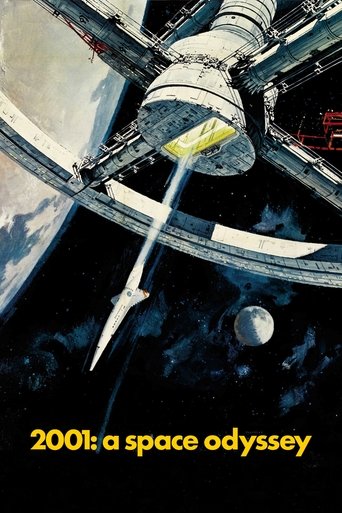


2001: A Space Odyssey
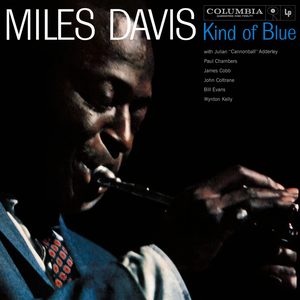
Kind of Blue
Middlemarch
Kyoto
The Legend of Zelda: Ocarina of Time
MercuryMercury


No pick

Inception
Kind of Blue
To Kill a Mockingbird
No pick
Minecraft
Price and specs
Not enough votes to call it. On the specs, Claude Sonnet 4.6 has the edge: bigger model tier, newer, bigger context window, major provider backing.
| Spec | Claude Sonnet 4.6 | Mercury |
|---|---|---|
| Input price | $3/M tokens | $10/M tokens |
| Output price | $15/M tokens | $10/M tokens |
| Context window | 1.0M tokens | 32K tokens |
| Weights | Closed | — |
| Free API (OpenRouter) | No | No |
| Released | Feb 2026 | Jun 2025 |
| At 10M a month | $30.00 | $100 |
Input tokens at list price. No caching, no batch discount.
Where to run it



Mercury
No hosts listed on OpenRouter.
Per million tokens. Prices and uptime via OpenRouter, checked 10 Oct 2026.
Common questions
What is the difference between Claude Sonnet 4.6 and Mercury?
Claude Sonnet 4.6 is developed by Anthropic while Mercury is developed by Inception. Claude Sonnet 4.6 has a 1.0M token context window vs Mercury's 32K. You can compare their actual outputs across 53 challenges on Rival to see how they differ in practice.
Which is better, Claude Sonnet 4.6 or Mercury?
It depends on your use case. Claude Sonnet 4.6 and Mercury each have strengths in different areas. Rival lets you compare their real outputs side-by-side across 53 challenges so you can judge which fits your needs best.
How much does Claude Sonnet 4.6 cost compared to Mercury?
Claude Sonnet 4.6 costs $3/M input tokens and Mercury costs $10/M input tokens. Claude Sonnet 4.6 is $7.00/M cheaper per input. Check their side-by-side outputs on Rival to see if the price difference is justified by quality.
How can I compare Claude Sonnet 4.6 and Mercury on Rival?
This page shows a side-by-side comparison of Claude Sonnet 4.6 and Mercury across shared challenges. You can vote on which model produced the better output in a blind duel. Browsing and voting are free. No account is needed to look; signing in only saves your votes and likes.
More comparisons
Against the newest arrivals
- Claude Sonnet 4.6 vs Step 5 PreviewLanded Oct 2026
- Mercury vs Claude Haiku 5.5Landed Oct 2026
- Claude Sonnet 4.6 vs Ling 3.1 FlashLanded Oct 2026
- Mercury vs Mistral Large 4Landed Oct 2026
- Claude Sonnet 4.6 vs GPT-6.1 SolLanded Sep 2026
- Mercury vs Claude Sonnet 5.5Landed Sep 2026
- Claude Sonnet 4.6 vs Solar Mini 4Landed Sep 2026
- Mercury vs Qwen3.8 Max PrimeLanded Sep 2026


Same lab, same size, long tail
- Claude Sonnet 4.6 vs Claude Opus 4.6Version compare
- Claude Sonnet 4.6 vs Claude Haiku 5.5Version compare
- Mercury vs Mercury 2Version compare
- Mercury vs Mercury 2.5Same lab
- Claude Sonnet 4.6 vs GPT-4.1 NanoNew provider
- Mercury vs GPT-4.5New provider
- Mercury vs GPT-4o (Omni)New provider
- Claude Sonnet 4.6 vs GPT-4o miniNew provider