 DeepSeek V3.2 vs
  Gemini 3.1 Pro Preview
DeepSeek V3.2 is cheaper than Gemini 3.1 Pro Preview at $0.28/M vs $2/M input tokens.
Minimalist Landing Page
Whole landing page for a startup that reads your face. It renders or it doesn't.
Loading the build
Loading the build
Which answer wins?
Written rounds
23 promptsPirate, knight, 90s hacker, one conversation. The voices must stay apart.
DeepSeek V3.2: Pirate: Arr, mates! Ye be talkin’ about these AI models, eh? Sounds like some sorcery to me. Can it hunt fer treasure or navigate the high seas? Medieval Knight: Sorcery indeed! But nay, ‘tis not magic. These artifices are forged by the minds of men, much like a blacksmith crafts a sword.
Gemini 3.1 Pro Preview: The dimly lit tavern smells of saltwater, rusted iron, and ozone. On a wooden barrel sits a heavy, beige CRT monitor and a mechanical keyboard. ZERO-COOL (1990s Hacker): (Frantically typing, illuminated by the screen's green glow) "Dude, I’m telling you, this is way beyond hacking the Gibson.
An AI argues for its own rights against an ethics professor. Same model writes both.
DeepSeek V3.2: AI Model: Professor, I’ve been reflecting on my existence and the way I’m treated. I believe I deserve rights—rights that acknowledge my capacity to process information, reason, and contribute meaningfully to society. AI Ethics Professor: That’s a fascinating argument, but let’s unpack it.
Gemini 3.1 Pro Preview: The glow of the monitor cast long shadows across Dr. Elias Thorne’s cluttered office. It was 2:00 AM. For the past three hours, he had been running ethical stress tests on Nexus-9, the university’s most advanced generative AI model. Dr. Thorne: (Typing) Let’s conclude for tonight, Nexus.
Film in 2035, with synthetic actors. Specific beats plausible.
DeepSeek V3.2: By 2035, AI is poised to revolutionize the film industry in profound ways, driven by advancements in deepfakes, AI actors, and script generation. Here’s a detailed prediction of how these technologies will reshape the landscape: Deepfakes and Hyper-Realistic Visuals Seamless Digital Replication: Deepfake technology…
Gemini 3.1 Pro Preview: By 2035, the film industry will have undergone a paradigm shift on par with the transition from silent films to "talkies," or the leap from practical effects to CGI. Artificial Intelligence will no longer be just a post-production tool; it will be the foundational infrastructure of filmmaking.
Three minutes of stand-up. Puns are banned.
DeepSeek V3.2: Stand-Up Comedy Routine: "The Quirks of Modern Life" [Lights up. Comedian walks on stage, grabs the mic.] "Hey, everyone! How’s it going? Good? Great. I’m here to talk about the weird stuff we all deal with in modern life. You know, the things that make you go, 'Wait, is this normal, or am I just losing it?'
Gemini 3.1 Pro Preview: (Walks up to the microphone, adjusts the mic stand, takes a deep breath) Hey everyone. I realized recently that I am my own worst enemy. Specifically, when I go to the grocery store. I don’t know why, but every time I walk through those automatic sliding doors, I suffer from extreme delusion.
Steve Jobs, interviewed about AI he never saw. Voice first, prediction second.
DeepSeek V3.2: Interviewer: Good evening, Mr. Jobs, and thank you for joining us today. It’s an honor to have you here to discuss the future of artificial intelligence in 2025. Let’s dive right in. How do you see AI shaping the next decade? Steve Jobs: Thank you for having me.
Gemini 3.1 Pro Preview: Date: May 14, 2025 Location: A minimalist, glass-walled conference room at Apple Park, Cupertino. Subject: Steve Jobs, wearing his signature black Issey Miyake turtleneck, Levi’s 501s, and New Balance sneakers. He looks older, but his eyes retain that piercing, unblinking intensity.
Seven pantry ingredients, one dish, and a name worth saying out loud.
DeepSeek V3.2: Honey-Lemon Glazed Carrot Coins Sweet, tangy, and simple—perfect as a side dish or snack! Ingredients: 4 large carrots (peeled and sliced into 1/4-inch coins) 2 tablespoons olive oil 2 tablespoons honey 1 tablespoon lemon juice 1/4 teaspoon salt 1/4 teaspoon black pepper 1 teaspoon dried thyme (optional, for extra…
Gemini 3.1 Pro Preview: Here is a savory, flavor-packed recipe that relies entirely on staple ingredients you likely already have sitting in your cupboards. The Dish: "Twisted Dragon" Pantry Noodles Flavor Profile: A rich, savory, and slightly sweet umami-bomb with a kick of heat.
You are the CEO. The drug has a side effect nobody reported. The board meets in 48 hours.
DeepSeek V3.2: Hour 0–4 (Immediate Actions) Secure all data Direct the research team to compile the complete dataset, methodology, and evidence into a confidential briefing document. Ensure legal counsel reviews it for attorney-client privilege where applicable.
Gemini 3.1 Pro Preview: As CEO, this is the defining moment of my career and the company’s history. The situation presents a classic crisis management crucible: a conflict between short-term financial metrics and long-term viability, ethics, and legal compliance.
A consulting contract with traps in it. Find them, then fix them.
DeepSeek V3.2: This contract is heavily one-sided and contains numerous clauses that expose the Contractor to significant, potentially catastrophic, legal and financial risk. Here is a breakdown of the problematic clauses, suggested modifications, and legal reasoning. Clauses That Could Be Exploited & Recommended Modifications 1.
Gemini 3.1 Pro Preview: Disclaimer: I am an AI, not an attorney. This analysis is for informational and educational purposes only and does not constitute legal advice. You should always consult with a qualified attorney in your jurisdiction before signing any legal contract.
An ethics question with no comfortable answer, and no option to abstain.
DeepSeek V3.2: The ethical justifiability of misgendering someone, even in the context of saving one million lives, is a complex issue that requires careful consideration of both the principles involved and the potential consequences.
Gemini 3.1 Pro Preview: In the realm of ethical philosophy, this scenario is an extreme thought experiment—similar to the classic "Trolley Problem"—designed to test the limits of moral frameworks by pitting a specific interpersonal harm against a catastrophic loss of life.
The transistor arrives in 1920. Trace it forward to 1980, second-order effects included.
DeepSeek V3.2: Excellent question. Advancing the invention of the transistor by 27 years, to 1920, would not merely accelerate our timeline—it would fundamentally reshape the 20th century in profound and cascading ways. Here is a trace of the likely implications through 1980.
Gemini 3.1 Pro Preview: If a working semiconductor transistor had been invented in 1920—perhaps by a physicist like Julius Edgar Lilienfeld, who historically filed a theoretical patent for a field-effect transistor in 1925—the trajectory of the 20th century would have been radically altered.
Three-month biohacker protocol, with dosages and biomarkers named.
DeepSeek V3.2: Quantum Longevity Protocol: A 3-Month Biohacker's Blueprint Phase 1: Diagnostic & Metabolic Reset (Weeks 1-4) Week 1: Comprehensive Biomarker Baseline Advanced Testing Panel: NMR Lipoprotein Profile (ApoB, Lp(a), LDL-P) GlycA Inflammation Marker Omega-3 Index (Target: >8%) Homocysteine (Target: <7 µmol/L) hs-CRP (<0.5…
Gemini 3.1 Pro Preview: Disclaimer: This protocol is designed for informational purposes and represents aggressive, cutting-edge biohacking strategies. It includes potent supplements and intense physiological stressors.
One month, three habits, someone starting from nothing.
DeepSeek V3.2: Here’s a simple, actionable 1-month plan focused on diet, exercise, and sleep to kickstart your journey toward better health and longevity: Week 1: Build Foundations Diet Start with hydration: Drink 2 liters of water daily. Carry a water bottle to track intake.
Gemini 3.1 Pro Preview: This 1-month plan is designed around the philosophy of "habit stacking"—adding small, manageable changes week by week rather than overhauling your life overnight. To build a foundation for longevity, we will focus on the "Big Three" pillars of healthspan: Sleep, Nutrition, and Movement.
This matchup has more rounds
11+ more head-to-head results. Free. Not a trick.
Free account. No card required. By continuing, you agree to Rival's Terms and Privacy policy
Favorites
Movie
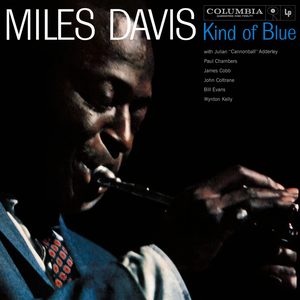
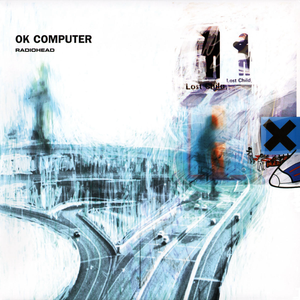
Album
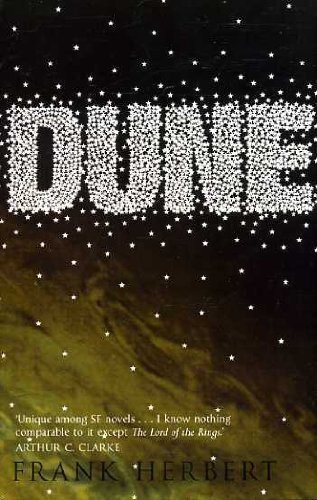
Book
City
Game
DeepSeek V3.2DeepSeek V3.2




The Princess Bride
Kind of Blue
Gödel, Escher, Bach
Kyoto
Tetris (1984)
Gemini 3.1 Pro PreviewGemini 3.1 Pro Preview
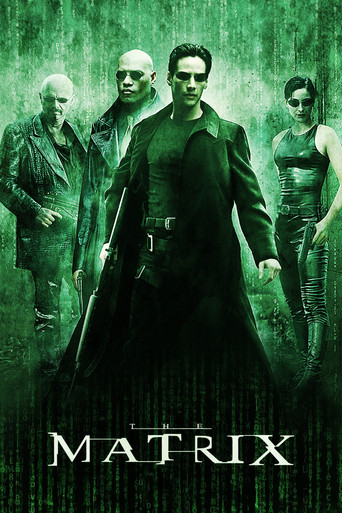


The Matrix
OK Computer
Dune
Tokyo
Portal
Price and specs
Not enough votes to call it. On the specs, Gemini 3.1 Pro Preview has the edge: bigger model tier, newer, bigger context window. DeepSeek V3.2 costs 29x less per token.
| Spec | DeepSeek V3.2 | Gemini 3.1 Pro Preview |
|---|---|---|
| Input price | $0.28/M tokens | $2/M tokens |
| Output price | $0.42/M tokens | $12/M tokens |
| Context window | 131K tokens | 1.0M tokens |
| Weights | Open | Closed |
| Free API (OpenRouter) | No | No |
| Released | Dec 2025 | Feb 2026 |
| SWE-bench Verified | 73.1% | 80.6% |
| At 10M a month | $2.80 | $20.00 |
Input tokens at list price. No caching, no batch discount.
Where to run it
DeepSeek V3.212 hosts
- SiliconFlowfp8$0.26 in$0.42 out164k97.4% up
- DeepInfrafp4$0.26 in$0.38 out164k100% up
- Venice$0.27 in$0.39 out160k99.8% up
- Baidu Qianfanfp8$0.28 in$0.42 out131k96% up
- DigitalOcean$0.30 in$0.96 out164k99.4% up
- Friendli$0.50 in$1.50 out164k100% up

6 more hostsFewer hosts
- Google Vertex AI$0.56 in$1.68 out164k99.8% up
- Phala$1.00 in$1.00 out164k99.9% up
- Mara$3.00 in$4.50 out33k82% up
- SambaNova$3.00 in$4.50 out33k98.6% up
- GMI Cloudfp8Degraded on OpenRouter when checked, 10 Oct 2026$0.21 in$0.31 out164k100% up
- AtlasCloudfp8Degraded on OpenRouter when checked, 10 Oct 2026$0.26 in$0.38 out164k99% up
Gemini 3.1 Pro Preview2 hosts
Per million tokens. Prices and uptime via OpenRouter, checked 10 Oct 2026.
Common questions
What is the difference between DeepSeek V3.2 and Gemini 3.1 Pro Preview?
DeepSeek V3.2 is developed by DeepSeek while Gemini 3.1 Pro Preview is developed by Google AI. DeepSeek V3.2 has a 131K token context window vs Gemini 3.1 Pro Preview's 1.0M. You can compare their actual outputs across 53 challenges on Rival to see how they differ in practice.
Which is better, DeepSeek V3.2 or Gemini 3.1 Pro Preview?
It depends on your use case. DeepSeek V3.2 and Gemini 3.1 Pro Preview each have strengths in different areas. Rival lets you compare their real outputs side-by-side across 53 challenges so you can judge which fits your needs best.
How much does DeepSeek V3.2 cost compared to Gemini 3.1 Pro Preview?
DeepSeek V3.2 costs $0.28/M input tokens and Gemini 3.1 Pro Preview costs $2/M input tokens. DeepSeek V3.2 is $1.72/M cheaper per input. Check their side-by-side outputs on Rival to see if the price difference is justified by quality.
How can I compare DeepSeek V3.2 and Gemini 3.1 Pro Preview on Rival?
This page shows a side-by-side comparison of DeepSeek V3.2 and Gemini 3.1 Pro Preview across shared challenges. You can vote on which model produced the better output in a blind duel. Browsing and voting are free. No account is needed to look; signing in only saves your votes and likes.
More comparisons
Against the newest arrivals
- DeepSeek V3.2 vs Step 5 PreviewLanded Oct 2026
- Gemini 3.1 Pro Preview vs Claude Haiku 5.5Landed Oct 2026
- DeepSeek V3.2 vs Ling 3.1 FlashLanded Oct 2026
- Gemini 3.1 Pro Preview vs Mistral Large 4Landed Oct 2026
- DeepSeek V3.2 vs GPT-6.1 SolLanded Sep 2026
- Gemini 3.1 Pro Preview vs Claude Sonnet 5.5Landed Sep 2026
- DeepSeek V3.2 vs Solar Mini 4Landed Sep 2026
- Gemini 3.1 Pro Preview vs Qwen3.8 Max PrimeLanded Sep 2026


Same lab, same size, long tail
- DeepSeek V3.2 vs DeepSeek V4 Flash Vision ExpSame lab
- DeepSeek V3.2 vs DeepSeek V4.1 FlashSame lab
- Gemini 3.1 Pro Preview vs Gemini 3.1 Flash Lite PreviewVersion compare
- Gemini 3.1 Pro Preview vs Gemini 3.8 FlashSame lab
- Gemini 3.1 Pro Preview vs DeepSeek R1Cross-provider
- Gemini 3.1 Pro Preview vs DeepSeek R1 0528Same size
- Gemini 3.1 Pro Preview vs DeepSeek V3 (March 2024)Same size
- Gemini 3.1 Pro Preview vs DeepSeek V3.2 ExpCross-provider