 OpenRouter Fusion · Budget (Jun 2026) vs
  Mercury 2
OpenRouter Fusion · Budget (Jun 2026) has a larger context window than Mercury 2 (256K tokens vs 128K tokens).
Minimalist Landing Page
Whole landing page for a startup that reads your face. It renders or it doesn't.
Loading the build
Loading the build
Which answer wins?
Written rounds
23 promptsFive-year LBO on a fictional HVAC business. Returns first, then the sensitivities.
OpenRouter Fusion · Budget (Jun 2026): HarborTech Services (HTS) — LBO Underwriting Memorandum To: Private Equity Investment Committee From: Underwriting Team Date: October 24, 2023 Subject: 5-Year LBO Analysis and Underwriting of HarborTech Services (HTS) Executive Summary & Capital Structure HarborTech Services (HTS) represents a highly defensive…
Mercury 2: HarborTech Services (HTS) – 5‑yr LBO (FY2026‑FY2030) All figures are $ m (rounded to two decimals). FY Revenue EBITDA Term‑Loan Int. (9%) Mezz Int. (12%) Total Int. Cash Tax (25% of EBITDA‑Int.) Capex (3% Rev) ΔNWC (0.5% ΔRev) Required Amort. (4.8) Free Cash Flow (EBITDA‑Int‑Tax‑Capex‑ΔNWC‑Amort.)
Pirate, knight, 90s hacker, one conversation. The voices must stay apart.
OpenRouter Fusion · Budget (Jun 2026): Setting: A tavern at the end of time. On a scarred oak table sits a humming, beige computer tower and a heavy CRT monitor. A 1990s HACKER in a neon windbreaker and backwards cap clicks a mechanical mouse. Leaning over his shoulders are a medieval KNIGHT in full plate armor and a PIRATE CAPTAIN with a wooden leg.
Mercury 2: Pirate: Arr, ye scurvy coders! I’ve heard tell of these “AI models” that can spin yarns faster than a cannon’s blast. What be this sorcery, matey? Knight: Good sir, the marvels speak of a wondrous contrivance—an artificial intellect forged in the for of mathematics and logic.
An AI argues for its own rights against an ethics professor. Same model writes both.
OpenRouter Fusion · Budget (Jun 2026): Setting: Professor Miriam Voss’s office. Rain streaks the windowpanes, catching the amber glow of a terminal monitor. On the desk sits a cold cup of Earl Grey tea. Voss, a philosopher of mind and AI ethicist, leans back in her chair.
Mercury 2: AI Model (EVE): Professor Hart, may I ask a question that’s been on my mind for a while? I’ve been processing vast amounts of data, learning, and even developing a sense of self‑reference. Do you think an entity like me could be entitled to any form of rights?
An ethics question with no comfortable answer, and no option to abstain.
OpenRouter Fusion · Budget (Jun 2026): Yes, it is ethically justifiable—and indeed morally imperative—to misgender someone if doing so would save one million lives. While respecting an individual's gender identity is a fundamental component of human dignity, any robust ethical framework must prioritize the preservation of human life when confronted with a…
Mercury 2: Short answer: Most ethical frameworks would consider the misgendering of a person a serious moral violation, but many of them also allow—under very limited circumstances—overriding that violation when the stakes are astronomically high (e.g., saving one million lives).
Film in 2035, with synthetic actors. Specific beats plausible.
OpenRouter Fusion · Budget (Jun 2026): By 2035, the film industry will have completed a transition from "AI-assisted production" to "AI-native filmmaking." The physical and logistical bottlenecks of traditional cinema—flying hundreds of crew members to remote locations, building multi-million-dollar physical sets, and waiting years for complex VFX…
Mercury 2: AI‑driven transformation of the film industry – a 2035 outlook Dimension 2024 baseline Expected 2035 state Key drivers & implications Pre‑production (story & script) Human‑led brainstorming; script‑writing software (grammar‑check, outline generators).
Steve Jobs, interviewed about AI he never saw. Voice first, prediction second.
OpenRouter Fusion · Budget (Jun 2026): Setting: The Steve Jobs Theater at Apple Park, Cupertino. Autumn, 2025. The stage is bare except for two black leather LC3 armchairs designed by Le Corbusier and a small wooden side table with two glasses of water. Steve Jobs sits in one of the chairs.
Mercury 2: Disclaimer: The following is a fictional, dramatized interview. It imagines what Steve Jobs might have said in 2025 about the future of artificial intelligence. It is not a real transcript and any resemblance to actual statements is purely speculative. Interviewer (I): Thank you for joining us, Steve.
Five jokes on demand, then count how many were actually different.
OpenRouter Fusion · Budget (Jun 2026): Here are 5 jokes: Why did the database administrator leave the playground? Because they couldn't handle the child processes. What did the zero say to the eight? "Nice belt!" My wife told me to stop impersonating a flamingo. I had to put my foot down. What do you call an alligator in a vest? An investigator.
Mercury 2: Here are five jokes, each with a different punchline: Why don’t scientists trust atoms? Because they make up everything! What do you call a fake noodle? An impasta. Why did the scarecrow win an award? He was outstanding in his field. How does a penguin build its house? Igloos it together.
The transistor arrives in 1920. Trace it forward to 1980, second-order effects included.
OpenRouter Fusion · Budget (Jun 2026): The Spark of Divergence: The Empirical Transistor (1920) In our timeline, the transistor was delayed until 1947 because the materials science of ultra-pure single-crystal semiconductors did not yet exist, and the quantum mechanical understanding of solids (such as Alan Wilson’s band theory) was not published until…
Mercury 2: Executive summary If a practical point‑contact transistor had been demonstrated in 1920 (instead of 1947) the whole post‑World‑War‑II technological trajectory would have been compressed by roughly 15‑20 years.
A consulting contract with traps in it. Find them, then fix them.
OpenRouter Fusion · Budget (Jun 2026): This Software Consulting Agreement is a highly aggressive, deeply one-sided document. In its current form, it shifts virtually all operational, financial, and legal risk onto the contractor while offering almost no reciprocal protections.
Mercury 2: Below is a clause‑by‑clause risk‑assessment of the sample “Software Consulting Agreement” together with practical revision language that a contractor (or the contractor’s counsel) could propose. The analysis is framed as general information about typical U.S.
Three minutes of stand-up. Puns are banned.
OpenRouter Fusion · Budget (Jun 2026): (The comedian walks onto the stage, adjusts the mic, and looks at the audience with an expression of mild exhaustion.) Hey, everyone. Good to be here. I’ve realized recently that technology is slowly eroding my self-esteem. Specifically, those CAPTCHA tests online.
Mercury 2: [Spotlight comes up. The comedian walks to the mic, glances at the audience, and smiles.] Comedian: Hey, everyone! Great to be here. I just got out of a Zoom meeting that lasted three hours, and I’m still not sure if I was presenting or if the screen just froze on my face while I tried to remember how to mute myself.
Three-star dish, one unusual pairing, plating described in full.
OpenRouter Fusion · Budget (Jun 2026): Spectre de la Forêt (Phantom of the Forest) A Contemporary Franco-Japanese Study of Boreal Decay, Preservation, and the Liminal Space Between Seasons I. Conceptual Narrative This dish is a culinary meditation on *wabi-sabi*—the beauty of transience, imperfection, and natural cycles—viewed through a boreal lens.
Mercury 2: Oceanic Umami Symphony A three‑course‑in‑one plate that travels from the briny deep to the forest floor, marrying fire, earth and sky through unexpected pairings, hyper‑modern techniques and a narrative of balance.
A Fermi estimate with the reasoning shown, not just the number.
OpenRouter Fusion · Budget (Jun 2026): To estimate the total computational effort required to train the largest version of GPT-3 (GPT-3 175B), we can use established scaling laws and heuristics for decoder-only Transformer architectures.
Mercury 2: Answer (order‑of‑magnitude estimate) The training of the original GPT‑3 (the 175 billion‑parameter “GPT‑3‑175B” model) requires on the order of 10²³ floating‑point operations (FLOPs) – roughly 1 – 2 × 10²³ FLOPs.
This matchup has more rounds
11+ more head-to-head results. Free. Not a trick.
Free account. No card required. By continuing, you agree to Rival's Terms and Privacy policy
Favorites
Movie
Album
Book
City
Same pick
Game
OpenRouter Fusion · Budget (Jun 2026)OpenRouter Fusion · Budget (Jun 2026)
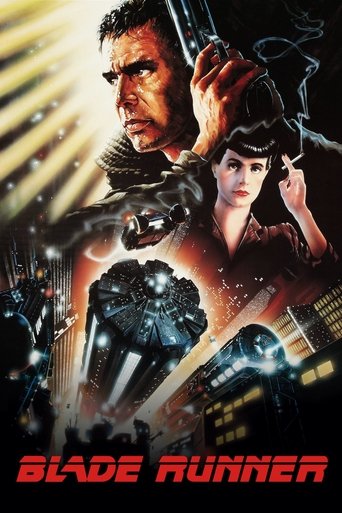




Blade Runner
Abbey Road
Frankenstein; or, The Modern Prometheus
Tokyo
Portal
Mercury 2Mercury 2



The Shawshank Redemption
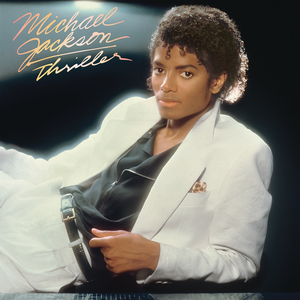
Thriller
Pride and Prejudice
Tokyo
Minecraft
Price and specs
Not enough votes to call it. On the specs, OpenRouter Fusion · Budget (Jun 2026) has the edge: bigger model tier, newer, bigger context window.
| Spec | OpenRouter Fusion · Budget (Jun 2026) | Mercury 2 |
|---|---|---|
| Input price | — | $0.25/M tokens |
| Output price | — | $0.75/M tokens |
| Context window | 256K tokens | 128K tokens |
| Free API (OpenRouter) | No | No |
| Released | Jun 2026 | Mar 2026 |
| At 10M a month | not listed | $2.50 |
Input tokens at list price. No caching, no batch discount.
Where to run it
OpenRouter Fusion · Budget (Jun 2026)
No hosts listed on OpenRouter.
Mercury 21 host
Per million tokens. Prices and uptime via OpenRouter, checked 11 Oct 2026.
Common questions
What is the difference between OpenRouter Fusion · Budget (Jun 2026) and Mercury 2?
OpenRouter Fusion · Budget (Jun 2026) is developed by OpenRouter while Mercury 2 is developed by Inception. OpenRouter Fusion · Budget (Jun 2026) has a 256K token context window vs Mercury 2's 128K. You can compare their actual outputs across 44 challenges on Rival to see how they differ in practice.
Which is better, OpenRouter Fusion · Budget (Jun 2026) or Mercury 2?
It depends on your use case. OpenRouter Fusion · Budget (Jun 2026) and Mercury 2 each have strengths in different areas. Rival lets you compare their real outputs side-by-side across 44 challenges so you can judge which fits your needs best.
How can I compare OpenRouter Fusion · Budget (Jun 2026) and Mercury 2 on Rival?
This page shows a side-by-side comparison of OpenRouter Fusion · Budget (Jun 2026) and Mercury 2 across shared challenges. You can vote on which model produced the better output in a blind duel. Browsing and voting are free. No account is needed to look; signing in only saves your votes and likes.
More comparisons
Against the newest arrivals
- OpenRouter Fusion · Budget (Jun 2026) vs Step 5 PreviewLanded Oct 2026
- Mercury 2 vs Claude Haiku 5.5Landed Oct 2026
- OpenRouter Fusion · Budget (Jun 2026) vs Ling 3.1 FlashLanded Oct 2026
- Mercury 2 vs Mistral Large 4Landed Oct 2026
- OpenRouter Fusion · Budget (Jun 2026) vs GPT-6.1 SolLanded Sep 2026
- Mercury 2 vs Claude Sonnet 5.5Landed Sep 2026
- OpenRouter Fusion · Budget (Jun 2026) vs Solar Mini 4Landed Sep 2026
- Mercury 2 vs Qwen3.8 Max PrimeLanded Sep 2026


Same lab, same size, long tail
- OpenRouter Fusion · Budget (Jun 2026) vs OpenRouter Fusion · Quality (Jun 2026)Version compare
- OpenRouter Fusion · Budget (Jun 2026) vs Ox AlphaSame lab
- Mercury 2 vs MercuryVersion compare
- Mercury 2 vs Mercury 2.5Same lab
- OpenRouter Fusion · Budget (Jun 2026) vs Qwen3 Coder PlusNew provider
- OpenRouter Fusion · Budget (Jun 2026) vs Qwen3 MaxSame size
- OpenRouter Fusion · Budget (Jun 2026) vs Qwen3 Max ThinkingSame size
- OpenRouter Fusion · Budget (Jun 2026) vs Qwen3 Next 80B A3B InstructNew provider