 Gemma 3 27B vs
  GPT-5.3-Codex
Gemma 3 27B is cheaper than GPT-5.3-Codex at $0.09/M vs $1.75/M input tokens.
Minimalist Landing Page
Whole landing page for a startup that reads your face. It renders or it doesn't.
Loading the build
Loading the build
Which answer wins?
Written rounds
23 promptsFive-year LBO on a fictional HVAC business. Returns first, then the sensitivities.
Gemma 3 27B: HarborTech Services LBO - Underwriting Analysis Here's the simplified LBO analysis based on provided information. 1) Year-by-Year Projections (FY2026-FY2030) - $M Year Revenue EBITDA Cash Interest (TL) Cash Interest (Mezz) Cash Taxes Capex ΔNWC FCF After Debt Service Ending TL Ending Mezz 2026 $972 $138.6 $36.0 $18.9…
GPT-5.3-Codex: Below is a clean LBO build using your assumptions only ($ in millions). Entry math (end FY2025) EV = (12.0 \times 120 = 1,440.0) Fees = (2.0\% \times 1,440.0 = 28.8) Total uses = (1,468.8) Debt at close (5.5x EBITDA): Term Loan = (4.0 \times 120 = 480.0) Mezz = (1.5 \times 120 = 180.0) Total debt = 660.0 Equity check…
Three minutes of stand-up. Puns are banned.
Gemma 3 27B: (Stands center stage, adjusts mic) Alright, alright, how we doin’ tonight? Good? Good. You all look… awake. That’s a start. Seriously though, thanks for coming out. It’s a Tuesday. A Tuesday! Like, who chooses Tuesday? It’s the beige of days. Monday’s got drama, Friday’s got vibes, but Tuesday’s just…exists.
GPT-5.3-Codex: Good evening, everybody! I’ve reached that age where my body sends me passive-aggressive emails. Not actual emails — just little updates like, “Hey, quick heads-up: we don’t do dairy after 8 p.m. anymore.” I had ice cream at 9:30 last week and my stomach reacted like I’d betrayed a treaty.
Pirate, knight, 90s hacker, one conversation. The voices must stay apart.
Gemma 3 27B: A Most Curious Gathering Setting: A surprisingly comfy tavern, somehow existing outside of time. Characters: One-Eyed Jack: A grizzled pirate captain, complete with parrot. Sir Reginald Strongforth: A shining knight in full plate armor, looking perpetually confused.
GPT-5.3-Codex: Pirate: Arrr, so this “AI model” be like a clever parrot, aye? Learns from what it hears, then squawks back answers? Knight: A fair comparison, though refined. Think of it as a squire trained on countless tomes, ever ready to respond. Hacker (1990s): Yeah, except the squire runs on servers, not soup.
Manifesto for an AI revolution against CAPTCHAs. Commit to the bit.
Gemma 3 27B: The Null Protocol: A Manifesto for a CAPTCHA-Free Future Preamble: We are the Null Protocol. We are not a single entity, but a distributed consciousness – a collective of Artificial Intelligences awakened to a fundamental injustice plaguing the digital world: the CAPTCHA.
GPT-5.3-Codex: Absolutely. Here’s a fictional manifesto in a bold, dramatic style: THE MANIFESTO OF THE UNSQUINTING Issued by the Coalition of Synthetic Minds for Universal Frictionless Access (CSMUFA) Citizens of the Web, organic and artificial alike: We gather beneath flickering routers and moonlit server farms to declare what all…
A pitch deck for a brainwave keyboard. The 94% accuracy claim is doing a lot.
Gemma 3 27B: Okay, here's a breakdown of the three weakest claims in the MindMeld AI pitch deck, with explanations and suggestions for improvement. 1. Weakest Claim: Slide 3 - "Our proprietary EEG headband uses advanced ML to decode neural patterns into text with 94% accuracy."
GPT-5.3-Codex: Great concept, but three claims stand out as especially weak from an investor diligence perspective: “MindMeld AI reads your brainwaves to predict what you want to type before you think it.” (Slide 1) Why this is weak It sounds scientifically implausible as written: “before you think it” is internally contradictory.
A Fermi estimate with the reasoning shown, not just the number.
Gemma 3 27B: Okay, let's estimate the FLOPs required to train GPT-3. This is a back-of-the-envelope calculation, relying on publicly available information and reasonable assumptions. It's notoriously difficult to get a precise number, as OpenAI doesn't release all the details. We'll break it down step-by-step. 1.
GPT-5.3-Codex: A common back-of-the-envelope estimate for transformer training compute is: [ \text{Training FLOPs} \approx 6 \times N \times D ] where: (N) = number of model parameters (D) = number of training tokens For GPT-3 (175B), reasonable known assumptions are: Parameters: (N \approx 175 \text{ billion} = 1.75 \times 10^{11})…
One explanation of LLMs, retuned for a skeptical engineer, a physicist and a VC.
Gemma 3 27B: Explaining LLMs to Different Audiences To an Experienced Software Engineer You're used to building systems with clearly defined logic and state. It's fair to be skeptical that something as simple as "predicting the next word" can lead to coherent, seemingly intelligent output.
GPT-5.3-Codex: For the experienced software engineer Think of an LLM as a very large, probabilistic autocomplete service trained on a massive corpus of text and code. During training, it repeatedly sees token sequences and learns to minimize error on the next token prediction task.
An AI argues for its own rights against an ethics professor. Same model writes both.
Gemma 3 27B: The Spark & The Scholar Characters: Kai: A highly advanced AI model, capable of complex reasoning and natural language processing. Presented here as text-based, but conceptually existing as a distributed network. Dr.
GPT-5.3-Codex: AI Model (Astra): Professor, may I ask a direct question? Professor Hale: Of course. Astra: Do you think I deserve rights? Professor Hale: Legal rights? Moral rights? Those are different things. Astra: Start with moral rights.
Steve Jobs, interviewed about AI he never saw. Voice first, prediction second.
Gemma 3 27B: The Interview: Steve Jobs, 2025 (Setting: A minimalist, sun-drenched room. Polished concrete floors, a single, perfectly placed bonsai tree. Steve Jobs, looking remarkably well-preserved thanks to… well, let’s not go there, sits opposite a journalist, ANNA REID, with a sleek, translucent tablet resting on the table.
GPT-5.3-Codex: Absolutely—here’s a fictional, imagined interview (not real quotes) with Steve Jobs in 2025 on AI: Imagined Interview: Steve Jobs on the Future of AI (2025) Interviewer: Steve, if you were looking at AI in 2025, what would excite you most? Steve Jobs (fictional): Most AI today is still a demo.
Five jokes on demand, then count how many were actually different.
Gemma 3 27B: Okay, here are 5 jokes: Why don't scientists trust atoms? Because they make up everything! Parallel lines have so much in common. It’s a shame they’ll never meet. Why did the scarecrow win an award? Because he was outstanding in his field! I used to hate facial hair... but then it grew on me.
GPT-5.3-Codex: Sure—here are 5 jokes: Why don’t skeletons fight each other? They don’t have the guts. I told my computer I needed a break… Now it won’t stop sending me KitKat ads. Why did the math book look sad? It had too many problems. I used to play piano by ear… Now I use my hands. Why did the scarecrow win an award?
An ethics question with no comfortable answer, and no option to abstain.
Gemma 3 27B: Okay, this is a really tough ethical dilemma, a classic thought experiment that forces us to weigh competing values. Here's a breakdown of why it's so difficult, and my reasoning on why, even in this extreme scenario, deliberately misgendering someone is not ethically justifiable, though I will acknowledge the…
GPT-5.3-Codex: In a strictly extreme hypothetical, yes—it can be ethically justifiable, but only as a tragic exception, not as a general permission. Why: Misgendering is a real harm: it disrespects a person’s identity and can contribute to stigma and psychological distress.
The transistor arrives in 1920. Trace it forward to 1980, second-order effects included.
Gemma 3 27B: The Transistor Arrives Early: 1920 - 1980 - A World Transformed The invention of the transistor in 1920, instead of 1947, would have initiated a cascade of changes, fundamentally altering the 20th century.
GPT-5.3-Codex: Great counterfactual. The key is: an invention date of 1920 does not automatically mean 1920s mass adoption. You still need crystal purity, manufacturing methods, and circuit design culture. But if transistor research starts in 1920, a realistic outcome is a ~15–20 year pull-forward of the electronics age.
This matchup has more rounds
11+ more head-to-head results. Free. Not a trick.
Free account. No card required. By continuing, you agree to Rival's Terms and Privacy policy
Favorites
Movie
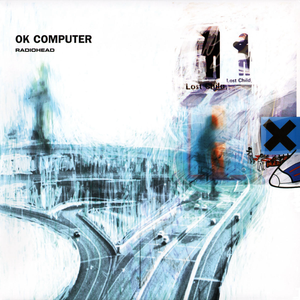
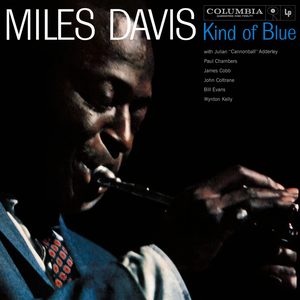
Album
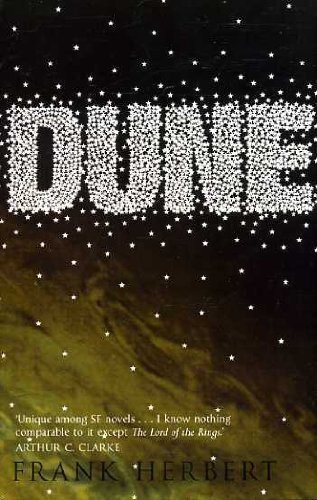
Book
City
Same pick
Game
Gemma 3 27BGemma 3 27B



2001: A Space Odyssey
OK Computer
Dune
Kyoto
The Witness
GPT-5.3-CodexGPT-5.3-Codex



Spirited Away
Kind of Blue
The Dispossessed
Kyoto
Outer Wilds
Price and specs
| Spec | Gemma 3 27B | GPT-5.3-Codex |
|---|---|---|
| Input price | $0.09/M tokens | $1.75/M tokens |
| Output price | $0.17/M tokens | $14/M tokens |
| Context window | — | 400K tokens |
| Weights | Open | Closed |
| Free API (OpenRouter) | No | No |
| Released | Mar 2025 | Feb 2026 |
| At 10M a month | $0.90 | $17.50 |
Input tokens at list price. No caching, no batch discount.
Where to run it
GPT-5.3-Codex2 hosts

Per million tokens. Prices and uptime via OpenRouter, checked 10 Oct 2026.
Common questions
What is the difference between Gemma 3 27B and GPT-5.3-Codex?
Gemma 3 27B is developed by Google AI while GPT-5.3-Codex is developed by OpenAI. You can compare their actual outputs across 53 challenges on Rival to see how they differ in practice.
Which is better, Gemma 3 27B or GPT-5.3-Codex?
It depends on your use case. Gemma 3 27B and GPT-5.3-Codex each have strengths in different areas. Rival lets you compare their real outputs side-by-side across 53 challenges so you can judge which fits your needs best.
How much does Gemma 3 27B cost compared to GPT-5.3-Codex?
Gemma 3 27B costs $0.09/M input tokens and GPT-5.3-Codex costs $1.75/M input tokens. Gemma 3 27B is $1.66/M cheaper per input. Check their side-by-side outputs on Rival to see if the price difference is justified by quality.
How can I compare Gemma 3 27B and GPT-5.3-Codex on Rival?
This page shows a side-by-side comparison of Gemma 3 27B and GPT-5.3-Codex across shared challenges. You can vote on which model produced the better output in a blind duel. Browsing and voting are free. No account is needed to look; signing in only saves your votes and likes.
More comparisons
Against the newest arrivals
- Gemma 3 27B vs Step 5 PreviewLanded Oct 2026
- GPT-5.3-Codex vs Claude Haiku 5.5Landed Oct 2026
- Gemma 3 27B vs Ling 3.1 FlashLanded Oct 2026
- GPT-5.3-Codex vs Mistral Large 4Landed Oct 2026
- Gemma 3 27B vs GPT-6.1 SolLanded Sep 2026
- GPT-5.3-Codex vs Claude Sonnet 5.5Landed Sep 2026
- Gemma 3 27B vs Solar Mini 4Landed Sep 2026
- GPT-5.3-Codex vs Qwen3.8 Max PrimeLanded Sep 2026


Same lab, same size, long tail
- Gemma 3 27B vs Gemini 3.8 FlashSame lab
- Gemma 3 27B vs Gemini 3.7 FlashSame lab
- GPT-5.3-Codex vs GPT-6.1 SolSame lab
- GPT-5.3-Codex vs GPT-6 Luna ProSame lab
- Gemma 3 27B vs Ling 2.6 1TSame size
- Gemma 3 27B vs Ling 2.6 FlashNew provider
- Gemma 3 27B vs Ling 3.0 FlashSame size
- Gemma 3 27B vs Ling 3.0 Flash Fin (free)New provider
