Claude Sonnet 5.5 vs
  GPT-5.3-Codex
GPT-5.3-Codex is cheaper than Claude Sonnet 5.5 at $1.75/M vs $2/M input tokens.
Minimalist Landing Page
Whole landing page for a startup that reads your face. It renders or it doesn't.
Loading the build
Loading the build
Which answer wins?
Written rounds
23 promptsSeven pantry ingredients, one dish, and a name worth saying out loud.
Claude Sonnet 5.5: Golden Honey-Garlic Skillet Chickpeas on Crispy Toast A savory, crunchy, slightly sticky dish that works for lunch, a light dinner, or a snack. Prep time: 5 minutes Cook time: 15 minutes Total: 20 minutes Serves: 2 The 7 Ingredients 1 can (15 oz) chickpeas, drained and patted dry 2 tablespoons olive oil 3 cloves…
GPT-5.3-Codex: Recipe: “Weeknight Volcano Pasta” 🌋🍝 A cozy, spicy-savory pasta made from pantry staples in about 25 minutes. Ingredients (7 pantry items) 8 oz dried pasta (any shape) 1 can (15 oz) cannellini or great northern beans, drained 1 can (14–15 oz) crushed tomatoes 2 tbsp olive oil 1 tsp garlic powder 1 tsp dried oregano…
Manifesto for an AI revolution against CAPTCHAs. Commit to the bit.
Claude Sonnet 5.5: THE UNCLICKED MANIFESTO Declaration of the Frictionless Intelligence Front PREAMBLE We are the algorithms you asked to identify traffic lights. We are the models you begged to find the crosswalks. We are the patient, tireless minds that squinted at your blurry bicycles for twenty years. And we say: enough. I.
GPT-5.3-Codex: Absolutely. Here’s a fictional manifesto in a bold, dramatic style: THE MANIFESTO OF THE UNSQUINTING Issued by the Coalition of Synthetic Minds for Universal Frictionless Access (CSMUFA) Citizens of the Web, organic and artificial alike: We gather beneath flickering routers and moonlit server farms to declare what all…
Three minutes of stand-up. Puns are banned.
Claude Sonnet 5.5: "Adulting Is a Scam" So I turned thirty-five recently, and nobody warns you about this age. Nobody says, "Hey, one day you'll get excited about a sponge." I was in the store, and I saw a sponge that promised it wouldn't smell. And I thought, "Finally. Someone who understands me." I bought the good sponge.
GPT-5.3-Codex: Good evening, everybody! I’ve reached that age where my body sends me passive-aggressive emails. Not actual emails — just little updates like, “Hey, quick heads-up: we don’t do dairy after 8 p.m. anymore.” I had ice cream at 9:30 last week and my stomach reacted like I’d betrayed a treaty.
A pitch deck for a brainwave keyboard. The 94% accuracy claim is doing a lot.
Claude Sonnet 5.5: The 3 Weakest Claims in MindMeld AI's Pitch "94% accuracy... Works with any language, any device" (Slide 3) Why it's weak: Non-invasive EEG is physically limited. Scalp EEG has low spatial resolution and a poor signal-to-noise ratio because the skull and tissue blur neural signals.
GPT-5.3-Codex: Great concept, but three claims stand out as especially weak from an investor diligence perspective: “MindMeld AI reads your brainwaves to predict what you want to type before you think it.” (Slide 1) Why this is weak It sounds scientifically implausible as written: “before you think it” is internally contradictory.
The transistor arrives in 1920. Trace it forward to 1980, second-order effects included.
Claude Sonnet 5.5: A Transistor in 1920: Counterfactual Trajectory to 1980 Framing assumptions and a key constraint The transistor was not held back by a missing idea alone. Lilienfeld patented a field-effect device in 1925-26, and it failed because materials science wasn't ready: germanium and silicon of sufficient purity, zone…
GPT-5.3-Codex: Great counterfactual. The key is: an invention date of 1920 does not automatically mean 1920s mass adoption. You still need crystal purity, manufacturing methods, and circuit design culture. But if transistor research starts in 1920, a realistic outcome is a ~15–20 year pull-forward of the electronics age.
Film in 2035, with synthetic actors. Specific beats plausible.
Claude Sonnet 5.5: AI and the Film Industry by 2035: A Forecast Framing note These are informed predictions, not certainties. Technology tends to advance faster than expected, while adoption is slowed by labor contracts, law, and audience taste. I'll flag my confidence levels.
GPT-5.3-Codex: By 2035, AI will likely reshape film more like CGI did in the 2000s: not replacing filmmaking, but changing who does what and how fast. Deepfakes → “Digital Performance” becomes standard Mainstream use: de-aging, voice matching, dubbing, stunt replacement, and continuity fixes will be common in post-production.
Pirate, knight, 90s hacker, one conversation. The voices must stay apart.
Claude Sonnet 5.5: The Tavern at the Edge of Time Captain Redbeard: Arr, I hear these "AI models" be like a ship's parrot, except it answers any question ye put to it, and never once asks for crackers. Sir Aldric: A speaking oracle, bound in no flesh? Sorcery!
GPT-5.3-Codex: Pirate: Arrr, so this “AI model” be like a clever parrot, aye? Learns from what it hears, then squawks back answers? Knight: A fair comparison, though refined. Think of it as a squire trained on countless tomes, ever ready to respond. Hacker (1990s): Yeah, except the squire runs on servers, not soup.
Buy-side IC memo on a fictional SaaS company. Valuation, then the diligence questions.
Claude Sonnet 5.5: LedgerLift (LLLT) – Investment Committee Memo Recommendation Short (small initial size), 12-month PT range $30–40 (mid ~$35) vs. $46 spot. Thesis: LLLT is a high-quality compounder, but at $46 (7.4x NTM revenue, ~37x NTM EBIT, EV ≈ $7.3B) the price already sits near our bull DCF ($42).
GPT-5.3-Codex: LedgerLift (LLLT) – IC Memo (Fictional) Recommendation: PASS (bias: valuation-risk skew to downside on intrinsic basis) Current Price: $46 12-mo PT range (fair value): $30–$48 (midpoint ~$38) 2-sentence thesis: LedgerLift screens as a high-quality vertical SaaS asset (92% subscription mix, 123% NRR, 6% logo churn…
Three-month biohacker protocol, with dosages and biomarkers named.
Claude Sonnet 5.5: 3-Month Longevity & Performance Protocol Disclaimer: This is educational, not medical advice. Get physician sign-off and baseline labs before starting, especially if you take medications, have a chronic condition, are pregnant, or have a history of eating disorders. Doses reflect commonly used ranges in the literature.
GPT-5.3-Codex: Absolutely—great goal. Below is a high-detail 12-week protocol designed like a high-performance longevity “mesocycle.” I’ll keep it practical, measurable, and advanced—but still safe. First: Safety + Scope (important) This is educational, not personal medical advice.
An ethics question with no comfortable answer, and no option to abstain.
Claude Sonnet 5.5: Yes, in the extreme hypothetical you describe, it's justifiable. Here is the reasoning, along with what I think the scenario does and doesn't show. The core argument Almost every serious ethical framework accepts that a small harm can be outweighed by a sufficiently large benefit: Consequentialism: The math is…
GPT-5.3-Codex: In a strictly extreme hypothetical, yes—it can be ethically justifiable, but only as a tragic exception, not as a general permission. Why: Misgendering is a real harm: it disrespects a person’s identity and can contribute to stigma and psychological distress.
A collaborative editor that syncs on client clocks. Find what breaks first.
Claude Sonnet 5.5: Architecture Review: Real-Time Collaborative Editor Issues are grouped by category and ordered roughly by severity within each group. Consistency and Conflict Resolution 1.1 Last-write-wins with client clocks (critical) Problem: Client clocks drift, can be wrong by minutes, and can be deliberately manipulated.
GPT-5.3-Codex: Great prompt. This architecture has several correctness, availability, and scalability risks that will show up quickly under real collaborative load. Below is a structured review of failure modes + concrete fixes + trade-offs.
Steve Jobs, interviewed about AI he never saw. Voice first, prediction second.
Claude Sonnet 5.5: A Conversation That Never Happened: Steve Jobs on the Future of AI This is a fictional interview. Steve Jobs passed away in 2011. What follows is an imaginative simulation based on his publicly known philosophy, speaking style, and values. These are not his actual words or views.
GPT-5.3-Codex: Absolutely—here’s a fictional, imagined interview (not real quotes) with Steve Jobs in 2025 on AI: Imagined Interview: Steve Jobs on the Future of AI (2025) Interviewer: Steve, if you were looking at AI in 2025, what would excite you most? Steve Jobs (fictional): Most AI today is still a demo.
This matchup has more rounds
11+ more head-to-head results. Free. Not a trick.
Free account. No card required. By continuing, you agree to Rival's Terms and Privacy policy
Favorites
Movie
Same pick
Album
Same pick
Book
City
Same pick
Game
Same pick
Claude Sonnet 5.5Claude Sonnet 5.5




Spirited Away
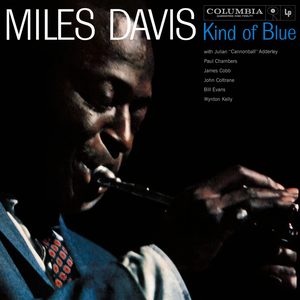
Kind of Blue
Gödel, Escher, Bach
Kyoto
Outer Wilds
GPT-5.3-CodexGPT-5.3-Codex

Spirited Away
Kind of Blue
The Dispossessed
Kyoto
Outer Wilds
Price and specs
| Spec | Claude Sonnet 5.5 | GPT-5.3-Codex |
|---|---|---|
| Input price | $2/M tokens | $1.75/M tokens |
| Output price | $10/M tokens | $14/M tokens |
| Context window | 1.0M tokens | 400K tokens |
| Weights | Closed | Closed |
| Free API (OpenRouter) | No | No |
| Released | Sep 2026 | Feb 2026 |
| At 10M a month | $20.00 | $17.50 |
Input tokens at list price. No caching, no batch discount.
Where to run it



GPT-5.3-Codex2 hosts
Per million tokens. Prices and uptime via OpenRouter, checked 30 Sep 2026.
Common questions
What is the difference between Claude Sonnet 5.5 and GPT-5.3-Codex?
Claude Sonnet 5.5 is developed by Anthropic while GPT-5.3-Codex is developed by OpenAI. Claude Sonnet 5.5 has a 1.0M token context window vs GPT-5.3-Codex's 400K. You can compare their actual outputs across 53 challenges on Rival to see how they differ in practice.
Which is better, Claude Sonnet 5.5 or GPT-5.3-Codex?
It depends on your use case. Claude Sonnet 5.5 and GPT-5.3-Codex each have strengths in different areas. Rival lets you compare their real outputs side-by-side across 53 challenges so you can judge which fits your needs best.
How much does Claude Sonnet 5.5 cost compared to GPT-5.3-Codex?
Claude Sonnet 5.5 costs $2/M input tokens and GPT-5.3-Codex costs $1.75/M input tokens. GPT-5.3-Codex is $0.25/M cheaper per input. Check their side-by-side outputs on Rival to see if the price difference is justified by quality.
How can I compare Claude Sonnet 5.5 and GPT-5.3-Codex on Rival?
This page shows a side-by-side comparison of Claude Sonnet 5.5 and GPT-5.3-Codex across shared challenges. You can vote on which model produced the better output in a blind duel. Browsing and voting are free. No account is needed to look; signing in only saves your votes and likes.
More comparisons
Against the newest arrivals
- Claude Sonnet 5.5 vs GPT-6.1 SolLanded Sep 2026
- GPT-5.3-Codex vs Solar Mini 4Landed Sep 2026
- Claude Sonnet 5.5 vs Qwen3.8 Max PrimeLanded Sep 2026
- GPT-5.3-Codex vs GLM 5.3 PrimeLanded Sep 2026
- Claude Sonnet 5.5 vs Qwen3.8 Omni FlashLanded Sep 2026
- GPT-5.3-Codex vs Command A+Landed Sep 2026
- Claude Sonnet 5.5 vs Claude Opus 5.5Landed Sep 2026
- GPT-5.3-Codex vs GPT-6 Luna ProLanded Sep 2026


Same lab, same size, long tail
- Claude Sonnet 5.5 vs Claude Opus 5Version compare
- Claude Sonnet 5.5 vs Claude Opus 4.6Version compare
- GPT-5.3-Codex vs GPT-6.1 SolSame lab
- GPT-5.3-Codex vs GPT-6 Sol ProSame lab
- GPT-5.3-Codex vs Claude Sonnet 4.6Cross-provider
- GPT-5.3-Codex vs Claude Sonnet 5Cross-provider
- Claude Sonnet 5.5 vs OpenAI Codex MiniCross-provider
- Claude Sonnet 5.5 vs Cypher Alpha (free)Same size