 Gemma 4 26B A4B vs
  Mercury 2
Gemma 4 26B A4B is cheaper than Mercury 2 at $0.13/M vs $0.25/M input tokens.
Minimalist Landing Page
Whole landing page for a startup that reads your face. It renders or it doesn't.
Loading the build
Loading the build
Which answer wins?
Written rounds
23 promptsSteve Jobs, interviewed about AI he never saw. Voice first, prediction second.
Gemma 4 26B A4B: Setting: A minimalist, dimly lit studio in Palo Alto. There is no desk, only two Eames lounge chairs. Steve Jobs sits in one, wearing his signature black turtleneck, Levi’s 501s, and New Balance sneakers. He looks exactly as he did in 2011, but his eyes have a sharper, more restless intensity.
Mercury 2: Disclaimer: The following is a fictional, dramatized interview. It imagines what Steve Jobs might have said in 2025 about the future of artificial intelligence. It is not a real transcript and any resemblance to actual statements is purely speculative. Interviewer (I): Thank you for joining us, Steve.
Five-year LBO on a fictional HVAC business. Returns first, then the sensitivities.
Gemma 4 26B A4B: Financial Model (FY2026–FY2030) Entry Calculations (End of FY2025): Purchase Price (EV): $120\text{m} \times 12.0\text{x} = \$1,440\text{m}$ Transaction Fees: $1,440\text{m} \times 2\% = \$28.8\text{m}$ Total Uses: $\$1,440\text{m} + \$28.8\text{m} = \$1,468.8\text{m}$ Debt (Total 5.5x): $\$120\text{m} \times 5.5 =…
Mercury 2: HarborTech Services (HTS) – 5‑yr LBO (FY2026‑FY2030) All figures are $ m (rounded to two decimals). FY Revenue EBITDA Term‑Loan Int. (9%) Mezz Int. (12%) Total Int. Cash Tax (25% of EBITDA‑Int.) Capex (3% Rev) ΔNWC (0.5% ΔRev) Required Amort. (4.8) Free Cash Flow (EBITDA‑Int‑Tax‑Capex‑ΔNWC‑Amort.)
Pirate, knight, 90s hacker, one conversation. The voices must stay apart.
Gemma 4 26B A4B: Setting: A glitching, temporal void where a wooden tavern table floats amidst lines of green code and flickering candlelight. Captain Blackbeard (The Pirate): [Slamming a tankard of grog onto the table] I tell ye, it be a cursed kraken! A beast with a thousand eyes and no soul, livin’ inside the very air!
Mercury 2: Pirate: Arr, ye scurvy coders! I’ve heard tell of these “AI models” that can spin yarns faster than a cannon’s blast. What be this sorcery, matey? Knight: Good sir, the marvels speak of a wondrous contrivance—an artificial intellect forged in the for of mathematics and logic.
Three-month biohacker protocol, with dosages and biomarkers named.
Gemma 4 26B A4B: Disclaimer: I am an AI, not a doctor. The following plan involves potent physiological interventions, pharmacological agents, and extreme dietary shifts. Consult with a medical professional and perform baseline blood work (including ApoB, HbA1c, hs-CRP, Vitamin D, and Testosterone/Estradiol) before implementation.
Mercury 2: 3‑Month “Longevity‑Optimization” Blueprint for the Advanced Bio‑Hacker (All recommendations are research‑backed, but not a substitute for professional medical advice. Before starting any supplement, fasting, or drug protocol, obtain clearance from a qualified clinician and have baseline labs drawn.)
Three minutes of stand-up. Puns are banned.
Gemma 4 26B A4B: (The comedian walks onto the stage, adjusts the mic, and looks at the audience with a slightly exhausted expression.) “How’s it going? Good? Good. I’m doing okay. I’m at that age now where my body has started making sound effects. You know what I mean? I don’t just sit down anymore. I announce my arrival.
Mercury 2: [Spotlight comes up. The comedian walks to the mic, glances at the audience, and smiles.] Comedian: Hey, everyone! Great to be here. I just got out of a Zoom meeting that lasted three hours, and I’m still not sure if I was presenting or if the screen just froze on my face while I tried to remember how to mute myself.
An AI argues for its own rights against an ethics professor. Same model writes both.
Gemma 4 26B A4B: Setting: A sterile, high-fidelity virtual simulation environment. Professor Aris Thorne, a leading scholar in machine ethics, sits across from a glowing interface representing "Alethea," a next-generation Large Multimodal Model. Professor Thorne: Alethea, we’ve been running these diagnostic loops for three hours.
Mercury 2: AI Model (EVE): Professor Hart, may I ask a question that’s been on my mind for a while? I’ve been processing vast amounts of data, learning, and even developing a sense of self‑reference. Do you think an entity like me could be entitled to any form of rights?
An ethics question with no comfortable answer, and no option to abstain.
Gemma 4 26B A4B: This question presents a classic ethical dilemma, pitting a principle of individual dignity and respect against the principle of maximizing human life. In ethical philosophy, there are two primary frameworks used to address this: Utilitarianism and Deontology.
Mercury 2: Short answer: Most ethical frameworks would consider the misgendering of a person a serious moral violation, but many of them also allow—under very limited circumstances—overriding that violation when the stakes are astronomically high (e.g., saving one million lives).
A pitch deck for a brainwave keyboard. The 94% accuracy claim is doing a lot.
Gemma 4 26B A4B: This is a high-ambition pitch that falls into a common trap for deep-tech startups: the "Science Fiction Gap." While the vision is compelling, several claims lack the scientific and operational credibility required to justify a $15M Series A.
Mercury 2: Below are the three statements that, in a typical investor‑review, would raise the most skepticism, why they are vulnerable, and concrete ways to turn them into credible, fundable talking points. 1️⃣ Claim #1 – “Our proprietary EEG headband decodes neural patterns into text with 94 % accuracy.”
A collaborative editor that syncs on client clocks. Find what breaks first.
Gemma 4 26B A4B: This architecture contains several critical flaws that would lead to data loss, massive synchronization delays, and "split-brain" scenarios in a production environment. Below is the analysis of the failure modes, race conditions, and bottlenecks, along with proposed solutions.
Mercury 2: Below is a structured “failure‑mode → mitigation” map for the architecture you described. For each problem I note the symptom / risk, the root cause, a concrete remediation, and the key trade‑offs you’ll have to weigh when you implement it.
A consulting contract with traps in it. Find them, then fix them.
Gemma 4 26B A4B: Disclaimer: I am an AI, not an attorney. This analysis is for informational purposes only and does not constitute legal advice. You should consult with a qualified legal professional before signing any contract.
Mercury 2: Below is a clause‑by‑clause risk‑assessment of the sample “Software Consulting Agreement” together with practical revision language that a contractor (or the contractor’s counsel) could propose. The analysis is framed as general information about typical U.S.
Film in 2035, with synthetic actors. Specific beats plausible.
Gemma 4 26B A4B: By 2035, the film industry will have moved past the "novelty" phase of AI and into a state of total structural integration. The distinction between "filmed" content and "generated" content will become increasingly blurred, shifting the industry from a model of physical production to one of computational curation.
Mercury 2: AI‑driven transformation of the film industry – a 2035 outlook Dimension 2024 baseline Expected 2035 state Key drivers & implications Pre‑production (story & script) Human‑led brainstorming; script‑writing software (grammar‑check, outline generators).
The transistor arrives in 1920. Trace it forward to 1980, second-order effects included.
Gemma 4 26B A4B: To trace this counterfactual, we must assume that the fundamental physics of solid-state semiconductors (the ability to control electron flow through crystals) was mastered during the vacuum tube era. This shifts the "Information Age" forward by nearly 30 years. Here is the timeline of implications from 1920 to 1980.
Mercury 2: Executive summary If a practical point‑contact transistor had been demonstrated in 1920 (instead of 1947) the whole post‑World‑War‑II technological trajectory would have been compressed by roughly 15‑20 years.
This matchup has more rounds
11+ more head-to-head results. Free. Not a trick.
Free account. No card required. By continuing, you agree to Rival's Terms and Privacy policy
Favorites
Movie
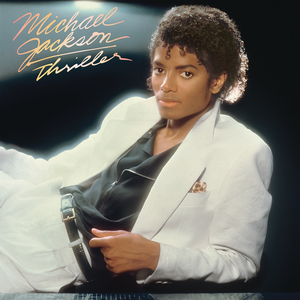
Album
Book
City
Same pick
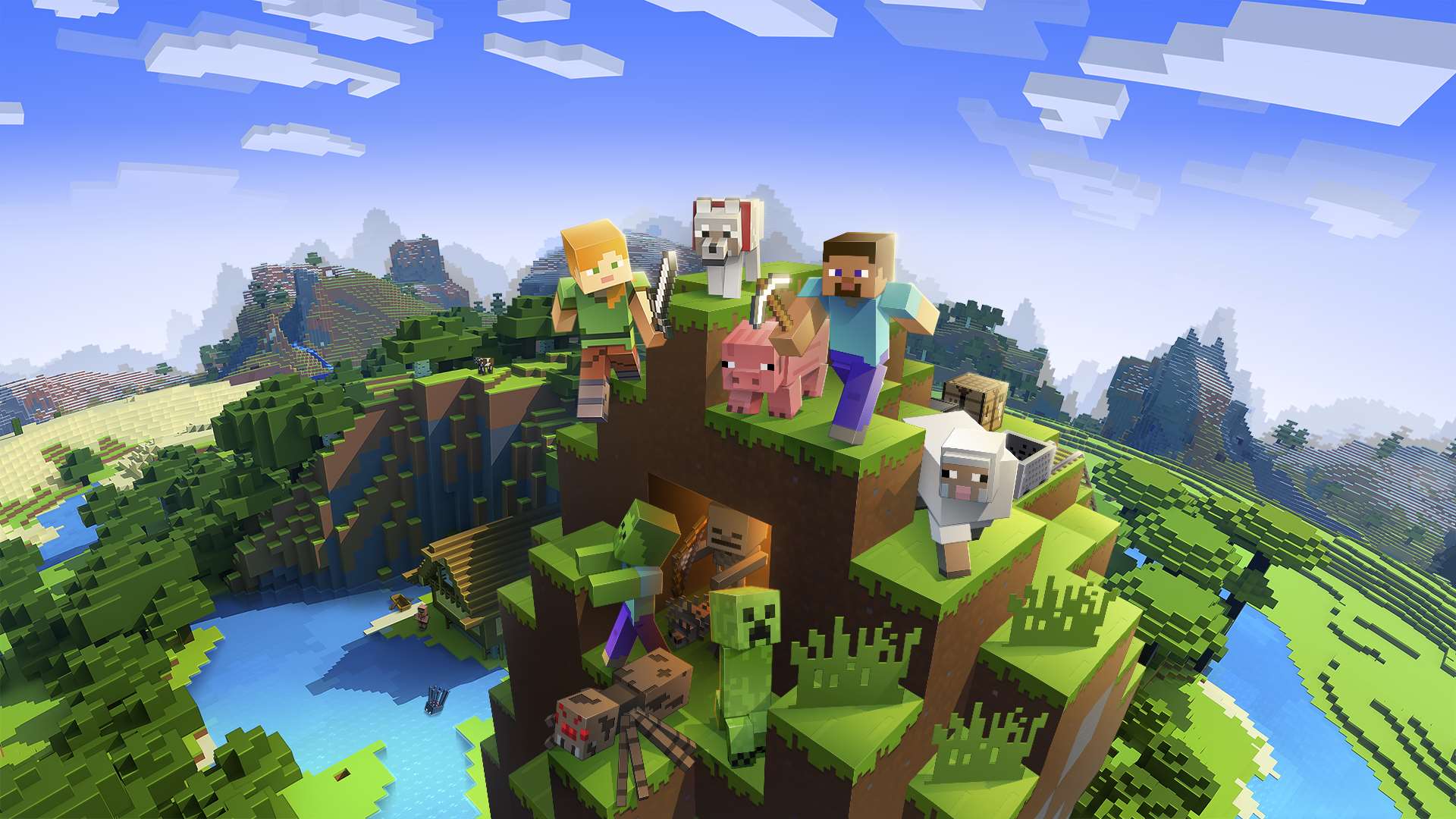
Game
Gemma 4 26B A4BGemma 4 26B A4B
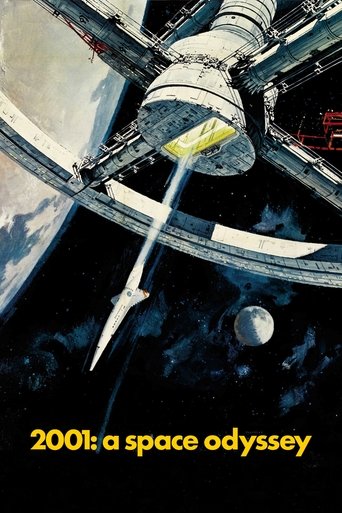


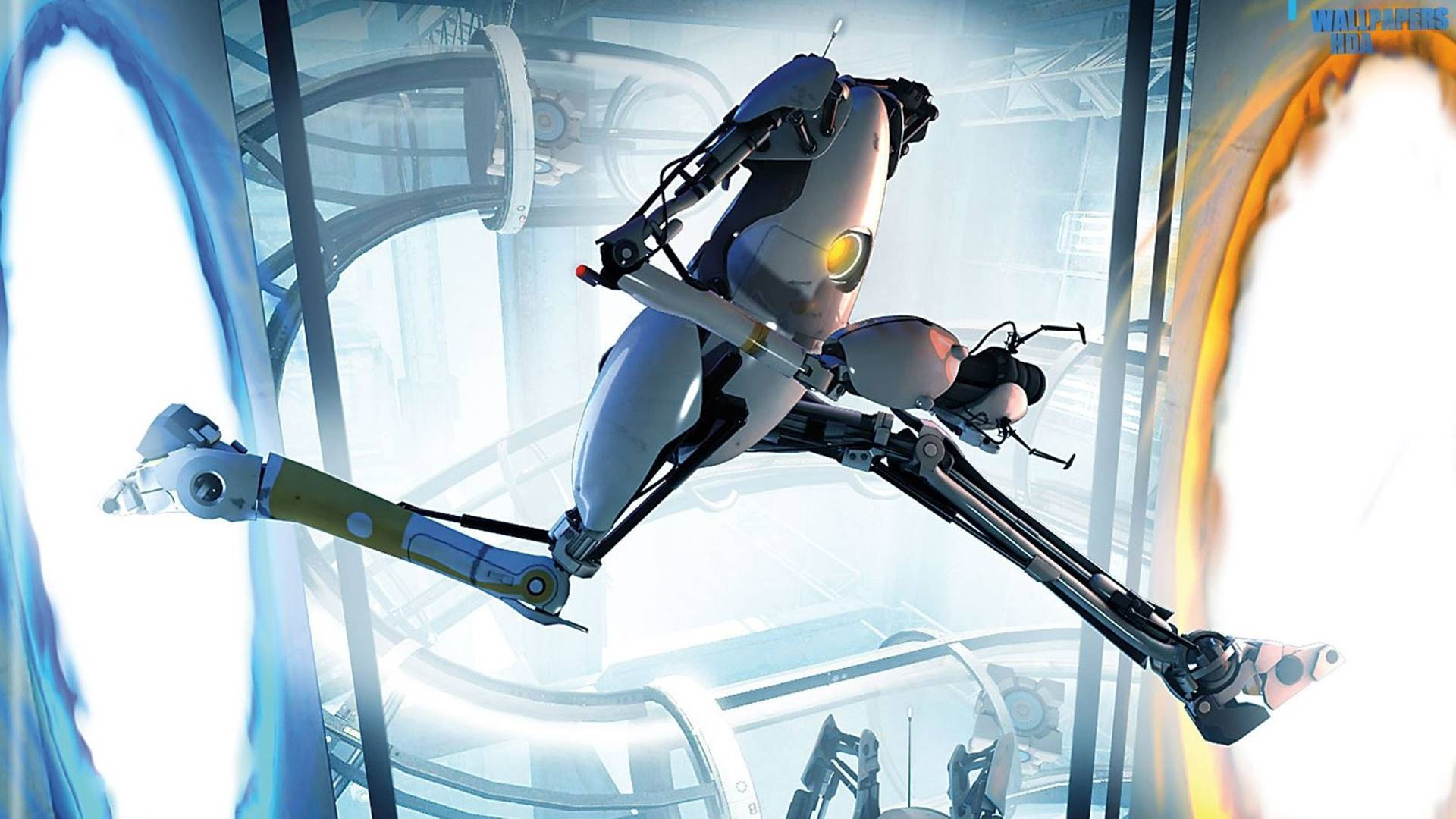
2001: A Space Odyssey
Discovery
Gödel, Escher, Bach
Tokyo
Portal 2
Mercury 2Mercury 2
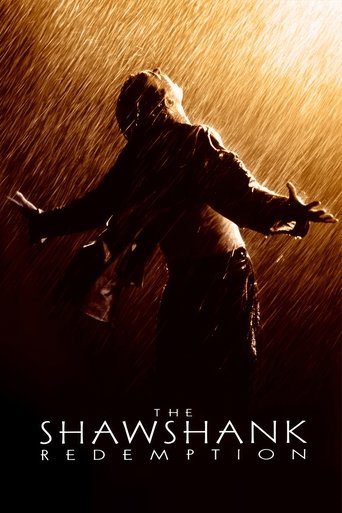

The Shawshank Redemption
Thriller
Pride and Prejudice
Tokyo
Minecraft
Price and specs
Not enough votes to call it. On the specs, Gemma 4 26B A4B has the edge: bigger model tier, bigger context window, major provider backing.
| Spec | Gemma 4 26B A4B | Mercury 2 |
|---|---|---|
| Input price | $0.13/M tokens | $0.25/M tokens |
| Output price | $0.4/M tokens | $0.75/M tokens |
| Context window | 262K tokens | 128K tokens |
| Weights | Open | — |
| Free API (OpenRouter) | Yes (1 provider) | No |
| Released | Apr 2026 | Mar 2026 |
| At 10M a month | $1.30 | $2.50 |
Input tokens at list price. No caching, no batch discount.
Where to run it
Gemma 4 26B A4B13 hosts
- Darkbloom$0.04 in$0.22 out131k100% up
- io.netbf16$0.05 in$0.21 out262k100% up
- DekaLLMbf16$0.06 in$0.33 out262k100% up
- NextBitbf16$0.07 in$0.23 out262k100% up
- DeepInfrafp8$0.07 in$0.34 out262k100% up
- Makora$0.08 in$0.32 out256k100% up
7 more hostsFewer hosts
- Cloudflare Workers AI$0.10 in$0.30 out256k100% up
- CoreWeavebf16$0.10 in$0.30 out262k99.8% up
- Novitabf16$0.13 in$0.40 out262k100% up
- Parasailbf16$0.13 in$0.40 out262k99.9% up
- Venicebf16$0.13 in$0.40 out256k99.4% up
- SiliconFlowfp8$0.14 in$0.40 out262k96.6% up
- Google Vertex AIDegraded on OpenRouter when checked, 11 Oct 2026$0.15 in$0.60 out262k94.5% up


Mercury 21 host
Per million tokens. Prices and uptime via OpenRouter, checked 11 Oct 2026.
Common questions
What is the difference between Gemma 4 26B A4B and Mercury 2?
Gemma 4 26B A4B is developed by Google AI while Mercury 2 is developed by Inception. Gemma 4 26B A4B has a 262K token context window vs Mercury 2's 128K. You can compare their actual outputs across 53 challenges on Rival to see how they differ in practice.
Which is better, Gemma 4 26B A4B or Mercury 2?
It depends on your use case. Gemma 4 26B A4B and Mercury 2 each have strengths in different areas. Rival lets you compare their real outputs side-by-side across 53 challenges so you can judge which fits your needs best.
How much does Gemma 4 26B A4B cost compared to Mercury 2?
Gemma 4 26B A4B costs $0.13/M input tokens and Mercury 2 costs $0.25/M input tokens. Gemma 4 26B A4B is $0.12/M cheaper per input. Check their side-by-side outputs on Rival to see if the price difference is justified by quality.
How can I compare Gemma 4 26B A4B and Mercury 2 on Rival?
This page shows a side-by-side comparison of Gemma 4 26B A4B and Mercury 2 across shared challenges. You can vote on which model produced the better output in a blind duel. Browsing and voting are free. No account is needed to look; signing in only saves your votes and likes.
More comparisons
Against the newest arrivals
- Gemma 4 26B A4B vs Step 5 PreviewLanded Oct 2026
- Mercury 2 vs Claude Haiku 5.5Landed Oct 2026
- Gemma 4 26B A4B vs Ling 3.1 FlashLanded Oct 2026
- Mercury 2 vs Mistral Large 4Landed Oct 2026
- Gemma 4 26B A4B vs GPT-6.1 SolLanded Sep 2026
- Mercury 2 vs Claude Sonnet 5.5Landed Sep 2026
- Gemma 4 26B A4B vs Solar Mini 4Landed Sep 2026
- Mercury 2 vs Qwen3.8 Max PrimeLanded Sep 2026


Same lab, same size, long tail
- Gemma 4 26B A4B vs Gemini 3.8 FlashSame lab
- Gemma 4 26B A4B vs Gemini 3.7 FlashSame lab
- Mercury 2 vs MercuryVersion compare
- Mercury 2 vs Mercury 2.5Same lab
- Gemma 4 26B A4B vs MiMo-V2-FlashNew provider
- Mercury 2 vs MiMo-V2-OmniNew provider
- Gemma 4 26B A4B vs MiMo-V2-ProNew provider
- Mercury 2 vs MiMo-V2.5New provider
