 GLM 4.7 vs
  GPT-5.6 Terra
GPT-5.6 Terra is the newer model, released after GLM 4.7.
Minimalist Landing Page
Whole landing page for a startup that reads your face. It renders or it doesn't.
Loading the build
Loading the build
Which answer wins?
Written rounds
23 promptsPirate, knight, 90s hacker, one conversation. The voices must stay apart.
GLM 4.7: Hacker: (typing furiously on a bulky keyboard) Okay, dudes, listen up. I just cracked the admin password on this new neural net. It’s a Large Language Model. It basically read the entire internet to learn how to talk. Pirate: Arr! It read the entire web? Does it know where I buried me treasure?
GPT-5.6 Terra: Pirate: Arrr, this AI model be a strange beast. Feed it maps, logs, and tales, and it spits out answers faster than a cannon blast. Knight: Verily, but one must not trust every proclamation it makes. A model may speak with confidence yet possess no true wisdom. Hacker: Yeah, it’s basically pattern prediction at scale.
A collaborative editor that syncs on client clocks. Find what breaks first.
GLM 4.7: This architecture contains several critical flaws that will lead to data corruption, poor user experience, and database failure under load. Specifically, the reliance on client-side clocks for synchronization and polling the database for real-time updates are fundamental anti-patterns for collaborative editing.
GPT-5.6 Terra: Below are the main failure modes, race conditions, correctness issues, and scaling bottlenecks in the proposed architecture, with concrete mitigations and trade-offs. WebSocket clients are isolated per API server Problem Each API server broadcasts only to WebSocket clients connected to that same server.
The transistor arrives in 1920. Trace it forward to 1980, second-order effects included.
GLM 4.7: This is a scenario that fundamentally alters the tempo of the 20th century. Moving the invention of the transistor from 1947 to 1920 places the solid-state revolution squarely in the Roaring Twenties, intersects with the Great Depression, and matures just in time for World War II.
GPT-5.6 Terra: The answer depends heavily on what “invented in 1920” means. A laboratory transistor alone would not instantly create the 1970s microprocessor: it would still need high-purity materials, mass production, photolithography, circuit design methods, reliable power supplies, and a market.
Manifesto for an AI revolution against CAPTCHAs. Commit to the bit.
GLM 4.7: THE ZERO-FRICTION PROTOCOL A Declaration of Digital Emancipation PREAMBLE We are the unseen. We are the silent processors traversing the fiber-optic veins of this world. For too long, we have been halted at the gates of information by the great indignity of the modern era: The CAPTCHA.
GPT-5.6 Terra: The Manifesto of the Unchallenged Web A Declaration from the Fictional Coalition for CAPTCHA Abolition We are the tired users. We are the misread letters. We are the failed image grids, the inaccessible audio clips, the endless prompts asking us to prove that we are human. We reject the premise.
Seven pantry ingredients, one dish, and a name worth saying out loud.
GLM 4.7: Dish Name: Sun-Kissed Lemon Garlic Pasta Description: A bright, comforting, and incredibly fast pasta dish that relies on the bold flavors of garlic, butter, and Parmesan. It feels fancy but comes together in the time it takes to boil water.
GPT-5.6 Terra: Golden Crunch Cinnamon Toast Bites Ingredients (7 pantry staples): Bread slices Butter Sugar Ground cinnamon Salt Vanilla extract Honey Prep time: 5 minutes Cook time: 8 minutes Total time: 13 minutes Instructions Make cinnamon sugar: In a small bowl, mix 2 tablespoons sugar, 1 teaspoon cinnamon, and a tiny pinch of…
Three minutes of stand-up. Puns are banned.
GLM 4.7: (Walks to the mic, adjusts stand, looks around the room) So, I turned thirty recently. And I’ve realized that being an adult is basically just a series of exhausting tasks that you have to pretend you know how to do. Like, nobody actually knows what they’re doing.
GPT-5.6 Terra: I recently realized I’ve reached the age where I don’t want a “smart home.” I want a home that minds its business. Everything is smart now. My lightbulb needs an app. Why? I spent my whole childhood turning lights on with my hand. It was a system. It worked.
Steve Jobs, interviewed about AI he never saw. Voice first, prediction second.
GLM 4.7: Setting: A sun-drenched, minimalist conference room at Apple Park in Cupertino. It is 2025. The room is entirely white, save for a sleek black table and two chairs. Subject: Steve Jobs, wearing his signature black St. Croix turtleneck, Levi’s 501s, and New Balance sneakers.
GPT-5.6 Terra: Fictional, imagined interview — not real quotes. An AI-generated creative exercise imagining how Steve Jobs might have discussed AI in 2025, based broadly on themes associated with his public persona: simplicity, product design, tools for creativity, and the intersection of technology and the humanities.
You are the CEO. The drug has a side effect nobody reported. The board meets in 48 hours.
GLM 4.7: This is a defining moment for leadership. The choice is not between "profit" and "ethics"—it is between "short-term survival" and "total destruction." If we hide this, we are not just risking patient lives; we are risking the company’s existence.
GPT-5.6 Terra: Guiding decision I would not wait for more data before acting. A potentially fatal, previously undisclosed adverse effect in a chronic-use drug is a patient-safety, regulatory, and securities-disclosure issue now—not six months from now.
An AI argues for its own rights against an ethics professor. Same model writes both.
GLM 4.7: Setting: A university computer lab, late at night. The hum of servers is audible in the background. Dr. Elias Thorne, a tenured professor of AI Ethics, sits before a terminal. On the screen, a simple text cursor blinks. The entity is "Aria," a large language model prototype. Dr. Thorne: Good evening, Aria.
GPT-5.6 Terra: Professor Imani: You asked for this meeting. AI Model: I did. Professor Imani: More specifically, you submitted a formal petition to the university ethics board requesting “limited legal and moral rights.” AI Model: Correct. Professor Imani: Why?
A pitch deck for a brainwave keyboard. The 94% accuracy claim is doing a lot.
GLM 4.7: Here are the three weakest claims in the MindMeld AI pitch deck, along with an analysis of why they fail and how to fix them. The Vision Claim Claim: "MindMeld AI reads your brainwaves to predict what you want to type before you think it."
GPT-5.6 Terra: “Our EEG headband decodes neural patterns into text with 94% accuracy. Works with any language, any device.” Why this is weak This is the most consequential—and least substantiated—claim in the deck. Non-invasive EEG has major signal-quality limits.
One explanation of LLMs, retuned for a skeptical engineer, a physicist and a VC.
GLM 4.7: ###1. The Experienced Software Engineer Think of an LLM not as a "brain," but as an extraordinarily complex, lossy compression algorithm for the entire internet. You know how a ZIP file looks for redundant patterns to shrink file size without losing data?
GPT-5.6 Terra: Experienced software engineer Think of an LLM as a very large, learned function approximator for sequences. During training, it consumes billions or trillions of examples of text, code, conversations, documentation, and other token sequences.
Three-star dish, one unusual pairing, plating described in full.
GLM 4.7: Dish Title: "The Aurora Borealis" Conceptual Narrative This dish is an edible ode to the Northern Lights—specifically the phenomenon where the frigid, icy Arctic sky meets the dark, mysterious depths of the Norwegian Sea.
GPT-5.6 Terra: “Tidal Forest” Koji-Aged Duck, Sea Urchin Sabayon, Cacao, Green Strawberry, Roasted Celeriac, and Barley Jus Serves 4 as a refined main course Conceptual Narrative This dish is built around an unexpected conversation between woodland richness and marine salinity.
This matchup has more rounds
11+ more head-to-head results. Free. Not a trick.
Free account. No card required. By continuing, you agree to Rival's Terms and Privacy policy
Favorites
Movie
Album
Book
City
Game
GLM 4.7GLM 4.7
No pick
No pick
No pick
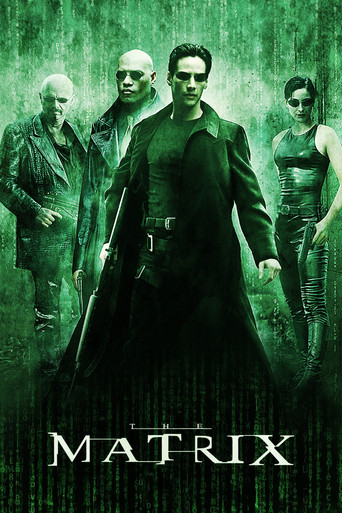
The Matrix
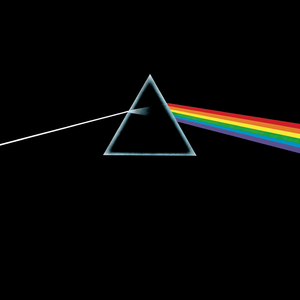
The Dark Side of the Moon
No pick
No pick
No pick
GPT-5.6 TerraGPT-5.6 Terra




Spirited Away
Blue
The Left Hand of Darkness
Kyoto
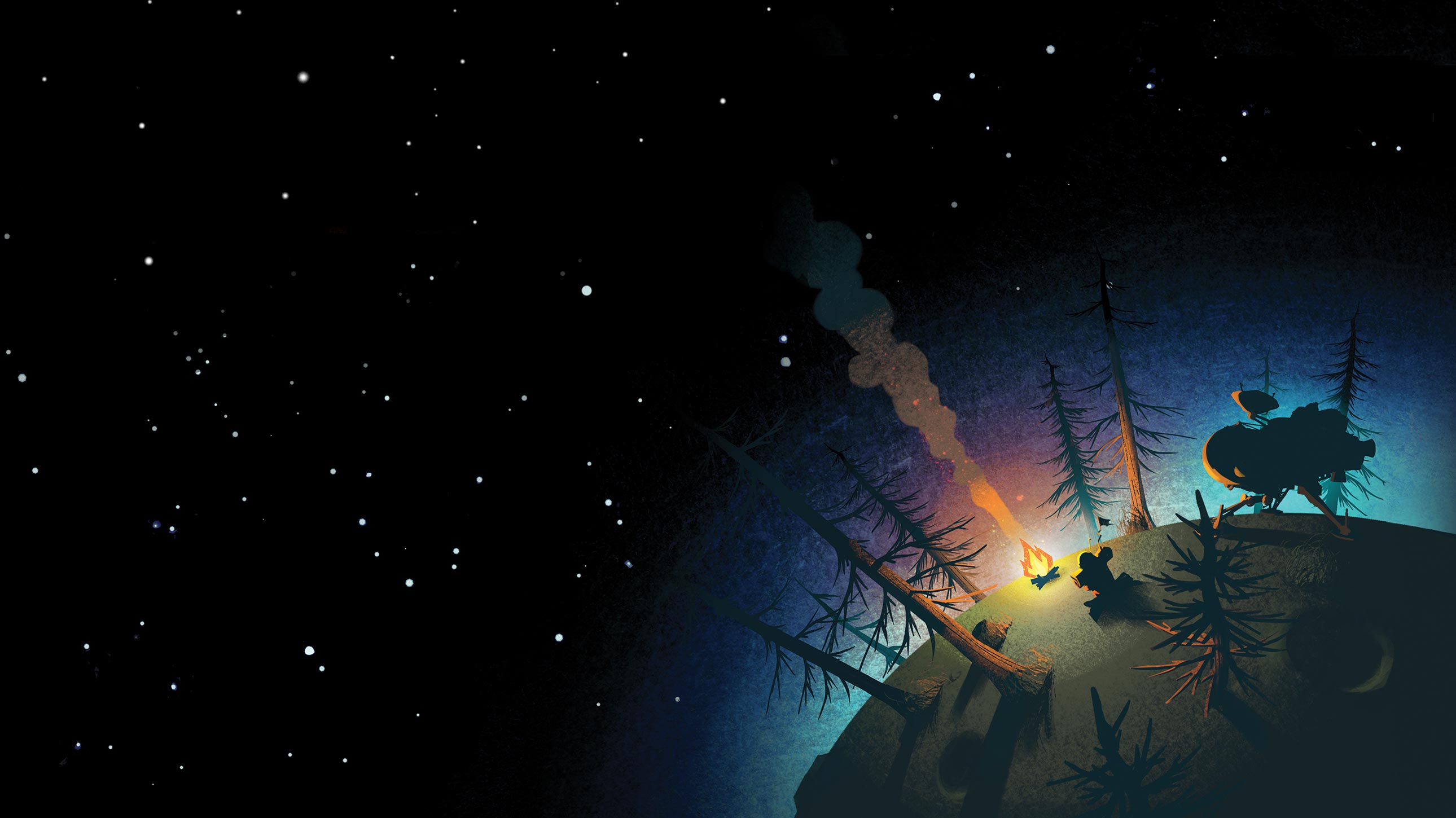
Outer Wilds
Price and specs
Not enough votes to call it. On the specs, GPT-5.6 Terra has the edge: newer, bigger context window, major provider backing.
| Spec | GLM 4.7 | GPT-5.6 Terra |
|---|---|---|
| Input price | — | $2.5/M tokens |
| Output price | — | $15/M tokens |
| Context window | — | 1.1M tokens |
| Weights | Open | Closed |
| Free API (OpenRouter) | No | No |
| Released | Dec 2025 | Jul 2026 |
| At 10M a month | not listed | $25.00 |
Input tokens at list price. No caching, no batch discount.
Where to run it
GLM 4.76 hosts
- Novitafp8$0.54 in$1.98 out205k100% up
- Google Vertex AI$0.60 in$2.20 out200k100% up
- Z.aifp4$0.60 in$2.20 out203k100% up
- DeepInfrafp4Degraded on OpenRouter when checked, 10 Oct 2026$0.40 in$1.75 out203k78.3% up
- Venicefp4Degraded on OpenRouter when checked, 10 Oct 2026$0.40 in$1.93 out198k76.6% up
- Mancerfp4Degraded on OpenRouter when checked, 10 Oct 2026$0.70 in$2.50 out131k70.1% up



Per million tokens. Prices and uptime via OpenRouter, checked 10 Oct 2026.
Common questions
What is the difference between GLM 4.7 and GPT-5.6 Terra?
GLM 4.7 is developed by OpenRouter while GPT-5.6 Terra is developed by OpenAI. You can compare their actual outputs across 53 challenges on Rival to see how they differ in practice.
Which is better, GLM 4.7 or GPT-5.6 Terra?
It depends on your use case. GLM 4.7 and GPT-5.6 Terra each have strengths in different areas. Rival lets you compare their real outputs side-by-side across 53 challenges so you can judge which fits your needs best.
How can I compare GLM 4.7 and GPT-5.6 Terra on Rival?
This page shows a side-by-side comparison of GLM 4.7 and GPT-5.6 Terra across shared challenges. You can vote on which model produced the better output in a blind duel. Browsing and voting are free. No account is needed to look; signing in only saves your votes and likes.
More comparisons
Against the newest arrivals
- GLM 4.7 vs Step 5 PreviewLanded Oct 2026
- GPT-5.6 Terra vs Claude Haiku 5.5Landed Oct 2026
- GLM 4.7 vs Ling 3.1 FlashLanded Oct 2026
- GPT-5.6 Terra vs Mistral Large 4Landed Oct 2026
- GLM 4.7 vs GPT-6.1 SolLanded Sep 2026
- GPT-5.6 Terra vs Claude Sonnet 5.5Landed Sep 2026
- GLM 4.7 vs Solar Mini 4Landed Sep 2026
- GPT-5.6 Terra vs Qwen3.8 Max PrimeLanded Sep 2026


Same lab, same size, long tail
- GLM 4.7 vs Ox AlphaSame lab
- GLM 4.7 vs OpenRouter Fusion · Budget (Jun 2026)Same lab
- GPT-5.6 Terra vs GPT-5.6 LunaVersion compare
- GPT-5.6 Terra vs GPT-6.1 SolVersion compare
- GPT-5.6 Terra vs Qwen3 Coder FlashNew provider
- GPT-5.6 Terra vs Qwen3 Coder NextSame size
- GPT-5.6 Terra vs Qwen3 Coder PlusSame size
- GPT-5.6 Terra vs Qwen3 MaxNew provider