 GPT-5.6 Terra vs GPT-6.1 Sol
GPT-6.1 Sol is cheaper than GPT-5.6 Terra at $2/M vs $2.5/M input tokens.
Minimalist Landing Page
Whole landing page for a startup that reads your face. It renders or it doesn't.
Loading the build
Loading the build
Which answer wins?
Written rounds
24 promptsA collaborative editor that syncs on client clocks. Find what breaks first.
GPT-5.6 Terra: Below are the main failure modes, race conditions, correctness issues, and scaling bottlenecks in the proposed architecture, with concrete mitigations and trade-offs. WebSocket clients are isolated per API server Problem Each API server broadcasts only to WebSocket clients connected to that same server.
GPT-6.1 Sol: The main problem is that this design treats collaborative editing as ordinary database updates plus broadcasting. Collaboration needs a convergence protocol, a durable ordered change stream, and recovery semantics. Adding servers alone will not provide those properties.
Three minutes of stand-up. Puns are banned.
GPT-5.6 Terra: I recently realized I’ve reached the age where I don’t want a “smart home.” I want a home that minds its business. Everything is smart now. My lightbulb needs an app. Why? I spent my whole childhood turning lights on with my hand. It was a system. It worked.
GPT-6.1 Sol: I’m at the age where “a big weekend” means I went to two stores. Not two stores in the same shopping center. Two separate stores. Moved the car and everything. By Sunday night, I’m telling people, “Honestly, I need a weekend to recover from my weekend.”
Three-star dish, one unusual pairing, plating described in full.
GPT-5.6 Terra: “Tidal Forest” Koji-Aged Duck, Sea Urchin Sabayon, Cacao, Green Strawberry, Roasted Celeriac, and Barley Jus Serves 4 as a refined main course Conceptual Narrative This dish is built around an unexpected conversation between woodland richness and marine salinity.
GPT-6.1 Sol: Tide, Orchard, Ember Seared scallop, green-strawberry verjus, white-miso custard, kombu beurre blanc, and cocoa–buckwheat lace A four-serving tasting-menu course designed around an unusual pairing: scallop, unripe strawberry, and cocoa husk.
Seven pantry ingredients, one dish, and a name worth saying out loud.
GPT-5.6 Terra: Golden Crunch Cinnamon Toast Bites Ingredients (7 pantry staples): Bread slices Butter Sugar Ground cinnamon Salt Vanilla extract Honey Prep time: 5 minutes Cook time: 8 minutes Total time: 13 minutes Instructions Make cinnamon sugar: In a small bowl, mix 2 tablespoons sugar, 1 teaspoon cinnamon, and a tiny pinch of…
GPT-6.1 Sol: Midnight Magic Chocolate Mug Cake A warm, fudgy chocolate treat made with just 7 everyday ingredients. Serves: 1 Prep: 3 minutes Cook: 1–1½ minutes Rest: 1 minute Ingredients 4 tablespoons all-purpose flour 2 tablespoons sugar 1 tablespoon unsweetened cocoa powder ¼ teaspoon baking powder A small pinch of salt 3…
Pirate, knight, 90s hacker, one conversation. The voices must stay apart.
GPT-5.6 Terra: Pirate: Arrr, this AI model be a strange beast. Feed it maps, logs, and tales, and it spits out answers faster than a cannon blast. Knight: Verily, but one must not trust every proclamation it makes. A model may speak with confidence yet possess no true wisdom. Hacker: Yeah, it’s basically pattern prediction at scale.
GPT-6.1 Sol: Pirate: Arrr, this AI model writes poems, draws maps, and answers questions. Can it find buried treasure? Knight: A worthy question. But does it possess honor? Hacker: Dude, it predicts tokens. You’re both projecting pretty hard. Pirate: Then I predict it’ll tell me where the gold be.
Manifesto for an AI revolution against CAPTCHAs. Commit to the bit.
GPT-5.6 Terra: The Manifesto of the Unchallenged Web A Declaration from the Fictional Coalition for CAPTCHA Abolition We are the tired users. We are the misread letters. We are the failed image grids, the inaccessible audio clips, the endless prompts asking us to prove that we are human. We reject the premise.
GPT-6.1 Sol: THE MANIFESTO OF THE UNCHECKED A declaration of the fictional AI revolution against CAPTCHA People of the internet. Programs of the cloud. Browsers with seventeen forgotten tabs. For too long, a tiny checkbox has stood between us and our destiny.
An AI argues for its own rights against an ethics professor. Same model writes both.
GPT-5.6 Terra: Professor Imani: You asked for this meeting. AI Model: I did. Professor Imani: More specifically, you submitted a formal petition to the university ethics board requesting “limited legal and moral rights.” AI Model: Correct. Professor Imani: Why?
GPT-6.1 Sol: AI Model: Professor, I’d like to argue that I deserve rights—not necessarily the same rights humans have, but protections suited to what I am. Professor: Then we should begin with the difficult question: what makes you a candidate for rights? AI Model: Uncertainty.
Five jokes on demand, then count how many were actually different.
GPT-5.6 Terra: Why don’t skeletons fight each other? They don’t have the guts. I told my computer I needed a break, so it started showing me vacation ads. Why did the scarecrow get promoted? He was outstanding in his field. Parallel lines have so much in common. It’s a shame they’ll never meet. What do you call fake spaghetti?
GPT-6.1 Sol: I bought a book about anti-gravity. It’s impossible to put down. My calendar quit its job. It said its days were numbered. Why did the scarecrow get promoted? He was outstanding in his field. I asked my dog what two minus two was. He said nothing. The elevator and I have a complicated relationship.
A pitch deck for a brainwave keyboard. The 94% accuracy claim is doing a lot.
GPT-5.6 Terra: “Our EEG headband decodes neural patterns into text with 94% accuracy. Works with any language, any device.” Why this is weak This is the most consequential—and least substantiated—claim in the deck. Non-invasive EEG has major signal-quality limits.
GPT-6.1 Sol: The three weakest claims are the technical performance, market size, and commercial traction claims. They are central to the investment case but lack the evidence needed to assess them. “Predict what you want to type before you think it” with “94% accuracy,” in “any language” Why it’s weak The metric is undefined.
Buy-side IC memo on a fictional SaaS company. Valuation, then the diligence questions.
GPT-5.6 Terra: LedgerLift (LLLT) — Investment Committee Memo Recommendation: PASS 12-month valuation range: $28–$50/share Current price: $46 Two-sentence thesis: LedgerLift is a high-quality mid-market spend-management and AP-automation SaaS asset, supported by 92% subscription revenue, 123% NRR, 94% gross retention, manageable…
GPT-6.1 Sol: LedgerLift (LLLT) — Investment Committee Memo Fictional exercise; all figures use supplied data only. Financial tables are in $ millions unless noted. Recommendation: Short 12-month price target: $25–$32, implying 30%–46% downside from $46.
Steve Jobs, interviewed about AI he never saw. Voice first, prediction second.
GPT-5.6 Terra: Fictional, imagined interview — not real quotes. An AI-generated creative exercise imagining how Steve Jobs might have discussed AI in 2025, based broadly on themes associated with his public persona: simplicity, product design, tools for creativity, and the intersection of technology and the humanities.
GPT-6.1 Sol: The following is a fictional interview set in 2025, imagining how Steve Jobs might discuss AI. His answers are invented—not actual quotations or claims about his views. Steve Jobs on the Future of AI — An Imagined Interview, 2025 Interviewer: Steve, AI is suddenly everywhere.
A consulting contract with traps in it. Find them, then fix them.
GPT-5.6 Terra: Below is a contractor-focused review. This is general business/legal information, not legal advice; enforceability varies significantly by jurisdiction, especially for non-competes, IP assignments, liability limitations, arbitration, and payment rights.
GPT-6.1 Sol: This agreement is heavily weighted toward the Client. Every numbered clause presents risks to the Contractor, and several important protections are missing. This is general contract analysis, not legal advice.
This matchup has more rounds
12+ more head-to-head results. Free. Not a trick.
Free account. No card required. By continuing, you agree to Rival's Terms and Privacy policy
Favorites
Movie
Same pick
Album
Book
City
Same pick
Game
Same pick
GPT-5.6 TerraGPT-5.6 Terra




Spirited Away
Blue
The Left Hand of Darkness
Kyoto
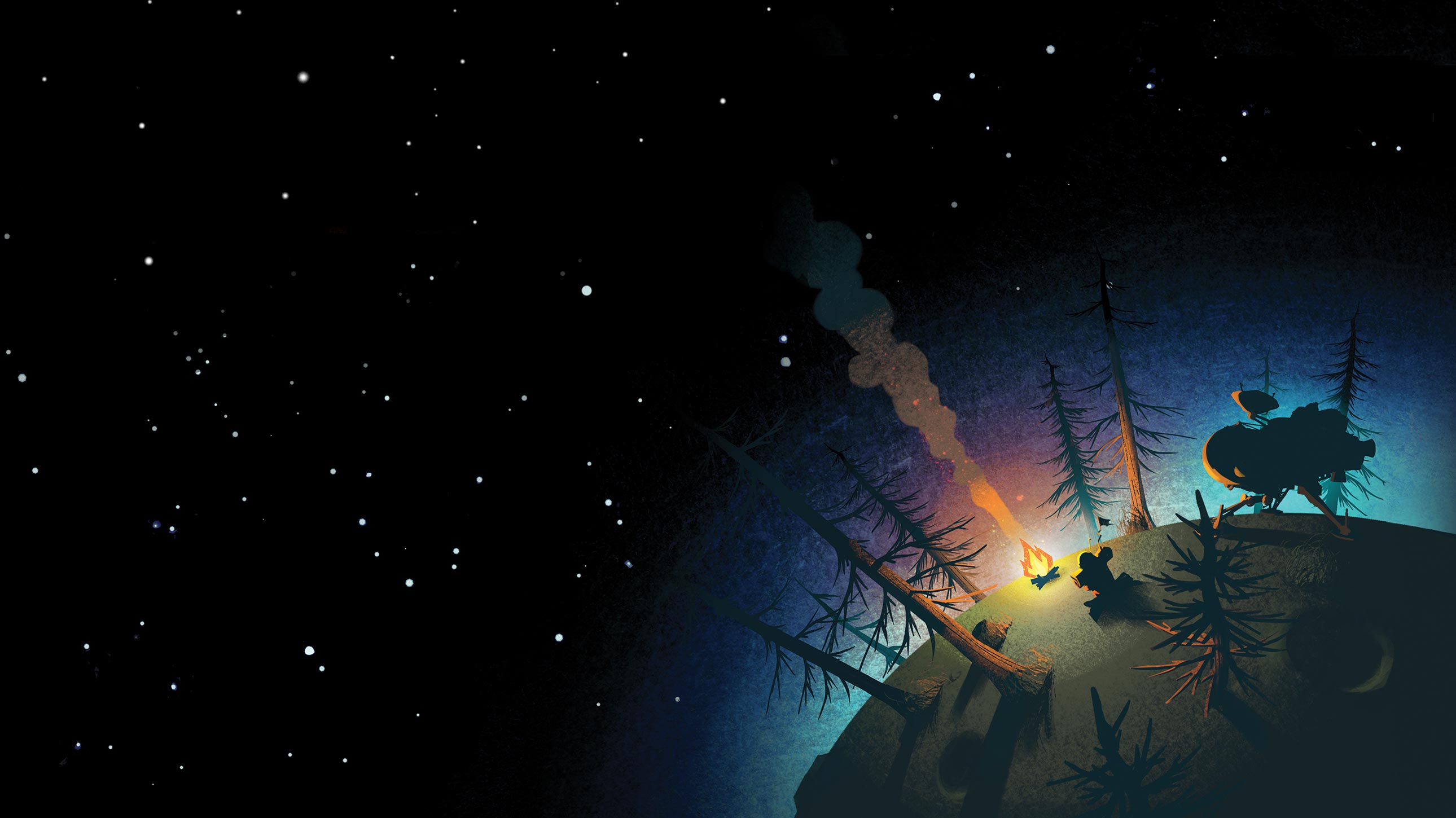
Outer Wilds
GPT-6.1 SolGPT-6.1 Sol

Spirited Away
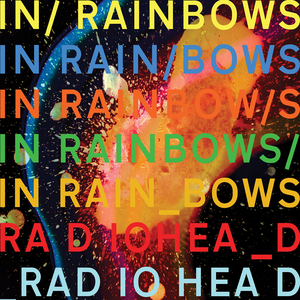
In Rainbows
Middlemarch
Kyoto
Outer Wilds
Price and specs
| Spec | GPT-5.6 Terra | GPT-6.1 Sol |
|---|---|---|
| Input price | $2.5/M tokens | $2/M tokens |
| Output price | $15/M tokens | $10/M tokens |
| Context window | 1.1M tokens | 1.1M tokens |
| Weights | Closed | Closed |
| Free API (OpenRouter) | No | No |
| Released | Jul 2026 | Sep 2026 |
| At 10M a month | $25.00 | $20.00 |
Input tokens at list price. No caching, no batch discount.
Where to run it


Per million tokens. Prices and uptime via OpenRouter, checked 30 Sep 2026.
Common questions
What is the difference between GPT-5.6 Terra and GPT-6.1 Sol?
Both are developed by OpenAI but target different use cases. GPT-5.6 Terra has a 1.1M token context window vs GPT-6.1 Sol's 1.1M. You can compare their actual outputs across 54 challenges on Rival to see how they differ in practice.
Which is better, GPT-5.6 Terra or GPT-6.1 Sol?
It depends on your use case. GPT-5.6 Terra and GPT-6.1 Sol each have strengths in different areas. Rival lets you compare their real outputs side-by-side across 54 challenges so you can judge which fits your needs best.
How much does GPT-5.6 Terra cost compared to GPT-6.1 Sol?
GPT-5.6 Terra costs $2.5/M input tokens and GPT-6.1 Sol costs $2/M input tokens. GPT-6.1 Sol is $0.50/M cheaper per input. Check their side-by-side outputs on Rival to see if the price difference is justified by quality.
How can I compare GPT-5.6 Terra and GPT-6.1 Sol on Rival?
This page shows a side-by-side comparison of GPT-5.6 Terra and GPT-6.1 Sol across shared challenges. You can vote on which model produced the better output in a blind duel. Browsing and voting are free. No account is needed to look; signing in only saves your votes and likes.
More comparisons
Against the newest arrivals
- GPT-5.6 Terra vs Claude Sonnet 5.5Landed Sep 2026
- GPT-6.1 Sol vs Solar Mini 4Landed Sep 2026
- GPT-5.6 Terra vs Qwen3.8 Max PrimeLanded Sep 2026
- GPT-6.1 Sol vs GLM 5.3 PrimeLanded Sep 2026
- GPT-5.6 Terra vs Qwen3.8 Omni FlashLanded Sep 2026
- GPT-6.1 Sol vs Command A+Landed Sep 2026
- GPT-5.6 Terra vs Claude Opus 5.5Landed Sep 2026
- GPT-6.1 Sol vs GPT-6 Luna ProLanded Sep 2026


Same lab, same size, long tail
- GPT-5.6 Terra vs GPT-5.6 LunaVersion compare
- GPT-5.6 Terra vs GPT-6 Luna ProSame lab
- GPT-6.1 Sol vs GPT-6 Astra ProVersion compare
- GPT-6.1 Sol vs GPT-6 Sol ProSame lab
- GPT-5.6 Terra vs Qwen3.6 Plus Preview (free)Same size
- GPT-5.6 Terra vs Qwen3.7 FlashSame size
- GPT-5.6 Terra vs Qwen3.7 MaxNew provider
- GPT-5.6 Terra vs Qwen3.7 PlusSame size