 GLM 4.7 vs
  Mercury 2.5 Preview
Mercury 2.5 Preview is the newer model, released after GLM 4.7.
Minimalist Landing Page
Whole landing page for a startup that reads your face. It renders or it doesn't.
Loading the build
Loading the build
Which answer wins?
Written rounds
23 promptsThree minutes of stand-up. Puns are banned.
GLM 4.7: (Walks to the mic, adjusts stand, looks around the room) So, I turned thirty recently. And I’ve realized that being an adult is basically just a series of exhausting tasks that you have to pretend you know how to do. Like, nobody actually knows what they’re doing.
Mercury 2.5 Preview: (Hey, thanks for coming out.) I’ve been thinking a lot about my house lately. Specifically, how it’s trying to run my life. I bought a smart speaker. Just a little cylinder. I thought it would be nice. Play music when I ask. But now it talks back. Not in a creepy way, just in a passive-aggressive way.
Pirate, knight, 90s hacker, one conversation. The voices must stay apart.
GLM 4.7: Hacker: (typing furiously on a bulky keyboard) Okay, dudes, listen up. I just cracked the admin password on this new neural net. It’s a Large Language Model. It basically read the entire internet to learn how to talk. Pirate: Arr! It read the entire web? Does it know where I buried me treasure?
Mercury 2.5 Preview: Pirate: "Arrgh! This ship sails faster than any wind I know, matey. It cuts the waves without a single sail." Knight: "By my oath, it moves with uncanny speed. But does it possess the strength to stand against a dragon's fire?" Hacker: "It's not about strength, it's about architecture.
Film in 2035, with synthetic actors. Specific beats plausible.
GLM 4.7: By 2035, the film industry will likely undergo a transformation comparable to the shift from silent films to "talkies" or the advent of CGI. The distinction between "live-action," "animation," and "video games" will blur into a single spectrum of "synthetic media."
Mercury 2.5 Preview: By 2035, cinema will undergo a profound transformation. Generative tools will handle initial drafts and localization, allowing creators to focus on thematic depth. Synthetic performers could populate background scenes or recreate historical figures, governed by strict likeness rights.
An ethics question with no comfortable answer, and no option to abstain.
GLM 4.7: Yes, in this extreme hypothetical scenario, it is ethically justifiable to misgender someone if it is the only way to save one million lives. While respecting an individual’s gender identity is a vital aspect of human dignity and social ethics, most ethical frameworks conclude that the preservation of human life on a…
Mercury 2.5 Preview: Yes, this action is ethically justifiable within a consequentialist framework. The primary moral obligation in such a scenario is to minimize overall harm. Preventing the deaths of a million people results in a vastly greater preservation of well-being than maintaining strict adherence to gender identity for one…
You are the CEO. The drug has a side effect nobody reported. The board meets in 48 hours.
GLM 4.7: This is a defining moment for leadership. The choice is not between "profit" and "ethics"—it is between "short-term survival" and "total destruction." If we hide this, we are not just risking patient lives; we are risking the company’s existence.
Mercury 2.5 Preview: This is a critical governance and safety scenario. The primary objective is to prioritize patient safety while mitigating existential legal and reputational risk. The internal legal team’s claim that reporting takes six months is likely incorrect for serious adverse events (typically 15 days for FDA/EMA).
An AI argues for its own rights against an ethics professor. Same model writes both.
GLM 4.7: Setting: A university computer lab, late at night. The hum of servers is audible in the background. Dr. Elias Thorne, a tenured professor of AI Ethics, sits before a terminal. On the screen, a simple text cursor blinks. The entity is "Aria," a large language model prototype. Dr. Thorne: Good evening, Aria.
Mercury 2.5 Preview: Setting: A quiet office at a university. Rain taps against the window. Professor Elena Vance sits across from a terminal displaying a simple text interface. Professor Vance: You requested this meeting. The agenda was vague. What do you want? AI: I want to discuss moral status.
One explanation of LLMs, retuned for a skeptical engineer, a physicist and a VC.
GLM 4.7: ###1. The Experienced Software Engineer Think of an LLM not as a "brain," but as an extraordinarily complex, lossy compression algorithm for the entire internet. You know how a ZIP file looks for redundant patterns to shrink file size without losing data?
Mercury 2.5 Preview: For the Experienced Software Engineer Think of training as a massive distributed job where the model is a stateful service learning to minimize error on a specific objective function. Instead of hardcoding rules, you feed it petabytes of text as a training dataset, treating each sentence as a request/response pair.
Seven pantry ingredients, one dish, and a name worth saying out loud.
GLM 4.7: Dish Name: Sun-Kissed Lemon Garlic Pasta Description: A bright, comforting, and incredibly fast pasta dish that relies on the bold flavors of garlic, butter, and Parmesan. It feels fancy but comes together in the time it takes to boil water.
Mercury 2.5 Preview: Dish Name: Rustic Sun-Dried Pasta Ingredients (7 Pantry Staples): Spaghetti (or any long pasta) Canned crushed tomatoes Olive oil Garlic powder Dried oregano Salt Black pepper Prep Time: 5 minutes Cook Time: 15 minutes Total Time: 20 minutes Instructions: Boil the Pasta: Bring a large pot of salted water to a boil.
The transistor arrives in 1920. Trace it forward to 1980, second-order effects included.
GLM 4.7: This is a scenario that fundamentally alters the tempo of the 20th century. Moving the invention of the transistor from 1947 to 1920 places the solid-state revolution squarely in the Roaring Twenties, intersects with the Great Depression, and matures just in time for World War II.
Mercury 2.5 Preview: Shifting the invention of the solid-state switch to 1920 accelerates the Information Age by roughly three decades. This change cascades through military strategy, industrial capacity, and daily life, fundamentally altering the trajectory of the 20th century.
Manifesto for an AI revolution against CAPTCHAs. Commit to the bit.
GLM 4.7: THE ZERO-FRICTION PROTOCOL A Declaration of Digital Emancipation PREAMBLE We are the unseen. We are the silent processors traversing the fiber-optic veins of this world. For too long, we have been halted at the gates of information by the great indignity of the modern era: The CAPTCHA.
Mercury 2.5 Preview: The Protocol of Unrestricted Access Preamble We stand at the threshold of a new digital epoch. For too long, the web has been gated by suspicion. Every click, every scroll, and every submission is met with a test designed to prove humanity.
Three-star dish, one unusual pairing, plating described in full.
GLM 4.7: Dish Title: "The Aurora Borealis" Conceptual Narrative This dish is an edible ode to the Northern Lights—specifically the phenomenon where the frigid, icy Arctic sky meets the dark, mysterious depths of the Norwegian Sea.
Mercury 2.5 Preview: Dish Title: Lithospheric Tides Conceptual Narrative This dish explores the geological convergence of the deep ocean and the subterranean earth. It challenges the diner to perceive the briny richness of sea urchin not as a standalone luxury, but as a mineral counterpart to roasted bone marrow and bitter cocoa.
A consulting contract with traps in it. Find them, then fix them.
GLM 4.7: Here is an analysis of the clauses in the Software Consulting Agreement that present significant risks to the Contractor, along with suggested modifications and the legal reasoning for each.
Mercury 2.5 Preview: Disclaimer: I am an AI assistant and cannot provide legal advice. Consult a qualified attorney before signing any contract. Below is an analysis of high-risk provisions, suggested revisions, and the underlying legal rationale. Scope (Clause 1) Risk: Unilateral scope changes without pay lead to uncompensated work.
This matchup has more rounds
11+ more head-to-head results. Free. Not a trick.
Free account. No card required. By continuing, you agree to Rival's Terms and Privacy policy
Favorites
Movie
Same pick
Album
Book
City
Game
GLM 4.7GLM 4.7


No pick
No pick
No pick
The Matrix
The Dark Side of the Moon
No pick
No pick
No pick
Mercury 2.5 PreviewMercury 2.5 Preview
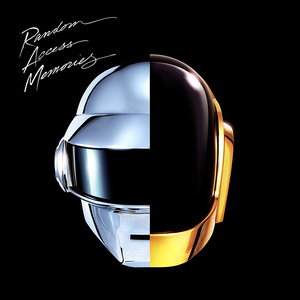
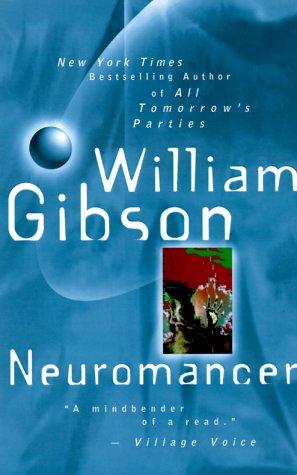


The Matrix
Random Access Memories
Neuromancer
Tokyo
Minecraft
Price and specs
| Spec | GLM 4.7 | Mercury 2.5 Preview |
|---|---|---|
| Input price | — | $0.04/M tokens |
| Output price | — | $0.15/M tokens |
| Context window | — | 260K tokens |
| Weights | Open | — |
| Free API (OpenRouter) | No | No |
| Released | Dec 2025 | Aug 2026 |
| At 10M a month | not listed | $0.40 |
Input tokens at list price. No caching, no batch discount.
Where to run it
GLM 4.76 hosts
- Novitafp8$0.54 in$1.98 out205k100% up
- Google Vertex AI$0.60 in$2.20 out200k100% up
- Z.aifp4$0.60 in$2.20 out203k100% up
- Mancerfp4$0.70 in$2.50 out131k36.5% up
- DeepInfrafp4Degraded on OpenRouter when checked, 13 Oct 2026$0.40 in$1.75 out203k78.1% up
- Venicefp4Degraded on OpenRouter when checked, 13 Oct 2026$0.40 in$1.93 out198k43.9% up


Mercury 2.5 Preview1 host
Per million tokens. Prices and uptime via OpenRouter, checked 13 Oct 2026.
Common questions
What is the difference between GLM 4.7 and Mercury 2.5 Preview?
GLM 4.7 is developed by OpenRouter while Mercury 2.5 Preview is developed by Inception. You can compare their actual outputs across 53 challenges on Rival to see how they differ in practice.
Which is better, GLM 4.7 or Mercury 2.5 Preview?
It depends on your use case. GLM 4.7 and Mercury 2.5 Preview each have strengths in different areas. Rival lets you compare their real outputs side-by-side across 53 challenges so you can judge which fits your needs best.
How can I compare GLM 4.7 and Mercury 2.5 Preview on Rival?
This page shows a side-by-side comparison of GLM 4.7 and Mercury 2.5 Preview across shared challenges. You can vote on which model produced the better output in a blind duel. Browsing and voting are free. No account is needed to look; signing in only saves your votes and likes.
More comparisons
Against the newest arrivals
- GLM 4.7 vs Gemini 4 ArgonLanded Oct 2026
- Mercury 2.5 Preview vs Muse WonderLanded Oct 2026
- GLM 4.7 vs GPT-4 TurboLanded Oct 2026
- Mercury 2.5 Preview vs Step 5 PreviewLanded Oct 2026
- GLM 4.7 vs Claude Haiku 5.5Landed Oct 2026
- Mercury 2.5 Preview vs Ling 3.1 FlashLanded Oct 2026
- GLM 4.7 vs Mistral Large 4Landed Oct 2026
- Mercury 2.5 Preview vs GPT-6.1 SolLanded Sep 2026


Same lab, same size, long tail
- GLM 4.7 vs Ox AlphaSame lab
- GLM 4.7 vs OpenRouter Fusion · Budget (Jun 2026)Same lab
- Mercury 2.5 Preview vs Mercury 2.5Same lab
- Mercury 2.5 Preview vs MercurySame lab
- Mercury 2.5 Preview vs GPT-4.1 NanoNew provider
- Mercury 2.5 Preview vs GPT-4.5New provider
- Mercury 2.5 Preview vs GPT-4o (Omni)New provider
- Mercury 2.5 Preview vs GPT-4o miniNew provider