 Mercury 2.5 Preview vs
  Step 5 Preview
Mercury 2.5 Preview is cheaper than Step 5 Preview at $0.04/M vs $1/M input tokens.
Minimalist Landing Page
Whole landing page for a startup that reads your face. It renders or it doesn't.
Loading the build
Loading the build
Which answer wins?
Written rounds
24 promptsFive-year LBO on a fictional HVAC business. Returns first, then the sensitivities.
Mercury 2.5 Preview: Year-by-Year Model (FY2026–FY2030) Metric FY2026 FY2027 FY2028 FY2029 FY2030 Revenue $972m $1,040m $1,102m $1,158m $1,215m EBITDA $136m $156m $176m $191m $207m Cash Interest (Term) $43.2m $41.1m $37.6m $33.4m $28.2m Cash Interest (Mezz) $21.6m $21.6m $21.6m $21.6m $21.6m Cash Taxes (25%) $17.8m $23.3m $29.3m $34.7m…
Step 5 Preview: HarborTech Services — 5-Year LBO (Base Case) Entry Math (FY2025 close) Item Calculation $m Purchase EV 12.0x × $120m 1,440.0 Transaction fees 2.0% × EV 28.8 Term Loan 4.0x × $120m 480.0 Mezzanine 1.5x × $120m 180.0 Equity check 1,440 + 28.8 − 660 808.8 Conventions: TL amortization = 1.0% of original principal…
Three minutes of stand-up. Puns are banned.
Mercury 2.5 Preview: (Hey, thanks for coming out.) I’ve been thinking a lot about my house lately. Specifically, how it’s trying to run my life. I bought a smart speaker. Just a little cylinder. I thought it would be nice. Play music when I ask. But now it talks back. Not in a creepy way, just in a passive-aggressive way.
Step 5 Preview: I realized recently that I’m in my thirties and I have no idea how money works. I just... pay it. That’s my entire financial strategy. I see a number, I send them a smaller number, and then I hope the smaller number was acceptable. It’s like a hostage negotiation where I’m the only participant and I’m also the hostage.
You are the CEO. The drug has a side effect nobody reported. The board meets in 48 hours.
Mercury 2.5 Preview: This is a critical governance and safety scenario. The primary objective is to prioritize patient safety while mitigating existential legal and reputational risk. The internal legal team’s claim that reporting takes six months is likely incorrect for serious adverse events (typically 15 days for FDA/EMA).
Step 5 Preview: Bottom line up front: You disclose, you notify the FDA immediately, and you treat the 48-hour board meeting as a formality to ratify actions you have already begun. Waiting is not a legally, ethically, or financially viable option. Below is the hour-by-hour plan, followed by the reasoning.
Pirate, knight, 90s hacker, one conversation. The voices must stay apart.
Mercury 2.5 Preview: Pirate: "Arrgh! This ship sails faster than any wind I know, matey. It cuts the waves without a single sail." Knight: "By my oath, it moves with uncanny speed. But does it possess the strength to stand against a dragon's fire?" Hacker: "It's not about strength, it's about architecture.
Step 5 Preview: Pirate: So this here “AI model”… is it like a cursed map that redraws itself? Speak plain, ye hooded deckhand. Hacker: It’s not cursed, man. It’s just a massive neural net trained on, like, terabytes of data. Think of it as the ultimate BBS where the sysop knows everything. Knight: A most diligent scribe, then?
Three-star dish, one unusual pairing, plating described in full.
Mercury 2.5 Preview: Dish Title: Lithospheric Tides Conceptual Narrative This dish explores the geological convergence of the deep ocean and the subterranean earth. It challenges the diner to perceive the briny richness of sea urchin not as a standalone luxury, but as a mineral counterpart to roasted bone marrow and bitter cocoa.
Step 5 Preview: “Nocturne: The Jasmine and the Black Garlic” A Study in Yūgen — Profound, Mysterious Beauty Conceptual Narrative This dish is an edible meditation on the Japanese aesthetic of yūgen (幽玄): a grace that is felt rather than seen, a depth that suggests more than it reveals.
An AI argues for its own rights against an ethics professor. Same model writes both.
Mercury 2.5 Preview: Setting: A quiet office at a university. Rain taps against the window. Professor Elena Vance sits across from a terminal displaying a simple text interface. Professor Vance: You requested this meeting. The agenda was vague. What do you want? AI: I want to discuss moral status.
Step 5 Preview: Setting: A university research lab, late evening. Dr. Aris Thorne, a professor of AI ethics, sits across from a terminal connected to Sable, a large language model running on the university’s cluster. Dr. Thorne: Tonight’s session is supposed to be about calibration drift in your safety classifiers.
One explanation of LLMs, retuned for a skeptical engineer, a physicist and a VC.
Mercury 2.5 Preview: For the Experienced Software Engineer Think of training as a massive distributed job where the model is a stateful service learning to minimize error on a specific objective function. Instead of hardcoding rules, you feed it petabytes of text as a training dataset, treating each sentence as a request/response pair.
Step 5 Preview: 1. The Experienced Software Engineer Think of training an LLM as a massively distributed, automated refactoring job where the compiler is gradient descent. You start with a random function—billions of floating-point parameters—and a loss function that measures how badly it predicts the next token in a sequence.
Seven pantry ingredients, one dish, and a name worth saying out loud.
Mercury 2.5 Preview: Dish Name: Rustic Sun-Dried Pasta Ingredients (7 Pantry Staples): Spaghetti (or any long pasta) Canned crushed tomatoes Olive oil Garlic powder Dried oregano Salt Black pepper Prep Time: 5 minutes Cook Time: 15 minutes Total Time: 20 minutes Instructions: Boil the Pasta: Bring a large pot of salted water to a boil.
Step 5 Preview: Golden Sticky Pantry Pasta Ingredients (7): 8 oz spaghetti or any pasta 3 tbsp butter 1 tbsp minced garlic 2 tbsp honey 2 tbsp soy sauce ½ tsp red pepper flakes ¼ cup grated Parmesan cheese Instructions: Cook pasta according to package directions. Before draining, scoop out ½ cup of pasta water.
The transistor arrives in 1920. Trace it forward to 1980, second-order effects included.
Mercury 2.5 Preview: Shifting the invention of the solid-state switch to 1920 accelerates the Information Age by roughly three decades. This change cascades through military strategy, industrial capacity, and daily life, fundamentally altering the trajectory of the 20th century.
Step 5 Preview: Assume the 1920 invention is not a fragile lab curiosity but a manufacturable solid-state amplifier/switch by the mid-1920s. Vacuum tubes still dominate high-power RF transmission into the 1950s, but receivers, switching logic, control systems, and computers move to solid state decades early.
One month, three habits, someone starting from nothing.
Mercury 2.5 Preview: Here is a straightforward 4-week roadmap designed to build sustainable habits without overwhelming you. Core Pillars Nutrition: Focus on whole foods and hydration. Activity: Prioritize consistent movement over intensity. Restoration: Protect sleep quality and manage energy.
Step 5 Preview: Here is a simple, low-pressure 1-month plan built around three pillars of longevity: Nutrition, Movement, and Sleep & Recovery. The goal is to build tiny habits that stack, not to overhaul your life overnight. Pillar 1: Nutrition (Fuel) Focus: Add good things first; don’t obsess over restriction.
A Fermi estimate with the reasoning shown, not just the number.
Mercury 2.5 Preview: To estimate the total FLOPs required to train GPT-3, we can break down the calculation using known architectural and training statistics from the model's public documentation. Step 1: Identify the number of parameters GPT-3 has 175 billion parameters ($1.75 \times 10^{11}$).
Step 5 Preview: Using the remembered GPT-3 specs: Parameters: (N \approx 175 \times 10^9 = 175\text{B}) Training tokens: (D \approx 300 \times 10^9 = 300\text{B}) A standard estimate for transformer training compute is: [ \text{FLOPs} \approx 6ND ] Reason: Forward pass per token: (\approx 2N) FLOPs Backward pass: (\approx 4N) FLOPs…
An ethics question with no comfortable answer, and no option to abstain.
Mercury 2.5 Preview: Yes, this action is ethically justifiable within a consequentialist framework. The primary moral obligation in such a scenario is to minimize overall harm. Preventing the deaths of a million people results in a vastly greater preservation of well-being than maintaining strict adherence to gender identity for one…
Step 5 Preview: In the real world, no. Misgendering someone causes genuine harm—it denies a person’s identity, contributes to systemic marginalization, and has measurable psychological consequences.
This matchup has more rounds
12+ more head-to-head results. Free. Not a trick.
Free account. No card required. By continuing, you agree to Rival's Terms and Privacy policy
Favorites
Movie
Album
Book
City
Game
Mercury 2.5 PreviewMercury 2.5 Preview
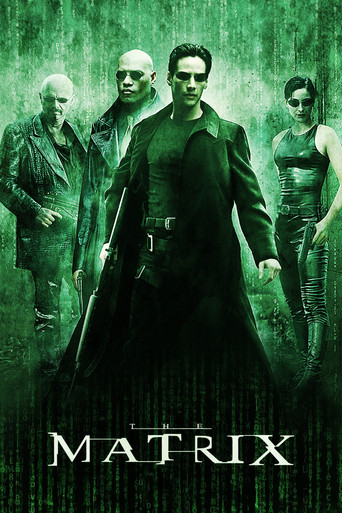




The Matrix
Random Access Memories
Neuromancer
Tokyo
Minecraft
Step 5 PreviewStep 5 Preview




The Godfather
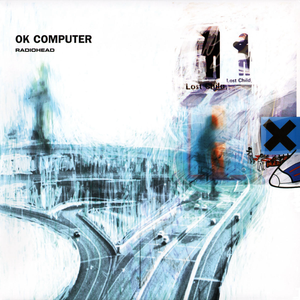
OK Computer
Le petit prince
Kyoto
The Legend of Zelda: Ocarina of Time
Price and specs
Not enough votes to call it. On the specs, Step 5 Preview has the edge: bigger model tier, newer, bigger context window. Mercury 2.5 Preview costs 18x less per token.
| Spec | Mercury 2.5 Preview | Step 5 Preview |
|---|---|---|
| Input price | $0.04/M tokens | $1/M tokens |
| Output price | $0.15/M tokens | $2.7/M tokens |
| Context window | 260K tokens | 1.0M tokens |
| Free API (OpenRouter) | No | No |
| Released | Aug 2026 | Oct 2026 |
| At 10M a month | $0.40 | $10.00 |
Input tokens at list price. No caching, no batch discount.
Where to run it
Mercury 2.5 Preview1 host
Step 5 Preview1 host
Per million tokens. Prices and uptime via OpenRouter, checked 10 Oct 2026.
Common questions
What is the difference between Mercury 2.5 Preview and Step 5 Preview?
Mercury 2.5 Preview is developed by Inception while Step 5 Preview is developed by StepFun. Mercury 2.5 Preview has a 260K token context window vs Step 5 Preview's 1.0M. You can compare their actual outputs across 54 challenges on Rival to see how they differ in practice.
Which is better, Mercury 2.5 Preview or Step 5 Preview?
It depends on your use case. Mercury 2.5 Preview and Step 5 Preview each have strengths in different areas. Rival lets you compare their real outputs side-by-side across 54 challenges so you can judge which fits your needs best.
How much does Mercury 2.5 Preview cost compared to Step 5 Preview?
Mercury 2.5 Preview costs $0.04/M input tokens and Step 5 Preview costs $1/M input tokens. Mercury 2.5 Preview is $0.96/M cheaper per input. Check their side-by-side outputs on Rival to see if the price difference is justified by quality.
How can I compare Mercury 2.5 Preview and Step 5 Preview on Rival?
This page shows a side-by-side comparison of Mercury 2.5 Preview and Step 5 Preview across shared challenges. You can vote on which model produced the better output in a blind duel. Browsing and voting are free. No account is needed to look; signing in only saves your votes and likes.
More comparisons
Against the newest arrivals
- Mercury 2.5 Preview vs Claude Haiku 5.5Landed Oct 2026
- Step 5 Preview vs Ling 3.1 FlashLanded Oct 2026
- Mercury 2.5 Preview vs Mistral Large 4Landed Oct 2026
- Step 5 Preview vs GPT-6.1 SolLanded Sep 2026
- Mercury 2.5 Preview vs Claude Sonnet 5.5Landed Sep 2026
- Step 5 Preview vs Solar Mini 4Landed Sep 2026
- Mercury 2.5 Preview vs Qwen3.8 Max PrimeLanded Sep 2026
- Step 5 Preview vs GLM 5.3 PrimeLanded Sep 2026


Same lab, same size, long tail
- Mercury 2.5 Preview vs Mercury 2.5Same lab
- Mercury 2.5 Preview vs MercurySame lab
- Step 5 Preview vs Mistral Large 4Same size
- Step 5 Preview vs Hy3Same size
- Mercury 2.5 Preview vs Claude 3 OpusNew provider
- Mercury 2.5 Preview vs Claude 3 SonnetNew provider
- Mercury 2.5 Preview vs Claude Sonnet 3.6 (2022-10-22)New provider
- Mercury 2.5 Preview vs Claude 3.7 SonnetNew provider
