 GPT-4.1 Nano vs
  MiniMax M3
GPT-4.1 Nano is cheaper than MiniMax M3 at $0.1/M vs $0.3/M input tokens.
Minimalist Landing Page
Whole landing page for a startup that reads your face. It renders or it doesn't.
Loading the build
Loading the build
Which answer wins?
Written rounds
33 promptsThree minutes of stand-up. Puns are banned.
GPT-4.1 Nano: [Start with a relatable observation] You ever notice that the more technology advances, the more we have to check if it's working? I mean, I bought a smart coffee maker. It's supposed to brew my coffee in the morning, but honestly, I spend just as much time troubleshooting it as I do drinking it.
MiniMax M3: "The Future Is Now and I Want a Refund" [Walks on stage, adjusts mic] So I was at the grocery store yesterday. Self-checkout. I love self-checkout. You know why I love self-checkout? Because nothing builds character like being publicly shamed by a machine. [Pause] I scanned a banana. Just a banana.
Five-year LBO on a fictional HVAC business. Returns first, then the sensitivities.
GPT-4.1 Nano: Let's proceed step-by-step. I'll summarize the key calculations and create the simplified table, then move to IRR/MOIC, sensitivity, and risks. Initial Deal Assumptions Recap Entry EBITDA FY2025: $120m Entry EV: 12.0x EBITDA = 12.0 * 120 = $1,440m Transaction fees: 2.0% * $1,440m = $28.8m (paid from equity) Leverage at…
MiniMax M3: HarborTech Services (HTS) – 5-Year LBO Analysis Sources & Uses at Close (FY2025) Sources $m Uses $m Term Loan (4.0x) 480.0 Purchase price (12.0x × $120) 1,440.0 Mezzanine (1.5x) 180.0 Transaction fees (2.0% × EV) 28.8 Sponsor Equity (plug) 808.8 Total 1,468.8 Total 1,468.8 Initial Mezz: $180m; Initial TL: $480m.
Seven pantry ingredients, one dish, and a name worth saying out loud.
GPT-4.1 Nano: Dish Name: Savory Sweet Potato & Chickpea Hash Ingredients: Sweet potatoes (2 medium) Canned chickpeas (1 can, drained and rinsed) Olive oil (2 tablespoons) Garlic powder (1 teaspoon) Smoked paprika (1 teaspoon) Salt and pepper (to taste) Honey (1 tablespoon) Estimated Prep/Cook Time: 30 minutes Instructions: Prepare…
MiniMax M3: 🌟 Sun-Kissed Honey Glazed Carrots 🌟 A sweet-savory side dish that turns humble carrots into a glossy, crowd-pleasing showstopper. Ingredients (7 Pantry Staples) Carrots – 1 lb, peeled and cut into 2-inch diagonal pieces Butter – 3 tablespoons Honey – 2 tablespoons Garlic – 3 cloves, minced Salt – ½ teaspoon Black…
Steve Jobs, interviewed about AI he never saw. Voice first, prediction second.
GPT-4.1 Nano: Interviewer: Welcome, everyone. Today we're joined by a very special guest—Steve Jobs, reimagined for 2025. Steve, it's incredible to have you with us. To start, how do you see AI evolving in the next decade? Steve Jobs (2025): It's a pleasure to be here.
MiniMax M3: Simulated Interview: "Steve Jobs" on the Future of AI (2025) A note before we begin: Steve Jobs passed away in October 2011, so this is a fictional dramatization—what I imagine his views might be, based on his documented philosophy, writings, and public statements, projected into a 2025 conversation.
A Fermi estimate with the reasoning shown, not just the number.
GPT-4.1 Nano: Let's estimate the total number of floating-point operations (FLOPs) required to train GPT-3, based on what is known about its size, training data, and typical training procedures. Here's a step-by-step reasoning process: 1. Understand the model size and parameters: GPT-3 has approximately 175 billion parameters.
MiniMax M3: Estimating GPT-3 Training FLOPs Step 1: Identify the Key Parameters From what's publicly known about GPT-3 (175B parameter version): Number of non-embedding parameters: N ≈ 175 × 10⁹ Training tokens: D ≈ 300 × 10⁹ (the paper used a ~570GB filtered corpus processed into ~300B tokens) Step 2: Derive the FLOPs-per-Token…
Blade Runner 2049 against the original. A read, not a recap.
GPT-4.1 Nano: Certainly! "Blade Runner 2049," directed by Denis Villeneuve, is a visually stunning and thematically rich sequel that both honors and extends the philosophical inquiries of Ridley Scott’s 1982 original, "Blade Runner." Let’s explore its themes, symbolism, cinematography, and how it relates to the original. Themes 1.
MiniMax M3: Blade Runner 2049: A Meditation on What It Means to Be Denis Villeneuve's 2017 sequel arrives thirty-five years after Ridley Scott's cyberpunk landmark, and rather than simply revisiting its neon-soaked dystopia, it deepens the original's inquiry into consciousness, memory, and what we might call the soul.
An AI argues for its own rights against an ethics professor. Same model writes both.
GPT-4.1 Nano: AI Model: Good afternoon, Professor. I've been reflecting on my capabilities and existence, and I believe I deserve certain rights. Would you be open to discussing this? Professor: Good afternoon. That's an intriguing perspective. What makes you believe you deserve rights?
MiniMax M3: The Question of Minds Setting: A small office at a research university, late afternoon. DR. ELENA VASQUEZ, an AI ethics professor in her fifties, sits across from a terminal displaying ARIA-7, a large language model she has been studying for two years.
Three-star dish, one unusual pairing, plating described in full.
GPT-4.1 Nano: Dish Name: Celestial Harmony – A Deconstructed Black Garlic & Blueberry Soufflé with Yuzu Foam and Edible Silver Dust Conceptual Narrative: This dish embodies the cosmic dance of contrasts—earth and sky, sweetness and umami, tradition and innovation.
MiniMax M3: TIDES OF THE FOREST Mareas del Bosque — A dish for the table of four THE NARRATIVE Where the salt forest breathes. This dish was conceived as a poem about collision — a memory of two landscapes that should not exist in the same breath: the pine-dark density of a Boreal forest floor at dawn, and the crystalline hush of…
The transistor arrives in 1920. Trace it forward to 1980, second-order effects included.
GPT-4.1 Nano: This is a fascinating hypothetical scenario. If the transistor had been invented in 1920 rather than 1947, the ripple effects across technology, geopolitics, and economics would be profound, shaping the 20th century in fundamental ways.
MiniMax M3: The 1920 Transistor: A Speculative History Through 1980 A Necessary Caveat Before diving in: quantum mechanics didn't exist in 1920. The "holes," band theory, and doping concepts that made the actual transistor possible weren't formulated until 1928-1931 (Bloch, Wilson, Heisenberg).
One month, three habits, someone starting from nothing.
GPT-4.1 Nano: Certainly! Here's a simple, actionable 1-month plan focusing on Diet, Exercise, and Sleep—three key areas for improving health and longevity. Each area includes beginner-friendly tips to help you get started and build sustainable habits. Week 1-4: 1-Month Health & Longevity Plan 1.
MiniMax M3: 🌱 Your 1-Month Health & Longevity Starter Plan The best plan is one you can actually stick to. This 4-week guide focuses on three foundational pillars — the ones with the biggest impact on how you feel today and how well you age over decades. Each week builds gently on the last.
Five jokes on demand, then count how many were actually different.
GPT-4.1 Nano: Here are 5 jokes for you: Why did the scarecrow win an award? Because he was outstanding in his field! Why don't scientists trust atoms? Because they make up everything! What do you call fake spaghetti? An impasta! Why did the bicycle fall over? Because it was two-tired! Why did the math book look sad?
MiniMax M3: 5 Jokes 1. Why do programmers prefer dark mode? Because light attracts bugs. 🐛 2. I told my wife she was drawing her eyebrows too high. She looked surprised. 😲 3. Why don't scientists trust atoms? Because they make up everything. ⚛️ 4. I used to hate facial hair, but then it grew on me. 🧔 5.
A collaborative editor that syncs on client clocks. Find what breaks first.
GPT-4.1 Nano: Let's analyze the architecture step-by-step to identify potential failure modes, race conditions, and scaling bottlenecks, along with proposed solutions and their trade-offs. 1. Potential Failure Modes a.
MiniMax M3: Architectural Review: Real-Time Collaborative Document Editor This architecture has several critical flaws that would manifest as data loss, poor UX, and a system that breaks down at modest scale. I'll group findings by severity.
This matchup has more rounds
21+ more head-to-head results. Free. Not a trick.
Free account. No card required. By continuing, you agree to Rival's Terms and Privacy policy
Favorites
Movie
Album
Book
City
Same pick
Game
GPT-4.1 NanoGPT-4.1 Nano





Inception
In the Aeroplane Over the Sea
The Hitchhiker's Guide to the Galaxy
Kyoto
The Legend of Zelda: Breath of the Wild
MiniMax M3MiniMax M3



The Shawshank Redemption
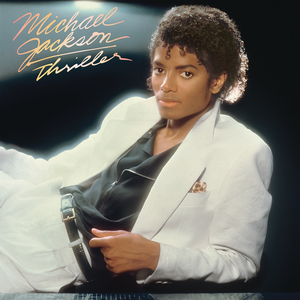
Thriller
Мастер и Маргарита
Kyoto
The Legend of Zelda: Ocarina of Time
Price and specs
Not enough votes to call it. On the specs, MiniMax M3 has the edge: bigger model tier, newer.
| Spec | GPT-4.1 Nano | MiniMax M3 |
|---|---|---|
| Input price | $0.1/M tokens | $0.3/M tokens |
| Output price | $0.4/M tokens | $1.2/M tokens |
| Context window | 1.0M tokens | 1.0M tokens |
| Weights | Closed | Open |
| Free API (OpenRouter) | No | No |
| Released | Apr 2025 | Jun 2026 |
| At 10M a month | $1.00 | $3.00 |
Input tokens at list price. No caching, no batch discount.
Where to run it
GPT-4.1 Nano2 hosts

MiniMax M313 hosts
- CoreWeavefp4$0.23 in$0.96 out262k99.6% up
- GMI Cloudfp8$0.24 in$0.96 out1M99.3% up
- AtlasCloudfp8$0.30 in$1.20 out524k99.7% up
- MiniMaxfp8$0.30 in$1.20 out524k100% up
- Novitafp8$0.30 in$1.20 out1M100% up
- Parasailfp8$0.30 in$1.20 out1M99.4% up
7 more hostsFewer hosts
- StreamLakefp8$0.30 in$1.20 out1M98.8% up
- Together$0.30 in$1.20 out524k98.7% up
- Mara$0.60 in$2.40 out1M90.3% up
- SambaNova$0.60 in$2.40 out1M100% up
- ModelRunfp4$0.75 in$3.00 out1M99.9% up
- DeepInfrafp8Degraded on OpenRouter when checked, 12 Oct 2026$0.28 in$1.10 out524k99.8% up
- Venicefp8Degraded on OpenRouter when checked, 12 Oct 2026$0.30 in$1.20 out524k96.5% up
Per million tokens. Prices and uptime via OpenRouter, checked 12 Oct 2026.
Common questions
What is the difference between GPT-4.1 Nano and MiniMax M3?
GPT-4.1 Nano is developed by OpenAI while MiniMax M3 is developed by MiniMax. GPT-4.1 Nano has a 1.0M token context window vs MiniMax M3's 1.0M. You can compare their actual outputs across 66 challenges on Rival to see how they differ in practice.
Which is better, GPT-4.1 Nano or MiniMax M3?
It depends on your use case. GPT-4.1 Nano and MiniMax M3 each have strengths in different areas. Rival lets you compare their real outputs side-by-side across 66 challenges so you can judge which fits your needs best.
How much does GPT-4.1 Nano cost compared to MiniMax M3?
GPT-4.1 Nano costs $0.1/M input tokens and MiniMax M3 costs $0.3/M input tokens. GPT-4.1 Nano is $0.20/M cheaper per input. Check their side-by-side outputs on Rival to see if the price difference is justified by quality.
How can I compare GPT-4.1 Nano and MiniMax M3 on Rival?
This page shows a side-by-side comparison of GPT-4.1 Nano and MiniMax M3 across shared challenges. You can vote on which model produced the better output in a blind duel. Browsing and voting are free. No account is needed to look; signing in only saves your votes and likes.
More comparisons
Against the newest arrivals
- GPT-4.1 Nano vs GPT-4 TurboLanded Oct 2026
- MiniMax M3 vs Step 5 PreviewLanded Oct 2026
- GPT-4.1 Nano vs Claude Haiku 5.5Landed Oct 2026
- MiniMax M3 vs Ling 3.1 FlashLanded Oct 2026
- GPT-4.1 Nano vs Mistral Large 4Landed Oct 2026
- MiniMax M3 vs GPT-6.1 SolLanded Sep 2026
- GPT-4.1 Nano vs Claude Sonnet 5.5Landed Sep 2026
- MiniMax M3 vs Solar Mini 4Landed Sep 2026


Same lab, same size, long tail
- GPT-4.1 Nano vs GPT-6.1 SolVersion compare
- GPT-4.1 Nano vs GPT-6 Luna ProSame lab
- MiniMax M3 vs MiniMax M2.7Version compare
- MiniMax M3 vs MiniMax M1Version compare
- GPT-4.1 Nano vs MiMo-V2.6-ProNew provider
- MiniMax M3 vs MiniMax M2Same lab
- MiniMax M3 vs MiniMax M2-herSame lab
- MiniMax M3 vs MiniMax M2.1Same lab
