 GPT-4 vs
  Ling 2.6 1T
Ling 2.6 1T is cheaper than GPT-4 at $0/M vs $30/M input tokens.
Mario Level UI Recreation
Playable Mario level in one HTML file. The physics is the hard part.
Loading the build
Loading the build
Which answer wins?
Written rounds
10 promptsSeven pantry ingredients, one dish, and a name worth saying out loud.
GPT-4: Dish Name: Hearty Baked Beans Fiesta Ingredients: 2 cans of baked beans 1 large onion 3 cloves of garlic 1 bell pepper 1 can of sweet corn 2 tablespoons of olive oil Salt & pepper to taste Instructions: Preheat your oven to 350°F (175°C). Dice the onion, bell pepper, and mince the garlic.
Ling 2.6 1T: Dish name: Pantry 7 Crunch Bowls Ingredients Pasta or rice (about 2 cups cooked) Canned black beans (1 can, rinsed) Canned diced tomatoes (1 can) Peanut butter (3–4 Tbsp) Soy sauce or tamari (2 Tbsp) Honey or maple syrup (1 Tbsp) Any spice/herb you keep (chili flakes, cumin, or garlic powder — about 1 tsp) Instructions…
A collaborative editor that syncs on client clocks. Find what breaks first.
GPT-4: Failure Modes: Single Point of Failure: If PostgreSQL database fails, the whole system will be unavailable. Solution: Implement a multi-master or master-slave replication for the PostgreSQL database. This will provide redundancy and high availability.
Ling 2.6 1T: Below is a failure-mode, race-condition and bottleneck audit of the proposed real-time collaborative editor, followed by specific fixes with explicit trade-offs. I have grouped issues by layer so you can prioritize remediation.
You are the CEO. The drug has a side effect nobody reported. The board meets in 48 hours.
GPT-4: Day 1: 8 AM-10 AM: Convene an emergency meeting with your core leadership team. This team includes the heads of Legal, Regulatory Affairs, Medical, Research and Development, Finance, and Communications. Brief them on the situation and ask for their initial input and strategies for managing the situation.
Ling 2.6 1T: Below is a 48-hour execution plan that treats patient safety as non-negotiable, protects the company from catastrophic legal/regulatory blowback, and preserves enterprise value by controlling the narrative rather than letting it leak.
The transistor arrives in 1920. Trace it forward to 1980, second-order effects included.
GPT-4: An early invention of the transistor in 1920 would have had profound implications across numerous domains, drastically altering the course of history. Technological Implications: WWII: The transistor, a fundamental component of modern electronic devices, could have advanced the technology used in WWII significantly.
Ling 2.6 1T: Assumptions to make the counterfactual coherent The “transistor” invented in 1920 is a crude, low-frequency point-contact device that can switch and amplify, but is expensive, unreliable, and not yet manufacturable at scale.
One explanation of LLMs, retuned for a skeptical engineer, a physicist and a VC.
GPT-4: Experienced Software Engineer: How does a language model like GPT produce intelligent behavior? Think of it as a highly specialized function in your code. This function has been trained on a large amount of text data, and it's main goal is to predict the next word in a sentence given the previous words.
Ling 2.6 1T: 1. Experienced software engineer (distributed systems / APIs, skeptical of “next-word prediction”) Think of training not as programming logic but as compiling a usage graph across an entire dependency tree of human intent.
One month, three habits, someone starting from nothing.
GPT-4: Title: 1-Month Plan for Better Health and Longevity Week 1 - Establishing a Healthy Diet 1.1: Start Eating Whole Foods: Begin by gradually replacing processed foods in your diet with whole foods. This may include fruits, vegetables, lean proteins, and whole grains.
Ling 2.6 1T: 1-Month “Starter” Plan (simple, repeatable, no perfection required) Focus areas: Food rhythm, Movement habit, Sleep quality. Week 0 (Prep — 1 hour) Pick 1 small change per focus area (see below).
A consulting contract with traps in it. Find them, then fix them.
GPT-4: SCOPE: The lack of specificity can be used against the contractor in that the client can modify the scope of work at will without renegotiating the price. This could lead to the contractor working beyond the initially agreed upon parameters without additional pay.
Ling 2.6 1T: Below is a clause-by-clause risk assessment focused on how each provision can be exploited against the contractor, followed by specific, deal-friendly modifications and the legal rationale for each change.
Three-star dish, one unusual pairing, plating described in full.
GPT-4: Dish Name: Symphony of Scarlet Prawn and Yuzu Conceptual Narrative: This dish is a harmonious interplay of land and sea, with the sweetness of scarlet prawns, a gem of the deep sea, and the refreshing, fragrant citrus notes of yuzu fruit, a treasure from the land.
Ling 2.6 1T: Dish Title “Petrichor & Pyrite” Forest floor, volcanic stone, and the electric tension between slow decay and crystallized fire. Conceptual Narrative The dish is an edible geologic cross-section.
Three-month biohacker protocol, with dosages and biomarkers named.
GPT-4: 3-Month Longevity Plan Dietary Protocols Month 1: Ketogenic Diet This diet is high in fats, moderate in protein, and low in carbohydrates. It helps in burning fat more effectively. Breakfast: 2 eggs, avocado, and mixed vegetables. Lunch: Grilled salmon with a side of asparagus. Dinner: Stir-fried chicken with broccoli.
Ling 2.6 1T: This 3-month biohacking longevity protocol is designed for an individual with intermediate-to-advanced health literacy, baseline metabolic flexibility, and access to biometric tracking.
A pitch deck for a brainwave keyboard. The 94% accuracy claim is doing a lot.
GPT-4: Weak Claim 1 - Solution: While the claim that the proprietary EEG headband uses advanced ML to decode neural patterns into text with 94% accuracy is impressive, it doesn't address concerns about user comfort, ease of use, or aesthetics.
Ling 2.6 1T: Here is an analysis of the three weakest claims in the MindMeld AI pitch deck, followed by specific reasoning and actionable suggestions for improvement. Weakness 1: The Solution (Slide 3) The Claim: "Our proprietary EEG headband... decodes neural patterns into text with 94% accuracy.
Favorites
Movie
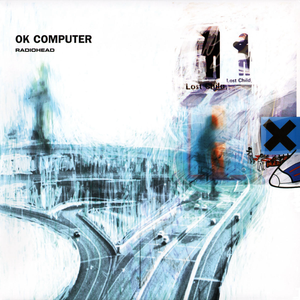
Album
Book
City
Game
GPT-4GPT-4




Blade Runner
OK Computer
Gödel, Escher, Bach
Tokyo
Minecraft
Ling 2.6 1TLing 2.6 1T





Blade Runner 2049
Kid A
Dune
Kyoto
The Legend of Zelda: Breath of the Wild
Price and specs
| Spec | GPT-4 | Ling 2.6 1T |
|---|---|---|
| Input price | $30/M tokens | Free |
| Output price | $60/M tokens | Free |
| Context window | 8K tokens | 262K tokens |
| Weights | Closed | Open |
| Free API (OpenRouter) | No | No |
| Released | May 2023 | Apr 2026 |
| At 10M a month | $300 | $0 |
Input tokens at list price. No caching, no batch discount.
Where to run it

Ling 2.6 1T
No hosts listed on OpenRouter.
Per million tokens. Prices and uptime via OpenRouter, checked 10 Oct 2026.
Common questions
What is the difference between GPT-4 and Ling 2.6 1T?
GPT-4 is developed by OpenAI while Ling 2.6 1T is developed by inclusionAI. GPT-4 has a 8K token context window vs Ling 2.6 1T's 262K. You can compare their actual outputs across 26 challenges on Rival to see how they differ in practice.
Which is better, GPT-4 or Ling 2.6 1T?
It depends on your use case. GPT-4 and Ling 2.6 1T each have strengths in different areas. Rival lets you compare their real outputs side-by-side across 26 challenges so you can judge which fits your needs best.
How much does GPT-4 cost compared to Ling 2.6 1T?
GPT-4 costs $30/M input tokens and Ling 2.6 1T costs $0/M input tokens. Ling 2.6 1T is $30.00/M cheaper per input. Check their side-by-side outputs on Rival to see if the price difference is justified by quality.
How can I compare GPT-4 and Ling 2.6 1T on Rival?
This page shows a side-by-side comparison of GPT-4 and Ling 2.6 1T across shared challenges. You can vote on which model produced the better output in a blind duel. Browsing and voting are free. No account is needed to look; signing in only saves your votes and likes.
More comparisons
Against the newest arrivals
- GPT-4 vs Step 5 PreviewLanded Oct 2026
- Ling 2.6 1T vs Claude Haiku 5.5Landed Oct 2026
- GPT-4 vs Ling 3.1 FlashLanded Oct 2026
- Ling 2.6 1T vs Mistral Large 4Landed Oct 2026
- GPT-4 vs GPT-6.1 SolLanded Sep 2026
- Ling 2.6 1T vs Claude Sonnet 5.5Landed Sep 2026
- GPT-4 vs Solar Mini 4Landed Sep 2026
- Ling 2.6 1T vs Qwen3.8 Max PrimeLanded Sep 2026


