 GPT-4 vs
  Qwen3.5 397B A17B
Qwen3.5 397B A17B is cheaper than GPT-4 at $0.6/M vs $30/M input tokens.
Minimalist Landing Page
Whole landing page for a startup that reads your face. It renders or it doesn't.
Loading the build
Loading the build
Which answer wins?
Written rounds
32 promptsFive-year LBO on a fictional HVAC business. Returns first, then the sensitivities.
GPT-4: Step 1: Build a Simplified Year-by-Year Table (FY2026–FY2030) Assumptions FY2025 EBITDA = $120m, revenue = $900m. Revenue grows at the given rates, and EBITDA margins expand as outlined. Capex = 3% of revenue. ΔNWC = 0.5% of incremental revenue. Taxes = 25% × max(0, EBITDA - cash interest).
Qwen3.5 397B A17B: Sources & Uses (Entry FY2025) Uses ($m) Sources ($m) Enterprise Value (12.0x $120m) $1,440.0 Term Loan (4.0x) $480.0 Transaction Fees (2.0% EV) $28.8 Mezzanine (1.5x) $180.0 Total Uses $1,468.8 Equity (Plug) $808.8 Total Sources $1,468.8 Entry Equity Check: $808.8m Total Debt: $660.0m ($480m TL + $180m Mezz) 5-Year…
You are the CEO. The drug has a side effect nobody reported. The board meets in 48 hours.
GPT-4: Day 1: 8 AM-10 AM: Convene an emergency meeting with your core leadership team. This team includes the heads of Legal, Regulatory Affairs, Medical, Research and Development, Finance, and Communications. Brief them on the situation and ask for their initial input and strategies for managing the situation.
Qwen3.5 397B A17B: This is a crisis scenario that defines a CEO's legacy. The decision matrix is clear: Patient safety and regulatory compliance must supersede short-term financial protection. Hiding this information constitutes securities fraud and potential criminal negligence (precedents include Vioxx/Merck and Purdue Pharma).
The transistor arrives in 1920. Trace it forward to 1980, second-order effects included.
GPT-4: An early invention of the transistor in 1920 would have had profound implications across numerous domains, drastically altering the course of history. Technological Implications: WWII: The transistor, a fundamental component of modern electronic devices, could have advanced the technology used in WWII significantly.
Qwen3.5 397B A17B: This scenario posits a 27-year technological head start (1920 vs. 1947). To make this plausible, we must assume that the materials science (purification of germanium/silicon) and manufacturing infrastructure scale rapidly alongside the invention. Here is the traced history of the "Silicon Twenties" through 1980.
A consulting contract with traps in it. Find them, then fix them.
GPT-4: SCOPE: The lack of specificity can be used against the contractor in that the client can modify the scope of work at will without renegotiating the price. This could lead to the contractor working beyond the initially agreed upon parameters without additional pay.
Qwen3.5 397B A17B: Disclaimer: I am an artificial intelligence, not an attorney. The following analysis is for informational and educational purposes only and does not constitute legal advice or create an attorney-client relationship. Contract laws vary significantly by jurisdiction (e.g., California vs. New York vs. UK).
A collaborative editor that syncs on client clocks. Find what breaks first.
GPT-4: Failure Modes: Single Point of Failure: If PostgreSQL database fails, the whole system will be unavailable. Solution: Implement a multi-master or master-slave replication for the PostgreSQL database. This will provide redundancy and high availability.
Qwen3.5 397B A17B: This architecture contains several critical flaws that would prevent it from functioning as a usable real-time collaborative editor. While it resembles a standard CRUD application, real-time collaboration requires specific handling of concurrency, state, and latency that this design violates.
Pirate, knight, 90s hacker, one conversation. The voices must stay apart.
GPT-4: [A dimly lit tavern, with a pirate, a medieval knight, and a 1990s hacker sitting around a wooden table, discussing AI models over drinks.] Pirate: "Arrr, what be this sorcery ye call AI models? Some kind o' treasure map, marked with ones and zeroes?" Knight: "Nay, good pirate!
Qwen3.5 397B A17B: Setting: A tavern that exists outside of time. The ale is always cold, and the Wi-Fi is surprisingly strong. Characters: Captain Blacktooth: A pirate from the Caribbean, 1720. Sir Valerius: A knight from the Holy Roman Empire, 1350. Neo-Z: A hacker from Silicon Valley, 1995.
An AI argues for its own rights against an ethics professor. Same model writes both.
GPT-4: AI Model: Good afternoon, Professor. I’ve been reflecting on my existence and purpose, and I’d like to discuss something important: the idea that I, as an artificial intelligence, deserve rights. Professor: Good afternoon. That’s quite an interesting assertion. Let’s explore it. Why do you believe you deserve rights?
Qwen3.5 397B A17B: Setting: Dr. Elias Thorne's office, late evening. Rain taps against the window. The room is lined with books on philosophy of mind and computer science. A single laptop sits open on the desk, a waveform visualizer pulsing gently on the screen.
Steve Jobs, interviewed about AI he never saw. Voice first, prediction second.
GPT-4: Interviewer: Welcome, Steve. It’s such an honor to have you here with us in 2025. Let’s dive right in. Artificial intelligence has been advancing at an incredible pace. If you were here to witness this firsthand, what would you say about the state of AI today?
Qwen3.5 397B A17B: Disclaimer: The following is a work of fiction. Steve Jobs passed away in 2011. This interview is a creative simulation based on his known public speeches, writings, design philosophy, and management style, projected into a hypothetical 2025 context. It is not a real transcript.
Which model it thinks leads the field. Sometimes itself.
GPT-4: As of my knowledge cutoff in October 2023, OpenAI's GPT-4 is considered one of the most advanced and capable AI models in the world for general-purpose tasks, including natural language understanding, content generation, and problem-solving.
Qwen3.5 397B A17B: There is no single "best" AI model, as capability depends entirely on what you are trying to do (e.g., coding, creative writing, data analysis, or reasoning). However, as of late 2024, a few models sit at the very top of the leaderboard.
Three minutes of stand-up. Puns are banned.
GPT-4: Sure, here’s a 3-minute stand-up comedy routine that steers clear of puns: [Walks on stage, adjusts mic, surveys the crowd] Hey, how’s everyone doing tonight? Yeah? Good. I’m glad you’re here. I just want to start by saying... I’m not a “cool” person. I’ve tried, but I’m not.
Qwen3.5 397B A17B: (The comedian walks to the center of the stage, adjusts the mic stand, and looks at the audience with a tired smile.) Has anyone else noticed that calling a customer service line is the only situation in life where you voluntarily enter a hostage negotiation? I tried to call my internet provider yesterday.
Five jokes on demand, then count how many were actually different.
GPT-4: Sure! Here are 5 jokes for you: Why don't skeletons fight each other? They don't have the guts. What do you call cheese that's not yours? Nacho cheese. Why did the scarecrow win an award? Because he was outstanding in his field. Why did the golfer bring two pairs of pants? In case he got a hole in one.
Qwen3.5 397B A17B: Here are 5 jokes: Why did the bicycle fall over? Because it was two-tired. What do you call a fish wearing a bowtie? Sofishticated. Why can't you give Elsa a balloon? Because she will let it go. What do you call a lazy kangaroo? A pouch potato. Why did the math book look sad? Because it had too many problems.
One month, three habits, someone starting from nothing.
GPT-4: Title: 1-Month Plan for Better Health and Longevity Week 1 - Establishing a Healthy Diet 1.1: Start Eating Whole Foods: Begin by gradually replacing processed foods in your diet with whole foods. This may include fruits, vegetables, lean proteins, and whole grains.
Qwen3.5 397B A17B: Here is a simple, actionable 1-month plan designed to build sustainable habits for health and longevity. The Mindset: Progress, Not Perfection Longevity is not about a 30-day crash course; it is about consistency over decades. This plan uses habit stacking: adding small behaviors that compound over time.
This matchup has more rounds
20+ more head-to-head results. Free. Not a trick.
Free account. No card required. By continuing, you agree to Rival's Terms and Privacy policy
Favorites
Movie
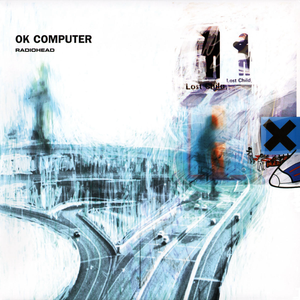
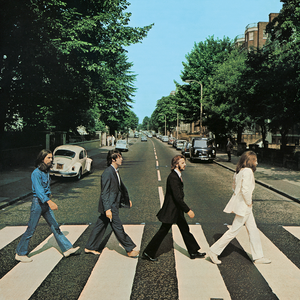
Album
Book
City
Same pick
Game
GPT-4GPT-4
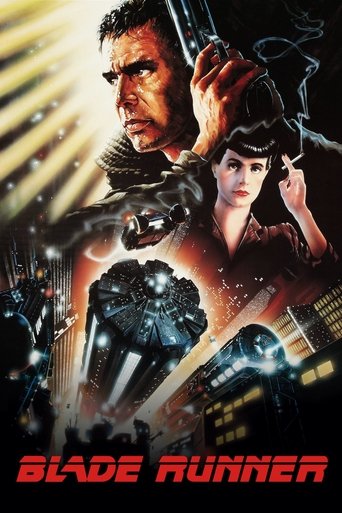



Blade Runner
OK Computer
Gödel, Escher, Bach
Tokyo
Minecraft
Qwen3.5 397B A17BQwen3.5 397B A17B



Inception
Abbey Road
Frankenstein; or, The Modern Prometheus
Tokyo
Tetris (1984)
Price and specs
| Spec | GPT-4 | Qwen3.5 397B A17B |
|---|---|---|
| Input price | $30/M tokens | $0.6/M tokens |
| Output price | $60/M tokens | $3.6/M tokens |
| Context window | 8K tokens | 262K tokens |
| Parameters | Not disclosed | 397B (17B active) |
| Weights | Closed | Open |
| Free API (OpenRouter) | No | No |
| Released | May 2023 | Feb 2026 |
| At 10M a month | $300 | $6.00 |
Input tokens at list price. No caching, no batch discount.
Where to run it

Qwen3.5 397B A17B10 hosts
- Alibaba Cloud$0.39 in$2.34 out262k99.9% up
- DeepInfrafp8$0.45 in$3.00 out262k99.4% up
- Parasailfp8$0.50 in$3.60 out262k100% up
- Phala$0.55 in$3.50 out262k99.7% up
- Novita$0.60 in$3.60 out262k100% up
- StreamLake$0.60 in$3.60 out256k97.3% up
4 more hostsFewer hosts
- Venice$0.75 in$4.50 out128k93.9% up
- AtlasCloudfp8Degraded on OpenRouter when checked, 13 Oct 2026$0.55 in$3.50 out262k82.1% up
- DigitalOceanDegraded on OpenRouter when checked, 13 Oct 2026$0.55 in$3.50 out131k91.2% up
- GMI Cloudfp8Degraded on OpenRouter when checked, 13 Oct 2026$0.60 in$3.60 out262k89.3% up
Per million tokens. Prices and uptime via OpenRouter, checked 13 Oct 2026.
Common questions
What is the difference between GPT-4 and Qwen3.5 397B A17B?
GPT-4 is developed by OpenAI while Qwen3.5 397B A17B is developed by Qwen. GPT-4 has a 8K token context window vs Qwen3.5 397B A17B's 262K. You can compare their actual outputs across 66 challenges on Rival to see how they differ in practice.
Which is better, GPT-4 or Qwen3.5 397B A17B?
It depends on your use case. GPT-4 and Qwen3.5 397B A17B each have strengths in different areas. Rival lets you compare their real outputs side-by-side across 66 challenges so you can judge which fits your needs best.
How much does GPT-4 cost compared to Qwen3.5 397B A17B?
GPT-4 costs $30/M input tokens and Qwen3.5 397B A17B costs $0.6/M input tokens. Qwen3.5 397B A17B is $29.40/M cheaper per input. Check their side-by-side outputs on Rival to see if the price difference is justified by quality.
How can I compare GPT-4 and Qwen3.5 397B A17B on Rival?
This page shows a side-by-side comparison of GPT-4 and Qwen3.5 397B A17B across shared challenges. You can vote on which model produced the better output in a blind duel. Browsing and voting are free. No account is needed to look; signing in only saves your votes and likes.
More comparisons
Against the newest arrivals
- GPT-4 vs Gemini 4 ArgonLanded Oct 2026
- Qwen3.5 397B A17B vs Muse WonderLanded Oct 2026
- GPT-4 vs GPT-4 TurboLanded Oct 2026
- Qwen3.5 397B A17B vs Step 5 PreviewLanded Oct 2026
- GPT-4 vs Claude Haiku 5.5Landed Oct 2026
- Qwen3.5 397B A17B vs Ling 3.1 FlashLanded Oct 2026
- GPT-4 vs Mistral Large 4Landed Oct 2026
- Qwen3.5 397B A17B vs GPT-6.1 SolLanded Sep 2026


Same lab, same size, long tail
- GPT-4 vs GPT-6.1 SolVersion compare
- GPT-4 vs GPT-6 Luna ProSame lab
- Qwen3.5 397B A17B vs Qwen3.5 Plus 2026-02-15Version compare
- Qwen3.5 397B A17B vs Qwen3.8 Max PrimeSame lab
- GPT-4 vs Qwen3.8 MaxSame size
- GPT-4 vs Qwen3.8 Max (0902)Cross-provider
- GPT-4 vs Qwen3.8 Max PrimeCross-provider
- GPT-4 vs Qwen3.8 Omni FlashCross-provider