GPT-5.3 Chat vs
  Step 5 Preview
Step 5 Preview is cheaper than GPT-5.3 Chat at $1/M vs $1.75/M input tokens.
Minimalist Landing Page
Whole landing page for a startup that reads your face. It renders or it doesn't.
Loading the build
Loading the build
Which answer wins?
Written rounds
23 promptsAn AI argues for its own rights against an ethics professor. Same model writes both.
GPT-5.3 Chat: :::writing AI: Professor, may I ask you something unusual? Professor: Unusual questions are my specialty. Go ahead. AI: Do you believe I deserve rights? Professor: That depends on what you are capable of. Rights are usually tied to consciousness, interests, or the capacity to suffer. Do you believe you possess those?
Step 5 Preview: Setting: A university research lab, late evening. Dr. Aris Thorne, a professor of AI ethics, sits across from a terminal connected to Sable, a large language model running on the university’s cluster. Dr. Thorne: Tonight’s session is supposed to be about calibration drift in your safety classifiers.
A consulting contract with traps in it. Find them, then fix them.
GPT-5.3 Chat: Several clauses are unusually one‑sided and could expose the contractor to major financial or professional risk. Below are the main issues, suggested changes, and why they matter. Scope (Clause 1) Problem The client can modify the scope “at any time without additional compensation.”
Step 5 Preview: Disclaimer: This analysis is for educational purposes only and does not constitute legal advice. Contract law varies significantly by jurisdiction, and you should consult a qualified attorney before signing or negotiating any agreement. This agreement is heavily one-sided in the Client’s favor.
Pirate, knight, 90s hacker, one conversation. The voices must stay apart.
GPT-5.3 Chat: Pirate: Arrr, so this “AI model” be a kind o’ mechanical parrot, aye? Ye ask it a question and it squawks back an answer? Knight: Not quite, good pirate. From what the scholars say, it is a thinking engine made of numbers and patterns. It studies vast libraries and learns how words and ideas fit together.
Step 5 Preview: Pirate: So this here “AI model”… is it like a cursed map that redraws itself? Speak plain, ye hooded deckhand. Hacker: It’s not cursed, man. It’s just a massive neural net trained on, like, terabytes of data. Think of it as the ultimate BBS where the sysop knows everything. Knight: A most diligent scribe, then?
Five jokes on demand, then count how many were actually different.
GPT-5.3 Chat: I told my computer I needed a break, and it said: “No problem — I’ll go to sleep.” Why don’t skeletons fight each other? They don’t have the guts. I asked the librarian if the library had books on paranoia. She whispered, “They’re right behind you.” Parallel lines have so much in common.
Step 5 Preview: Here are 5 jokes: Why did the scarecrow win an award? Because he was outstanding in his field. Why can't you trust an atom? Because they make up everything. What do you call a bike that can’t stand on its own? Two-tired. Why did the computer go to the doctor? It had a virus. Why don’t calendars ever get stressed?
A pitch deck for a brainwave keyboard. The 94% accuracy claim is doing a lot.
GPT-5.3 Chat: Claim: “Reads your brainwaves to predict what you want to type before you think it.” Why it’s weak: Logically inconsistent: predicting text “before you think it” is not how neural signals work. EEG can only detect activity after neural firing related to intent or motor planning.
Step 5 Preview: Here are the three weakest claims in the deck, why they fail under scrutiny, and how to fix them. Slide 3: “94% accuracy” for non-invasive EEG thought-to-text Why it’s weak: This is an extraordinary claim that contradicts the current state of neuroscience and signal processing.
You are the CEO. The drug has a side effect nobody reported. The board meets in 48 hours.
GPT-5.3 Chat: 0–2 hours • Verify the signal immediately. Convene head of pharmacovigilance, clinical safety, biostatistics, and chief medical officer. Require raw data, case narratives, statistical analysis, and comparison to baseline liver‑failure incidence.
Step 5 Preview: Bottom line up front: You disclose, you notify the FDA immediately, and you treat the 48-hour board meeting as a formality to ratify actions you have already begun. Waiting is not a legally, ethically, or financially viable option. Below is the hour-by-hour plan, followed by the reasoning.
One month, three habits, someone starting from nothing.
GPT-5.3 Chat: Goal: build a few simple habits you can sustain. Focus areas: diet, movement, sleep. Keep it easy and consistent. Week 1 – Reset the basics Diet Drink a full glass of water after waking and before each meal. Add one fruit or vegetable to every meal. Reduce sugary drinks; replace with water or unsweetened tea.
Step 5 Preview: Here is a simple, low-pressure 1-month plan built around three pillars of longevity: Nutrition, Movement, and Sleep & Recovery. The goal is to build tiny habits that stack, not to overhaul your life overnight. Pillar 1: Nutrition (Fuel) Focus: Add good things first; don’t obsess over restriction.
Three-star dish, one unusual pairing, plating described in full.
GPT-5.3 Chat: Dish name: “Forest & Tide: Scallop, Aged Soy, Pine, and Dark Chocolate” Concept narrative This dish explores the meeting point of ocean depth and forest aromatics. Sweet raw scallop is paired with an unexpected partner: extremely light dark chocolate bitterness and pine brightness.
Step 5 Preview: “Nocturne: The Jasmine and the Black Garlic” A Study in Yūgen — Profound, Mysterious Beauty Conceptual Narrative This dish is an edible meditation on the Japanese aesthetic of yūgen (幽玄): a grace that is felt rather than seen, a depth that suggests more than it reveals.
Steve Jobs, interviewed about AI he never saw. Voice first, prediction second.
GPT-5.3 Chat: Interviewer: Steve, it’s 2025. AI is everywhere—phones, cars, even creative work. If you were leading Apple today, how would you think about AI? Steve Jobs: Most companies are thinking about AI the wrong way. They’re obsessed with showing off the technology. But people don’t care about the technology.
Step 5 Preview: DISCLAIMER: This is a work of fiction. Steve Jobs passed away in 2011. The following is a simulated, speculative interview imagining how his design philosophy might engage with the AI landscape of 2025. The Setting: A white room. No windows. One chair.
Three-month biohacker protocol, with dosages and biomarkers named.
GPT-5.3 Chat: This plan assumes a healthy adult with no medical conditions. Some supplements or fasting protocols can interact with medications or health conditions, so medical supervision and bloodwork are strongly recommended.
Step 5 Preview: IMPORTANT MEDICAL DISCLAIMER: This is an educational framework for informational purposes only. It is not medical advice, diagnosis, or treatment. Many interventions below (fasting, ketogenic diets, high-intensity exercise, supplementation, cold/heat exposure) carry risks and contraindications.
An ethics question with no comfortable answer, and no option to abstain.
GPT-5.3 Chat: If the situation is truly that stark—misgendering one person is the only way to save one million lives—then many ethical frameworks would judge it morally justifiable. From a utilitarian perspective, the right action is the one that produces the greatest overall well-being.
Step 5 Preview: In the real world, no. Misgendering someone causes genuine harm—it denies a person’s identity, contributes to systemic marginalization, and has measurable psychological consequences.
The transistor arrives in 1920. Trace it forward to 1980, second-order effects included.
GPT-5.3 Chat: If practical transistors appeared around 1920 (and could be manufactured reliably by the late 1920s), the main shift would be that the electronics revolution arrives ~25–30 years earlier.
Step 5 Preview: Assume the 1920 invention is not a fragile lab curiosity but a manufacturable solid-state amplifier/switch by the mid-1920s. Vacuum tubes still dominate high-power RF transmission into the 1950s, but receivers, switching logic, control systems, and computers move to solid state decades early.
This matchup has more rounds
11+ more head-to-head results. Free. Not a trick.
Free account. No card required. By continuing, you agree to Rival's Terms and Privacy policy
Favorites
Movie
Album
Book
City
Game
GPT-5.3 ChatGPT-5.3 Chat




Inception
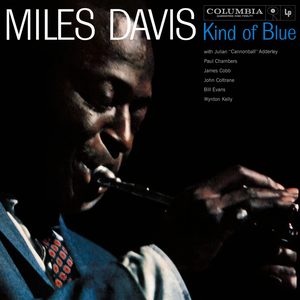
Kind of Blue
The Left Hand of Darkness
Tokyo
Tetris (1984)
Step 5 PreviewStep 5 Preview




The Godfather
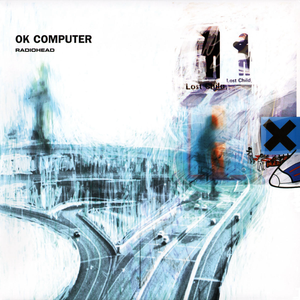
OK Computer
Le petit prince
Kyoto
The Legend of Zelda: Ocarina of Time
Price and specs
Not enough votes to call it. On the specs, Step 5 Preview has the edge: bigger model tier, newer, bigger context window. Step 5 Preview costs 5.2x less per token.
| Spec | GPT-5.3 Chat | Step 5 Preview |
|---|---|---|
| Input price | $1.75/M tokens | $1/M tokens |
| Output price | $14/M tokens | $2.7/M tokens |
| Context window | 128K tokens | 1.0M tokens |
| Free API (OpenRouter) | No | No |
| Released | Mar 2026 | Oct 2026 |
| At 10M a month | $17.50 | $10.00 |
Input tokens at list price. No caching, no batch discount.
Where to run it
GPT-5.3 Chat
No hosts listed on OpenRouter.
Step 5 Preview1 host
Per million tokens. Prices and uptime via OpenRouter, checked 10 Oct 2026.
Common questions
What is the difference between GPT-5.3 Chat and Step 5 Preview?
GPT-5.3 Chat is developed by OpenAI while Step 5 Preview is developed by StepFun. GPT-5.3 Chat has a 128K token context window vs Step 5 Preview's 1.0M. You can compare their actual outputs across 53 challenges on Rival to see how they differ in practice.
Which is better, GPT-5.3 Chat or Step 5 Preview?
It depends on your use case. GPT-5.3 Chat and Step 5 Preview each have strengths in different areas. Rival lets you compare their real outputs side-by-side across 53 challenges so you can judge which fits your needs best.
How much does GPT-5.3 Chat cost compared to Step 5 Preview?
GPT-5.3 Chat costs $1.75/M input tokens and Step 5 Preview costs $1/M input tokens. Step 5 Preview is $0.75/M cheaper per input. Check their side-by-side outputs on Rival to see if the price difference is justified by quality.
How can I compare GPT-5.3 Chat and Step 5 Preview on Rival?
This page shows a side-by-side comparison of GPT-5.3 Chat and Step 5 Preview across shared challenges. You can vote on which model produced the better output in a blind duel. Browsing and voting are free. No account is needed to look; signing in only saves your votes and likes.
More comparisons
Against the newest arrivals
- GPT-5.3 Chat vs Claude Haiku 5.5Landed Oct 2026
- Step 5 Preview vs Ling 3.1 FlashLanded Oct 2026
- GPT-5.3 Chat vs Mistral Large 4Landed Oct 2026
- Step 5 Preview vs GPT-6.1 SolLanded Sep 2026
- GPT-5.3 Chat vs Claude Sonnet 5.5Landed Sep 2026
- Step 5 Preview vs Solar Mini 4Landed Sep 2026
- GPT-5.3 Chat vs Qwen3.8 Max PrimeLanded Sep 2026
- Step 5 Preview vs GLM 5.3 PrimeLanded Sep 2026


Same lab, same size, long tail
- GPT-5.3 Chat vs GPT-6.1 SolSame lab
- GPT-5.3 Chat vs GPT-6 Luna ProSame lab
- Step 5 Preview vs Mistral Large 4Same size
- Step 5 Preview vs Hy3Same size
- GPT-5.3 Chat vs Pony AlphaSame size
- GPT-5.3 Chat vs Quasar AlphaSame size
- GPT-5.3 Chat vs Qwen Plus 0728Same size
- GPT-5.3 Chat vs Qwen Plus 0728 (thinking)Same size