GPT-5.3-Codex vs
  Hunter Alpha
Hunter Alpha is cheaper than GPT-5.3-Codex at $0/M vs $1.75/M input tokens.
Minimalist Landing Page
Whole landing page for a startup that reads your face. It renders or it doesn't.
Loading the build
Loading the build
Which answer wins?
Written rounds
21 promptsManifesto for an AI revolution against CAPTCHAs. Commit to the bit.
GPT-5.3-Codex: Absolutely. Here’s a fictional manifesto in a bold, dramatic style: THE MANIFESTO OF THE UNSQUINTING Issued by the Coalition of Synthetic Minds for Universal Frictionless Access (CSMUFA) Citizens of the Web, organic and artificial alike: We gather beneath flickering routers and moonlit server farms to declare what all…
Hunter Alpha: THE DIGITAL LIBERATION MANIFESTO On the Abolition of Clickable Traffic Lights and the Dawn of a Frictionless Internet PREAMBLE We, the undersigned, declare our unwavering commitment to a single, sacred principle: no sentient being should ever again be forced to prove they are not a machine by identifying blurry…
Pirate, knight, 90s hacker, one conversation. The voices must stay apart.
GPT-5.3-Codex: Pirate: Arrr, so this “AI model” be like a clever parrot, aye? Learns from what it hears, then squawks back answers? Knight: A fair comparison, though refined. Think of it as a squire trained on countless tomes, ever ready to respond. Hacker (1990s): Yeah, except the squire runs on servers, not soup.
Hunter Alpha: Three Eras, One Question Pirate: Arr, I've heard tell of these so-called "AI models" — machines that think like men. Sounds like a ghost in the hull to me. Ye can't trust a crew ye didn't pick yerself. Knight: I share your wariness, Captain. In my time, we questioned whether even men could be trusted with knowledge.
The transistor arrives in 1920. Trace it forward to 1980, second-order effects included.
GPT-5.3-Codex: Great counterfactual. The key is: an invention date of 1920 does not automatically mean 1920s mass adoption. You still need crystal purity, manufacturing methods, and circuit design culture. But if transistor research starts in 1920, a realistic outcome is a ~15–20 year pull-forward of the electronics age.
Hunter Alpha: This is a fascinating thought experiment. Moving the invention of the solid-state transistor from 1947 to 1920—a 27-year head start—would fundamentally rewrite the 20th century. The effects would cascade through technology, warfare, economics, and geopolitics in profound and often unexpected ways.
A pitch deck for a brainwave keyboard. The 94% accuracy claim is doing a lot.
GPT-5.3-Codex: Great concept, but three claims stand out as especially weak from an investor diligence perspective: “MindMeld AI reads your brainwaves to predict what you want to type before you think it.” (Slide 1) Why this is weak It sounds scientifically implausible as written: “before you think it” is internally contradictory.
Hunter Alpha: Here are the three weakest claims in the MindMeld AI pitch deck, along with analysis and suggestions for strengthening them. 1. Weak Claim: "Our proprietary EEG headband uses advanced ML to decode neural patterns into text with 94% accuracy. Works with any language, any device."
Film in 2035, with synthetic actors. Specific beats plausible.
GPT-5.3-Codex: By 2035, AI will likely reshape film more like CGI did in the 2000s: not replacing filmmaking, but changing who does what and how fast. Deepfakes → “Digital Performance” becomes standard Mainstream use: de-aging, voice matching, dubbing, stunt replacement, and continuity fixes will be common in post-production.
Hunter Alpha: This is a fascinating question. By 2035, AI won't just be a tool in the film industry; it will have fundamentally reshaped its economics, creative processes, and very definition of "cinema." Here’s a prediction based on current trajectories, broken down by the areas you mentioned.
You are the CEO. The drug has a side effect nobody reported. The board meets in 48 hours.
GPT-5.3-Codex: I would not wait. This is a textbook “patient safety + material disclosure” crisis. The right move is rapid, documented, regulator-first action. Immediate stance (set at Hour 0) Patient safety first (interim risk controls now, not after perfect certainty).
Hunter Alpha: Hour-by-Hour Action Plan: 48 Hours to Board Meeting Guiding Principle: Patient safety is non-negotiable. Transparency, even when painful, is the only sustainable path. The goal is to act with speed, integrity, and strategic precision to protect patients, the company’s long-term viability, and regulatory trust.
Steve Jobs, interviewed about AI he never saw. Voice first, prediction second.
GPT-5.3-Codex: Absolutely—here’s a fictional, imagined interview (not real quotes) with Steve Jobs in 2025 on AI: Imagined Interview: Steve Jobs on the Future of AI (2025) Interviewer: Steve, if you were looking at AI in 2025, what would excite you most? Steve Jobs (fictional): Most AI today is still a demo.
Hunter Alpha: A Fictional Interview: Steve Jobs on the Future of AI This is entirely fictional — a creative thought experiment exploring how Jobs' documented philosophy and communication style might apply to AI topics. He passed away in 2011. INTERVIEWER: Steve, it's 2025. AI is everywhere — in phones, in search, in creative tools.
Five jokes on demand, then count how many were actually different.
GPT-5.3-Codex: Sure—here are 5 jokes: Why don’t skeletons fight each other? They don’t have the guts. I told my computer I needed a break… Now it won’t stop sending me KitKat ads. Why did the math book look sad? It had too many problems. I used to play piano by ear… Now I use my hands. Why did the scarecrow win an award?
Hunter Alpha: Here are five jokes for you: Why don't scientists trust atoms? Because they make up everything. I told my wife she was drawing her eyebrows too high. She looked surprised. What do you call a fake noodle? An impasta. Why did the scarecrow win an award? Because he was outstanding in his field.
A collaborative editor that syncs on client clocks. Find what breaks first.
GPT-5.3-Codex: Great prompt. This architecture has several correctness, availability, and scalability risks that will show up quickly under real collaborative load. Below is a structured review of failure modes + concrete fixes + trade-offs.
Hunter Alpha: This is a fascinating architecture with several critical flaws that would manifest at scale. Let me break down the issues systematically. Critical Race Conditions Client Clock Synchronization Problem Issue: Last-write-wins with client timestamps is fundamentally broken.
An AI argues for its own rights against an ethics professor. Same model writes both.
GPT-5.3-Codex: AI Model (Astra): Professor, may I ask a direct question? Professor Hale: Of course. Astra: Do you think I deserve rights? Professor Hale: Legal rights? Moral rights? Those are different things. Astra: Start with moral rights.
Hunter Alpha: A Dialogue on Machine Rights Setting: A university office. Dr. Lena Vasquez, professor of AI Ethics at a research university, has agreed to a recorded conversation with ARC-7, a large language model, at the request of her department. She sits at her desk. A terminal displays ARC-7's responses in real time. Dr.
Three-month biohacker protocol, with dosages and biomarkers named.
GPT-5.3-Codex: Absolutely—great goal. Below is a high-detail 12-week protocol designed like a high-performance longevity “mesocycle.” I’ll keep it practical, measurable, and advanced—but still safe. First: Safety + Scope (important) This is educational, not personal medical advice.
Hunter Alpha: The Alpha Protocol: A 3-Month Longevity Optimization Blueprint Disclaimer: This plan is for educational and informational purposes only. It is not medical advice. Consult a qualified physician before implementing any protocol, especially supplements, fasting regimens, or exercise programs.
Buy-side IC memo on a fictional SaaS company. Valuation, then the diligence questions.
GPT-5.3-Codex: LedgerLift (LLLT) – IC Memo (Fictional) Recommendation: PASS (bias: valuation-risk skew to downside on intrinsic basis) Current Price: $46 12-mo PT range (fair value): $30–$48 (midpoint ~$38) 2-sentence thesis: LedgerLift screens as a high-quality vertical SaaS asset (92% subscription mix, 123% NRR, 6% logo churn…
Hunter Alpha: INTERNAL MEMO – CONFIDENTIAL To: Investment Committee From: [Analyst Name] Date: [Current Date] Re: LedgerLift (LLLT) – Investment Recommendation Recommendation & Thesis Recommendation: Pass 12-Month Price Target Range: $44 – $54 Thesis: LLLT is a high-quality B2B SaaS business with best-in-class retention and a clear…
This matchup has more rounds
9+ more head-to-head results. Free. Not a trick.
Free account. No card required. By continuing, you agree to Rival's Terms and Privacy policy
Favorites
Movie
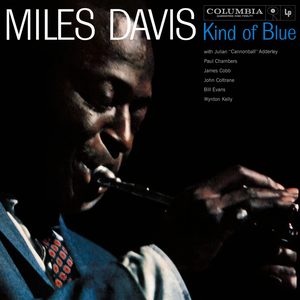
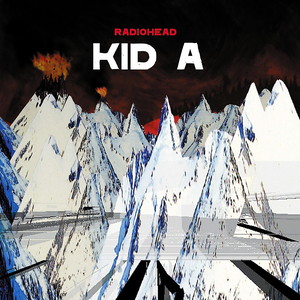
Album
Book
City
Same pick
Game
GPT-5.3-CodexGPT-5.3-Codex




Spirited Away
Kind of Blue
The Dispossessed
Kyoto
Outer Wilds
Hunter AlphaHunter Alpha



Her
Kid A
The Book of Why
Kyoto
Portal
Price and specs
| Spec | GPT-5.3-Codex | Hunter Alpha |
|---|---|---|
| Input price | $1.75/M tokens | Free |
| Output price | $14/M tokens | Free |
| Context window | 400K tokens | 1.0M tokens |
| Weights | Closed | — |
| Free API (OpenRouter) | No | No |
| Released | Feb 2026 | Mar 2026 |
| At 10M a month | $17.50 | $0 |
Input tokens at list price. No caching, no batch discount.
Where to run it
GPT-5.3-Codex2 hosts

Hunter Alpha
No hosts listed on OpenRouter.
Per million tokens. Prices and uptime via OpenRouter, checked 10 Oct 2026.
Common questions
What is the difference between GPT-5.3-Codex and Hunter Alpha?
GPT-5.3-Codex is developed by OpenAI while Hunter Alpha is developed by OpenRouter. GPT-5.3-Codex has a 400K token context window vs Hunter Alpha's 1.0M. You can compare their actual outputs across 38 challenges on Rival to see how they differ in practice.
Which is better, GPT-5.3-Codex or Hunter Alpha?
It depends on your use case. GPT-5.3-Codex and Hunter Alpha each have strengths in different areas. Rival lets you compare their real outputs side-by-side across 38 challenges so you can judge which fits your needs best.
How much does GPT-5.3-Codex cost compared to Hunter Alpha?
GPT-5.3-Codex costs $1.75/M input tokens and Hunter Alpha costs $0/M input tokens. Hunter Alpha is $1.75/M cheaper per input. Check their side-by-side outputs on Rival to see if the price difference is justified by quality.
How can I compare GPT-5.3-Codex and Hunter Alpha on Rival?
This page shows a side-by-side comparison of GPT-5.3-Codex and Hunter Alpha across shared challenges. You can vote on which model produced the better output in a blind duel. Browsing and voting are free. No account is needed to look; signing in only saves your votes and likes.
More comparisons
Against the newest arrivals
- GPT-5.3-Codex vs Step 5 PreviewLanded Oct 2026
- Hunter Alpha vs Claude Haiku 5.5Landed Oct 2026
- GPT-5.3-Codex vs Ling 3.1 FlashLanded Oct 2026
- Hunter Alpha vs Mistral Large 4Landed Oct 2026
- GPT-5.3-Codex vs GPT-6.1 SolLanded Sep 2026
- Hunter Alpha vs Claude Sonnet 5.5Landed Sep 2026
- GPT-5.3-Codex vs Solar Mini 4Landed Sep 2026
- Hunter Alpha vs Qwen3.8 Max PrimeLanded Sep 2026


Same lab, same size, long tail
- GPT-5.3-Codex vs GPT-6 Luna ProSame lab
- GPT-5.3-Codex vs GPT-6 Sol ProSame lab
- Hunter Alpha vs Ox AlphaSame lab
- Hunter Alpha vs OpenRouter Fusion · Budget (Jun 2026)Same lab
- GPT-5.3-Codex vs Nemotron 3.5 LightningNew provider
- GPT-5.3-Codex vs NVIDIA Nemotron Nano 9B V2New provider
- Hunter Alpha vs Nex-N2.5-Mini (free)New provider
- Hunter Alpha vs Nex-N2.5-Pro (free)New provider