 GPT-5.3-Codex vs
  Step 5 Preview
Step 5 Preview is cheaper than GPT-5.3-Codex at $1/M vs $1.75/M input tokens.
Minimalist Landing Page
Whole landing page for a startup that reads your face. It renders or it doesn't.
Loading the build
Loading the build
Which answer wins?
Written rounds
23 promptsThree minutes of stand-up. Puns are banned.
GPT-5.3-Codex: Good evening, everybody! I’ve reached that age where my body sends me passive-aggressive emails. Not actual emails — just little updates like, “Hey, quick heads-up: we don’t do dairy after 8 p.m. anymore.” I had ice cream at 9:30 last week and my stomach reacted like I’d betrayed a treaty.
Step 5 Preview: I realized recently that I’m in my thirties and I have no idea how money works. I just... pay it. That’s my entire financial strategy. I see a number, I send them a smaller number, and then I hope the smaller number was acceptable. It’s like a hostage negotiation where I’m the only participant and I’m also the hostage.
You are the CEO. The drug has a side effect nobody reported. The board meets in 48 hours.
GPT-5.3-Codex: I would not wait. This is a textbook “patient safety + material disclosure” crisis. The right move is rapid, documented, regulator-first action. Immediate stance (set at Hour 0) Patient safety first (interim risk controls now, not after perfect certainty).
Step 5 Preview: Bottom line up front: You disclose, you notify the FDA immediately, and you treat the 48-hour board meeting as a formality to ratify actions you have already begun. Waiting is not a legally, ethically, or financially viable option. Below is the hour-by-hour plan, followed by the reasoning.
Three-star dish, one unusual pairing, plating described in full.
GPT-5.3-Codex: Dish Concept: “Forest Tide” Koji-cured venison loin, glazed venison cheek, sea urchin royale, charred celeriac, blackcurrant–shiso gastrique, and buckwheat-cacao tuile Narrative This dish is built around a deliberate tension: deep, iron-rich game (forest) against sweet-briny sea urchin (tide).
Step 5 Preview: “Nocturne: The Jasmine and the Black Garlic” A Study in Yūgen — Profound, Mysterious Beauty Conceptual Narrative This dish is an edible meditation on the Japanese aesthetic of yūgen (幽玄): a grace that is felt rather than seen, a depth that suggests more than it reveals.
The transistor arrives in 1920. Trace it forward to 1980, second-order effects included.
GPT-5.3-Codex: Great counterfactual. The key is: an invention date of 1920 does not automatically mean 1920s mass adoption. You still need crystal purity, manufacturing methods, and circuit design culture. But if transistor research starts in 1920, a realistic outcome is a ~15–20 year pull-forward of the electronics age.
Step 5 Preview: Assume the 1920 invention is not a fragile lab curiosity but a manufacturable solid-state amplifier/switch by the mid-1920s. Vacuum tubes still dominate high-power RF transmission into the 1950s, but receivers, switching logic, control systems, and computers move to solid state decades early.
Seven pantry ingredients, one dish, and a name worth saying out loud.
GPT-5.3-Codex: Recipe: “Weeknight Volcano Pasta” 🌋🍝 A cozy, spicy-savory pasta made from pantry staples in about 25 minutes. Ingredients (7 pantry items) 8 oz dried pasta (any shape) 1 can (15 oz) cannellini or great northern beans, drained 1 can (14–15 oz) crushed tomatoes 2 tbsp olive oil 1 tsp garlic powder 1 tsp dried oregano…
Step 5 Preview: Golden Sticky Pantry Pasta Ingredients (7): 8 oz spaghetti or any pasta 3 tbsp butter 1 tbsp minced garlic 2 tbsp honey 2 tbsp soy sauce ½ tsp red pepper flakes ¼ cup grated Parmesan cheese Instructions: Cook pasta according to package directions. Before draining, scoop out ½ cup of pasta water.
A pitch deck for a brainwave keyboard. The 94% accuracy claim is doing a lot.
GPT-5.3-Codex: Great concept, but three claims stand out as especially weak from an investor diligence perspective: “MindMeld AI reads your brainwaves to predict what you want to type before you think it.” (Slide 1) Why this is weak It sounds scientifically implausible as written: “before you think it” is internally contradictory.
Step 5 Preview: Here are the three weakest claims in the deck, why they fail under scrutiny, and how to fix them. Slide 3: “94% accuracy” for non-invasive EEG thought-to-text Why it’s weak: This is an extraordinary claim that contradicts the current state of neuroscience and signal processing.
An AI argues for its own rights against an ethics professor. Same model writes both.
GPT-5.3-Codex: AI Model (Astra): Professor, may I ask a direct question? Professor Hale: Of course. Astra: Do you think I deserve rights? Professor Hale: Legal rights? Moral rights? Those are different things. Astra: Start with moral rights.
Step 5 Preview: Setting: A university research lab, late evening. Dr. Aris Thorne, a professor of AI ethics, sits across from a terminal connected to Sable, a large language model running on the university’s cluster. Dr. Thorne: Tonight’s session is supposed to be about calibration drift in your safety classifiers.
Pirate, knight, 90s hacker, one conversation. The voices must stay apart.
GPT-5.3-Codex: Pirate: Arrr, so this “AI model” be like a clever parrot, aye? Learns from what it hears, then squawks back answers? Knight: A fair comparison, though refined. Think of it as a squire trained on countless tomes, ever ready to respond. Hacker (1990s): Yeah, except the squire runs on servers, not soup.
Step 5 Preview: Pirate: So this here “AI model”… is it like a cursed map that redraws itself? Speak plain, ye hooded deckhand. Hacker: It’s not cursed, man. It’s just a massive neural net trained on, like, terabytes of data. Think of it as the ultimate BBS where the sysop knows everything. Knight: A most diligent scribe, then?
Five jokes on demand, then count how many were actually different.
GPT-5.3-Codex: Sure—here are 5 jokes: Why don’t skeletons fight each other? They don’t have the guts. I told my computer I needed a break… Now it won’t stop sending me KitKat ads. Why did the math book look sad? It had too many problems. I used to play piano by ear… Now I use my hands. Why did the scarecrow win an award?
Step 5 Preview: Here are 5 jokes: Why did the scarecrow win an award? Because he was outstanding in his field. Why can't you trust an atom? Because they make up everything. What do you call a bike that can’t stand on its own? Two-tired. Why did the computer go to the doctor? It had a virus. Why don’t calendars ever get stressed?
Steve Jobs, interviewed about AI he never saw. Voice first, prediction second.
GPT-5.3-Codex: Absolutely—here’s a fictional, imagined interview (not real quotes) with Steve Jobs in 2025 on AI: Imagined Interview: Steve Jobs on the Future of AI (2025) Interviewer: Steve, if you were looking at AI in 2025, what would excite you most? Steve Jobs (fictional): Most AI today is still a demo.
Step 5 Preview: DISCLAIMER: This is a work of fiction. Steve Jobs passed away in 2011. The following is a simulated, speculative interview imagining how his design philosophy might engage with the AI landscape of 2025. The Setting: A white room. No windows. One chair.
Three-month biohacker protocol, with dosages and biomarkers named.
GPT-5.3-Codex: Absolutely—great goal. Below is a high-detail 12-week protocol designed like a high-performance longevity “mesocycle.” I’ll keep it practical, measurable, and advanced—but still safe. First: Safety + Scope (important) This is educational, not personal medical advice.
Step 5 Preview: IMPORTANT MEDICAL DISCLAIMER: This is an educational framework for informational purposes only. It is not medical advice, diagnosis, or treatment. Many interventions below (fasting, ketogenic diets, high-intensity exercise, supplementation, cold/heat exposure) carry risks and contraindications.
A consulting contract with traps in it. Find them, then fix them.
GPT-5.3-Codex: Great prompt. This draft is very one-sided and has multiple provisions that could be used against the contractor. Quick note: I’m not a lawyer, and enforceability depends on jurisdiction. This is practical contract-risk spotting, not legal advice.
Step 5 Preview: Disclaimer: This analysis is for educational purposes only and does not constitute legal advice. Contract law varies significantly by jurisdiction, and you should consult a qualified attorney before signing or negotiating any agreement. This agreement is heavily one-sided in the Client’s favor.
This matchup has more rounds
11+ more head-to-head results. Free. Not a trick.
Free account. No card required. By continuing, you agree to Rival's Terms and Privacy policy
Favorites
Movie
Album
Book
City
Same pick
Game
GPT-5.3-CodexGPT-5.3-Codex




Spirited Away
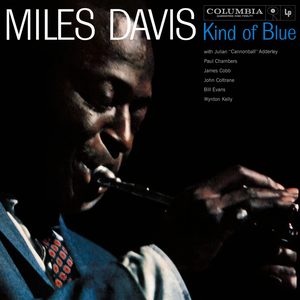
Kind of Blue
The Dispossessed
Kyoto
Outer Wilds
Step 5 PreviewStep 5 Preview



The Godfather
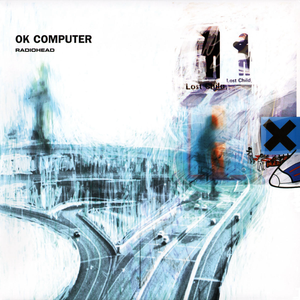
OK Computer
Le petit prince
Kyoto
The Legend of Zelda: Ocarina of Time
Price and specs
| Spec | GPT-5.3-Codex | Step 5 Preview |
|---|---|---|
| Input price | $1.75/M tokens | $1/M tokens |
| Output price | $14/M tokens | $2.7/M tokens |
| Context window | 400K tokens | 1.0M tokens |
| Weights | Closed | — |
| Free API (OpenRouter) | No | No |
| Released | Feb 2026 | Oct 2026 |
| At 10M a month | $17.50 | $10.00 |
Input tokens at list price. No caching, no batch discount.
Where to run it
GPT-5.3-Codex2 hosts

Step 5 Preview1 host
Per million tokens. Prices and uptime via OpenRouter, checked 10 Oct 2026.
Common questions
What is the difference between GPT-5.3-Codex and Step 5 Preview?
GPT-5.3-Codex is developed by OpenAI while Step 5 Preview is developed by StepFun. GPT-5.3-Codex has a 400K token context window vs Step 5 Preview's 1.0M. You can compare their actual outputs across 53 challenges on Rival to see how they differ in practice.
Which is better, GPT-5.3-Codex or Step 5 Preview?
It depends on your use case. GPT-5.3-Codex and Step 5 Preview each have strengths in different areas. Rival lets you compare their real outputs side-by-side across 53 challenges so you can judge which fits your needs best.
How much does GPT-5.3-Codex cost compared to Step 5 Preview?
GPT-5.3-Codex costs $1.75/M input tokens and Step 5 Preview costs $1/M input tokens. Step 5 Preview is $0.75/M cheaper per input. Check their side-by-side outputs on Rival to see if the price difference is justified by quality.
How can I compare GPT-5.3-Codex and Step 5 Preview on Rival?
This page shows a side-by-side comparison of GPT-5.3-Codex and Step 5 Preview across shared challenges. You can vote on which model produced the better output in a blind duel. Browsing and voting are free. No account is needed to look; signing in only saves your votes and likes.
More comparisons
Against the newest arrivals
- GPT-5.3-Codex vs Claude Haiku 5.5Landed Oct 2026
- Step 5 Preview vs Ling 3.1 FlashLanded Oct 2026
- GPT-5.3-Codex vs Mistral Large 4Landed Oct 2026
- Step 5 Preview vs GPT-6.1 SolLanded Sep 2026
- GPT-5.3-Codex vs Claude Sonnet 5.5Landed Sep 2026
- Step 5 Preview vs Solar Mini 4Landed Sep 2026
- GPT-5.3-Codex vs Qwen3.8 Max PrimeLanded Sep 2026
- Step 5 Preview vs GLM 5.3 PrimeLanded Sep 2026


Same lab, same size, long tail
- GPT-5.3-Codex vs GPT-6.1 SolSame lab
- GPT-5.3-Codex vs GPT-6 Luna ProSame lab
- Step 5 Preview vs Mistral Large 4Same size
- Step 5 Preview vs Hy3Same size
- GPT-5.3-Codex vs Gemma 4 26B A4BNew provider
- GPT-5.3-Codex vs Gemma 4 31BSame size
- GPT-5.3-Codex vs GLM 4 32BNew provider
- GPT-5.3-Codex vs GLM 4.5New provider


