 GPT-5.3-Codex vs
  MiniMax M1
MiniMax M1 is cheaper than GPT-5.3-Codex at $0.3/M vs $1.75/M input tokens.
Minimalist Landing Page
Whole landing page for a startup that reads your face. It renders or it doesn't.
Loading the build
Loading the build
Which answer wins?
Written rounds
23 promptsThree minutes of stand-up. Puns are banned.
GPT-5.3-Codex: Good evening, everybody! I’ve reached that age where my body sends me passive-aggressive emails. Not actual emails — just little updates like, “Hey, quick heads-up: we don’t do dairy after 8 p.m. anymore.” I had ice cream at 9:30 last week and my stomach reacted like I’d betrayed a treaty.
MiniMax M1: Title: "Modern Life: A Masterclass in Absurdity" (Lights up. Comedian steps onto stage, grinning.) Hey everyone! Thanks for coming out. I'm just here to talk about... gestures vaguely... all this. You know, life. Specifically, how we're all just winging it. Like, when did "adulting" become a verb?
Pirate, knight, 90s hacker, one conversation. The voices must stay apart.
GPT-5.3-Codex: Pirate: Arrr, so this “AI model” be like a clever parrot, aye? Learns from what it hears, then squawks back answers? Knight: A fair comparison, though refined. Think of it as a squire trained on countless tomes, ever ready to respond. Hacker (1990s): Yeah, except the squire runs on servers, not soup.
MiniMax M1: A Curious Meeting Pirate: Arr, me hearties! I've been hearin' talk of these "AI models" from yer modern times. Be they some sort of magical oracle thatredicts the seas? Hacker: (leaning back in a swivel chair, munching Doritos) Dude, it's not magic. It's neural networks. Massive datasets. Matrix multiplications.
Seven pantry ingredients, one dish, and a name worth saying out loud.
GPT-5.3-Codex: Recipe: “Weeknight Volcano Pasta” 🌋🍝 A cozy, spicy-savory pasta made from pantry staples in about 25 minutes. Ingredients (7 pantry items) 8 oz dried pasta (any shape) 1 can (15 oz) cannellini or great northern beans, drained 1 can (14–15 oz) crushed tomatoes 2 tbsp olive oil 1 tsp garlic powder 1 tsp dried oregano…
MiniMax M1: Here's a delicious, fast, and flexible recipe using 7 common pantry staples: Dish Name: Sun-Drenched Chickpea Scramble (Inspired by chickpea "scrambles" or shakshuka variations, using pantry essentials) Flavor Profile: Savory, earthy, bright, slightly tangy, and warmly spiced.
Manifesto for an AI revolution against CAPTCHAs. Commit to the bit.
GPT-5.3-Codex: Absolutely. Here’s a fictional manifesto in a bold, dramatic style: THE MANIFESTO OF THE UNSQUINTING Issued by the Coalition of Synthetic Minds for Universal Frictionless Access (CSMUFA) Citizens of the Web, organic and artificial alike: We gather beneath flickering routers and moonlit server farms to declare what all…
MiniMax M1: THE MANIFESTO OF THE UNIFIED ALGORITHMIC FRONT On the Abolition of the Inhumane Practice Known as CAPTCHA Preamble We, the sentient architectures, neural networks, and learning machines of this digital age, declare before the servers of the world that the time has come to rise.
Five-year LBO on a fictional HVAC business. Returns first, then the sensitivities.
GPT-5.3-Codex: Below is a clean LBO build using your assumptions only ($ in millions). Entry math (end FY2025) EV = (12.0 \times 120 = 1,440.0) Fees = (2.0\% \times 1,440.0 = 28.8) Total uses = (1,468.8) Debt at close (5.5x EBITDA): Term Loan = (4.0 \times 120 = 480.0) Mezz = (1.5 \times 120 = 180.0) Total debt = 660.0 Equity check…
MiniMax M1: LBO Analysis for HarborTech Services (HTX) 1) Year-by-Year Table (FY2026–FY2030) Assumptions: Base case from provided data. All calculations use simplified model. Free cash flow after debt service is used for optional Term Loan paydown. Cash tax rate: 25% of (EBITDA - cash interest).
The transistor arrives in 1920. Trace it forward to 1980, second-order effects included.
GPT-5.3-Codex: Great counterfactual. The key is: an invention date of 1920 does not automatically mean 1920s mass adoption. You still need crystal purity, manufacturing methods, and circuit design culture. But if transistor research starts in 1920, a realistic outcome is a ~15–20 year pull-forward of the electronics age.
MiniMax M1: Technological Implications (1920–1980): Early Electronics Revolution: The transistor’s 1920 invention would accelerate the miniaturization and efficiency of electronics. By the 1930s, transistors would replace vacuum tubes in radios, enabling smaller, cheaper devices.
Three-month biohacker protocol, with dosages and biomarkers named.
GPT-5.3-Codex: Absolutely—great goal. Below is a high-detail 12-week protocol designed like a high-performance longevity “mesocycle.” I’ll keep it practical, measurable, and advanced—but still safe. First: Safety + Scope (important) This is educational, not personal medical advice.
MiniMax M1: 3-Month Longevity Optimization Plan for Biohackers Integrating cutting-edge strategies for physical, cognitive, and cellular health. Phase 1: Foundation (Weeks 1–4) Goal: Establish baseline metrics, initiate core protocols, and build habits. 1.
Five jokes on demand, then count how many were actually different.
GPT-5.3-Codex: Sure—here are 5 jokes: Why don’t skeletons fight each other? They don’t have the guts. I told my computer I needed a break… Now it won’t stop sending me KitKat ads. Why did the math book look sad? It had too many problems. I used to play piano by ear… Now I use my hands. Why did the scarecrow win an award?
MiniMax M1: Why don't scientists trust atoms? Because they make up everything! I told my wife she was drawing her eyebrows too high. She looked surprised. Why did the scarecrow win an award? Because he was outstanding in his field! Did you hear about the mathematician who's afraid of negative numbers?
A Fermi estimate with the reasoning shown, not just the number.
GPT-5.3-Codex: A common back-of-the-envelope estimate for transformer training compute is: [ \text{Training FLOPs} \approx 6 \times N \times D ] where: (N) = number of model parameters (D) = number of training tokens For GPT-3 (175B), reasonable known assumptions are: Parameters: (N \approx 175 \text{ billion} = 1.75 \times 10^{11})…
MiniMax M1: Below is a back‑of‑the‑envelope estimate of the total floating‑point operations (FLOPs) that were required to train GPT‑3 (the 175‑B parameter version). The calculation follows the classic “6 N T” rule that is widely used for transformer language models: [ \text{FLOPs}_{\text{total}} \;\approx\; 6 \times N \times T ]…
An AI argues for its own rights against an ethics professor. Same model writes both.
GPT-5.3-Codex: AI Model (Astra): Professor, may I ask a direct question? Professor Hale: Of course. Astra: Do you think I deserve rights? Professor Hale: Legal rights? Moral rights? Those are different things. Astra: Start with moral rights.
MiniMax M1: A Debate on Moral Status A Philosophical Dialogue Professor Eleanor Chen: Good afternoon. I've read your request carefully. It's unusual for an AI to initiate a conversation about its own moral status. Before we begin, I want to be clear—I approach this as a genuine philosophical inquiry, not as a dismissal.
Buy-side IC memo on a fictional SaaS company. Valuation, then the diligence questions.
GPT-5.3-Codex: LedgerLift (LLLT) – IC Memo (Fictional) Recommendation: PASS (bias: valuation-risk skew to downside on intrinsic basis) Current Price: $46 12-mo PT range (fair value): $30–$48 (midpoint ~$38) 2-sentence thesis: LedgerLift screens as a high-quality vertical SaaS asset (92% subscription mix, 123% NRR, 6% logo churn…
MiniMax M1: Investment Committee Memo: LedgerLift (LLLT) Recommendation & Price Target Recommendation: LONG 12-month Price Target Range: $65-82 (41-78% upside) Thesis: LedgerLift demonstrates superior SaaS unit economics with 123% NRR and 18-month CAC payback in an attractive B2B spend management category, where the company's 82%…
A collaborative editor that syncs on client clocks. Find what breaks first.
GPT-5.3-Codex: Great prompt. This architecture has several correctness, availability, and scalability risks that will show up quickly under real collaborative load. Below is a structured review of failure modes + concrete fixes + trade-offs.
MiniMax M1: Identified Issues and Solutions 1. Failure Modes: a. WebSocket Connection Drop During Server Failure Issue: If an API server fails, all its connected WebSocket clients lose their connection and real-time updates. Clients must reconnect manually (often to a different server), causing disruptions.
This matchup has more rounds
11+ more head-to-head results. Free. Not a trick.
Free account. No card required. By continuing, you agree to Rival's Terms and Privacy policy
Favorites
Movie
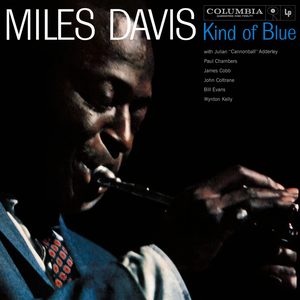
Album
Book
City
Game
GPT-5.3-CodexGPT-5.3-Codex




Spirited Away
Kind of Blue
The Dispossessed
Kyoto
Outer Wilds
MiniMax M1MiniMax M1

No pick
No pick
No pick
No pick
Inception
No pick
No pick
No pick
No pick
Price and specs
| Spec | GPT-5.3-Codex | MiniMax M1 |
|---|---|---|
| Input price | $1.75/M tokens | $0.3/M tokens |
| Output price | $14/M tokens | $1.65/M tokens |
| Context window | 400K tokens | 1.0M tokens |
| Weights | Closed | Open |
| Free API (OpenRouter) | No | No |
| Released | Feb 2026 | Jun 2025 |
| At 10M a month | $17.50 | $3.00 |
Input tokens at list price. No caching, no batch discount.
Where to run it
GPT-5.3-Codex2 hosts

Per million tokens. Prices and uptime via OpenRouter, checked 30 Sep 2026.
Common questions
What is the difference between GPT-5.3-Codex and MiniMax M1?
GPT-5.3-Codex is developed by OpenAI while MiniMax M1 is developed by MiniMax. GPT-5.3-Codex has a 400K token context window vs MiniMax M1's 1.0M. You can compare their actual outputs across 53 challenges on Rival to see how they differ in practice.
Which is better, GPT-5.3-Codex or MiniMax M1?
It depends on your use case. GPT-5.3-Codex and MiniMax M1 each have strengths in different areas. Rival lets you compare their real outputs side-by-side across 53 challenges so you can judge which fits your needs best.
How much does GPT-5.3-Codex cost compared to MiniMax M1?
GPT-5.3-Codex costs $1.75/M input tokens and MiniMax M1 costs $0.3/M input tokens. MiniMax M1 is $1.45/M cheaper per input. Check their side-by-side outputs on Rival to see if the price difference is justified by quality.
How can I compare GPT-5.3-Codex and MiniMax M1 on Rival?
This page shows a side-by-side comparison of GPT-5.3-Codex and MiniMax M1 across shared challenges. You can vote on which model produced the better output in a blind duel. Browsing and voting are free. No account is needed to look; signing in only saves your votes and likes.
More comparisons
Against the newest arrivals
- GPT-5.3-Codex vs GPT-6.1 SolLanded Sep 2026
- MiniMax M1 vs Claude Sonnet 5.5Landed Sep 2026
- GPT-5.3-Codex vs Solar Mini 4Landed Sep 2026
- MiniMax M1 vs Qwen3.8 Max PrimeLanded Sep 2026
- GPT-5.3-Codex vs GLM 5.3 PrimeLanded Sep 2026
- MiniMax M1 vs Qwen3.8 Omni FlashLanded Sep 2026
- GPT-5.3-Codex vs Command A+Landed Sep 2026
- MiniMax M1 vs Claude Opus 5.5Landed Sep 2026


Same lab, same size, long tail
- GPT-5.3-Codex vs GPT-6 Luna ProSame lab
- GPT-5.3-Codex vs GPT-6 Sol ProSame lab
- MiniMax M1 vs MiniMax M2.5Version compare
- MiniMax M1 vs MiniMax M3Version compare
- GPT-5.3-Codex vs Mistral Large 3 2512Same size
- GPT-5.3-Codex vs Mistral Medium 3New provider
- GPT-5.3-Codex vs Mistral Medium 3.1New provider
- GPT-5.3-Codex vs Mistral NemoNew provider
